Connect with us
DNV Decarbonization Insight Series August 2026 - What maritime professionals should know about AI Training

Alternative Fuels

DNV joins MMMCZCS as Knowledge Partner, aims to drive maritime decarbonization

DNV will support the Center by providing analyses of how maritime decarbonization could progress through measures including energy efficiency measures and adoption of new bunker fuels.

Admin

Published

on

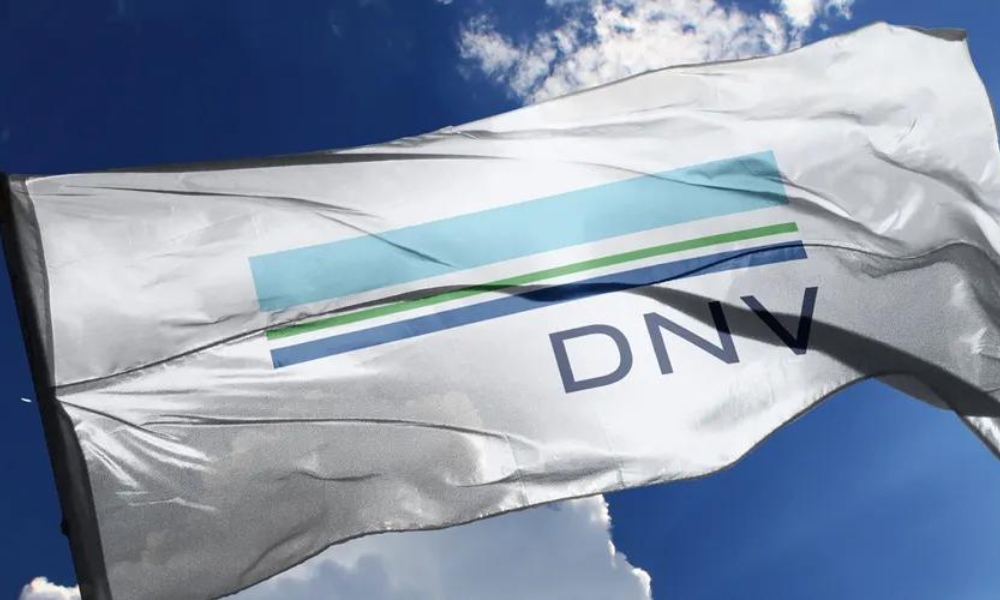
DNV flag

Classification society DNV and the Mærsk Mc-Kinney Møller Center for Zero Carbon Shipping (MMMCZCS) on Tuesday (9 December) announced that DNV is joining MMMCZCS’s global network as a knowledge Partner. 

Through this collaboration DNV and MMMCZCS aim to launch and support initiatives that will drive maritime decarbonization in an impactful and tangible manner.

As knowledge partner, DNV will support the Center through development of decarbonization pathways and insights, providing clear analyses of how maritime decarbonization could progress through a combination of energy efficiency measures, onboard carbon capture, and the adoption of new fuels. 

These pathways will consider regulatory, economic, and technological factors to help stakeholders understand the implications of decarbonization and identify barriers to be addressed. Furthermore, the collaboration will include the development of design concepts, demonstrators, frameworks, and standards to support and accelerate the maritime industry’s transition to a low-carbon future.

Bo Cerup-Simonsen, CEO of the Mærsk Mc-Kinney Møller Center for Zero Carbon Shipping, said: “We are proud to welcome DNV as a knowledge partner. Their deep know-how and global perspective will be instrumental in shaping robust decarbonization pathways and accelerating the maritime transition.

“This collaboration strengthens our capabilities in the next phase of the transition, which is focused on implementation of near-term decarbonization measures, while maturing and enabling the longer-term pathways.”

Knut Ørbeck-Nilssen, CEO Maritime at DNV, said: “We are delighted to be working together with the Center to advance the decarbonization of shipping. By combining our efforts, we can create the insights, frameworks, and standards needed to accelerate the transition and help the industry overcome key barriers on the path to a low-carbon future.”


Photo credit: DNV
Published: 10 December, 2025

Continue Reading

Engine

Japan’s first WinGD methanol dual-fuel marine engine passes FAT at MITSUI E&S

Company successfully completed the Factory Acceptance Test of the DU-WinGD 6X82DF-M-1.0 LP-SCR, the first methanol dual-fuel WinGD large marine engine built in Japan.

Admin

Published

on

By

MITSUI E&S completes FAT of Japan's first WinGD methanol dual-fuel engine

MITSUI E&S on Monday (3 August) announced that Mitsui E&S DU, a group company of MITSUI E&S, has successfully completed the Factory Acceptance Test (FAT) of the DU-WinGD 6X82DF-M-1.0 LP-SCR, the first methanol dual-fuel WinGD large marine engine built in Japan.

The engine is also the first WinGD large marine engine manufactured at MITSUI E&S Tamano Works.

“The engine is scheduled to be installed on the first vessel in a series of four vessels being built for a domestic shipowner,” the company said on its website. 

By utilising green methanol as fuel, it will contribute to a substantial reduction in greenhouse gas (GHG) emissions from shipping operations.

“To meet the expected increase in marine engine demand under the Japanese government’s Shipbuilding Industry Revitalisation Roadmap, the MITSUI E&S Group is working to enhance production efficiency for large marine engines through integrated operation at MITSUI E&S Tamano and Mitsui E&S DU Aioi,” the company added.


Photo credit: MITSUI E&S
Published: 4 August, 2026

Continue Reading

Alternative Fuels

Quadrise and Licella amend JDA to advance low-carbon marine fuel testing

Companies have been collaborating since March 2025 on the use of Licella’s bio-oil produced by HTL technology as a potential cost-effective feedstock for Quadrise’s bioMSAR™ and bioMSAR Zero™ fuels.

Admin

Published

on

By

RESIZED scott graham

Quadrise, a low emissions fuels and biofuel developer, recently announced an amendment to the Joint Development Agreement (JDA) with Australian-based Licella Holdings (Licella).

Licella is a global technology pioneer delivering scalable, low-cost and high-value fossil replacement solutions. Its proprietary Cat-HTR™ hydrothermal liquefaction (HTL” technology efficiently converts abundant biomass residues and biowastes, including wood and agricultural waste, into high-quality, sustainable bio-oil that can be blended or refined into low-carbon liquid fuels.

“HTL is globally recognised as one of the most promising pathways for producing sustainable fuels for hard-to-abate sectors such as shipping, with organisations highlighting its potential to deliver low-carbon bio-oils at the scale the maritime sector requires,” Quadrise said. 

Under the JDA entered into on 26 March 2025, Quadrise and Licella have been collaborating and seeking, inter alia, to progress the use of Licella’s bio-oil produced by HTL technology as a potential cost-effective feedstock for the Company’s  bioMSAR™ and bioMSAR Zero™ fuels.  

Under the JDA, pursuant to which lab testing has been undertaken in Australia and the UK, the parties have jointly developed a deeper understanding of the technological advancements needed to supply sustainable HTL-derived bio-oils to the maritime sector.

As a result, and prior to diesel engine testing, the Amended JDA now sets out a non-binding but more specific development focus, with an updated time schedule for the joint testing of the parties’ respective fuel technologies, with Licella providing the scalable HTL bio-oil production expertise and Quadrise providing maritime market access and fuel experience.  

Upon successful completion of final lab tests on refined Licella HTL bio-oils in H2 2026, initial marine fuel diesel engine pilot tests are planned by the parties, after which Quadrise and Licella will seek to undertake the larger scale, third-party engine testing required to move to commercial vessel tests.


Photo credit: Scott Graham
Published: 4 August, 2026

Continue Reading

Methanol

CMA CGM names new 15,000 TEU methanol-powered vessel “ROI ARTHUR”

Joining the company’s REX2 service, the ship will strengthen its fleet of new-generation vessels designed to support the decarbonisation of shipping.

Admin

Published

on

By

8 1

French shipping giant CMA CGM on Monday (3 August) said its new 15,000 TEU methanol-powered vessel, CMA CGM ROI ARTHUR, has officially been named and is ready to begin its journey at sea.

Joining the company’s REX2 service, the ship will strengthen its fleet of new-generation vessels designed to support the decarbonisation of shipping. 

“Powered by methanol, she contributes to reducing atmospheric emissions and advancing the energy transition of our industry,” the company said in a social media post. 

The vessel was welcomed by her Master, Captain Roman DIDENKO, and her godmother, Ms. Sun Lijun, Vice Chairman of Tianjin Bridge Welding Materials Group Co., Ltd. and Vice President of the Tianjin Women Entrepreneurs Association.

In January, the company announced the arrival in its fleet of its 400th owned vessel, the CMA CGM MONTE CRISTO, the first in a series of six methanol container ships.

The Group is preparing to operate, by 2031, around 200 dual-fuel LNG and methanol container ships that can be powered with low-carbon energy.

Related: CMA CGM marks 400-vessel milestone as methanol-powered boxship joins fleet


Photo credit: CMA CGM
Published: 4 August, 2026

Continue Reading

Trending