
Milestone
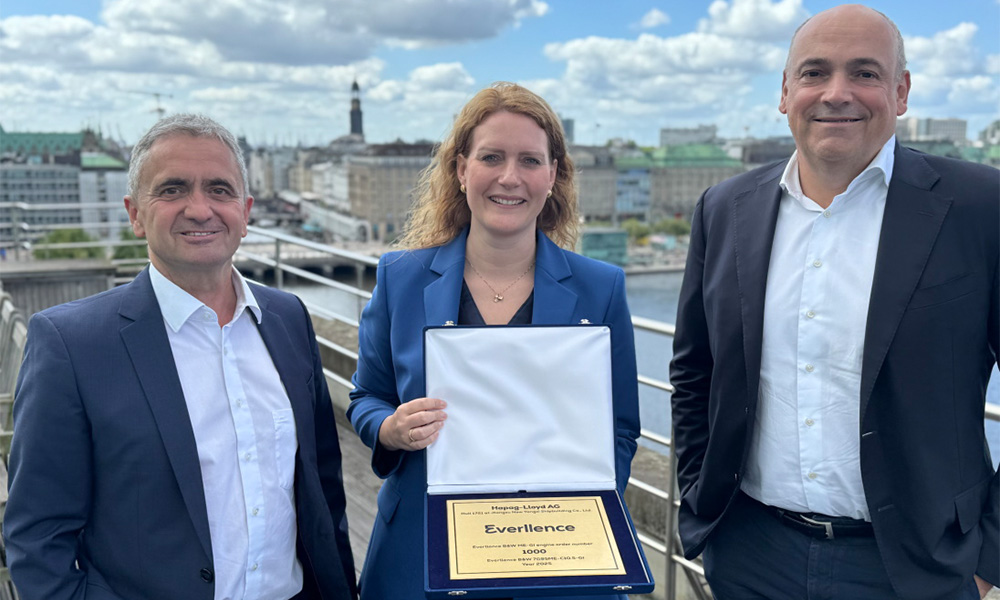
Everllence celebrates 1,000th ME-GI engine; milestone unit goes to Hapag-Lloyd
Engine, a 7G95ME-GI type, bound for a Hapag-Lloyd container vessel currently under construction at Jiangsu New Yangzi Shipbuilding Co., Ltd.

Ammonia
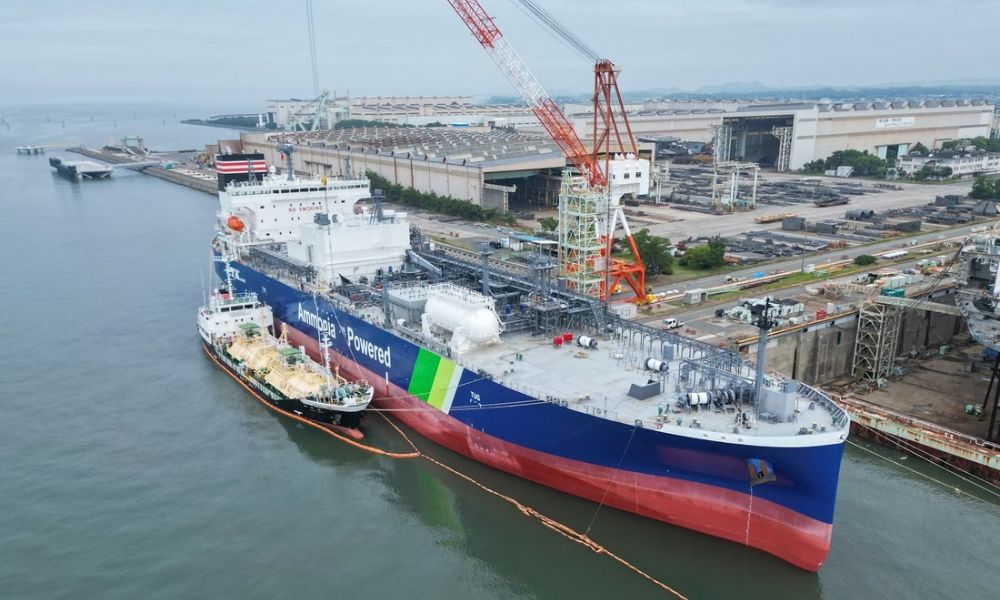
NYK wraps up first STS ammonia bunkering operation in Japan
Ammonia fuel was transferred from the ammonia carrier “Shoei Maru” via the STS method to an ammonia-fuelled medium gas carrier, scheduled for delivery in November 2026.
Events
PIL’s new LNG dual-fuel boxship “Kota Elan” makes maiden call in Singapore
“Kota Elan” is currently operating on PIL’s East Coast Service 1 (ES1) route that connects Asia with South America and is now on its way to Brazil.

Alternative Fuels
China: Guangzhou completes first bio-methanol STS bunkering operation
A total of 1,021 metric tonnes of bio-methanol was supplied to the world’s first methanol dual-fuel Ultramax bulk carrier in Guangzhou anchorage.
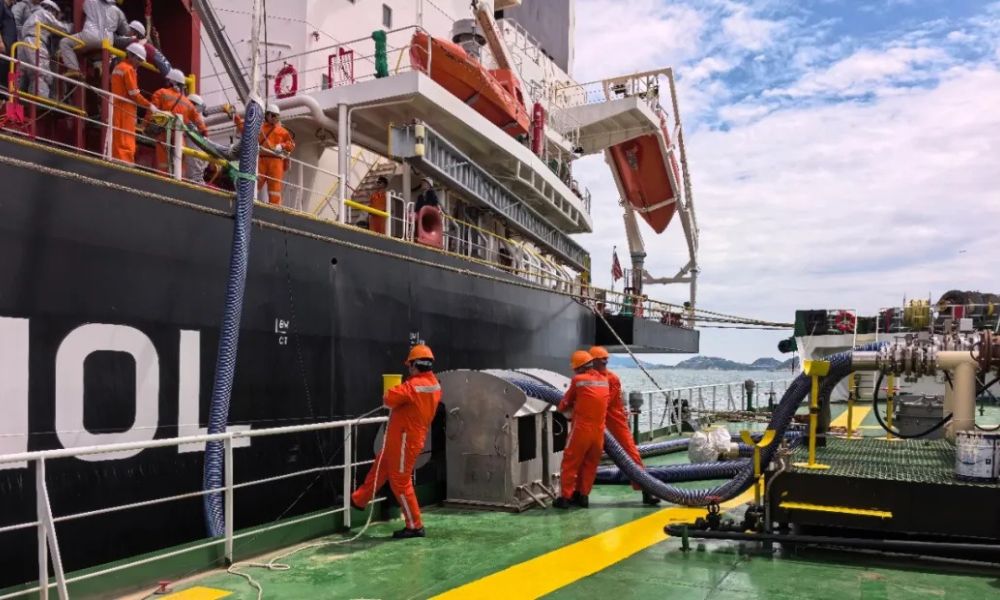
Clean energy equipment and services provider CIMC Enric on Monday (7 September) said China’s first green methanol bunkering operation for a bulk carrier was completed at Guangzhou anchorage.
The company said the bunkering operation also marked the first bio-methanol STS bunkering operation at Guangzhou Port.
A total of 1,021 metric tonnes (mt) of bio-methanol was supplied ship-to-ship (STS) to the world’s first methanol dual-fuel Ultramax bulk carrier.
The operation was completed on 6 September by China Shipping & Sinopec Suppliers Co Ltd’s Da Qing 268, which carried bio-methanol produced at CIMC Enric’s green methanol facility in Zhanjiang.
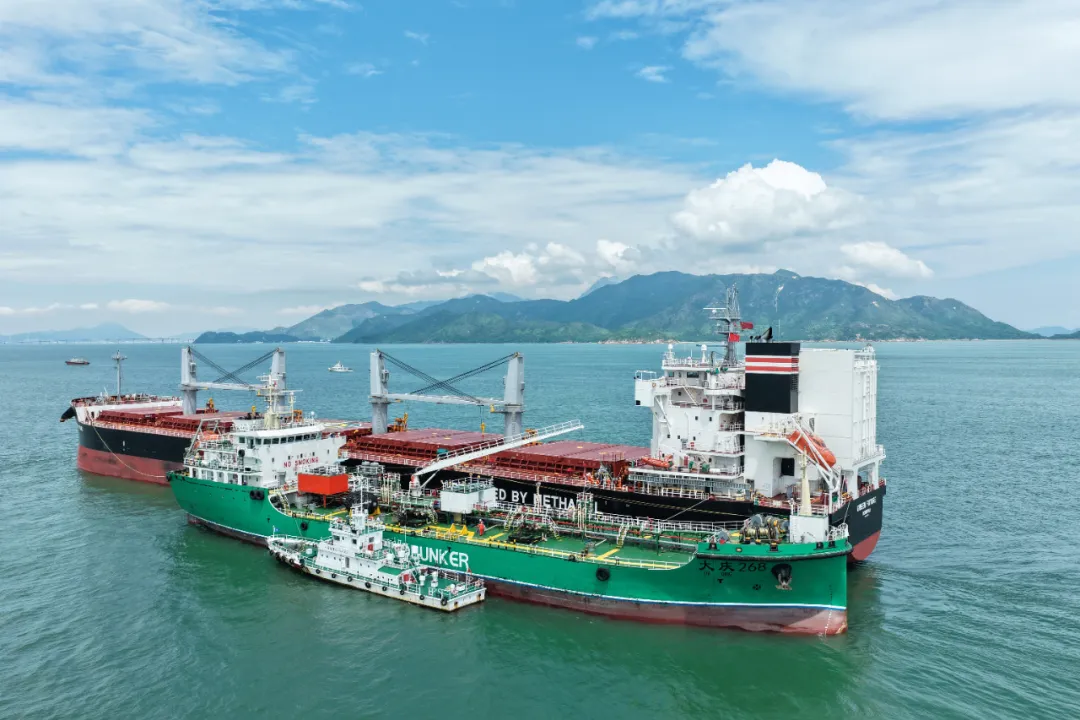
The successful operation in Guangzhou, following previous green methanol bunkering operations in Shenzhen and Hong Kong, means that Guangdong-produced bio-based methanol has established a supply network across the Guangdong-Hong Kong-Macao Greater Bay Area.
The company said the development connects the production, storage, transportation and bunkering segments of the green methanol supply chain, moving the region beyond individual pilot projects towards coordinated operations across the Greater Bay Area.
CIMC Enric described its Zhanjiang green methanol facility as China’s first commercial-scale bio-methanol production plant.
Since beginning production, the Zhanjiang facility has maintained a stable production and delivery schedule, supplying bio-based methanol to major ports across China, with delivery volumes continuing to increase, according to the company.
The first phase of the facility has an annual production capacity of 50,000 metric tonnes (mt), while its methanol products have a carbon emission reduction rate of more than 85%, CIMC Enric said.
The products have also obtained ISCC EU sustainability certification, with the company saying their specifications meet international requirements for shipping decarbonisation and can support the low-carbon operation of vessels.
Photo credit: CIMC Enric
Published: 9 September, 2026

OUR INDUSTRY PARTNERS

Shell Singapore charged over Pulau Bukom oil leaks, reporting delays

MPA probes Singapore Strait collision involving fishing vessel, bulk carrier

TFG Marine deploys first MFM-equipped bunker barge in Jamaica

Seascale Energy names Gaetan Perret co-CEO as Olivier Josse prepares to retire

DNV: New research shows how regulation could reshape shipping

Stena Line orders two new hybrid ferries for Sweden – Denmark route

ENGINE: Americas Bunker Fuel Availability Outlook (24 Sep 2026)

Singapore: Marine fuel testing firm CCIC Singapore faces winding up application

High Court of Singapore issues winding up order against Hengli Petrochemical International

APPEC 2026: Digitalisation in bunkering not merely a ‘paper-to-screen’ swap, states panellists

APPEC 2026: Panellists navigate maritime decarbonisation and alternative marine fuel strategies

LDA’s methanol-powered “Spirit of Toulouse” gets Norsepower rotor sail in Shanghai

Goldwind green methanol facility completes trial production, ships first 500 mt

Singapore: Bunker fuel sales down by 4% on year in August 2026
-
 Winding up2 weeks ago
Singapore: Marine fuel testing firm CCIC Singapore faces winding up application
-
 Winding up2 weeks ago
High Court of Singapore issues winding up order against Hengli Petrochemical International
-
 Technology2 weeks ago
APPEC 2026: Digitalisation in bunkering not merely a ‘paper-to-screen’ swap, states panellists
-
 Alternative Fuels2 weeks ago
APPEC 2026: Panellists navigate maritime decarbonisation and alternative marine fuel strategies
-
 Wind-assisted2 weeks ago
LDA’s methanol-powered “Spirit of Toulouse” gets Norsepower rotor sail in Shanghai
-
 Methanol2 weeks ago
Goldwind green methanol facility completes trial production, ships first 500 mt
-
 Alternative Fuels2 weeks ago
Singapore: Bunker fuel sales down by 4% on year in August 2026
-
 Bunker Fuel2 weeks ago
APPEC 2026: Equatorial and Kuwait Petroleum Corporation discuss Middle East bunker market dynamics