Connect with us

Methanol

Mabanaft plans to convert four tanks at Hamburg terminal for methanol storage by 2027

Firm’s aim is to store methanol at Blumensand and facilitate import of low-carbon methanol to northern Germany as it expects demand for methanol to grow in shipping and other transport sectors.

Admin

Published

on

Mabanaft plans to convert four tanks at Hamburg terminal for methanol storage by 2027

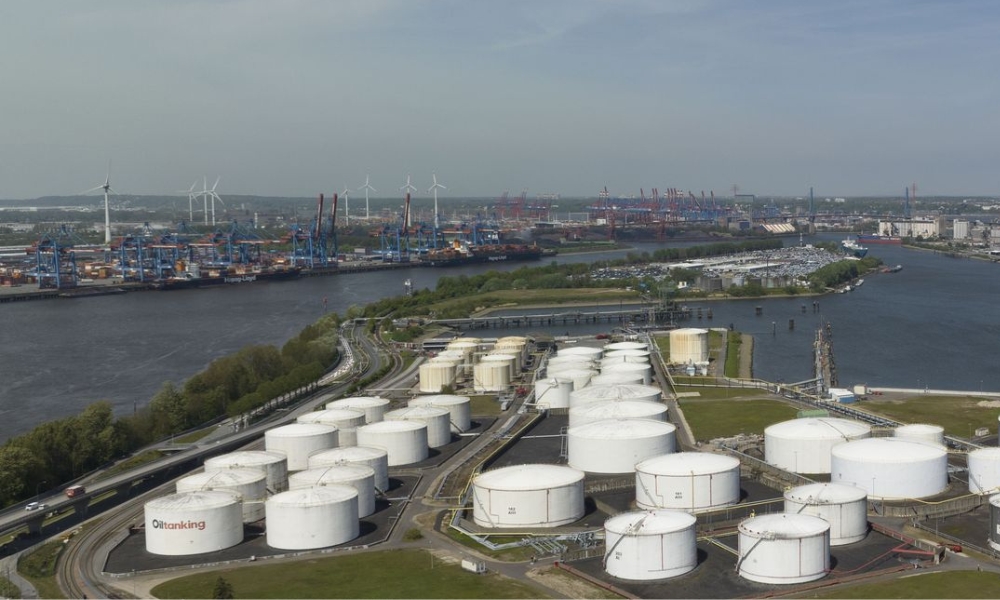
Energy company Mabanaft on Wednesday (22 January) said it plans to convert four of its tanks at the Blumensand tank terminal in the Port of Hamburg over the next two years. 

The company’s aim is to enable the storage of methanol at Blumensand and facilitate the import of low-carbon methanol to northern Germany. 

By investing in methanol storage capabilities, Mabanaft wants to support its customers’ transition towards greener alternatives. Mabanaft expects demand to grow in the future, both in shipping and other transport sectors, as well as in the chemical industry.

While the tanks are planned to be retrofitted from mid-2025, the methanol storage is scheduled to start in 2027. Mabanaft intends to import the methanol itself and then store and distribute it in Germany and possibly other locations. 

By deciding to apply for the necessary approvals in January this year, the company is willing to take on this multi-million-euro investment. The project requires the successful completion of an approval process with the Hamburg Authority of Environment, Climate, Energy and Agriculture (Behörde für Umwelt, Klima, Energie und Agrarwirtschaft, BUKEA).

The four tanks that would be converted have a total capacity of approximately 20,000 cubic metres. Subject to the necessary approvals their conversion is planned to be carried out in two stages: the first two tanks by mid of 2026 and the further tanks in 2027. 

Mabanaft is working with both existing and new customers to develop solutions for decarbonising their fuel needs.

“CO2-reduced methanol can be produced in several ways: through e-methanol synthesis using renewable electricity and captured CO2, through biomethanol production from biomass, or through the production of so-called blue methanol from natural gas with carbon capture and storage,” said Joost Vespermann, Business Developer in Mabanaft’s Sustainable Fuels division. 

“All these types of low-carbon methanol can be used in the future, depending on regional legislation and customer preferences.”

Shipping as the first market for methanol 

“In the shipping industry, there is no single solution for sustainable fuels,” said Oleksandr Siromakha, Head of Sustainable Fuels at Mabanaft. 

“That’s why we are committed to offering our customers a diverse range of options tailored to their needs—both now and in the future. Alongside conventional fuels, we currently offer bio-blends and want to provide more tailored solutions such as hydrogen, ammonia, and methanol.”

“Our goal is to simplify the transition for our customers by making methanol and other alternative fuels more accessible. The challenges of decarbonisation are great. We are here to support our customers every step of the way.”

In Europe in particular, Mabanaft is helping cruise lines and other players in the shipping industry to use methanol. In January 2024, Mabanaft signed a Memorandum of Understanding (MoU) with cruise operator TUI Cruises to supply green methanol bunker fuel in the future.

In addition to the marine sector, the company intends to offer methanol to other areas of the transportation industry, such as a gasoline additive, as well as to the chemical industry. 

Related: Mabanaft to supply TUI Cruises with green methanol bunker fuel


Photo credit: Mabanaft
Published: 23 January, 2025

Continue Reading

Mass Flowmeter

Hong Kong backs MFM adoption with voluntary scheme to boost bunkering competitiveness

Hong Kong’s Marine Department launched the Quality Bunker Operator Scheme to encourage bunker operators to install and use mass flow meter systems on their bunker vessels.

Admin

Published

on

By

RESIZED EH dual mfm setup

Hong Kong’s Marine Department (MD) on Wednesday (3 June) launched the Quality Bunker Operator Scheme to encourage bunker operators to install and use mass flow meter systems (MFM systems) on their bunker vessels.

MD said the scheme aims to enhance Hong Kong’s bunkering service quality and the competitiveness of Hong Kong ports, thereby further consolidating Hong Kong’s position as an international maritime centre and a major bunkering port.

Under the Scheme, bunker operators of traditional maritime fuel and biodiesel that install and use MFM systems on their bunker vessels, with the MFM systems inspected and certified by an accredited body in accordance with the International Organization for Standardization’s ISO 22192 Standard or equivalent requirements, can apply to the MD for inclusion in the scheme’s “List of Quality Bunker Vessels”, provided they meet the relevant technical and operational requirements. 

Details of the bunker vessels successfully included in the List will be published on a dedicated page on the MD’s website for reference by shipping companies and relevant stakeholders.

Participation in the Scheme is voluntary. In addition to receiving recognition from the MD, participating bunker operators will benefit from enhanced corporate image and competitiveness through the adoption of MFM systems, thereby boosting customers’ confidence and helping to create new business opportunities.

 A spokesman for the MD, said: “As an international maritime centre supported by our country, Hong Kong has a strategic location adjacent to major international fairways. Coupled with years of development in marine fuel bunkering, Hong Kong possesses rich experience and talent in the field. For many years, Hong Kong has consistently ranked as the seventh-largest bunkering port globally, the second-largest in our country, and the largest in the Greater Bay Area, providing reliable and competitive fuel bunkering services to ocean-going vessels from around the world. 

“As the international shipping industry has an increasing demand for accuracy and transparency in bunkering services, service quality and measurement precision in bunkering operations have become important indicators of a bunkering port’s competitiveness. The Scheme will enhance bunkering accuracy and transparency, further enhancing the quality of Hong Kong’s bunkering services.

The spokesman added that comprehensive port services are one of Hong Kong’s key advantages as an international maritime centre.

“We will also mandate the use of MFM systems on all methanol bunker vessels this year to ensure that Hong Kong continues to provide high-quality bunkering services in the era of green maritime fuels.” 

Note: The application form for the Scheme can be found on the MD’s website. Interested bunker operators can download the application form from the website or contact the MD’s Green Maritime Fuel Team via email ([email protected]) for details.


Photo credit: Manifold Times
Published: 4 June, 2026

Continue Reading

Methanol

Seaspan and Hapag-Lloyd complete first of five methanol vessel retrofit

Following “Seaspan Yangtze”, the remaining vessels planned for retrofit under the methanol retrofit programme are “Seaspan Amazon”, “Seaspan Ganges”, “Seaspan Thames”, and “Seaspan Zambezi”.

Admin

Published

on

By

Seaspan and Hapag-Lloyd complete first of five methanol vessel retrofit

Seaspan Corporation (Seaspan) and Hapag-Lloyd on Wednesday (3 June) announced the successful completion of the first of the five vessel conversions under their methanol retrofit programme with the delivery of Seaspan Yangtze.

From the early SAVER (Seaspan Action for Vessel Energy Reduction) programme to today’s CleanBlue initiative, Seaspan has committed over USD 230 USD million across 86 vessels, executing more than 550 efficiency and retrofit projects.

Following Seaspan Yangtze, the remaining vessels planned for retrofit under the programme are Seaspan Amazon, Seaspan Ganges, Seaspan Thames, and Seaspan Zambezi. Each retrofit is expected to reduce well-to-wake CO₂e emissions by approximately 30,000 to 50,000 metric tonnes per vessel annually when operating on low-carbon methanol, while also extending vessel lifespan and enhancing fuel flexibility.

“Decarbonisation is not just about building the fleet of tomorrow, it is also about unlocking the full potential of the fleet we have today. Retrofitting and upgrades on existing fleets play a practical, immediate, and economical role in accelerating shipping’s decarbonization journey,” said Bing Chen, Chairman, President and CEO of Seaspan. 

“Project SAVER CleanBlue highlights Seaspan’s strong customer partnerships, deep technical expertise, and unique platform integrated with JV partners, such as WattSpan Maritime Technology, in executing complex and large-scale retrofit projects.”

“The successful conversion of the Seaspan Yangtze together with the planned retrofit of its four sister vessels is another important step on our ambitious path towards net-zero fleet operations by 2045,” said Silke Lehmköster, Managing Director, Fleet, Hapag-Lloyd. 

“Together with Seaspan, we are demonstrating that retrofitting existing vessels for low-carbon methanol can be a practical way to reduce emissions in shipping.”


Photo credit: Seaspan
Published: 4 June, 2026

Continue Reading

Alternative Fuels

Shipfinex: The green fleet transition has a financing problem

Capt. Vikas Pandey, Founder & CEO, Shipfinex argues green shipping progress is uneven: major carriers can finance alternative-fuel vessels, while smaller owners face capital constraints.

Admin

Published

on

By

Shipfinex: The green fleet transition has a financing problem

By Capt. Vikas Pandey, Founder & CEO, Shipfinex

The numbers on alternative-fuel orders look encouraging. Seventy-two percent of newbuild capacity ordered in the first ten months of 2025 was for alternative-fuel vessels, with LNG dual-fuel accounting for 60% of that figure. More than 1,369 LNG dual-fuel vessels are now in operation or on order globally. By most measures, the transition appears to be happening.

Look at who is actually placing those orders. MSC. Hapag-Lloyd. CMA CGM. Carriers with balance sheets large enough to absorb the cost premium of alternative-fuel newbuilds and relationships with Chinese leasing companies that extend leverage ratios unavailable to most of the industry. The Strait of Hormuz disruption this March accelerated that activity further: LNG tanker charter rates spiked above $200,000 per day and carriers with deep pockets moved to lock in fuel flexibility. Meanwhile, for vessels under 6,000 TEU, orders for conventionally fuelled tonnage rose to 28% of capacity ordered in 2025, up from 19% the year before. That is not a story of broad commitment to green fuels. It is a story about who has access to capital.

An alternative-fuel newbuild costs materially more than a conventional equivalent. Methanol-ready designs, ammonia-ready structures, LNG dual-fuel systems, each carries a cost premium above the base vessel price. For an independent shipowner financing through a traditional bank, that gap is increasingly difficult to bridge. Top-40 bank lending to shipping fell from $454.9 billion in 2011 to $284.3 billion by end-2023. The Chinese leasing companies that absorbed part of that contraction are structurally oriented toward Chinese-built vessels under long-term contracts with tier-one counterparties. Independent bulk owners, mid-tier tanker operators, feeder container companies: they are working with a materially shrunken pool of willing lenders at precisely the moment they are being asked to upgrade their fleets.

This bifurcation deserves more attention from the marine fuels industry than it currently receives. Bunkering infrastructure investment follows demand signals. Alternative-fuel bunkering at secondary ports, methanol at regional hubs, LNG outside the major transhipment centres, requires a broader fleet base of alternative-fuel vessels to justify the investment. If green fuel adoption stays concentrated among a handful of majors rather than spreading across the independent owner fleet, the economics of scaling bunkering supply infrastructure outside the primary corridors remain thin.

Capital market structure and marine fuel adoption are connected, and pretending otherwise slows both. Digital instruments representing economic exposure to vessel-owning Special Purpose Vehicles, structured within regulated frameworks like VARA in Dubai, can extend the base of capital available to shipowners below the tier-one threshold. That capital base does not replace bank lending. It reaches operators that bank lending currently does not.

The Hormuz disruption reminded the industry that fuel supply chains carry geopolitical risk. The financing gap raises a quieter but equally structural point: the demand side of the green fuel equation depends on shipowners being able to afford the vessels that create that demand. Alternative-fuel bunkering infrastructure will scale when the fleet ordering those vessels does. Right now, that fleet is smaller than the order book numbers suggest.

About the Author

Vikas Pandey is a Master Mariner with decades at sea across various vessel categories. He is Founder and CEO of Shipfinex FZCO, a maritime asset tokenization platform operating under VARA In-Principle Approval (IPA/26/01/002) in Dubai and registered as a Virtual Asset Service Provider in Poland.

Disclaimer: This article is for informational purposes only and does not constitute financial advice or a solicitation to buy or sell any financial instrument or virtual asset. Maritime Asset Tokens are virtual assets; values may decline materially below purchase price. VARA In-Principle Approval does not constitute a final licence.

Linkedin: https://ae.linkedin.com/in/capt-vikaspandey
Website: https://www.shipfinex.com/


Photo credit: Shipfinex
Published: 4 June, 2026

Continue Reading

Trending