Connect with us
DNV Decarbonization Insight Series August 2026 - What maritime professionals should know about AI Training

Newbuilding

Al Seer Marine receives future marine fuels ready MR tanker duo

Newbuilds engineered to accommodate alternative bunker fuels such as Liquefied Natural Gas (LNG), ammonia, and methanol.

Admin

Published

on

saiph inner1

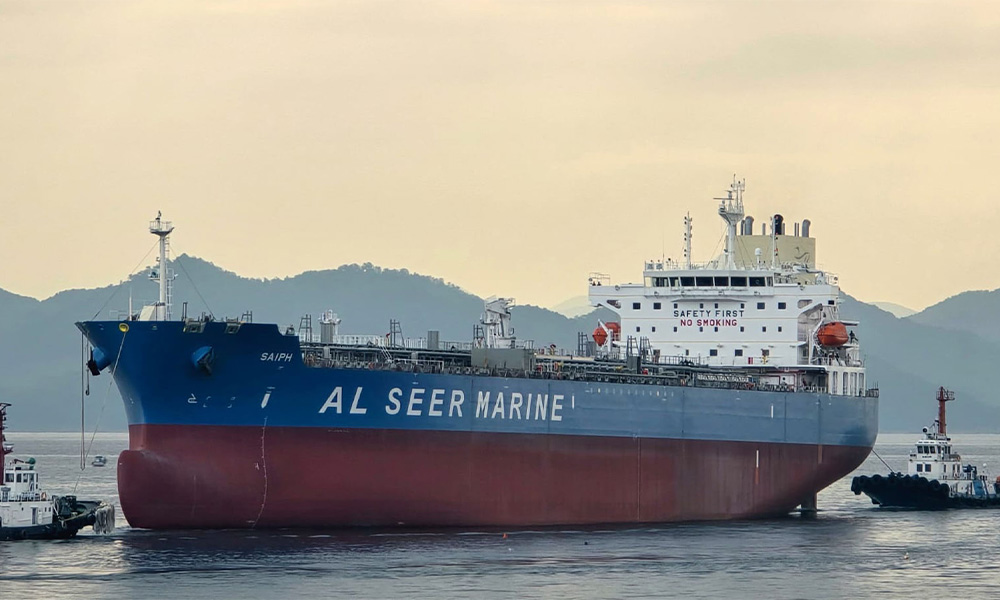
Abu Dhabi-based shipping firm Al Seer Marine, a subsidiary of International Holding Company, on 20 December said it has taken delivery of M.T. Saiph and her sister ship from K Shipbuilding Korea.

The MR tankers are the second pair in a series of six newbuildings. Each vessel is equipped with an Exhaust Gas Cleaning System (EGCS) and engineered to accommodate alternative bunker fuels such as Liquefied Natural Gas (LNG), ammonia, and methanol.

With a deadweight of 49,757 MT each, the two vessels are IMO II/III oil and chemical tankers carefully engineered to carry six fully segregated grades of cargo for optimal global operations.

Both tankers have secured 5-year time charters with Reliance Industries (Middle East) DMCC, valued at USD 42 million per vessel, joining their sister ships Betelgeuse and Bellatrix in the charter arrangement.

The delivery is financed by BOCOM Financial Leasing Co., Ltd. (BOCOM Leasing), a subsidiary of Bank of Communications, securing a total of USD 80 million (USD 40 million per vessel).

“At Al Seer Marine, we continue to invest strategically in product and chemical tankers, which represents one of the most promising sectors in the maritime industry,” stated Guy Neivens, CEO at Al Seer Marine.

“The expansion of our partnership with BOCOM Leasing, our first international financing partner, validates our growth trajectory and market potential.

“This aligns with our vision to become a global leader in meeting the surging demand for refined petroleum products and chemicals trade, a position increasingly recognised by financial markets and key investors.”


Photo credit: Al Seer Marine
Published: 30 December 2024

Continue Reading

LNG Bunkering

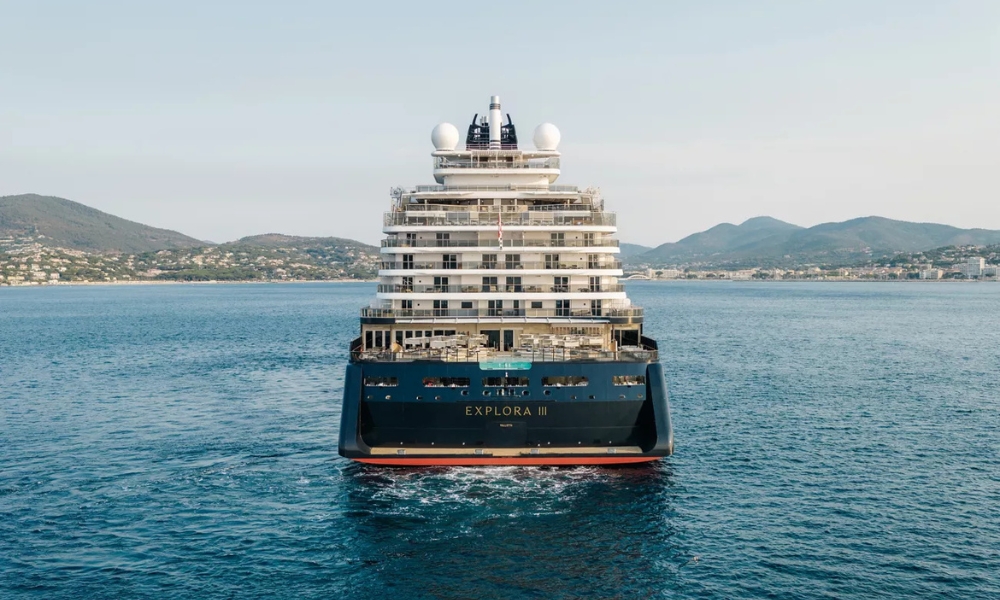
Explora Journeys names first LNG-powered ship “EXPLORA III” in Barcelona

As the first LNG-powered ship in the Explora Journeys fleet, the ship also offers a pathway towards renewable alternatives such as bio-LNG and synthetic LNG as these become increasingly available.
Admin

Published

on

By

Explora Journeys names first LNG-powered ship “EXPLORA III” in Barcelona

Explora Journeys recently officially named EXPLORA III in Barcelona, welcoming the brand’s first liquefied natural gas (LNG)-powered ship to the fleet. 

Following her early delivery in Genoa on 23 July 2026, EXPLORA III embarked on a journey through the Mediterranean before arriving in Barcelona for the official naming ceremony. 

“As the first LNG-powered vessel in the Explora Journeys fleet, EXPLORA III represents the next step in the brand’s investment in advanced marine technologies,” the company said on its website. 

Designed to operate on LNG today, the ship also offers a pathway towards renewable alternatives such as bio-LNG and synthetic LNG as these become increasingly available. 

The vessel is equipped with shore power capability, enabling connection to onshore electricity in ports where infrastructure exists, allowing engines to be switched off while alongside.

EXPLORA III departed on 3 August on its seven-night Maiden Journey to Lisbon.


Photo credit: Explora Journeys
Published: 5 August, 2026

Continue Reading

Methanol

CMA CGM names new 15,000 TEU methanol-powered vessel “ROI ARTHUR”

Joining the company’s REX2 service, the ship will strengthen its fleet of new-generation vessels designed to support the decarbonisation of shipping.
Admin

Published

on

By

8 1

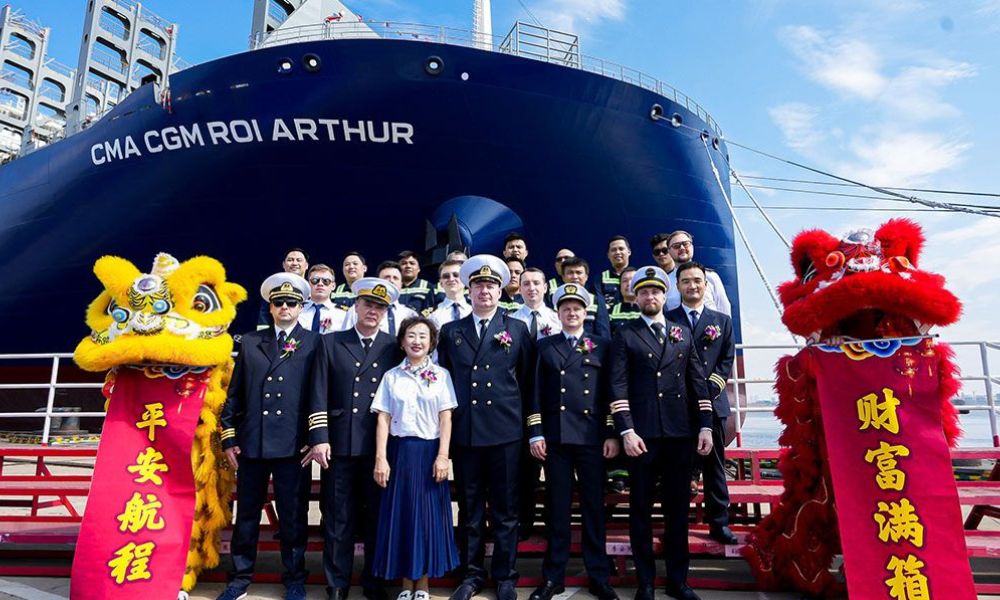
French shipping giant CMA CGM on Monday (3 August) said its new 15,000 TEU methanol-powered vessel, CMA CGM ROI ARTHUR, has officially been named and is ready to begin its journey at sea.

Joining the company’s REX2 service, the ship will strengthen its fleet of new-generation vessels designed to support the decarbonisation of shipping. 

“Powered by methanol, she contributes to reducing atmospheric emissions and advancing the energy transition of our industry,” the company said in a social media post. 

The vessel was welcomed by her Master, Captain Roman DIDENKO, and her godmother, Ms. Sun Lijun, Vice Chairman of Tianjin Bridge Welding Materials Group Co., Ltd. and Vice President of the Tianjin Women Entrepreneurs Association.

In January, the company announced the arrival in its fleet of its 400th owned vessel, the CMA CGM MONTE CRISTO, the first in a series of six methanol container ships.

The Group is preparing to operate, by 2031, around 200 dual-fuel LNG and methanol container ships that can be powered with low-carbon energy.

Related: CMA CGM marks 400-vessel milestone as methanol-powered boxship joins fleet


Photo credit: CMA CGM
Published: 4 August, 2026

Continue Reading

Methanol

China’s first domestically developed Ultramax methanol dual-fuel bulker pair named

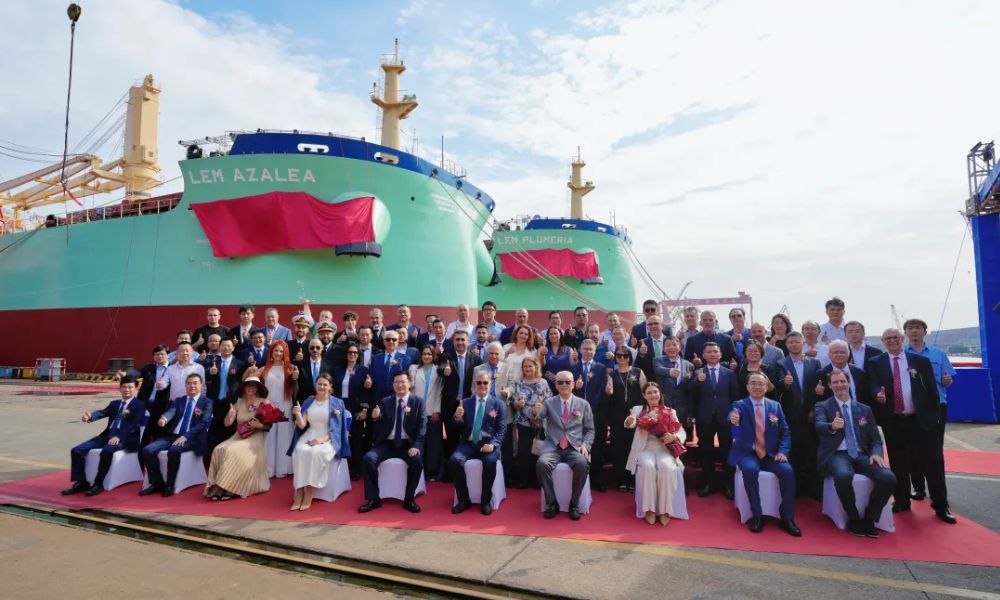
SDARI says two 65,000 dwt methanol dual-fuel bulk carriers, “LEM AZALEA” and “LEM PLUMERIA”, were named on 27 July at Guangzhou’s Nansha district.
Admin

Published

on

By

China's first domestically developed Ultramax methanol dual-fuel bulker pair named

Shanghai Merchant Ship Design and Research Institute (SDARI) on Wednesday (29 July) said two 65,000 dwt methanol dual-fuel bulk carriers, LEM AZALEA and LEM PLUMERIA, were named on 27 July at Guangzhou’s Nansha district.

The vessels were designed by the SDARI, part of China State Shipbuilding Corporation (CSSC), for Cyprus-based Lemissoler Navigation and built by CSSC Huangpu Wenchong Shipbuilding.

According to SDARI, the vessels are the institute’s first methanol dual-fuel bulk carrier design and China’s first domestically developed Ultramax methanol dual-fuel bulk carriers.

The bulk carriers are equipped with a methanol dual-fuel propulsion system comprising a conventional fuel tank and two dedicated high-capacity methanol fuel tanks, allowing operators to switch flexibly between fuels while meeting current and anticipated IMO requirements on carbon reduction and sulphur emissions.

The vessels are also fitted with an auxiliary lithium battery system to supply onboard lighting power, reducing overall energy consumption.

Compared with conventionally fuelled bulk carriers, the methanol dual-fuel design is expected to significantly reduce carbon dioxide, sulphur oxide, nitrogen oxide and particulate matter emissions.

SDARI said the project fills a gap in China’s domestically developed methanol dual-fuel bulk carrier segment in the 65,000 dwt class and provides a mature and scalable design that can be replicated for future vessels.


Photo credit: CSSC Huangpu Wenchong Shipbuilding
Published: 3 August, 2026

Continue Reading

Trending