
Methanol
VPS examines methanol as a marine fuel for decarbonisation
Steve Bee of VPS explores methanol’s potential as a bunker fuel, the challenges ahead, industry standards to support its usage and VPS’s role in supporting this transition.

Steve Bee, Commercial Director of marine fuels testing company VPS, on Tuesday (3 December) explored methanol’s potential as a marine fuel, the challenges ahead, industry standards to support its usage and VPS’s role in supporting this transition:
Introduction
It’s very apparent, global shipping’s drive to decarbonise is well underway. The ship-building profile is changing dramatically, highlighted by the 2023 order book showing 539 new builds capable of running on low-to-zero carbon fuels, being ordered. This equates to 45% of all orders in terms of gross tonnage. LNG dual-fuel vessels are currently the most popular vessels of choice, but Methanol-capable vessels have gained traction. Looking at Jan-Sept 2024, 49% of the gross tonnage on order was for vessels configured to be alternative fuels ready, with this specific order book growing by 24% year on year. It’s obvious that shipping is keeping its options very much open and looking for as much flexibility as possible, when it comes to the fuel choices for its ships.
The industry currently bunkers 230 Million mt of fuel per year. Burning this fuel equates to emissions of 716M mt of CO2-equivalent, as the majority of the fuel burnt continues to be traditional fossil fuels. However, the list of environmental legislation and directives to reduce emissions from shipping is ever-increasing in order to reduce SOx, NOx, Particulate Matter, CO2, Methane and other Green House Gases. It is this regulatory demand which is driving the developments of numerous alternative low-to-zero carbon fuels for marine use.
VPS has been and continues to be, at the forefront of fuels research & development and continues to pioneer and develop test methods for such fuels.
Methanol bunkers and bunkering facilities are growing with 13 ports now offering methanol. But this methanol is predominantly grey, and Tank-to-Wake emissions from grey methanol are similar to conventional fossil fuels. The maritime sector must look to use the sustainable “green” methanol options of e-methanol, bio-methanol, or blue methanol:
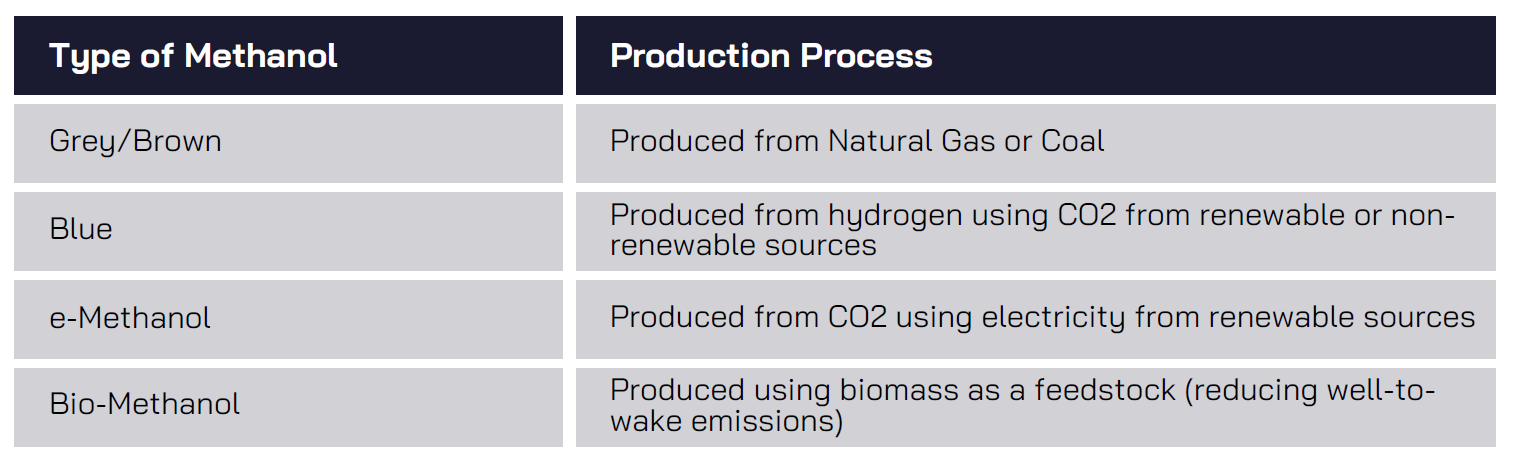
IRENA forecast e-methanol will reach a production level of 250M mt and bio-methanol will reach 135M mt by 2050.
Currently we see 39 methanol-powered ships on our sees, but a further 262 are on order.
As with all fuels, there are numerous pro’s and con’s to using methanol as a marine fuel:
Methanol fuel handling and management is certainly easier than that for LNG, with retrofit costs being less expensive and easier. Plus, green methanol sources offer almost near-zero GHG emissions.
In terms of ECA compliance Methanol conforms to SOx, NOx and PM content. It is biodegradable, miscible with water and a liquid at atmospheric pressure, all of which are positive factors in terms of fuel management and handling.
As demand grows, methanol should become more cost competitive, with increasing number of ports providing methanol.
However, methanol has half the energy of maritime’s current fossil fuels and a Flash Point of only 12ºC. Current availability of green methanol, is still an issue, yet this year industry news has highlighted that some green methanol projects have been cancelled, eg one in Antwerp (Orsted) and Flagship-One in Sweden.
Over the past 2 years, VPS have made significant investments in CAPEX for new laboratory equipment, plus the training of laboratory staff, technical advisors and bunker quantity surveyors, in order to survey, sample and test methanol bunkers.
The summer of 2023 saw VPS act the partner of choice to Maersk and undertook work during the maiden voyage of the Laura Maersk. We surveyed, sampled and tested, the methanol loadings in Singapore, Port Said and Rotterdam. As part of the requirements, changes to bunkering practices and procedures included heightened H&S processes, increased levels of tank cleaning, the use of closed-sampling devices and the use of biofuel as the pilot fuel, which also required testing. Testing was under the International Methanol Producers and Consumers Association (IMPCA) specification, with the results all on specification from all three loadings.
Since then, VPS has also worked with OCI covering similar work on the ECO Maestro.
In October 2024, it was announced at SIBCON-24, that Singapore will release a new technical reference standard for Methanol before year end, which covers fuel transfer, quality and quantity measurements as well operational and safety instructions as well as crew training. VPS has been closely involved in the development of this new Methanol Standard by being part of the Working Group.
This same group will also release a similar standard for Ammonia in 2025.
The announcement from Singapore was followed by a further notification from the International Standards Organisation (ISO) in November 2024. The ISO announcement highlighted the release of the publication of the first edition of their international standard for methanol as marine fuel, ISO 6583:2024. This standard sets the requirements and limits for three methanol grades for marine: MMA, MMB and MMC. It uses the IMPCA specifications as a starting point, with some properties less critical for marine and other fuel related aspects not covered. Grade MMC allows for wider tolerances in certain characteristics compared to MMB, while MMA includes additional requirements for lubricity and cleanliness. The new Singapore Methanol Standard will make reference to the ISO 6583 for quality requirements under its custody transfer section.
Summary
As decarbonisation and legislation drives the development of low-to-zero carbon fuels, demand for methanol will grow as it provides an excellent way to achieve immediate reductions of emissions compared to fossil fuels.
VPS are experienced in providing methanol surveying, sampling and testing work and capable of offering key technical support to our customers.
All of this is evidence that the global shipping industry is well on its way and intent on delivering upon its decarbonisation goals, but with many challenges still to overcome.
Related: SIBCON 2024: Singapore launches two new bunkering standards, revises third benchmark
Related: ISO publishes international standard for methanol as a marine fuel
Photo credit: VPS
Published: 4 December, 2024
Alternative Fuels
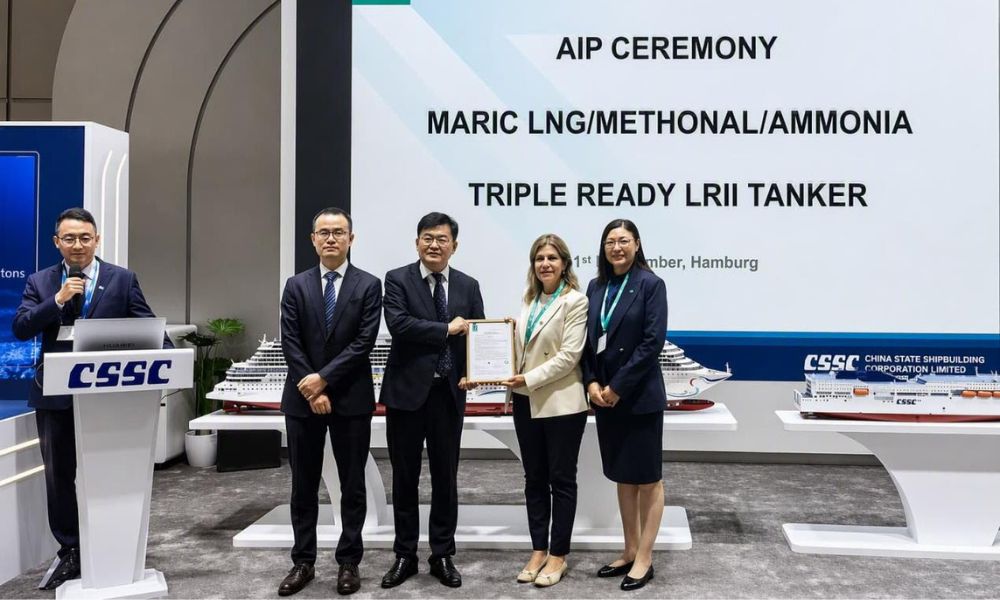
LR, China’s MARIC unveil tanker concept ready for three future bunker fuels
Both secured AiP for a new 114,000 DWT product and crude oil tanker designed to accommodate future conversion to LNG, methanol or ammonia.
Alternative Fuels
DNV: Alternative-fuelled vessel orders hit highest monthly level since October 2024
LNG-fuelled vessels accounted for the vast majority of August activity while the strong summer performance marked a significant acceleration in ordering activity after a relatively slow start to the year.
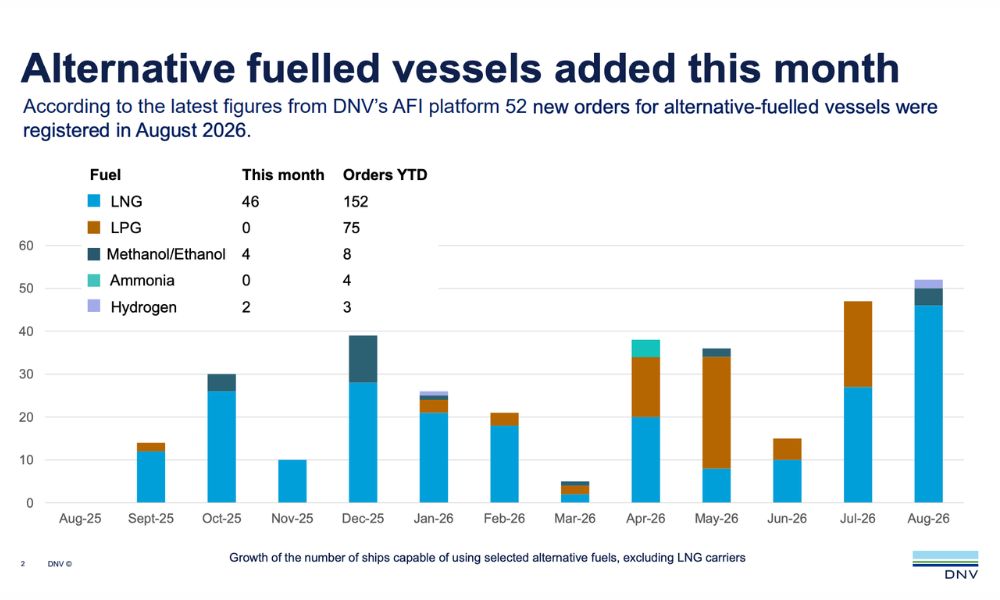
Latest data from classification society DNV’s Alternative Fuels Insight (AFI) platform alternative-fuelled vessel ordering was strong in August, with 52 new vessels added to the platform.
This is the highest monthly total since October 2024 and follows another active month in July, when 47 vessels were added to the database.
LNG-fuelled vessels accounted for the vast majority of August activity, with 46 orders recorded. The container segment led the way with 30 orders, while the car carrier segment contributed a further 12 LNG-fuelled vessels. In addition, four ethanol-fuelled bulk carriers and two hydrogen-powered bulk carriers were added during the month, as well as one LNG bunker vessel.
The strong summer performance marked a significant acceleration in ordering activity after a relatively slow start to the year. In total, 242 alternative-fuelled vessel orders have been placed in the first eight months of 2026, representing a 27% increase compared with the same period in 2025.
LNG remains the dominant fuel choice, accounting for 63% of all alternative-fuelled vessel orders registered so far this year. Container vessels represent the largest share of these LNG orders (59%), followed by car carriers (30%).
Jason Stefanatos, Global Decarbonization Director at DNV Maritime, said: “The past two months have been particularly strong for alternative-fuelled vessel ordering, with August recording the highest monthly total we’ve seen since October 2024. This has helped lift year-to-date orders to a level well above the same period last year.
“LNG remains the leading fuel choice, driven largely by activity in the container and car carrier segments. These sectors have been among the earliest adopters of alternative fuels, supported by predictable liner operations and increasing demand from cargo owners to reduce emissions across supply chains.
“For many owners, LNG offers a combination of emissions reductions, fuel availability and future flexibility while the longer-term fuel landscape continues to evolve.
“At the same time, the latest figures include orders for ethanol- and hydrogen-fuelled vessels, highlighting that owners continue to explore a range of decarbonization pathways. Different segments are making different fuel choices, but the overall level of activity demonstrates continued investment in lower-emission shipping.”
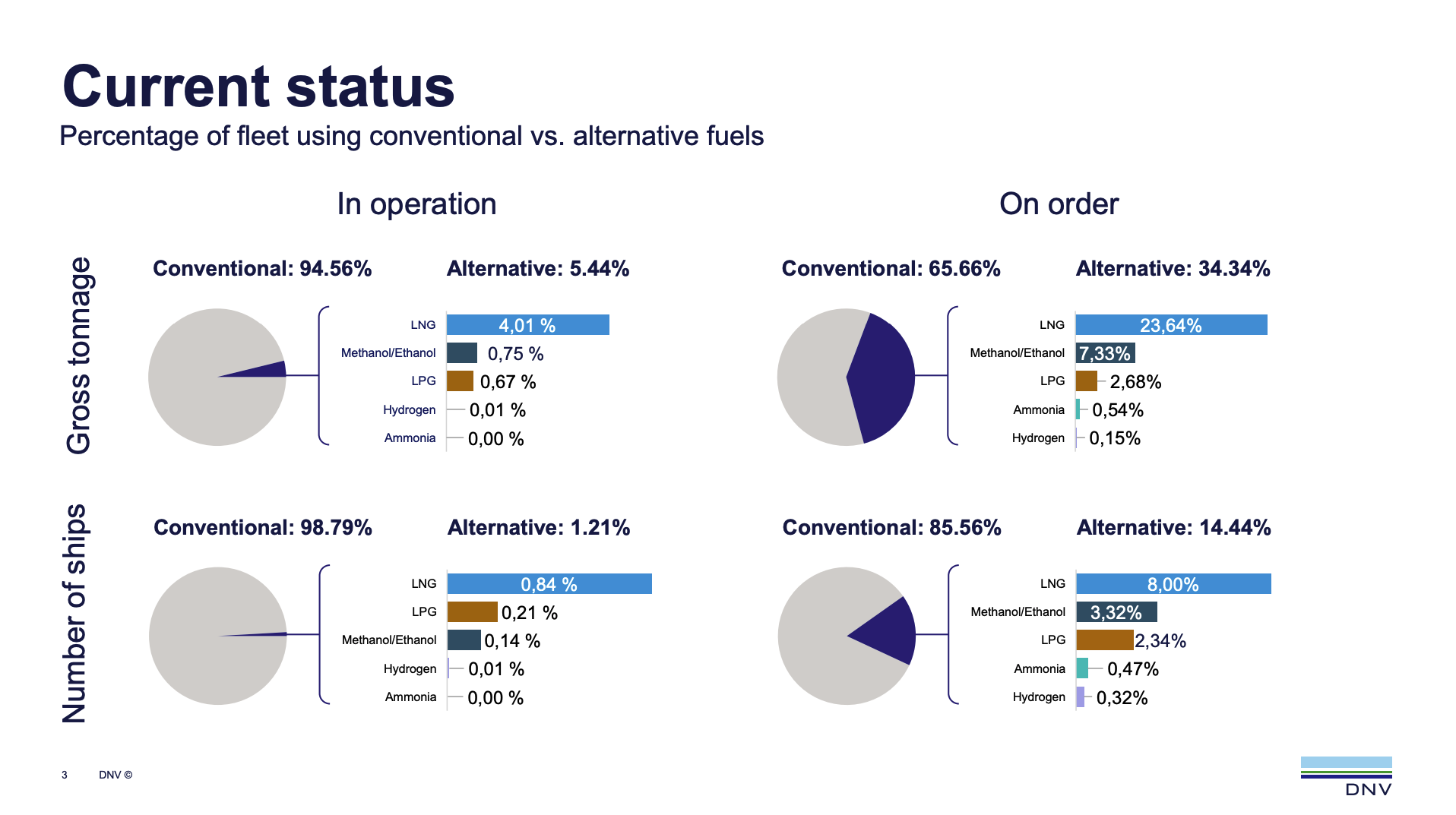
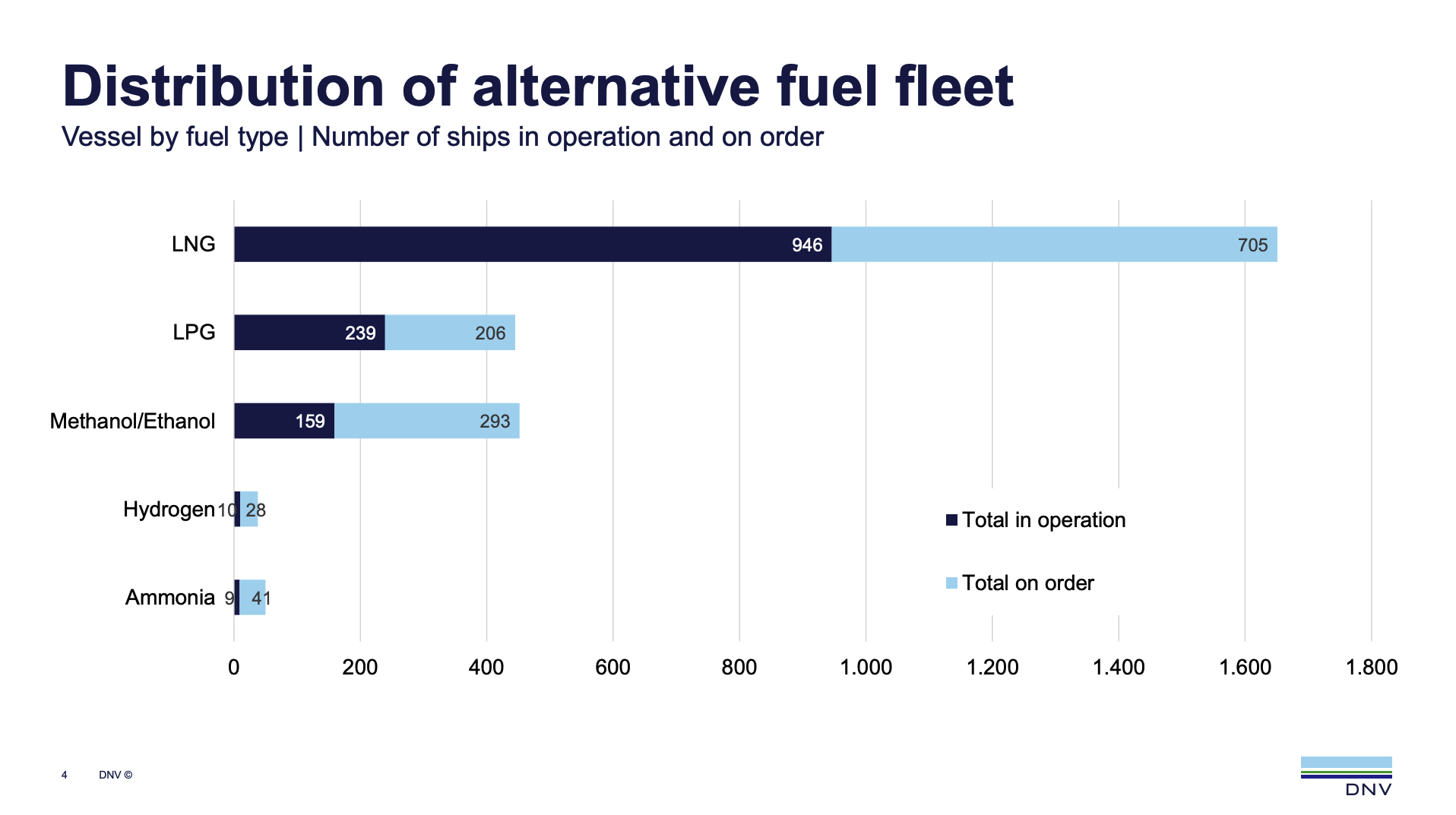
Photo credit: DNV
Published: 4 September, 2026
Methanol
GENA Solutions: Total renewable and low-carbon methanol project pipeline increases from 61.8 to 62.2 Mt by 2032
Information shared by MI – the Global Methanol Alliance meant to assist the maritime industry in the adoption of methanol as a mainstream marine fuel heading into IMO 2030/2050.
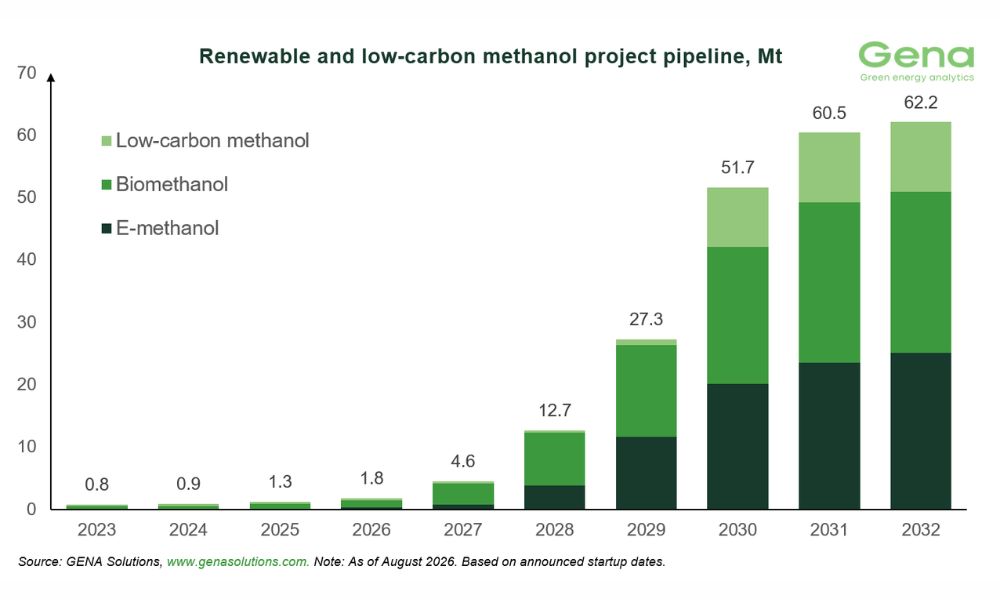
MI – the Global Methanol Alliance recently shared with Manifold Times the renewable and low-carbon methanol project pipeline August 2026 release produced by GENA Solutions Oy.
Information from the release is meant to provide the bunkering publication’s readers with insight on renewable methanol availability, and to assist the maritime industry in the adoption of methanol as a mainstream marine fuel heading into IMO 2030/2050.
Key takeaways from GENA’s August 2026 Methanol release are as follows:
- As of the end of August 2026, GENA tracks 286 renewable and low carbon methanol projects, representing 62.2 Mt of capacity by 2032. This includes 25.1 Mt of e-methanol, 25.9 Mt of biomethanol, and 11.2 Mt of low carbon methanol capacity.
- Two new projects were added to Project Navigator last month, while one frozen project was excluded. The project pipeline increased by 0.4 Mt month on month.
- Four new offtake agreements were registered during August, including two biomethanol and two e-methanol agreements.
- About 8% of the cumulative renewable methanol project pipeline capacity has reached FID so far, with another 11% at the FEED stage.
- Considering the current uncertainty around regulatory developments and demand growth, GENA projects that renewable methanol capacity could reach 6 Mt to 12 Mt by 2031.
Note: The full article can be viewed here.
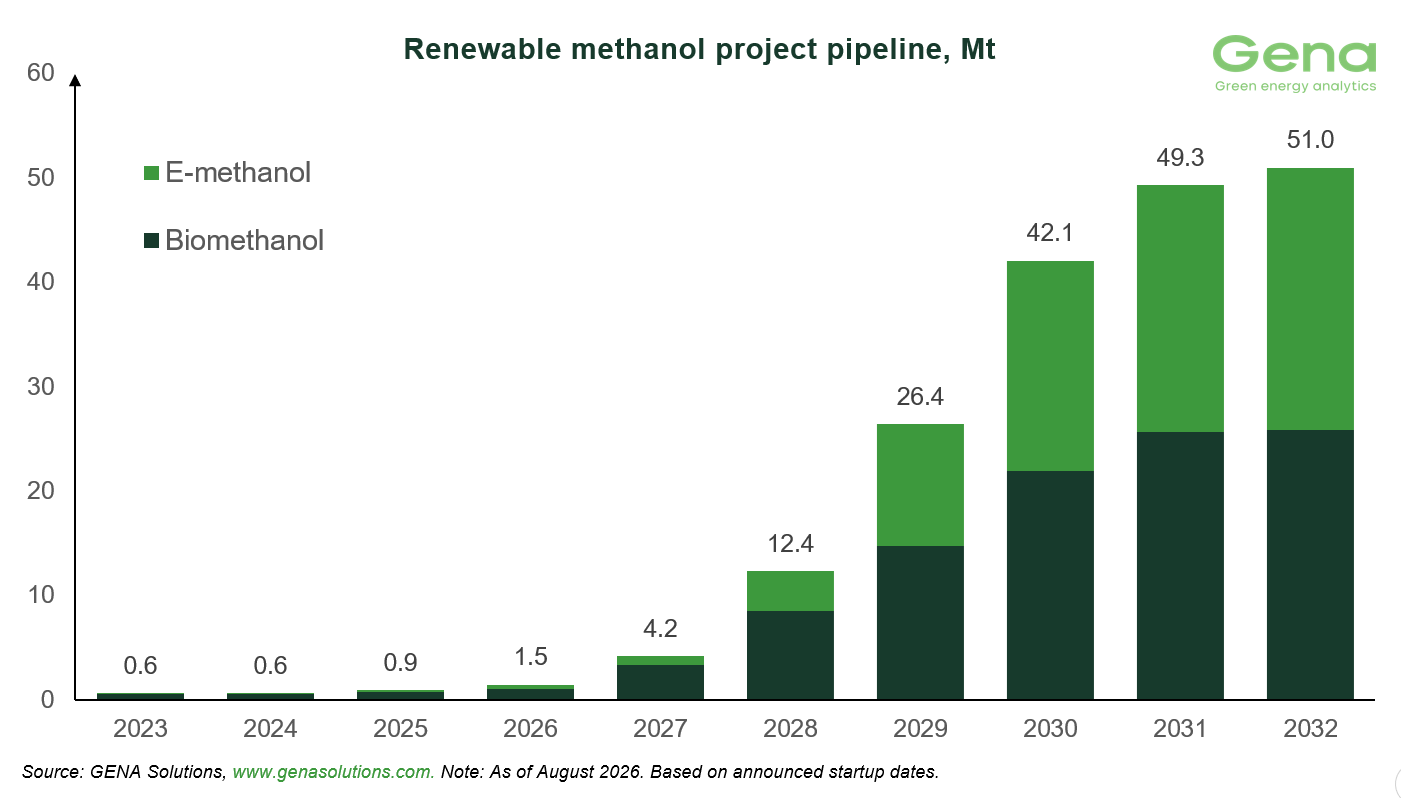
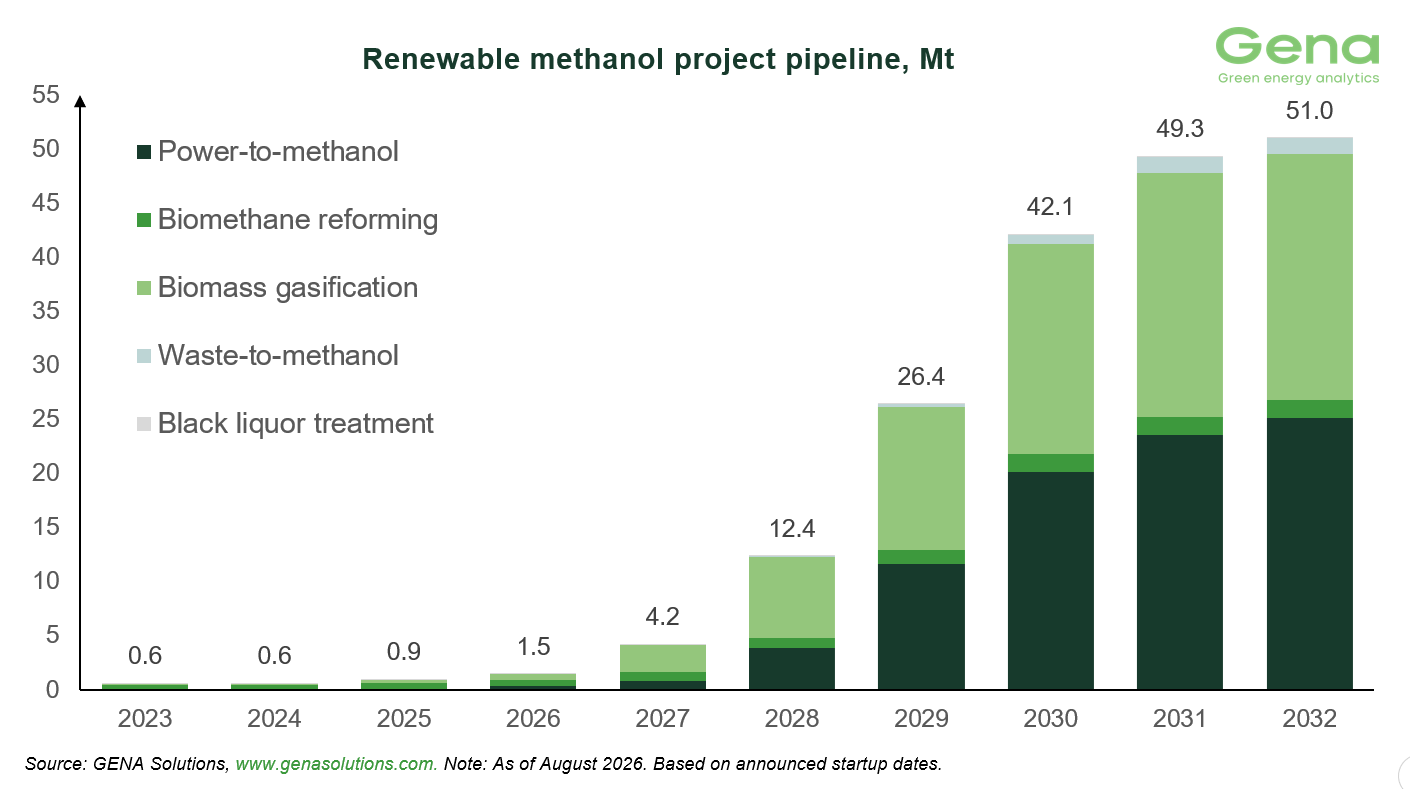
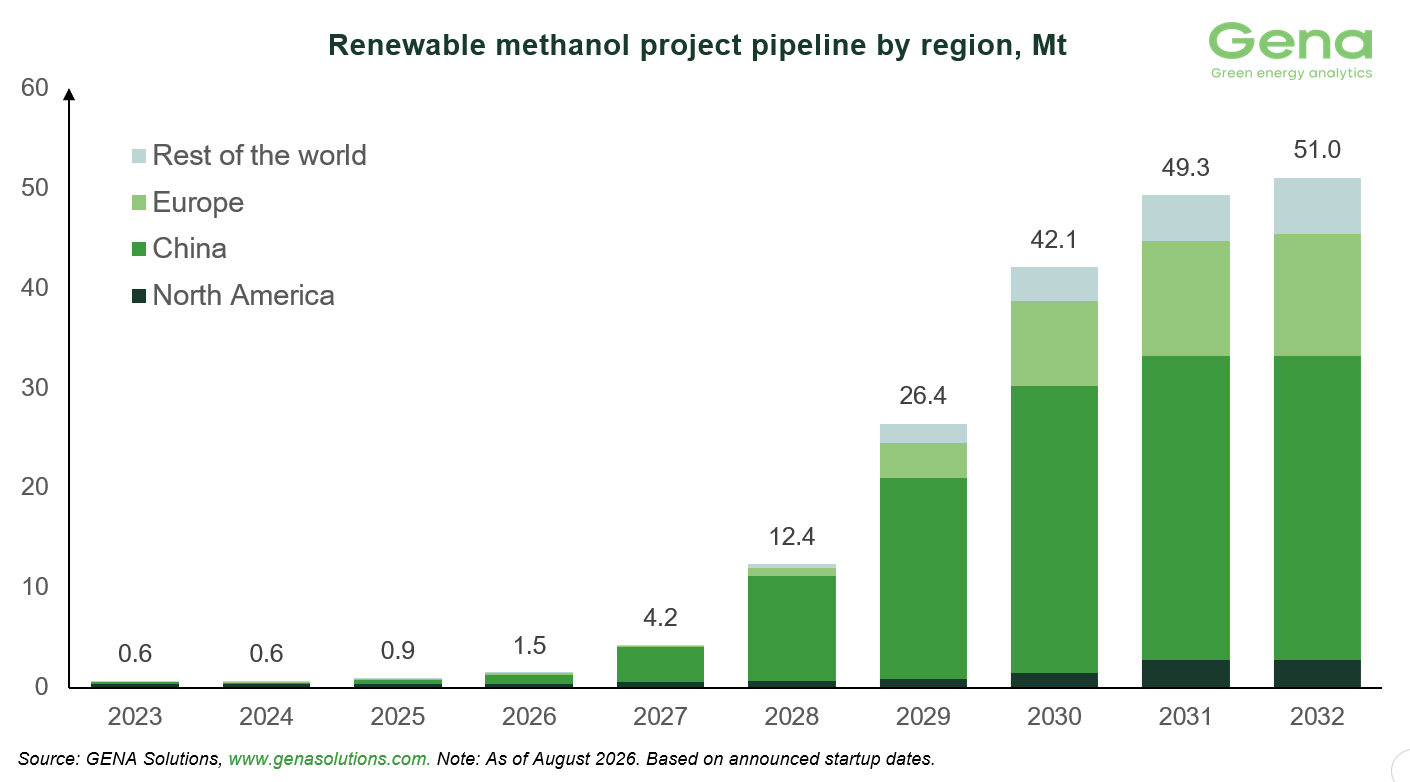
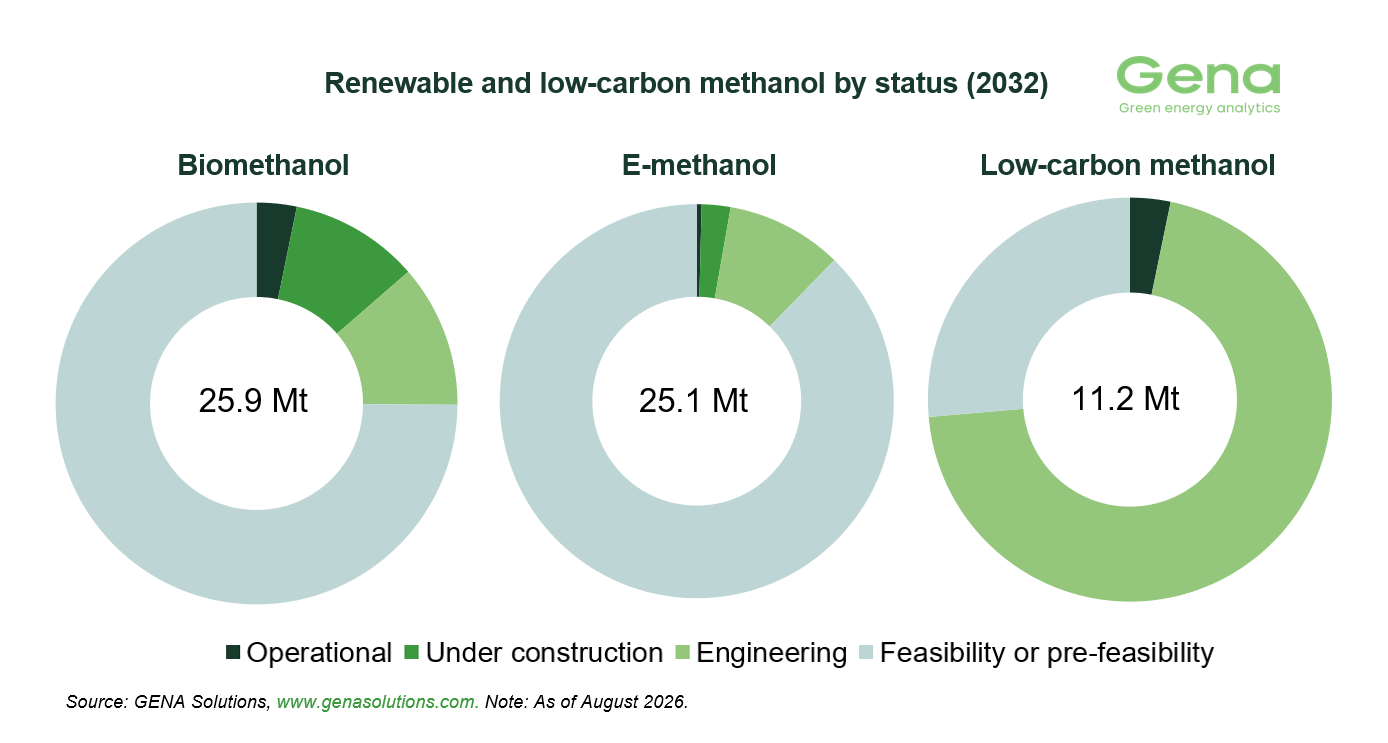
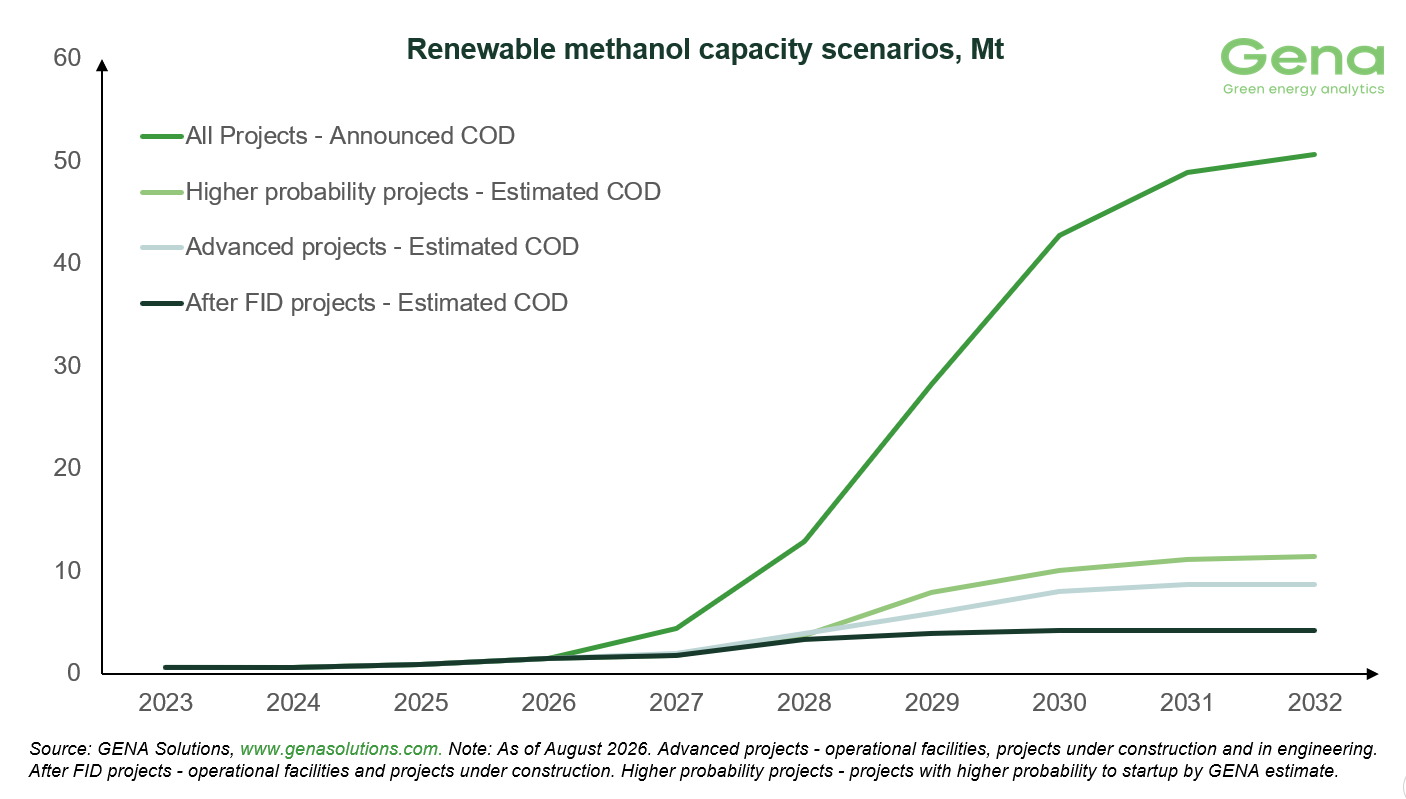
Photo credit: GENA Solutions
Published: 4 September, 2026

OUR INDUSTRY PARTNERS

Yang Ming orders six LNG dual-fuel, ammonia-ready containerships from Hanwha Ocean

LR, China’s MARIC unveil tanker concept ready for three future bunker fuels

DNV: Alternative-fuelled vessel orders hit highest monthly level since October 2024

TFG Marine advances global MFM rollout with two US Gulf bunker barges

GENA Solutions: Total renewable and low-carbon methanol project pipeline increases from 61.8 to 62.2 Mt by 2032

Baltic Exchange: Bunker Report (3 September 2026)

ENGINE: Americas Fuel Availability Outlook (3 September 2026)

Singapore-flagged tugboat “Kim Heng 3203” placed under Sheriff’s arrest

US targets five bunker companies in latest sanctions campaign against Iran

Singapore bunkering community supports Living Hope Evangelism’s 7th anniversary outreach for residents in need

China’s bunker market reshaped by tax rebates, trade flows and refining changes, says economist

Hengli Petrochemical’s ex-Singapore trading arm faces winding up application

Rajah & Tann: Bunker disputes are won in the first 48 hours

Report: GCMD outlines practical approach to quantity assurance in marine biofuel supply chains
-
 Vessel Arrest2 weeks ago
Singapore-flagged tugboat “Kim Heng 3203” placed under Sheriff’s arrest
-
 Sanctions2 weeks ago
US targets five bunker companies in latest sanctions campaign against Iran
-
 Events2 weeks ago
Singapore bunkering community supports Living Hope Evangelism’s 7th anniversary outreach for residents in need
-
 Interview1 week ago
China’s bunker market reshaped by tax rebates, trade flows and refining changes, says economist
-
 Winding up2 weeks ago
Hengli Petrochemical’s ex-Singapore trading arm faces winding up application
-
 Bunker Claim5 days ago
Rajah & Tann: Bunker disputes are won in the first 48 hours
-
 Biofuel2 weeks ago
Report: GCMD outlines practical approach to quantity assurance in marine biofuel supply chains
-

 Winding up1 week ago
Singapore: Notices of annual meeting issued for Vroon Shipping Asia and related firms