Connect with us

Alternative Fuels

China: CSSC research unit receives BV approvals for LNG fuel supply control system

GAS·MAC® LNG fuel supply control system obtained product Type Approval certificate and Prototype Approval Certificate from classification society Bureau Veritas recently.


Admin

Published

on

MT pix 25 july 2022 19

China State Shipbuilding Corporation on Thursday (19 December) said the GAS·MAC® LNG fuel supply control system (MAC is the abbreviation of MARIC Automation Control) developed by the 708th Research Institute of CSSC successfully obtained the product Type Approval certificate and Prototype Approval Certificate by classification society Bureau Veritas (BV).  

This also marks the first type approval certificate for LNG fuel supply control system issued by BV in China.

The product has complete independent intellectual property rights, adopts a distributed control system (DCS), has the characteristics of stability, reliability, high safety, and high level of intelligence. It has reached the international leading level and is ready for actual ship application.

During the research and development and testing process, the 708th Research Institute adopted advanced multi-field and multi-disciplinary digital joint simulation technology to build a simulation test platform for the LNG fuel supply system and conducted control system interface through a virtual simulation.

Disclaimer: The above article published by Manifold Times was sourced from China’s domestic market through a local correspondent. While considerable efforts have been taken to verify its accuracy through a professional translator and processed from sources believed to be reliable, no warranty is made regarding the accuracy, completeness and reliability of any information.


Photo credit: 文 邵 from Pixabay
Published: 20 January, 2023

Continue Reading

Nuclear

Long Beach becomes first US port to partner with MARAD on nuclear-powered shipping

It became the first Port in the nation to sign a Memorandum of Cooperation with MARAD to advance work on development of SMR technology to power commercial vessels, ports and other maritime assets.
Admin

Published

on

By

Long Beach becomes first US port to partner with MARAD on nuclear shipping

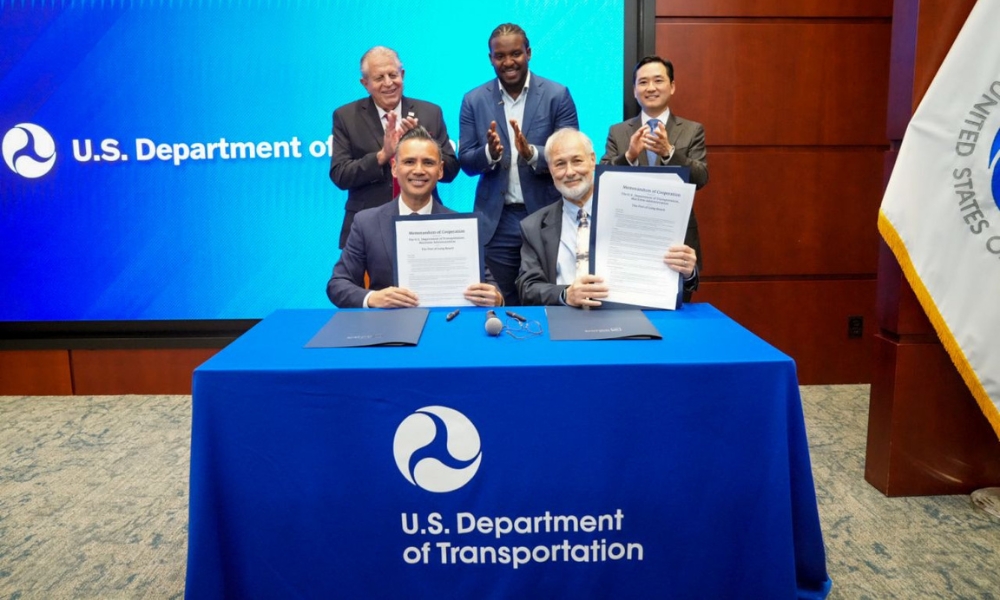
The Port of Long Beach on Wednesday (22 July) said it became the first Port in the nation to sign a Memorandum of Cooperation with the US Department of Transportation’s Maritime Administration (MARAD) to advance work on development of small modular reactor (SMR) technology to power commercial vessels, ports and other maritime assets.

The agreement represents a significant milestone, making Long Beach the first US seaport to formalise a partnership with MARAD to establish nuclear-powered vessels for commercial service.

“This first-of-its-kind partnership with MARAD allows us to leverage strong federal leadership and private sector innovation to catalyse SMR technology as we safely and securely support the next generation of shipping,” said Port of Long Beach CEO Dr. Noel Hacegaba. 

“We’re building the Port of the Future in Long Beach, where we’ve led in global trade by moving USD 300 billion in cargo annually to support 2.7 million American jobs, and we will continue our tradition of leadership as we partner to advance nuclear energy in maritime and beyond.”

“Under President Trump’s and Secretary Duffy’s leadership, MARAD is taking decisive action to revitalise US shipbuilding and secure our national energy dominance,” said Maritime Administrator Stephen M. Carmel.

“This milestone agreement with the Port of Long Beach brings cutting-edge Small Modular Reactor technology into active testing. It ensures our maritime supply chains stay operational under any contingency while training the next generation of high-skilled American mariners.”

The agreement builds on momentum from MARAD’s Request for Information on 7 May, issued in the Federal Register, seeking industry input on the development of a US-built, scalable and commercially viable SMR for the nation’s marine transportation system. 

It also complements the Port’s new lease agreement with BlueCore Energy Inc., which allows the company to assemble, test and store maritime power modules, adding private-sector expertise to this the partnership with an American energy and technology company on the forefront of SMR development.

Demand for reliable electricity sources is forecast to grow substantially as the Port pursues a goal to double container volume by 2050. Under the agreement, the Port and MARAD will collaborate with the U.S. Coast Guard, the Department of Energy and the Nuclear Regulatory Commission to help define the operational protocols, safety standards and inspection processes needed to support the safe arrival and servicing of SMR-powered vessels at US ports, as well as to develop and share other best practices. 


Photo credit: Port of Long Beach
Published: 24 July, 2026

Continue Reading

Newbuilding

CMA CGM names second 24,000 TEU LNG dual-fuel ULCS

Group’s latest ship, “CMA CGM PANTHEON”, the sister ship to “CMA CGM NOTRE DAME”, has joined the company’s fleet under the French flag.
Admin

Published

on

By

CMA CGM names second 24,000 TEU LNG dual-fuel ULCS

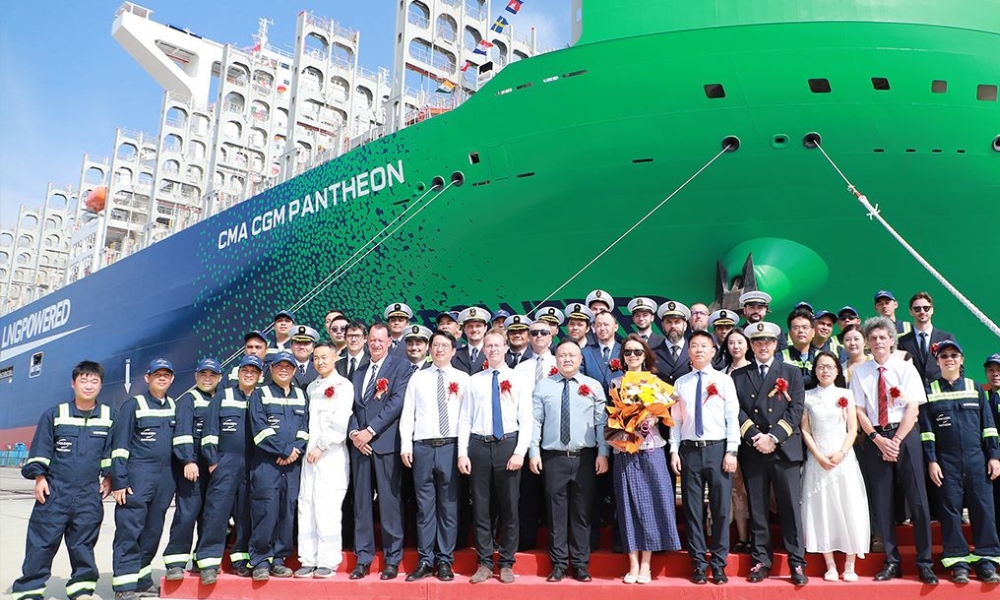
French shipping giant CMA CGM on Wednesday (22 July) said it has recently named the second ship in a series of 24,000 TEU liquefied natural gas (LNG) dual-fuel ultra-large container ships (ULCS).

The Group’s latest ship, CMA CGM PANTHEON, the sister ship to CMA CGM NOTRE DAME, has joined the company’s fleet under the French flag. 

During the ceremony, the vessel was welcomed by her Master, Captain Benoit LE DREAU, and her godmother, Ms. Xiao Wang, Director of Programming & Screening at the Shanghai International Film Festival, following maritime tradition.

“Soon to operate on the FAL1 service connecting Asia with Europe, CMA CGM PANTHEON embodies our commitment to supporting global trade while accelerating the energy transition in shipping,” the company said in a social media post. 

Related: BV classes CMA CGM’s first LNG dual-fuel ULCS in newbuild series


Photo credit: CMA CGM
Published: 24 July, 2026

Continue Reading

Methanol

VARD to build methanol-ready maintenance vessels for Trinity House

Future-proofed for the maritime energy transition, the vessels are designed with the capability for conversion to methanol fuel, an optimised hull design and highly efficient propulsion equipment.
Admin

Published

on

By

VARD to build methanol-ready maintenance vessels for Trinity House

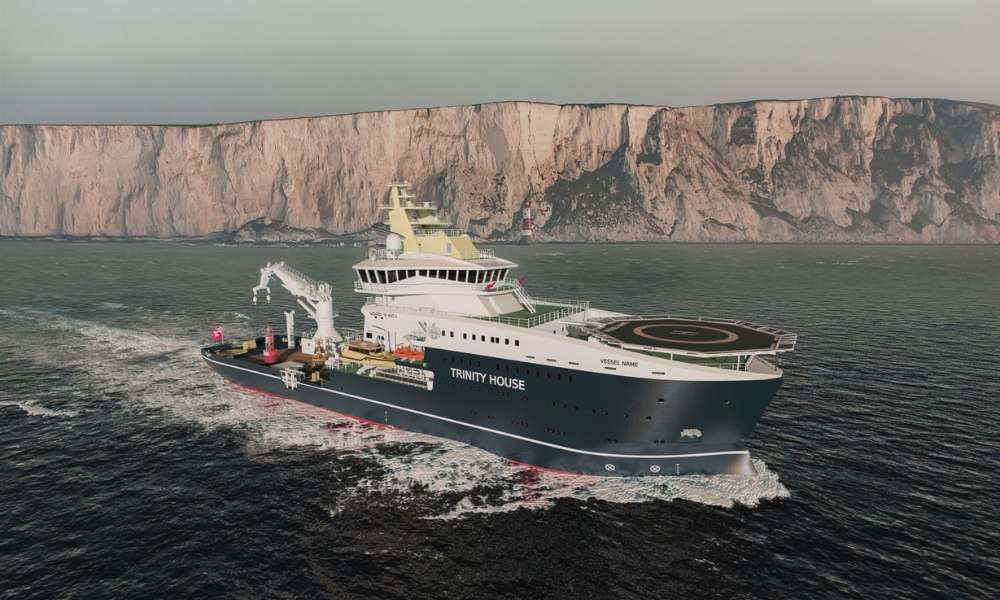
VARD, a subsidiary of the Fincantieri Group and shipbuilder of specialised vessels, on Wednesday (22 July) announced that it has been awarded a contract with the British maritime safety and welfare organisation Trinity House for two multi-function Buoy and Lighthouse maintenance vessels. 

Future-proofed for the maritime energy transition, the vessels are designed with the capability for conversion to methanol fuel, an optimised hull design and highly efficient propulsion equipment. 

The vessels for Trinity House feature a hybrid propulsion system and can operate fully on battery power while alongside, at anchor and for limited duration during dynamic positioning and transit. The battery system also provides peak shaving and spinning reserve support to the main generators, minimising fuel consumption, emissions and environmental impact.

These are the first two vessels VARD has signed of its kind. The value of the contract exceeds EUR 220 million.

The two multi-function Buoy and Lighthouse maintenance vessels are of VARD 9 601 design, designed by Vard Marine Inc in Canada in collaboration with Vard Design in Norway. 

VARD was awarded the contract following a public tender. The two new vessels will replace the ageing THV Patricia and THV Galatea and are part of Trinity House’s plans to renew their fleet of three vessels.

Trinity House is a maritime safety and welfare organisation that works for the benefit and safety of all mariners as a General Lighthouse Authority and maritime charity. As the General Lighthouse Authority for England, Wales, the Channel Islands and Gibraltar, it operates marine aids to navigation that are critical to the safety of ships and seafarers.


Photo credit: VARD
Published: 24 July, 2026

Continue Reading

Trending