Connect with us

LNG Bunkering

Eagle LNG bunker station enters full operations

Starts weekly LNG bunker deliveries to Crowley’s LNG powered ConRo ships El Coquí and Taino for routes.

Admin

Published

on

5c38259fa96e3 1547183519

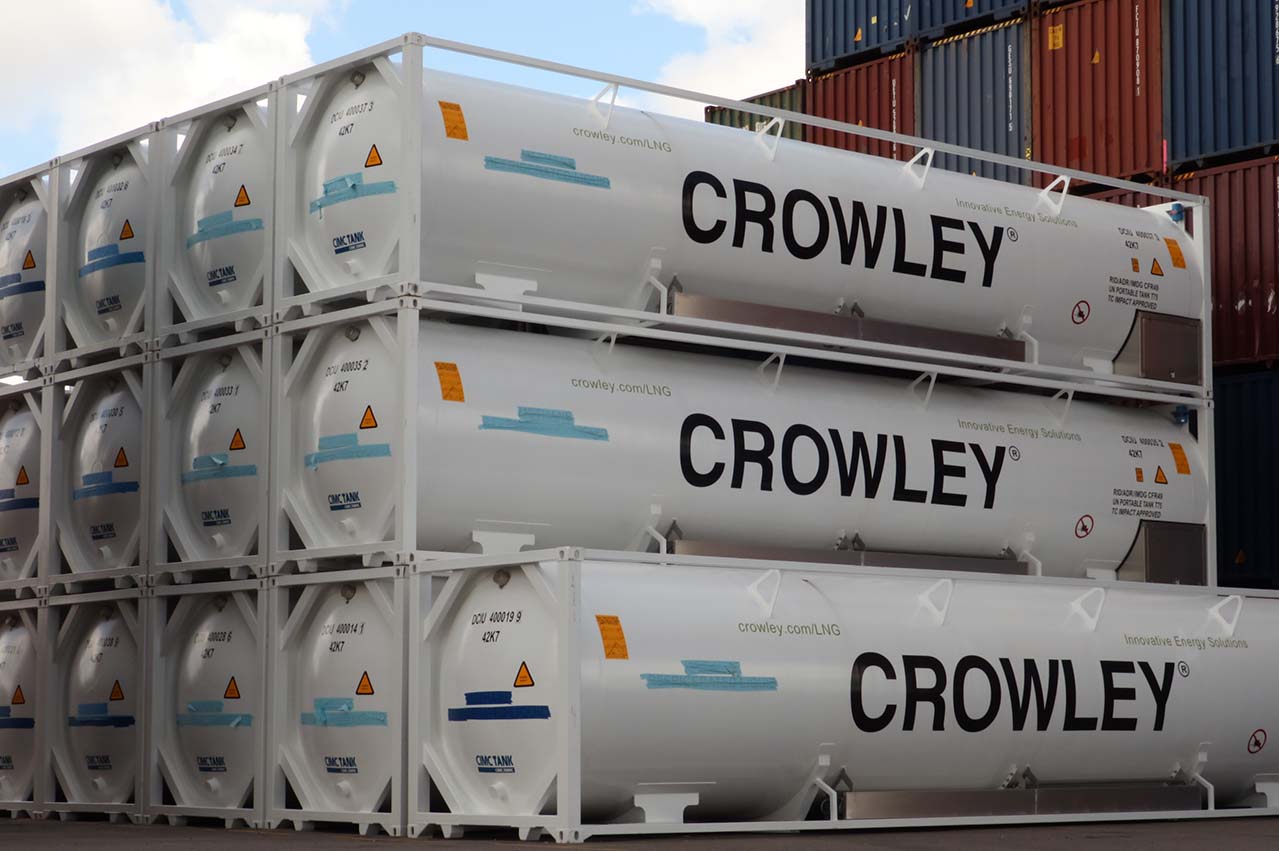
The Eagle LNG Talleyrand LNG Bunker Station that supplies liquefied natural gas (LNG) marine fuel to Crowley’s LNG powered ConRo ships, El Coquí and Taino, for the U.S. mainland to Puerto Rico container and vehicle trade and shipping route has now entered full routine operations.

“Today marks another key accomplishment for our company with our Talleyrand terminal providing LNG bunkering to refuel Crowley’s newest ConRo, LNG-powered ship, Taino. The Taino joins Crowley’s other LNG powered ship, El Coquí, in weekly scheduled LNG fuelling,” said Sean Lalani, President of Eagle LNG.

“The Talleyrand marine bunkering terminal in JAXPORT is capable of providing LNG fuel for the maritime industry while its small two-acre design can be easily replicated in other coastal ports.

“We are proud of our partnerships with Crowley, the Jacksonville community and JAXPORT without whom this cutting-edge bunkering technology could not have come to fruition.”

Eagle LNG’s Talleyrand LNG Bunker Station is built with 500,000 LNG-gallons of storage capacity and with a design capacity flow rate of 2,700 gallons per minute, sufficient to fuel each of Crowley’s vessels in less than eight hours.

The LNG bunkering station is routinely filled via truck from Eagle LNG’s Maxville LNG Facility, which liquefies natural gas, located in West Jacksonville. The Maxville LNG Facility has another 1 million LNG-gallons of storage capacity, assuring security of supply for Crowley’s weekly bunkering events.

Eagle LNG transfers LNG to power Crowley’s ConRo ships through a Mobile Transfer Unit with ongoing simultaneous operations, including gantry crane operation and container movement forward, and RORO aft of accommodation. The permanent infrastructure ensures transfer of the highest quality, coldest liquid fuel, increasing ships’ range and time between ‘fill-ups.’

Eagle LNG is developing a larger, on-water liquefaction plant and terminal in Jacksonville, known as the Jacksonville Export Facility, capable of liquefying 1.65 million LNG-gallons per day with 12 million LNG-gallons of storage capacity for natural gas exports and additional marine bunkering demand.

Moving forward, Eagle LNG is expecting to offer the lowest cost LNG for bunkering in the southeast United States once the Jacksonville Export Facility is completed and combined with the Talleyrand LNG Bunker Station.

Related: Crowley Maritime takes delivery of second LNG-fuelled ConRo ship
RelatedCrowley Maritime christens LNG-fuelled RoCon El Coquí
RelatedCrowley receives LNG-powered ConRo vessel
RelatedST Engineering shares building experience of LNG-powered ConRo
RelatedEagle LNG bunkering terminal obtains U.S. FERC draft approval
RelatedJacksonville LNG bunkering terminal secures avails
RelatedCrowley celebrates first loading of LNG ISO tank

Photo credit: Eagle LNG
Published: 11 January, 2019


Continue Reading

LNG Bunkering

Singapore-based EPS takes delivery of three LNG dual-fuel bulk carriers

Three vessels are the third, fourth and fifth in the company’s series of 14 Newcastlemaxes being built at the yard, and were delivered five months ahead of their contracted delivery dates.
Admin

Published

on

By

35

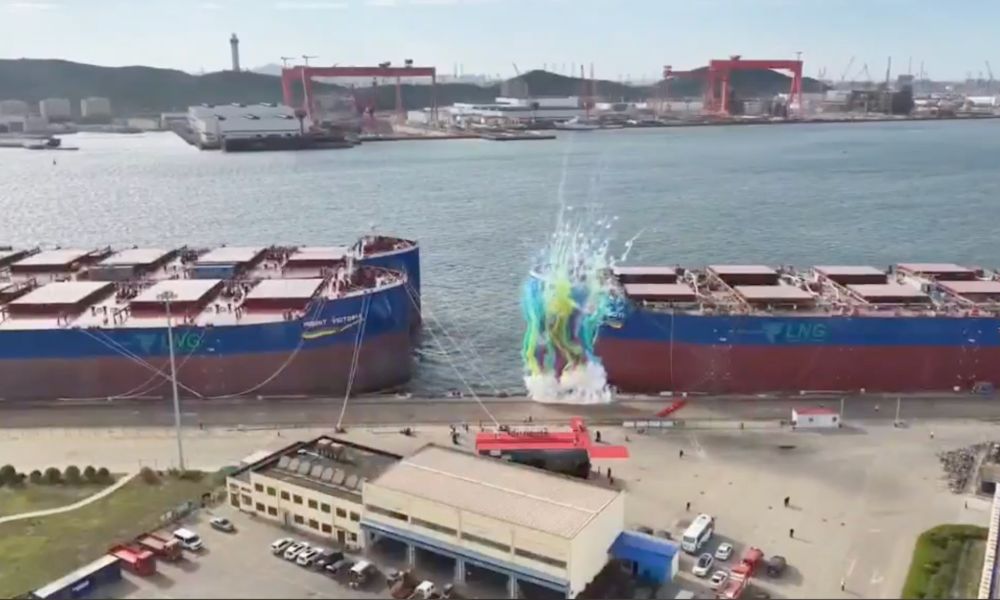
Singapore-based Eastern Pacific Shipping (EPS) on Friday (4 September) announced the naming and delivery of three new LNG dual-fuel Newcastlemax bulk carriers from China’s Qingdao Beihai Shipbuilding. 

Cyril Ducau, CEO of EPS, said the vessels were named Mount Victoria, Mount Yulong and Mount Wuyi

The three vessels are the third, fourth and fifth in the company’s series of 14 Newcastlemaxes being built at the yard, and were delivered five months ahead of their contracted delivery dates.

“A big thank you to CSSC Group and Qingdao Beihai Shipbuilding, working alongside our EPS team, for the tremendous collaboration and commitment behind this achievement,” Ducau said in a social media post.  


Photo credit: Eastern Pacific Shipping
Published: 7 September, 2026

Continue Reading

LNG Bunkering

LR awards AiP to CSSC Huangpu Wenchong for 12,500 m³ LNG bunker vessel design

Vessel design incorporates Type C LNG cargo tanks and has been evaluated against a range of class notations covering gas operations, automation, environmental performance and cyber resilience.
Admin

Published

on

By

33

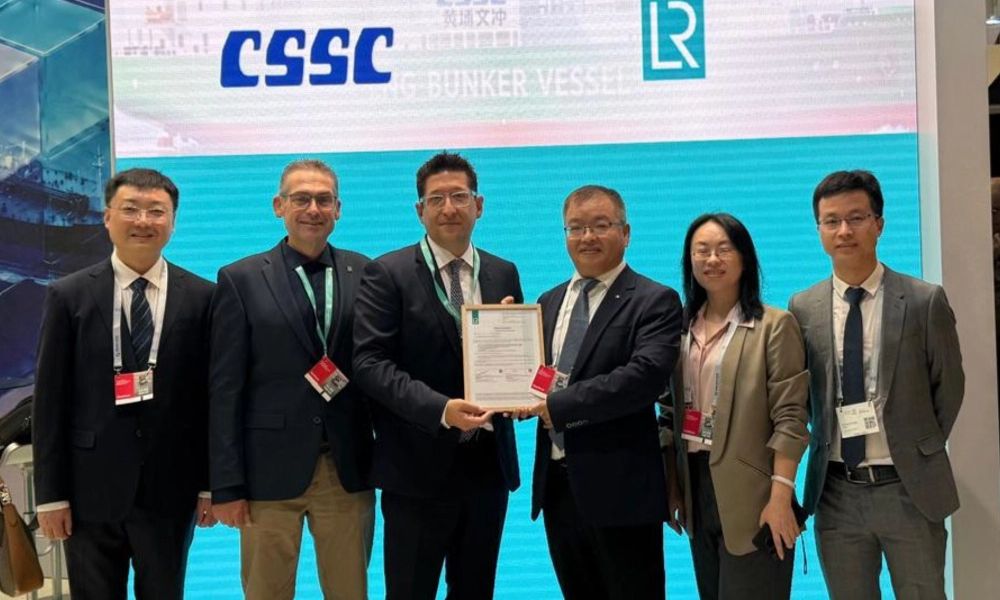
Classification society Lloyd’s Register (LR) on Thursday (3 September) said it has awarded Approval in Principle (AiP) to CSSC Huangpu Wenchong Shipbuilding Co., Ltd. for a new 12,500 m³ LNG bunkering vessel design.

The AiP was signed at SMM 2026 in Hamburg and confirms that the vessel concept has successfully completed an independent design assessment against LR’s latest classification requirements.

The new 12,500 m³ vessel design incorporates Type C LNG cargo tanks and has been evaluated against a comprehensive range of class notations covering gas operations, automation, environmental performance and cyber resilience.

LR’s assessment was carried out in accordance with its Rules and Regulations for the Classification of Ships and Rules and Regulations for the Construction and Classification of Ships for the Carriage of Liquefied Gas in Bulk.

Constantinos Chaelis, LR’s Global Gas Segment Director, said: “This project demonstrates the continued market confidence in LNG and the importance of building the supporting infrastructure that enables owners to make practical emissions reductions today, while maintaining flexibility for the future. Through early engagement between shipyard and class, we can accelerate the delivery of robust designs that meet both operational and regulatory requirements.”

A Huangpu Wenchong spokesperson, said: “This Approval in Principle from Lloyd’s Register validates the technical approach and provides a strong foundation for future development. We believe vessels of this type will play an increasingly important role in supporting the energy transition by helping ensure LNG is available where shipowners need it most.”


Photo credit: Lloyd’s Register
Published: 7 September, 2026

Continue Reading

Alternative Fuels

Yang Ming orders six LNG dual-fuel, ammonia-ready containerships from Hanwha Ocean

Each of the six new vessels will have a capacity of up to 13,650 TEU and feature LNG dual-fuel propulsion and Ammonia Fuel Ready specifications.
Admin

Published

on

By

Yang Ming orders six LNG dual-fuel, ammonia-ready containerships from Hanwha Ocean

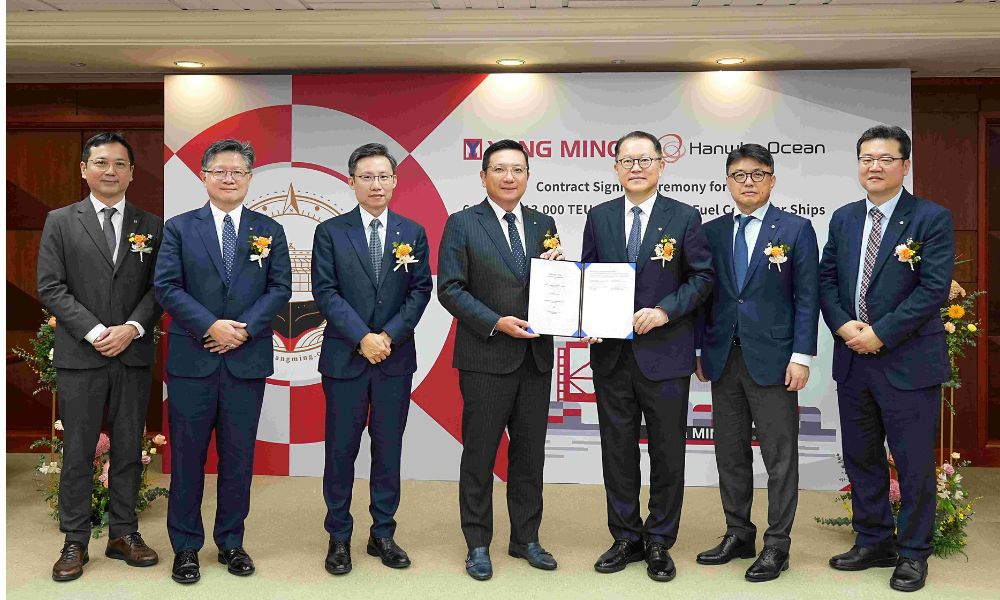
Taiwanese shipping firm Yang Ming Marine Transport Corporation (Yang Ming) and South Korean shipbuilder Hanwha Ocean on Wednesday (2 September) signed a shipbuilding contract for six 13,000 TEU class LNG dual-fuel container vessels. 

The contract was signed by Dr. Chuck Tsai, Chairman of Yang Ming, and Mr. Charles Kim, CEO of Hanwha Ocean. The vessels are scheduled for delivery between 2028 and 2029. 

They will complement Yang Ming’s existing fleet of 10,000+ TEU vessels and serve as key vessels on East-West services, with deployment flexibility across trade lanes connecting Asia with the East and West Coasts of North America, South America, and the Mediterranean. 

Each of the six new vessels will have a capacity of up to 13,650 TEU and feature LNG dual-fuel propulsion and Ammonia Fuel Ready specifications.

“As Yang Ming transitions toward net-zero emissions, LNG provides a relatively mature and economically viable alternative fuel solution, capable of reducing greenhouse gas emissions by approximately 20%,” the company said. 

“At the same time, ammonia can serve as a carbon-free fuel by utilising converted LNG storage facilities, while offering relatively lower conversion costs and comparatively well-developed supply chains and infrastructure. The Ammonia Fuel Ready design will therefore provide Yang Ming with greater flexibility in responding to increasingly stringent international regulations on greenhouse gas emissions.”

In addition, the vessels will be equipped with Type B LNG fuel tanks with a design pressure of 1.0 bar to enhance the safety and efficiency of LNG operations, together with a range of energy-saving technologies, including Wind Shields, Rudder Bulbs, Pre-Swirl Stators, and Shore Power Systems. Smart ship technologies and cybersecurity protection features will also be incorporated to enhance operational efficiency, safety, and reliability while effectively reducing fuel consumption and greenhouse gas emissions.

Deliveries under Yang Ming’s next-generation fleet optimization plan commenced earlier this year. By 2030, a total of 24 new vessels are expected to enter service. 

This includes 18 LNG dual-fuel vessels—comprising five 15,500 TEU, seven 16,000 TEU, and the six 13,000 TEU vessels under this contract—alongside six 8,000 TEU methanol dual-fuel-ready ships. 


Photo credit: Yang Ming Marine Transport
Published: 4 September, 2026

Continue Reading
Advertisement

OUR INDUSTRY PARTNERS


Trending