Connect with us

Technology

MFL introduces third generation MFM calibration lab in Singapore

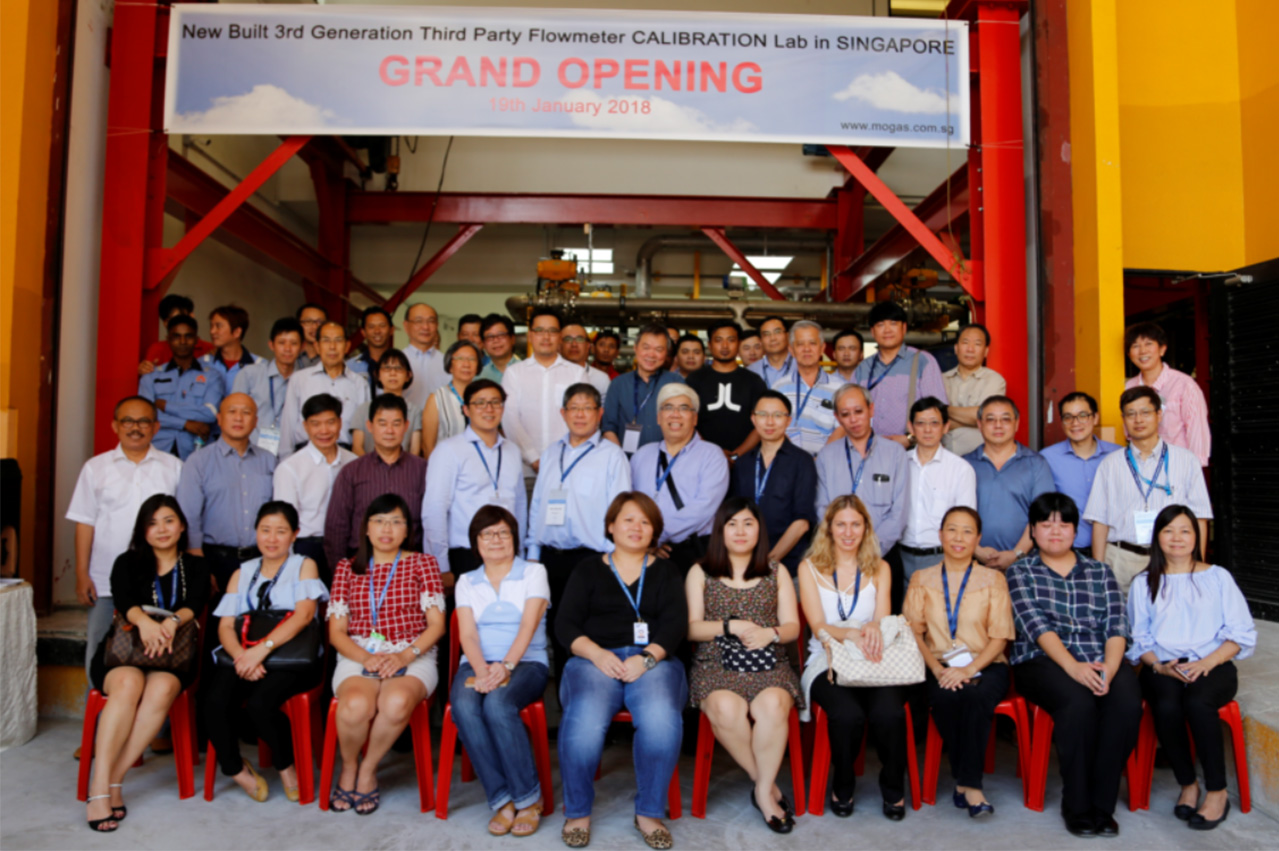
The new Mogas Flow Lab MFM calibration facility launched on 19 January builds upon the company’s experiences and lessons learned in applied metrology since 1991.

Admin

Published

on

5a669c3332d77 1516674099

Singapore-based third party mass flowmeter (MFM) calibration firm Mogas Flow Lab (MFL) launched its latest facility at the republic on 19 January, 2018.

"MFL started plans to build the third generation lab on 5 December 2016," a company spokesman told audience in a private launch ceremony attended by Manifold Times.

"We took approximately one year to plan, develop and construct the facility."

According to him, MFL's first generation calibration lab was established in 1991 at Port Dickson, Malaysia. 

"Shell took the first initiative to use mass flowmeters for marine loading and unloading operations and invited MFL because they are aware an essential component of using this custody transfer metering technology is obtaining an mutually acceptable quantity kilogram through calibration," he said.

"As such, we built our first generation lab at Port Dickson in 1991."

MFL's second generation lab was build ten years later at Tuas, Singapore in 2001.

The latest third generation MFM calibration facility has a 250 metric tonne (mt) per hour calibration and measurement capacity (CMC).

It is currently in phase one of operations; phase two of operations will see CMC ramp up to 1,500 mt per hour.

MFL will proceed with the second phase to cater to the need for Singapore’s bunkering sector in 2018, an area which MFL sees new growth opportunities.

"We are a company that always delight our customers with a passion to help them see and make the most of every opportunity to increase productivity and profitability," he says.
 

Photo credit: Mogas Flow Lab
Published: 23 January, 2018
 

Continue Reading

Ammonia

Amogy and LOTTE Fine Chemical to explore ammonia bunkering in South Korea

Under a MoU, both will explore supplying ammonia to vessels equipped with Amogy’s Ammonia-to-Power technology, leveraging LFC’s ammonia terminal at Ulsan Port and ship-bunkering capabilities.

Admin

Published

on

By

Amogy, LOTTE Fine Chemical to explore ammonia bunkering in South Korea

Ammonia-to-power solutions provider Amogy and LOTTE Fine Chemical Co Ltd (LFC) on Thursday (10 September) announced the signing of a Memorandum of Understanding (MoU) to jointly advance ammonia-to-hydrogen and ammonia-to-power solutions in South Korea.

Under the MoU, Amogy and LFC will explore collaboration across three priority areas that combine LFC’s ammonia supply and infrastructure capabilities with Amogy’s downstream ammonia cracking and power generation technology.

In hydrogen refuelling infrastructure, LFC would supply green ammonia through its overseas procurement and domestic infrastructure, with Amogy’s ammonia cracking technology converting the ammonia into high-purity hydrogen on-site for use at hydrogen refueling stations. 

For distributed ammonia-to-power generation at commercial and community-scale sites, LFC would provide ammonia supply, storage, and logistics, while Amogy would provide its Ammonia-to-Power generation modules, including fuel cell or internal combustion engine configurations. 

In marine ammonia bunkering, the companies would explore supplying ammonia to vessels equipped with Amogy’s Ammonia-to-Power technology, leveraging LFC’s ammonia terminal at Ulsan Port and ship-bunkering capabilities.

“As Korea continues to build out its clean ammonia and hydrogen infrastructure, partnerships that connect upstream supply with downstream technology are essential to accelerating deployment,” said Seonghoon Woo, CEO of Amogy.

“LOTTE Fine Chemical’s ammonia infrastructure, paired with our ammonia-to-hydrogen and ammonia-to-power technology, gives us a strong foundation to advance hydrogen refuelling, distributed power, and marine applications across the region.”

“LFC has built the infrastructure to import, store, and supply ammonia safely and at scale, including the world’s first ship-bunkering supply of ammonia,” said Suk Min Hwang, Vice President of Ammonia Business Division at LOTTE Fine Chemical. 

“This collaboration with Amogy allows us to extend that infrastructure into new downstream applications, supporting Korea’s transition to a clean ammonia and hydrogen economy.”

LFC has achieved the world’s first commercial import of green ammonia in addition to the world’s first domestic ship-bunkering supply using green ammonia.

Amogy’s proprietary ammonia cracking technology enables the efficient conversion of ammonia into hydrogen, supporting both high-purity hydrogen production and ammonia-to-power generation across stationary, distributed, and marine applications.

Building on the MoU, Amogy and LFC will continue joint evaluation of collaboration opportunities across hydrogen refuelling, distributed power, and marine ammonia bunkering, with further details on project scope and timing to be finalised for execution.


Photo credit: Amogy
Published: 11 September, 2026

Continue Reading

Engine

Polaris Shipping orders WinGD engines capable of running on methanol, ethanol

Ability to operate on either fuel gives Polaris Shipping greater flexibility to respond to changes in fuel availability, pricing and regulatory requirements over the vessels’ operating lives.

Admin

Published

on

By

Polaris Shipping orders WinGD engines capable of running on methanol, ethanol

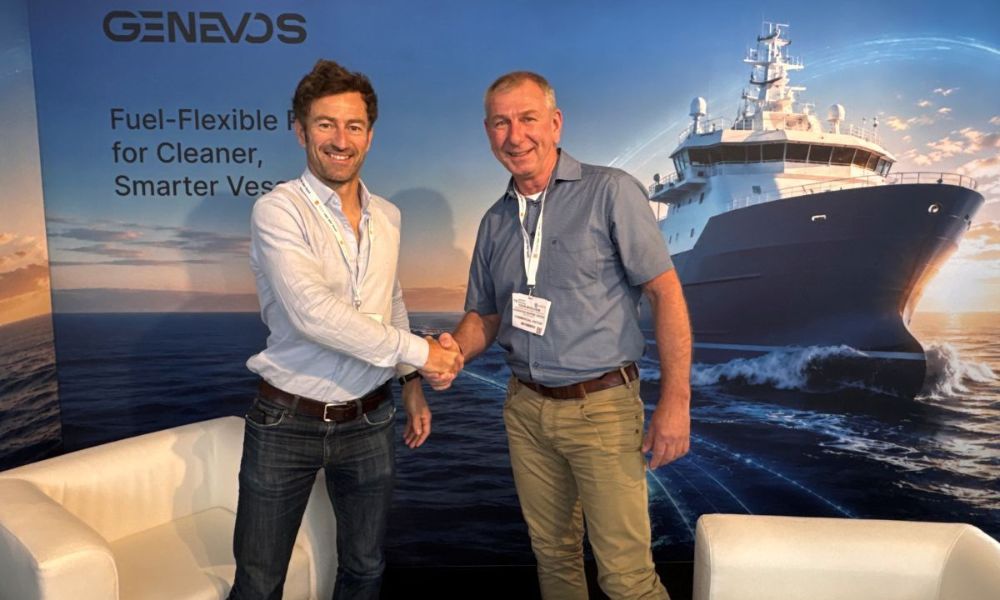
Swiss marine power company WinGD on Thursday (10 September) said it has won a contract that will give Polaris Shipping true fuel flexibility for its future Newcastlemax fleet with an order of four X72DF-M-1.0 engines that can operate on methanol and ethanol. 

The ability to operate on either fuel gives Polaris Shipping greater flexibility to respond to changes in fuel availability, pricing and regulatory requirements over the vessels’ operating lives and is a key benefit of WinGD’s alcohol-fuel engine platform.

The WinGD engines will power four 210,000 DWT Ore carriers being built for Polaris Shipping at Qingdao Beihai Shipbuilding Heavy Industry Co in China, with delivery scheduled for 2031. 

Dr. Carmelo Cartalemi, Head of Strategic Marketing, WinGD, said “Shipowners are looking for flexible solutions to help them meet their decarbonisation goals without compromising on reliability, safety or financial stability. 

“Our alcohol-fuel engine platform enables ships to operate on either ethanol or methanol, giving shipowners and managers the option to select the fuel that best fits their operational and commercial requirements. With fuel markets and regulations continuing to evolve, that flexibility can be a valuable asset over the lifetime of a vessel.”

The X72DF-M1.0 can run on methanol and ethanol. This provides flexibility between the two fuels, while maintaining compliance with the regulatory requirements applicable to both fuels.

WinGD will also provide dedicated service and lifecycle support for the new alcohol fuels, helping shipowners and operators build familiarity with the technology, optimise operation and maintenance, and adopt methanol and ethanol propulsion in a safe and economically sustainable way

Polaris Shipping, said: “Fuel availability and economics will continue to evolve over the lifetime of these vessels. Selecting an engine platform that gives us access to both methanol and ethanol means we can provide to our charter a greater choice in how the ships are operated in the future, rather than having to predict today which fuel will be most competitive in the years ahead. 

“We’re investing for the long-term, and this engine choice gives us the confidence to do that.”

The order adds to WinGD orderbook of alternative fuel engine technology, which now spans LNG, methanol, ethanol and ammonia. Beihai Shipyard is also working with WinGD on the installation of its ammonia-fuelled engine for CMB TECH’s newbuild 210,000 dwt dry bulk carriers. 


Photo credit: WinGD
Published: 11 September, 2026

Continue Reading

Technology

Singapore: MPA working with industry on next phase of digital bunkering, says Deputy CE

‘We are now working with industry on the next phase, trialling capabilities to further strengthen the integrity and quality of bunker data shared between stakeholders and MPA,’ says David Foo.

Admin

Published

on

By

MPA’s Deputy Chief Executive (Ops & Tech), Mr David Foo

Editor’s Note [11 September 2026]: Photo has been updated. 

Secure systems, trusted data and reliable digital services are becoming as important to maritime operations as physical infrastructure, said Mr David Foo, Deputy Chief Executive (Operations & Technology), Maritime and Port Authority of Singapore (MPA), on Thursday (10 September). 

In his opening keynote speech at APPEC 2026 Shipping And Bunker Conference, Foo said OCEANS-X, Digital Bunkering and the Maritime Digital Twin are enabling trusted data sharing, better operational planning and the testing of new digital solutions.

Foo said since 2025, digital bunkering has strengthened the efficiency and transparency of bunker operations. 

“We are now working with industry on the next phase, trialling capabilities to further strengthen the integrity and quality of bunker data shared between stakeholders and MPA.” he said.

He also said MPA is taking a forward-looking approach to the energy transition.

“Over the coming decades, we are likely to see the most diverse marine fuel mix in shipping’s history. There may not be a single fuel of the future.”

“Our role as a global bunkering hub is therefore not to determine which fuel will prevail. Our role is to ensure that whichever fuels the industry adopts, Singapore is ready – with the infrastructure, standards and operational capabilities to support them.”

Foo said MPA is making concrete progress across the major alternative fuel pathways with the issuance of methanol bunkering licences and the commencement of methanol bunkering operations. 

“For ammonia, we are developing the regulatory and operational frameworks needed to support future commercial deployment. We are also facilitating greater use of sustainable biofuels,” he said.

At the same time, MPA continues to expand its LNG bunkering ecosystem, with additional licences issued this year. 

“This will broaden supply options as more LNG-fuelled vessels enter the global fleet. We have also just updated our LNG standards, while maintaining the high standards of safety and reliability that underpin Singapore’s reputation as a trusted bunkering hub,” Foo added.

Related: MPA Chief Executive: Port of Singapore begins digital bunkering initiative today
Related: Singapore: Golden Island, GET, and PetroChina to receive methanol bunkering licences
Related: Singapore: Equatorial Marine Fuel among eight selected for new LNG bunkering licences
Related: Singapore strengthens LNG bunkering framework with new SS 727 standard


Photo credit: Swapnil Bapat on Unsplash
Published: 10 September, 2026

Continue Reading

Trending