
Biofuel
VPS on Cashew Nut Shell Liquid: Biofuel saviour or concerning contaminant?
Steve Bee of VPS highlights potential and pitfalls of CNSL in marine biofuels in view of the maritime industry turning to CNSL as an alternative low carbon bio-option for FAME.


Steve Bee, Group Marketing and Strategic Projects Director of marine fuels testing company VPS on Thursday (24 April) highlighted the potential and the pitfalls of Cashew Nut Shell Liquid (CNSL) in marine biofuels in view of the maritime industry turning to CNSL as an alternative low carbon bio-option for Fatty Acid Methyl Esters (FAME):
Cashew Nut Shell Liquid – Background
As demand grows from all modes of transportation for low-to-zero carbon fuels, to support efforts in complying and achieving numerous environmental legislation leading to global decarbonisation, many alternative fuel sources are being considered. One of the most common and in demand sources of such fuels, is Fatty Acid Methyl Esters (FAME), as either a 100% fuel-source, or as part of a bio-fossil blend. But with road transportation, aviation and shipping, all seeking to use FAME in their respective biofuels, demand is outweighing supply. Therefore, other bio-materials are being considered as alternatives to FAME.
One such material is Cashew Nut Shell Liquid (CNSL), which is the oil extracted from the shells of the cashew nut. This by-product of the cashew industry is a naturally occurring substituted phenol, which is abundantly available and a waste product, with a lower demand than FAME. The composition, properties and quality of CNSL depend upon the specific manufacturing production process used to extract the oil from the shell. These vary from, mechanical pressing to solvent extraction, vacuum pyrolysis, vacuum distillation or solvent extraction.
The industrial applications where CNSL is a key component are wide ranging and include, the production of polymers, plastics, resins, adhesives, surface coatings, insecticides, fungicides, anti-termite products and even pharmaceutical products.
There are three main components of CNSL, these are Cardanol, (also known as Ginkgol), Cardol and Anacardic Acid:
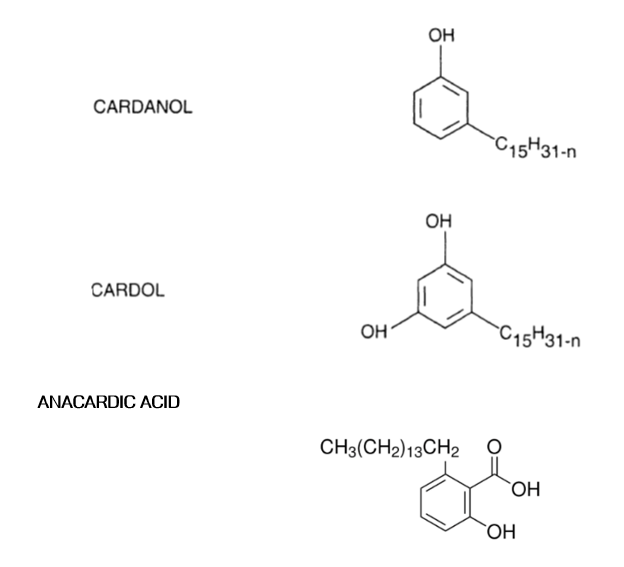 These substituted phenols tend to exhibit high acid number values (>3mgKOH/g). They also show high iodine values (>300gI2/100g), indicating an elevated level of unsaturation and hence increased degrees of reactivity and instability. Then also, high potassium levels leading to potential post-combustion deposits and corrosion of turbocharger nozzle rings.
As monomers, these chemicals are also prone to polymerisation at temperatures, >200ºC. As a consequence CNSL is potentially a highly reactive, very corrosive material.
However, the levels of acidity and reactivity can be reduced during the production and refining process by converting Cardol and Anacardic Acid to Cardanol. If the CNSL is >98% Cardanol, then the reactivity is significantly reduced.
VPS Testing of CNSL as a Biofuel
Over the past 3 years VPS have tested various CNSL compounds and fuel-blends to assess the potential of CNSL to be a viable biofuel.
Firstly, the use of CNSL blends can significantly reduce HC, CO/CO2 and smoke emissions, although they can raise NOx emissions slightly. However, VPS would advise never to use 100% CNSL as a fuel, as it is far too reactive and corrosive. Further advice is to always check with the OEM regarding the compatibility of CNSL-based biodiesel blended products, with their machinery. Traditional marine fuels when blended with CNSL, may reduce the high acid number, reactivity and potassium levels of 100% CNSL, but also increase the energy content, sulphur content, cold-flow and sediment potential issues.
Fuel Combustion Analysis (FCA) of CNSL/Fossil Fuel Blends
In the recent past, VPS have tested CNSL products, blended with marine gas oil (MGO), very low sulphur fuel oils (VLSFO) and high sulphur fuel oils (HSFO). When undertaking fuel combustion analysis (FCA) of CNSL blended at varying percentages with MGO, VLSFO and HSFO, a wide range of results were produced in relation to, estimated cetane number, ignition delay and rate of heat release (ROHR), examples are given in the table below:
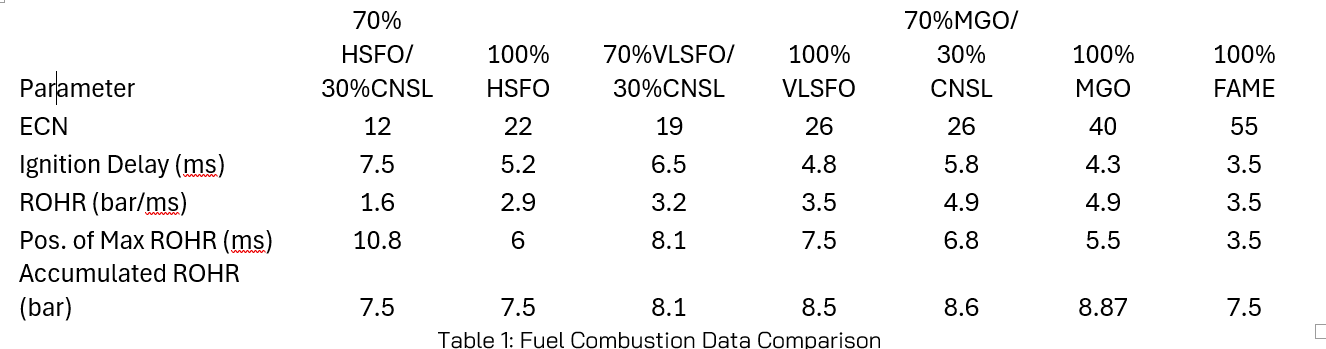
The CNSL blends with HSFO which undertook FCA, were particularly poor, with low Estimated Cetane Number (ECN), long Ignition Delay and low ROHR. CNSL blended with VLSFO gave better results, with acceptable ECN, shorter ignition delay and improved ROHR. Blending CNSL with MGO, gave better results than those obtained by HSFO/CNSL and VLSFO/CNSL blends.
Whether the blends were 80/20, 70/30 or 50/50 Fossil/CNSL, the blends using HSFO consistently gave the poorest FCA results. This may be due to a negative interaction between the asphaltenic content of the HSFO and the acidic nature of the CNSL.
Each of the CNSL blends gave poorer FCA results, when compared with the 100% fossil fuels, HSFO, VLSFO, MGO and 100% FAME.
Please note, to VPS knowledge, the above highlighted CNSL blends were not burnt onboard a vessel.
Burning CNSL/Fossil Blends
CNSL-blended fuels with MGO, VLSFO, or HSFO, have shown mixed reactions to vessel operations, where some CNSL-blends have been stored and burnt without issue, whilst, other CNSL-blends have given rise to operational problems such as:
- Fuel sludging
- Fuel injector failure
- Corrosion of engine parts
- Filter clogging
- Fuel system deposits
- Corrosion of turbocharger nozzle rings
- Damage to Selective Catalytic Reactor (SCR) units.
The quality of the CNSL, through its production and refining processes, will of course be significantly influential in relation to the quality of the fuel, but also the quality of the fossil fuel with which it is blended, will also have an influence.
Note: The full article on CNSL can be viewed here.
Photo credit: VPS
Published: 25 April, 2025
Alternative Fuels
DNV: Alternative-fuelled vessel orders hit highest monthly level since October 2024
LNG-fuelled vessels accounted for the vast majority of August activity while the strong summer performance marked a significant acceleration in ordering activity after a relatively slow start to the year.
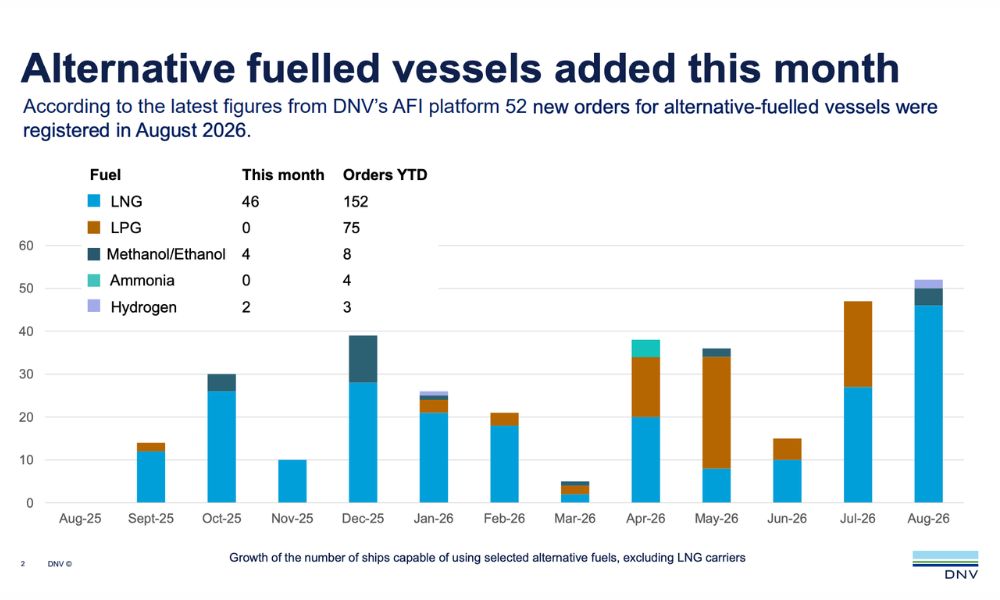
Latest data from classification society DNV’s Alternative Fuels Insight (AFI) platform alternative-fuelled vessel ordering was strong in August, with 52 new vessels added to the platform.
This is the highest monthly total since October 2024 and follows another active month in July, when 47 vessels were added to the database.
LNG-fuelled vessels accounted for the vast majority of August activity, with 46 orders recorded. The container segment led the way with 30 orders, while the car carrier segment contributed a further 12 LNG-fuelled vessels. In addition, four ethanol-fuelled bulk carriers and two hydrogen-powered bulk carriers were added during the month, as well as one LNG bunker vessel.
The strong summer performance marked a significant acceleration in ordering activity after a relatively slow start to the year. In total, 242 alternative-fuelled vessel orders have been placed in the first eight months of 2026, representing a 27% increase compared with the same period in 2025.
LNG remains the dominant fuel choice, accounting for 63% of all alternative-fuelled vessel orders registered so far this year. Container vessels represent the largest share of these LNG orders (59%), followed by car carriers (30%).
Jason Stefanatos, Global Decarbonization Director at DNV Maritime, said: “The past two months have been particularly strong for alternative-fuelled vessel ordering, with August recording the highest monthly total we’ve seen since October 2024. This has helped lift year-to-date orders to a level well above the same period last year.
“LNG remains the leading fuel choice, driven largely by activity in the container and car carrier segments. These sectors have been among the earliest adopters of alternative fuels, supported by predictable liner operations and increasing demand from cargo owners to reduce emissions across supply chains.
“For many owners, LNG offers a combination of emissions reductions, fuel availability and future flexibility while the longer-term fuel landscape continues to evolve.
“At the same time, the latest figures include orders for ethanol- and hydrogen-fuelled vessels, highlighting that owners continue to explore a range of decarbonization pathways. Different segments are making different fuel choices, but the overall level of activity demonstrates continued investment in lower-emission shipping.”
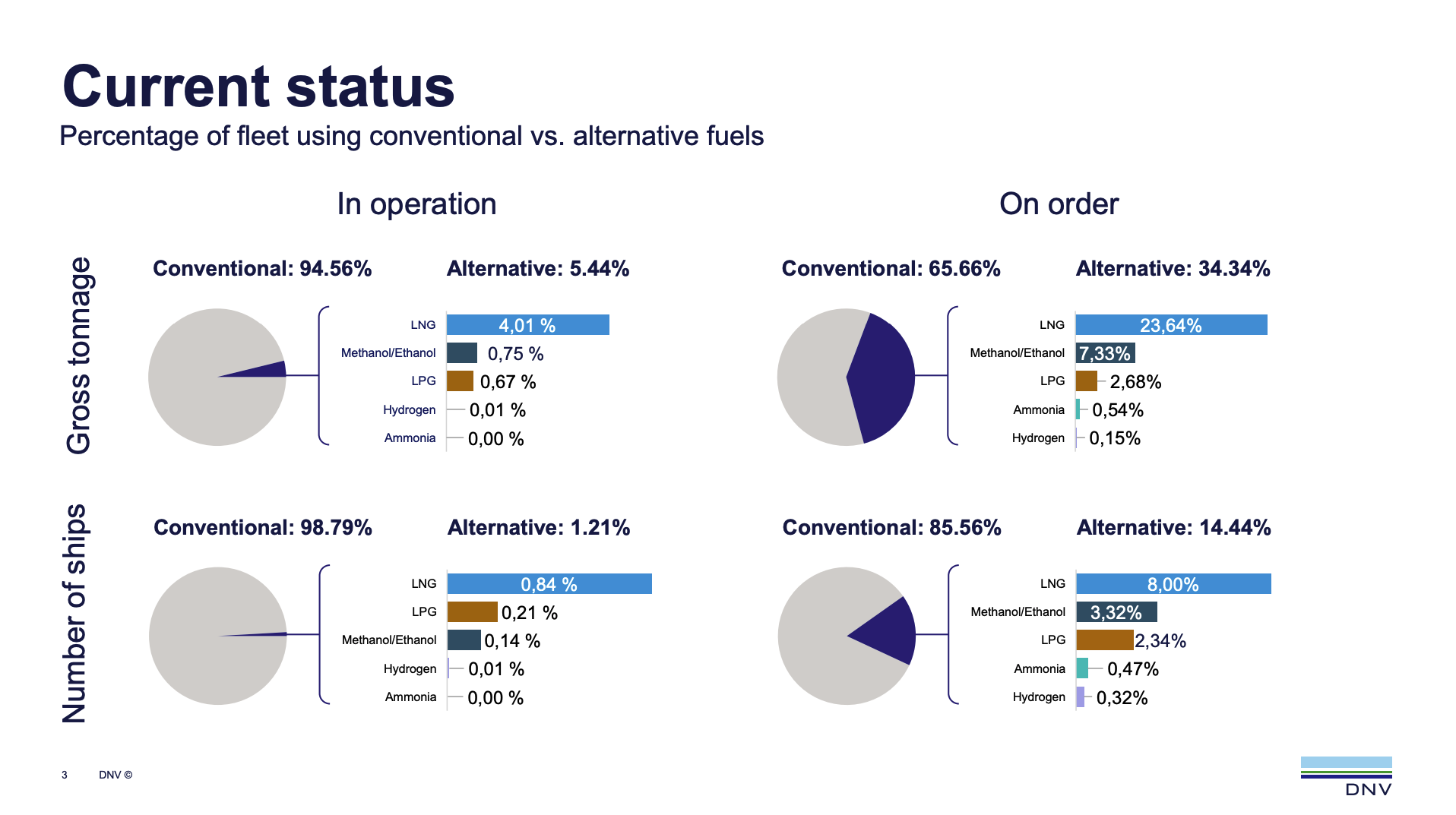
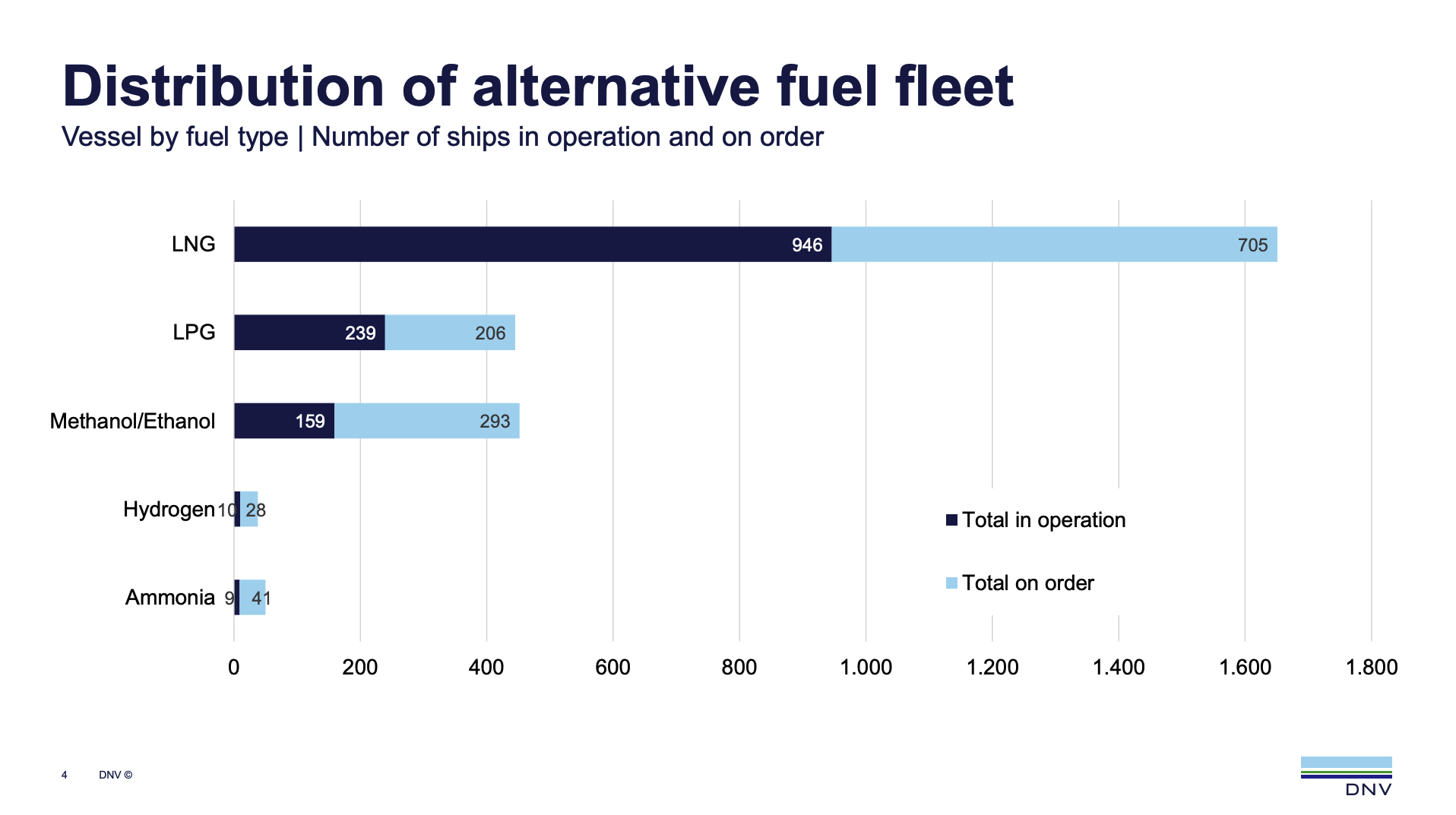
Photo credit: DNV
Published: 4 September, 2026
Alternative Fuels
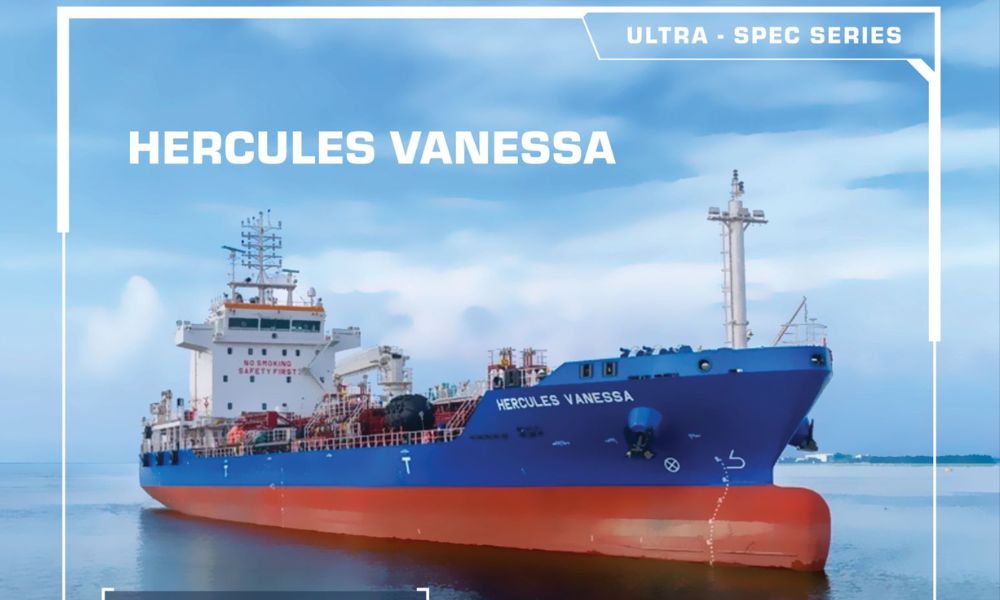
Hercules Tanker Management’s ‘Ultra-Spec Series’ tanker “Vanessa” begins maiden voyage
Designed for worldwide deployment, the series can transport and supply conventional marine fuels as well as alternative fuels up to B100 and methanol.
Alternative Fuels
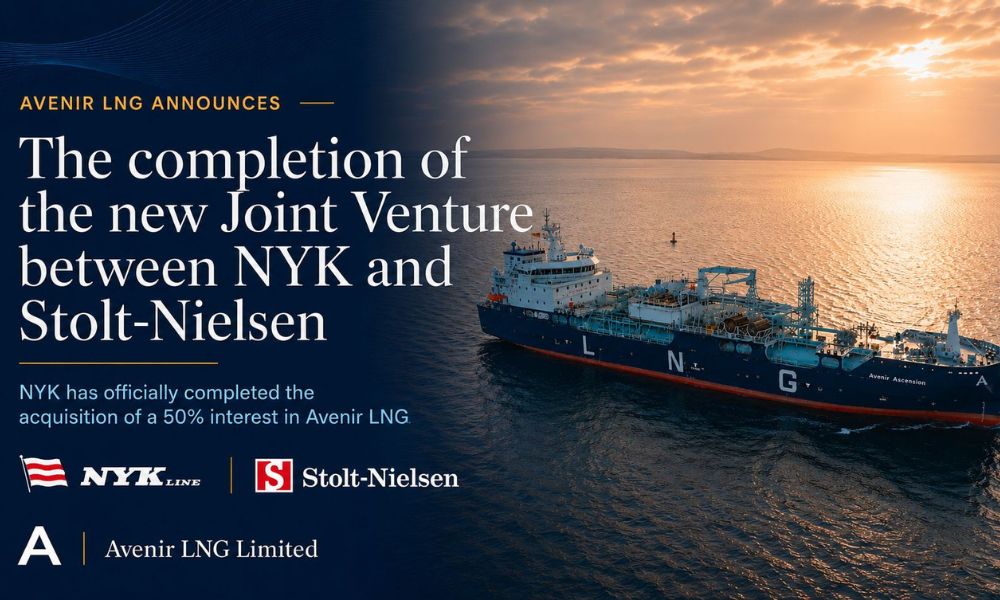
NYK and Stolt-Nielsen target LNG, bio-LNG bunkering growth through Avenir LNG JV
NYK says joint venture will pursue opportunities in LNG and bio-LNG bunkering, supporting the maritime industry’s transition to lower-emission fuels.

OUR INDUSTRY PARTNERS

Yang Ming orders six LNG dual-fuel, ammonia-ready containerships from Hanwha Ocean

LR, China’s MARIC unveil tanker concept ready for three future bunker fuels

DNV: Alternative-fuelled vessel orders hit highest monthly level since October 2024

TFG Marine advances global MFM rollout with two US Gulf bunker barges

GENA Solutions: Total renewable and low-carbon methanol project pipeline increases from 61.8 to 62.2 Mt by 2032

Baltic Exchange: Bunker Report (3 September 2026)

ENGINE: Americas Fuel Availability Outlook (3 September 2026)

Singapore-flagged tugboat “Kim Heng 3203” placed under Sheriff’s arrest

US targets five bunker companies in latest sanctions campaign against Iran

Singapore bunkering community supports Living Hope Evangelism’s 7th anniversary outreach for residents in need

China’s bunker market reshaped by tax rebates, trade flows and refining changes, says economist

Hengli Petrochemical’s ex-Singapore trading arm faces winding up application

Rajah & Tann: Bunker disputes are won in the first 48 hours

Report: GCMD outlines practical approach to quantity assurance in marine biofuel supply chains
-
 Vessel Arrest1 week ago
Singapore-flagged tugboat “Kim Heng 3203” placed under Sheriff’s arrest
-
 Sanctions2 weeks ago
US targets five bunker companies in latest sanctions campaign against Iran
-
 Events2 weeks ago
Singapore bunkering community supports Living Hope Evangelism’s 7th anniversary outreach for residents in need
-
 Interview1 week ago
China’s bunker market reshaped by tax rebates, trade flows and refining changes, says economist
-
 Winding up2 weeks ago
Hengli Petrochemical’s ex-Singapore trading arm faces winding up application
-
 Bunker Claim4 days ago
Rajah & Tann: Bunker disputes are won in the first 48 hours
-
 Biofuel1 week ago
Report: GCMD outlines practical approach to quantity assurance in marine biofuel supply chains
-

 Winding up1 week ago
Singapore: Notices of annual meeting issued for Vroon Shipping Asia and related firms