Connect with us

Alternative Fuels

Port of Antwerp in sustainable methanol fuel initiative

ENGIE, Oiltanking, Indaver, VMH, Helm-Proman, among supporters of complex and challenging project.

Admin

Published

on

5c99aebcc0002 1553575612

Port of Antwerp on Friday (22 March) said it has started a project involving various players to produce sustainable methanol fuel. The project is complex and challenging, but will be a "first" for Belgium, it states.

The port notes methanol can be used to fuel vessels such as tug boats, and it “has the ambition of introducing a first methanol-powered tug in the near future.”

The port of Antwerp uses around 300,000 tonnes of methanol annually for chemical processes and fuel production: everything from insulation panels to fuel additives.

Methanol, however, is currently obtained from fossil sources that can ultimately run out.

Didier Van Osselaer, project manager at Port of Antwerp, explains how sustainable methanol fuel will be produced at the port.

“In practical terms we will produce methanol from waste CO2 and sustainably generated hydrogen,” he says. 

“The waste CO2 will be collected by a new process called Carbon Capture and Utilisation (CCU) in which at least some of the CO2 emissions are recovered.

“This CO2 is then combined with hydrogen generated on a sustainable basis using green energy in a new electrolysis plant. These two processes – CCU and electrolysis – together form the perfect basis for producing sustainable methanol.”

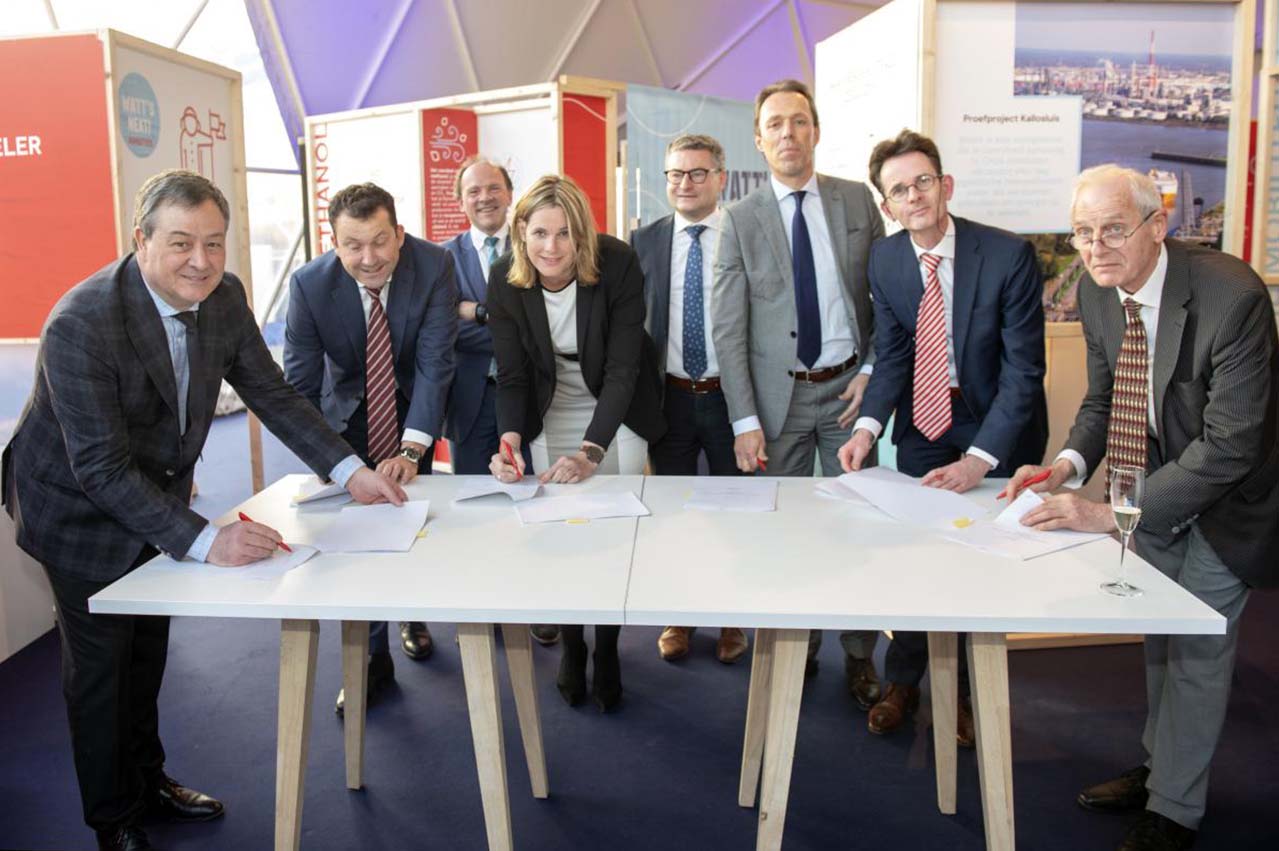
To achieve this, the Port of Antwerp is bringing various experts together. ENGIE, Oiltanking, Indaver, Vlaamse Milieuholding (VMH) and Helm-Proman have all declared their support for this project, and several knowledge institutes have also committed themselves.

Each partner has its own particular role to play in this project. For instance, ENGIE will contribute its knowledge of the electricity market, Oiltanking will give advice on the logistical aspects of methanol production and storage, while Indaver will offer expertise on collection of CO2. Helm-Proman is involved with a view to finding markets for the methanol that is produced, VMH will be responsible for at least part of the financing, while Port of Antwerp will act as a bridge between the public and private sectors.

Port of Antwerp CEO Jacques Vandermeiren confirms: "With this innovative project we aim to smooth the path for alternative energy sources in the port of Antwerp. I am proud that we are able to sign this collaboration agreement today with five crucial partners from among others the electricity, fuel and chemical industries. Our role as Port Authority is to bring people from different sectors together, in order to face the challenges of tomorrow. Today marks yet another step in the right direction."

Minister Muyters adds: "Innovation is key when it comes to facing challenges large and small. We won't solve the climate problem by taxing entrepreneurs into the ground. This innovative project shows once again that our companies are very much part of the solution, especially when they come together and collaborate as here in the port of Antwerp."

Minister for the Environment, Nature and Agriculture Koen Van den Heuvel is particularly pleased with this initiative: "I am very glad that Port of Antwerp has taken on this role. It shows that we have innovative thinking here in Flanders. Just like the project for onshore power, this project will help us to achieve our ambitious climate objectives. At the same time it will save primary raw materials and take us a step further in the transition to a circular economy."

Photo credit: Port of Antwerp
Published: 26 March, 2019


Continue Reading

LNG Bunkering

Osaka Gas conducts Osaka Bay’s first STS LNG bunkering operation

Acting through Singapore-based marine fuel trading firm Integr8 Fuels, Osaka Gas supplied LNG bunker fuel to an LNG-fuelled PCTC operated by an overseas shipping company calling at the Port of Kobe.
Admin

Published

on

By

Osaka Gas conducts Osaka Bay’s first STS LNG bunkering operation

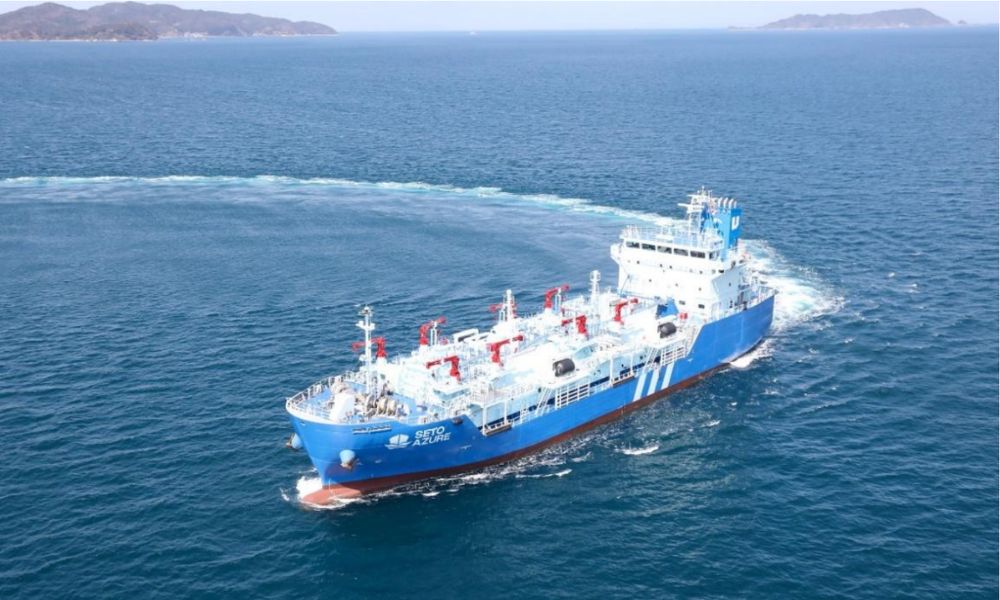
Japanese energy company Osaka Gas on Friday (4 September) said it has successfully completed the first-ever ship-to-ship LNG bunkering operation in Osaka Bay, supplying LNG fuel to an LNG-fuelled PCTC.

The operation was conducted using SETO AZURE, an LNG bunkering vessel owned by Osaka Bay LNG Shipping Co Ltd, an affiliated company of Osaka Gas. 

Acting through Integr8 Fuels Pte Ltd, a Singapore-based marine fuel trading company, Osaka Gas supplied LNG fuel to an LNG-fuelled PCTC operated by an overseas shipping company calling at the Port of Kobe.

Ship-to-ship bunkering will help ensure a stable supply of LNG fuel in the Osaka Bay area and support the development of the Port of Kobe as a Carbon Neutral Port.

In addition to ship-to-ship bunkering, Osaka Gas provides LNG fuel through truck-to-ship bunkering and port-to-ship bunkering. With capability covering all three major LNG bunkering methods, Osaka Gas provides flexible and reliable LNG fuel supply services to meet customers’ diverse needs.

The company said LNG bunkering infrastructure in Japan remains insufficient, highlighting the need to establish a stable fuel supply network to support the wider adoption of LNG-fuelled vessels.


Photo credit: Osaka Gas
Published: 8 September, 2026

Continue Reading

Alternative Fuels

DNV at SMM: Yanmar Maritime awarded type approval for fuel cell system

Certification marked an important step in moving Yanmar’s maritime hydrogen fuel cell technology from successful domestic deployment toward broader commercial adoption in international markets.
Admin

Published

on

By

DNV at SMM: Yanmar Maritime awarded type approval for fuel cell system

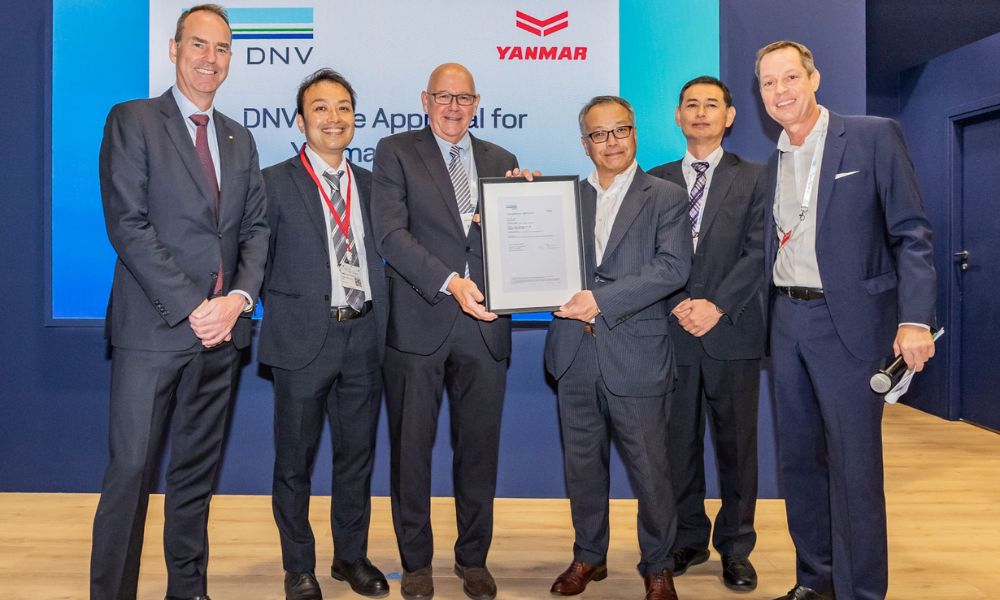
Classification society DNV on Monday (7 September) said it awarded Yanmar Power Solutions Co Ltd, a subsidiary of Yanmar Holdings, type approval (TA) for its Maritime Hydrogen Fuel Cell System at the SMM trade fair in Hamburg last week. 

DNV said the certification marked an important step in moving Yanmar’s maritime hydrogen fuel cell technology from successful domestic deployment toward broader commercial adoption in international markets.

“This certification represents a significant milestone in the commercialization and global deployment of hydrogen fuel cell technology for marine applications,” the classification society said in a statement. 

The approval confirms that the GH-FC series complies with DNV’s industry leading rules and guidelines, enabling shipbuilders, system integrators, and vessel operators to adopt the technology with greater confidence and reduced certification burden for future projects.

Masaru Hirose, President and Representative Director of Yanmar Power Solutions Co Ltd, said: “Achieving DNV Type Approval represents a major milestone in our journey to bring hydrogen-powered solutions to the marine market. Building on our operational experience in Japan, we aim to support customers around the world in their transition to zero-emission operations and realize sustainable maritime transportation.”

Eric Tigelaar, Department Manager of Commercial Marine Department at Yanmar Europe, stated: “This certification strengthens our ability to support customers throughout Europe and beyond who are seeking practical pathways toward decarbonization. The GH-FC series combines easy installation, operational flexibility, modularity and environmental performance, making it an attractive solution for a wide range of vessel applications.”

Olaf Drews, Head of Engines & Pressurized Equipment, DNV Maritime, said: “We are very pleased to continue our cooperation with Yanmar and award them this latest Type Approval Award for their GH-FC series. Every step demonstrates the growing maturity of hydrogen fuel cell technology and continues to build confidence in the market and showcase its readiness for broader commercial applications. DNV is pleased to continue supporting innovative solutions that can help accelerate the transition toward zero-emission shipping.”


Photo credit: DNV
Published: 8 September, 2026

Continue Reading

Alternative Fuels

ORLEN and Port of Gdynia to explore LNG and bio-LNG bunkering in Poland

Cooperation will examine market demand, the potential scale of LNG and bioLNG bunkering, required infrastructure, operating conditions and the regulatory framework needed to support future services.
Admin

Published

on

By

ORLEN and Port of Gdynia to explore LNG and bio-LNG bunkering in Poland

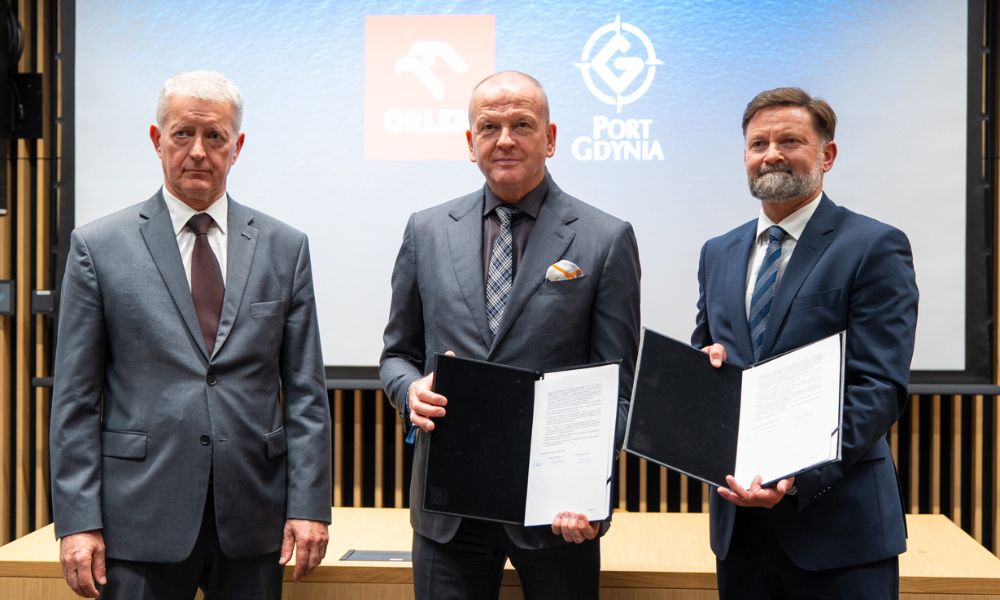
Polish energy company ORLEN on Friday (4 September) said it has signed an agreement with Port of Gdynia Authority to assess the development of LNG and bioLNG bunkering services for marine vessels, as both organisations explore infrastructure and market solutions that could expand access to alternative fuels along the Polish coast.

The cooperation will examine market demand, the potential scale of LNG and bioLNG bunkering, required infrastructure, operating conditions and the regulatory framework needed to support future services.

One of the main areas under consideration will be waterside bunkering, including ship-to-ship operations, where fuel is transferred directly from a bunker vessel to another ship while in port.

Robert Soszyński, Vice President of the ORLEN Management Board for Operations, said the cooperation with the Port of Gdynia forms part of the Group’s broader fuel portfolio transformation through 2035.

Under ORLEN’s strategy, natural gas, including LNG, is expected to retain an important role as a transitional fuel supporting energy security and transport decarbonisation.

The company is seeking to strengthen capabilities across the full value chain, including fuel sourcing, logistics and final use.

At the same time, ORLEN is developing renewable fuel capabilities, including bioLNG, which the company sees as a potential route for reducing emissions in heavy-duty road transport and shipping.

Soszyński said ORLEN’s ambition is to work with ports not only as a fuel supplier but also as a partner in developing infrastructure and market conditions for alternative marine fuels in Poland and the wider region.

Piotr Gorzeński, CEO of the Port of Gdynia Authority, said the shipping industry’s energy transition is already changing the fuel and technology requirements faced by ports.

“Shipowners are increasingly examining ways to reduce emissions, while ports need to be capable of serving vessels using a wider range of propulsion technologies and fuels,” he said. 

The cooperation will include knowledge sharing and an assessment of requirements among shipowners and port users, particularly operators of scheduled ferry, container and ro-ro services.

ORLEN and the Port of Gdynia will also analyse bunkering models used at other European ports.

Among the options under review will be the suitability of ship-to-ship bunkering for larger vessels and the possibility of supplying fuel while ships are alongside the berth.

The partners will also examine whether bunkering could take place in parallel with cargo-handling operations.


Photo credit: ORLEN
Published: 8 September, 2026

Continue Reading

Trending