Connect with us

Port & Regulatory

India: DGS seeking for comments for proposed national biofuel bunkering guidelines

Guidelines to align Indian practices with international conventions, contributing to a modern, resilient, and environmentally conscious maritime ecosystem.

Admin

Published

on

DGS biofuel bunkering guidelines

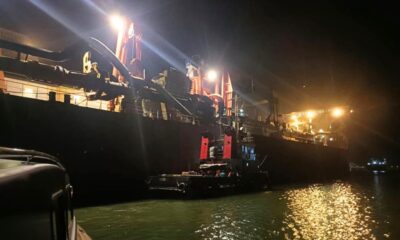
The Directorate General of Shipping (DGS), Mumbai on 3 July issued a notice inviting comments from stakeholders on the draft circular on Biofuel bunkering Guidelines.

“Increasing global emphasis on decarbonising the maritime sector has accelerated the adoption of biofuels as a sustainable alternative to conventional marine fuels,” it explained.

“Biofuels, particularly drop-in types such as Fatty Acid Methyl Esters (FAME), Fatty Acid Ethyl Esters (FAEE), Straight Vegetable Oils (SVO), Hydrotreated Vegetable Oils (HVO), Bio-FT-diesel (bio-Fischer-Tropsch diesel) and Biomass-to-Liquid (BTL) fuels, offer considerable benefits by reducing lifecycle greenhouse gas emissions without necessitating major modifications to existing shipboard fuel systems.

“However, the absence of standardised national guidelines for biofuel bunkering operations in India introduces potential challenges related to safety, fuel quality assurance, environmental protection, and operational consistency.”

The proposed circular aims to bridge these gaps by establishing a clear regulatory framework for permitting, operational protocols, safety management, documentation, environmental safeguards, training requirements, and enforcement mechanisms specific to biofuel bunkering.

By implementing these guidelines, the Directorate seeks to ensure safe and reliable bunkering practices, promote the use of cleaner fuels in alignment with India’s environmental commitments, and support the growth of sustainable maritime infrastructure.

The guidelines are crucial for facilitating the responsible uptake of biofuels in the shipping sector, aligning Indian practices with international conventions, contributing to a modern, resilient, and environmentally conscious maritime ecosystem.

The full draft circular on biofuel bunkering guidelines can be obtained from DGS’ website here. Comments and inputs should be sent to: [email protected] and CC to: [email protected] by 18/07/2025.


Photo credit: Directorate General of Shipping
Published: 10 July 2025

Continue Reading

Alternative Fuels

K Shipbuilding and LR to develop ethanol-fuelled MR tanker design

Joint development project will assess the technical feasibility, safety and regulatory compliance of a new ethanol-fuelled tanker design, with the objective of achieving AiP from LR.
Admin

Published

on

By

K Shipbuilding and LR to develop ethanol-fuelled MR tanker design

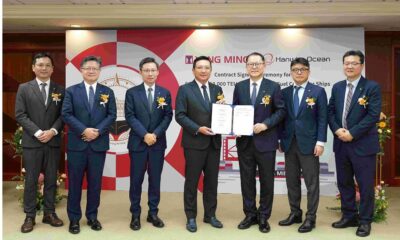
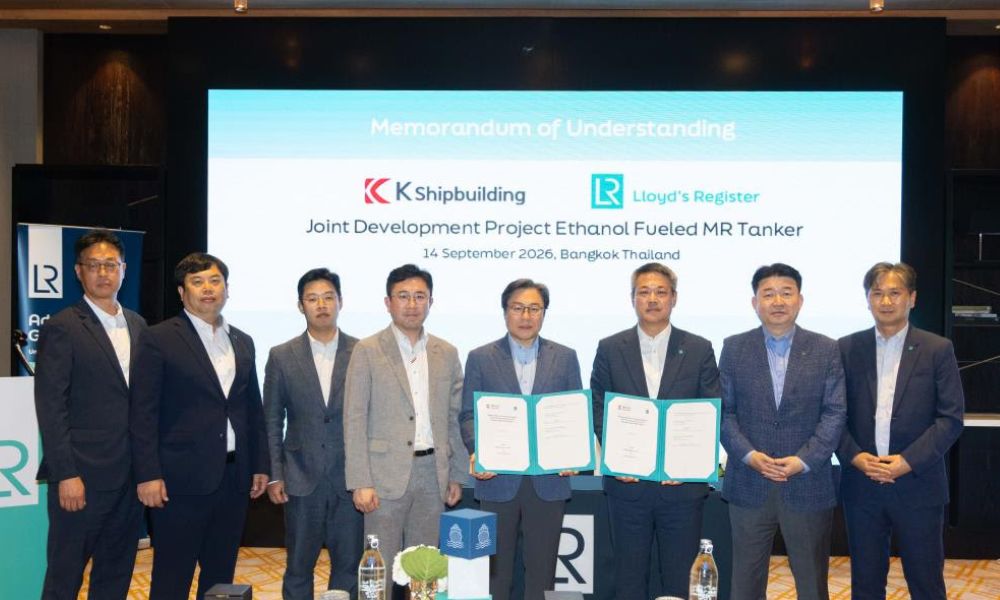
K Shipbuilding and Lloyd’s Register (LR) on Monday (14 September) signed a Memorandum of Understanding (MoU) to jointly develop an ethanol-fuelled 50,000 dwt Medium Range (MR) tanker.

Announced at Gastech 2026 in Bangkok, the joint development project will assess the technical feasibility, safety and regulatory compliance of a new ethanol-fuelled tanker design, with the objective of achieving Approval in Principle (AiP) from LR and creating a commercially competitive vessel concept for the global product tanker market.

LR will undertake technical reviews covering vessel arrangements, stability, structural requirements and fuel tank integration, while K Shipbuilding will lead the vessel design and development programme.

The project will also examine opportunities to optimise vessel design and operational efficiency while ensuring compliance with applicable class rules and international regulations.

Theo Kourmpelis, Global Business Director for tankers, Lloyd’s Register, said: “Ethanol is already a familiar cargo across the product tanker trades, which makes the MR segment a practical place to assess it as a fuel. As ethanol production and seaborne trade continue to develop, owners active in these trades are well placed to connect its role as a cargo with its use onboard.

“This project will give owners a clearer basis for evaluating ethanol within their fleet strategies, and help lay the groundwork for its broader uptake across the tanker sector.”

Andy McKeran, Chief Growth Officer, Lloyd’s Register, said: “Shipping’s energy transition is unlikely to be delivered through a single fuel solution. Shipowners are increasingly looking at a range of fuel options and want confidence that emerging technologies can be implemented safely, efficiently and in compliance with evolving regulations.

“This project will help deepen industry understanding of ethanol’s potential in the tanker sector and provide owners with greater insight into how alternative fuel solutions can be incorporated into commercially viable vessel designs.”

Tae-Hyun Koh, Chief Technology Officer, K Shipbuilding, said: “We see growing interest in fuel flexibility as shipowners make long-term investment decisions in an increasingly complex regulatory environment. Through this collaboration with Lloyd’s Register, we aim to develop a practical and competitive ethanol-fuelled MR tanker design that addresses both operational and market requirements.”


Photo credit: Lloyd’s Register
Published: 16 September, 2026

Continue Reading

Wind-assisted

KR, HD Hyundai, BAR Technologies and LISCR team up on wind-assisted LNG carrier

All four signed a MoU, aimed to assess the technical feasibility and safety of applying wind-assisted propulsion technology to LNG carriers.
Admin

Published

on

By

KR, HD Hyundai, BAR Technologies and LISCR team up on wind-assisted LNG carrier

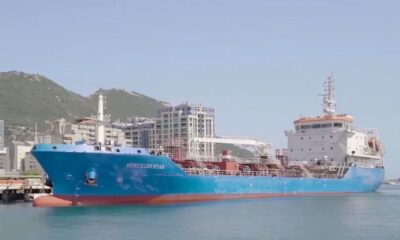
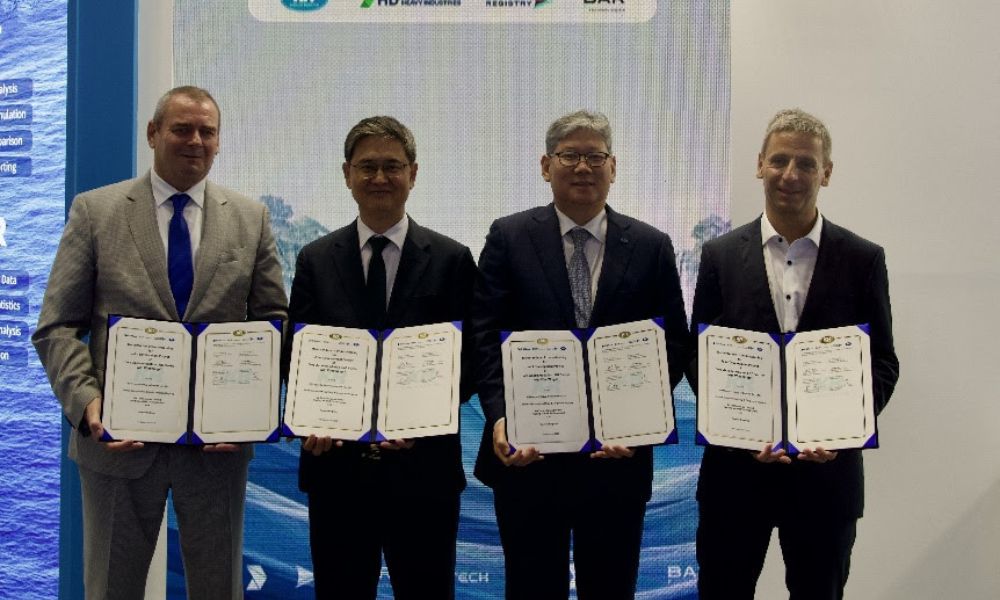
Classification society Korean Register (KR) on Tuesday (15 September) said it has signed a Memorandum of Understanding (MoU) with HD Hyundai Heavy Industries (HHI), UK-based wind propulsion technology company BAR Technologies, and the Liberian International Ship & Corporate Registry (LISCR) to jointly develop a 174K LNG carrier equipped with the WindWings® wind-assisted propulsion system.

The agreement was signed on 15 September at Gastech 2026 in Bangkok and aims to assess the technical feasibility and safety of applying wind-assisted propulsion technology to LNG carriers as the global shipping industry accelerates its transition toward decarbonisation.

The project will focus on a 174K LNG carrier developed by HHI featuring a forward accommodation arrangement. 

By positioning the crew accommodation block toward the bow, the design provides additional space on the upper deck, creating an opportunity to integrate BAR Technologies’ WindWings® system. 

WindWings® uses large, rigid wing sails installed on a vessel to harness wind as supplementary propulsion. By reducing reliance on the vessel’s main propulsion system, the technology can lower fuel consumption and greenhouse gas emissions while improving overall energy efficiency.

Under the collaboration, HHI will lead the vessel’s basic design and design review, while BAR Technologies will provide technical data covering the arrangement and specifications of WindWings®, structural strength, operational concepts and expected fuel savings.

KR, together with LISCR, will assess the safety and technical suitability of the design against applicable rules and international requirements. Based on the outcome of the assessment, KR will also consider granting Approval in Principle (AIP), supporting the application and future commercialization of wind-assisted propulsion technology on LNG carriers.

Hong-ryul Ryu, Senior Executive Vice President and CTO of HHI, said: “Through this project, we aim to integrate wind-assisted propulsion technology into our forward accommodation LNG carrier design, further enhancing the competitiveness of next-generation, low-emission LNG carriers.”

John Cooper, CEO of BAR Technologies, said: “We already have WindWings® deployed across 10 bulkers and tankers, with 23 WindWings® collectively saving approximately 100 tonnes of CO₂ per day. We look forward to extending the application of WindWings® to next-generation gas carriers, establishing a robust foundation for safe commercialisation, and providing shipowners with a genuinely attractive environmental solution.”

Yongsok Lee, Chairman and CEO of KR, said: “Through this joint development project, KR will assess the safety and technical suitability of applying wind-assisted propulsion to this LNG carrier design against applicable rules and international requirements, with a view to granting Approval in Principle.”

Alfonso Castillero, CEO of the Liberian International Ship & Corporate Registry, added: “By assessing wind-assisted propulsion for LNG carriers from an early design stage, the partners can help translate the decarbonization challenge into practical opportunities for improved efficiency, future-ready ship designs and competitive advantage, without compromising safety or quality.”


Photo credit: Korean Register
Published: 16 September, 2026

Continue Reading

Hydrogen

Chart Industries to supply liquid hydrogen fuel systems for Samskip boxships

Project will bring together advanced storage technology, fuel conditioning systems, bunkering interfaces, and safety solutions to support reliable vessel operations.
Admin

Published

on

By

Chart Industries to supply liquid hydrogen fuel systems for Samskip boxships

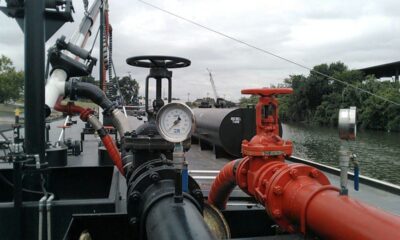
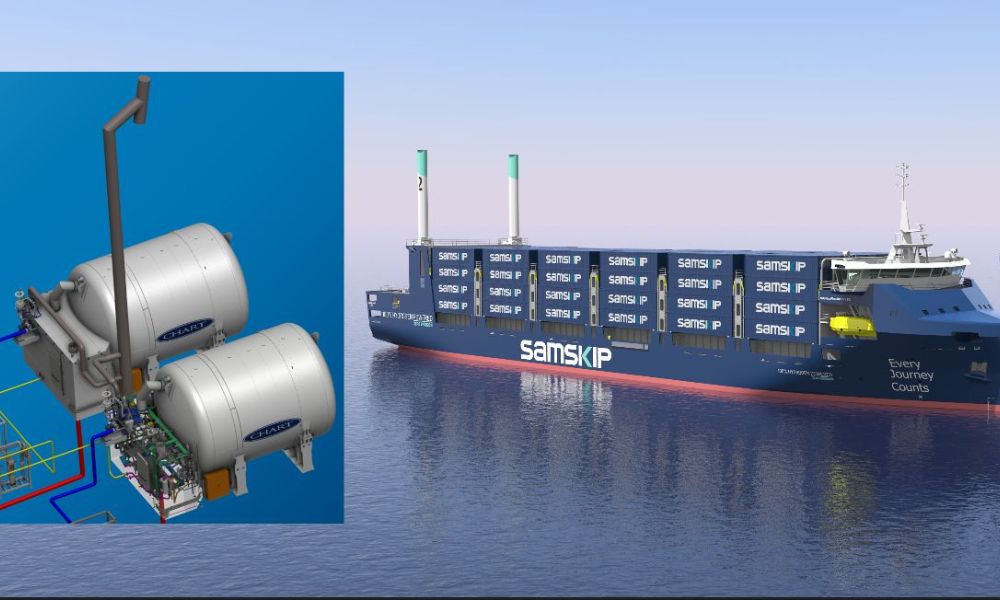
US cryogenic equipment company Chart Industries recently said the company will supply the liquid hydrogen fuel systems for Samskip’s SeaShuttle 1 and 2, the world’s first hydrogen-powered container vessels.

The company said the project will demonstrate how liquid hydrogen can enable zero-emission operations for commercial shipping, bringing together advanced storage technology, fuel conditioning systems, bunkering interfaces, and safety solutions to support reliable vessel operations. 

“Most importantly, these are not demonstration concepts. They are commercial vessels designed to operate on the Rotterdam-Oslo corridor, showcasing how hydrogen is moving from possibility to practice,” it said in a social media post. 

“We’re proud to support Samskip and our project partners as we help advance the future of sustainable maritime transport.”


Photo credit: Chart Industries
Published: 16 September, 2026

Continue Reading

Trending