Connect with us

Alternative Fuels

BV Malaysia and Straits Bio-LNG partner on ISCC EU-certified sustainable bio-methane

BV Malaysia and Straits Bio-LNG will jointly commit to establishing a comprehensive framework to ensure ISCC EU compliance across Straits Bio-LNG’s supply chain.

Admin

Published

on

BV Malaysia and Straits Bio-LNG partner on ISCC EU-certified sustainable bio-methane

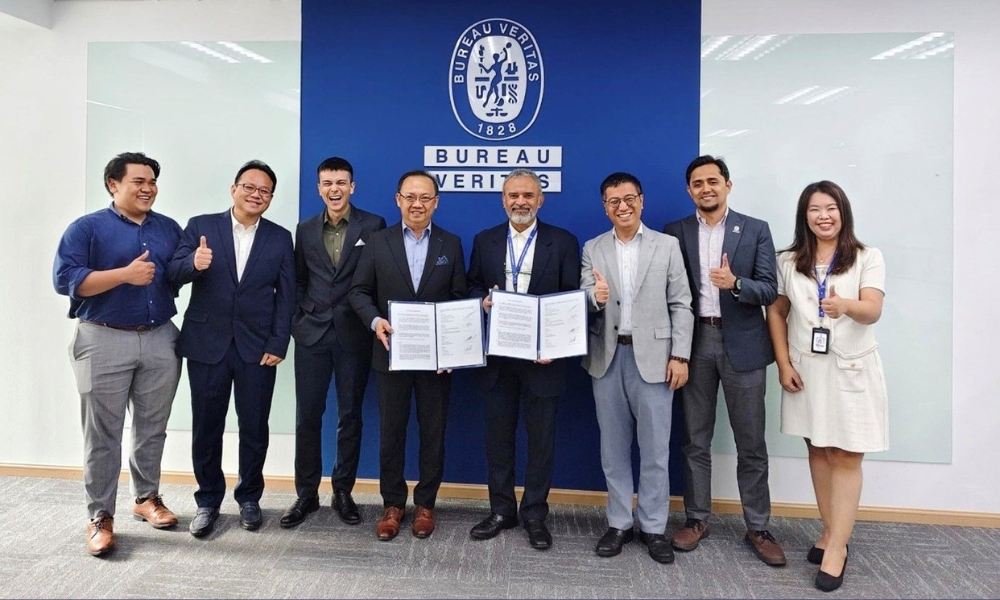
Bureau Veritas (BV) Malaysia and Singapore’s bio-LNG supplier Straits Bio-LNG Pte Ltd have signed a Memorandum of Understanding (MOU) to establish a strategic alliance focused on producing ISCC EU-certified sustainable bio-methane, according to classification society BV on Wednesday (7 January).

BV said the partnership reinforces BV Malaysia’s commitment to supporting the energy sector’s transition, by working closely with Straits Bio-LNG to develop a sustainable bio-methane liquefaction facility that upholds the highest standards of environmental protection and regulatory compliance. 

Through this collaboration, BV Malaysia and Straits Bio-LNG will jointly commit to establishing a comprehensive framework to ensure ISCC EU compliance across Straits Bio-LNG’s supply chain, advancing sustainability practices while meeting evolving regulatory requirements and promoting industry-leading certification benchmarks to support market credibility and trust. 

The MOU signing was witnessed by Dato’ Mohd Nizam Abdul Malik, BV Malaysia Country Chief Executive, CIF, and Tan Soo Koong, CEO of Straits Bio-LNG.

According to its website, Straits Bio-LNG procures Compressed Biomethane (CBM) in various parts of South East Asia and produces liquefied biomethane to export to international markets. 

Straits Bio-LNG has previously stated that it recognised the growing demand for LNG in key bunkering hubs including Singapore and aims to deliver 250,000 tonnes of bio-LNG will be available yearly in response.

Straits Bio-LNG aims to reach its bio-LNG supply goal by using pioneering methods. It is currently in the advanced stage of testing breaking down Empty Fruit Bunch (EFB) by an established biological process with high enzyme concentration in its R&D facility in Malaysia. Both Palm Oil Mill Effluent (POME) and EFB are sustainable biomass resources listed in the “List of Materials Eligible for ISCC EU Certification” and are therefore compliant with the European Union’s Renewable Energy Directive (RED).

Related: Singapore-based Straits Bio-LNG aims to deliver 250,000 mt of bio-LNG bunker fuel per year

Photo credit: Bureau Veritas Group
Published: 8 January, 2026

Continue Reading

Bunker Fuel

Singapore: Bunker fuel sales drops by 6.8% on year in May 2026

4.55 million mt of various marine fuel grades were delivered at the world’s largest bunkering port in May, down from 4.88 million mt recorded during the similar month in 2025, according to MPA data.

Admin

Published

on

By

Singapore: Bunker fuel sales drops by 6.8% on year in May 2026

Sales of marine fuel at Singapore port dropped by 6.8% on year in May 2026, according to data from the Maritime and Port Authority of Singapore (MPA).

In total, 4.55 million metric tonnes (mt) (exact 4,548,000 mt) of various marine fuel grades were delivered at the world’s largest bunkering port in May, down from 4.88 million mt (4,878,100 mt) recorded during the similar month in 2025.

Deliveries of marine fuel oil, low sulphur fuel oil, ultra low sulphur fuel oil, marine gas oil and marine diesel oil in May (against on year) recorded respectively 1.79 million mt (-5.3% from 1.89 million mt), 2.29 million mt (-6.5% from 2.45 million mt), zero (-100% from 1,200 mt), 600 (35.2% from 1,700 mt) and zero (from zero).

Singapore: Bunker fuel sales drops by 6.8% on year in May 2026

Bio-blended variants of marine fuel oil, low sulphur fuel oil, ultra low sulphur fuel oil, marine gas oil and marine diesel oil in May, (against on year) recorded respectively 11,600 mt (-71.6% from 40,900 mt), 36,400 mt (-62.1% from 96,100 mt), zero (from zero), zero (from zero) and zero (from zero). B100 biofuel bunkers, introduced in February last year, recorded 12,800 mt (+573.7% from 1,900 mt). 

LNG and methanol sales were 70,300 mt (+56.2% from 45,000 mt) and zero (from zero) respectively. There were no recorded sales of ammonia for the month and so far since 2025.


Photo credit: Maritime and Port Authority of Singapore
Published: 15 June, 2026

Continue Reading

Alternative Fuels

Hong Kong expands support for alternative bunker fuels with new vessel incentives

Port Dues Incentive Scheme for Green Maritime Fuel-related Vessels and the Green Vessels Registration Incentive Scheme will be launched on 16 June for a period of three years.

Admin

Published

on

By

Hong Kong

The Marine Department (MD) on Friday (12 June) announced that the Port Dues Incentive Scheme for Green Maritime Fuel-related Vessels and the Green Vessels Registration Incentive Scheme will be launched on 16 June for a period of three years, with a view to encouraging more vessels to bunker green maritime fuels in Hong Kong and accelerating the green transformation of the Hong Kong fleet.

To leverage the trend of decarbonisation in the international shipping industry, the Government has committed in the Action Plan on Green Maritime Fuel Bunkering promulgated in November 2024 the provision of various financial incentives to help lower the cost of transitioning to green maritime fuels by the maritime industry and expedite the development of Hong Kong as a green port. 

In this year’s Budget, the Government has allocated approximately $34 million to implement relevant initiatives, including providing port dues concessions for vessels powered by green maritime fuels as well as those carrying green maritime fuels, and offering incentives for green fuel-powered vessels registered in Hong Kong.

The Port Dues Incentive Scheme for Green Maritime Fuel-related Vessels provides concessions for green maritime fuel-related vessels, including ocean-going vessels (OGVs) powered by or bunkering specified green maritime fuels in Hong Kong, and OGVs carrying green maritime fuels for supply in Hong Kong. 

Specified green maritime fuels covered under the Scheme refer to liquefied natural gas (LNG), methanol, ammonia, hydrogen, and bio-diesel (blended with at least 20% bio-fuel). Eligible OGVs conducting specified operation(s) throughout their stay in Hong Kong may apply for a reimbursement of their port dues (including port facilities and light dues, anchorage dues, buoy dues and fees for port clearance permits) paid in accordance with the Shipping and Port Control Regulations (Cap. 313A). The amount of the incentive is equivalent to 25% or 50% of the port dues paid.

Eligible shipowners or their agents must submit the application form together with the required supporting documents to the MD within three months of their vessels’ completion of the above operation(s) in and departure from Hong Kong. The approved incentive amount will generally be disbursed within 30 working days. The amounts of incentives applicable to different types of OGVs are set out in the Annex.

A spokesman for the MD, said: “Following the launch of the Green Maritime Fuel Bunkering Incentive Scheme last year, the new initiative further provides incentives to encourage the industry to adopt green maritime fuels, which are often more expensive than traditional fuels, and to build up demand for green maritime fuel bunkering services in Hong Kong early. 

“This will in turn attract other players in the green maritime fuel bunkering supply chain, such as bunker suppliers, bunker operators and traders, to establish and expand their operations in Hong Kong. We expect this scheme to attract more than 1,000 visits to Hong Kong by green maritime fuel-related vessels.”

Meanwhile, the Green Vessels Registration Incentive Scheme provides incentives to green fuel-powered vessels currently or newly registered in the Hong Kong Shipping Registry (HKSR), thereby attracting and retaining the registration of green vessels in Hong Kong.

Under the scheme, all Hong Kong-registered ships that use green maritime fuels as their primary propulsion fuel, which include LNG, methanol, ammonia and hydrogen but exclude conventional fuels and biofuels, will be eligible to apply. 

During the three-year period of the scheme, each eligible vessel will be provided with a subsidy of HKD 60,000 once every year, and may enjoy one or at most three years’ incentives depending on the timing and duration that the vessel is registered with the HKSR. 

Each vessel is eligible to receive a maximum subsidy of HKD 180,000. Approval and disbursement of the incentives will take approximately three months from the receipt of an application with all required supporting documents. The vessel’s Hong Kong registration status must be maintained on the date the incentive is disbursed. 

The spokesman, said: “This scheme will encourage vessels using green maritime fuels to register in Hong Kong and promote the green transformation of the Hong Kong fleet, which will further enhance the overall competitiveness of the HKSR. We estimate that this scheme will attract approximately 100 vessels powered by green maritime fuels to register with the HKSR. Alongside the vessels powered by green maritime fuels currently registered in Hong Kong, we expect that around 170 such vessels registered in Hong Kong will benefit from the scheme within three years of implementation.”

Note: For details of the Port Dues Incentive Scheme for Green Maritime Fuel-related Vessels and the Green Vessels Registration Incentive Scheme, visit the MD’s webpages (www.mardep.gov.hk/filemanager/en/share/forms/pdf/md558.pdf ; www.mardep.gov.hk/filemanager/en/share/forms/pdf/md743.pdf).


Photo credit: M on Unsplash
Published: 15 June, 2026

Continue Reading

Biofuel

Bunker brokerage Norwegian Energy Trading renews ISCC certification for biofuel trading

‘Our biofuel volumes have been growing steadily, and we’re committed to keeping pace with where the market is genuinely heading — not where it’s announced to be heading,’ says firm.

Admin

Published

on

By

Bunker brokerage Norwegian Energy Trading renews ISCC certification for biofuel trading

Bunker brokerage Norwegian Energy Trading (NET) recently announced that its International Sustainability and Carbon Certification (ISCC) certification for biofuel trading has been renewed for another year.

NET said certified mass balance, full chain of custody, and verifiable GHG savings are the foundation of any credible bio offering.

The company added that the renewal comes at the right time.

“Our biofuel volumes have been growing steadily, and we’re committed to keeping pace with where the market is genuinely heading — not where it’s announced to be heading,” it added.


Photo credit: Norwegian Energy Trading
Published: 15 June, 2026

Continue Reading

Trending