Connect with us

Technology

Q&A: DNV’s Piyush Raj on building AI capabilities for maritime professionals

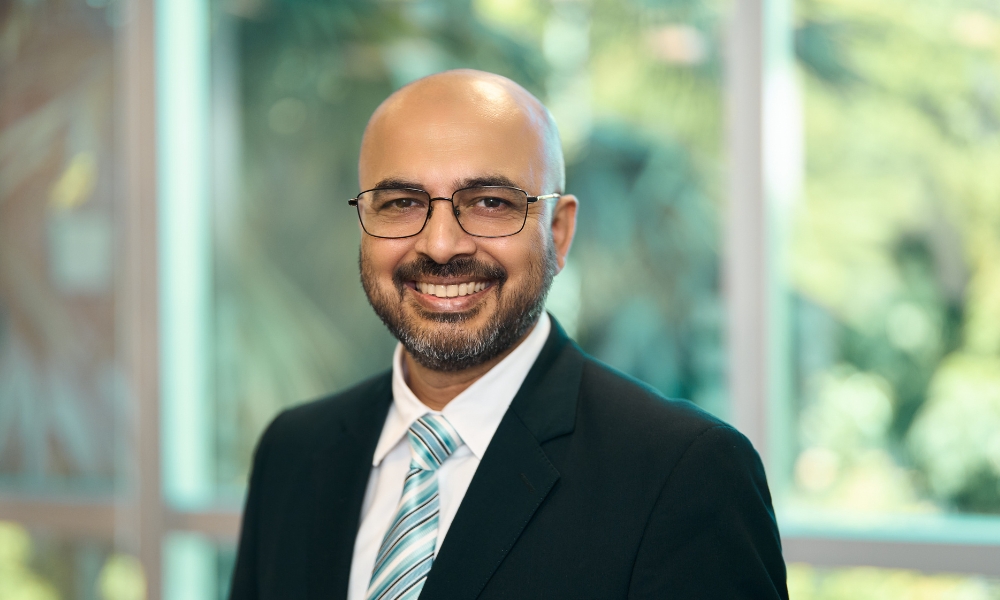
In an interview, DNV Maritime Advisory’s Dr. Piyush Raj shares his perspectives on the industry’s evolving AI landscape and the skills maritime professionals will need in the years ahead.

Admin

Published

on

Q&A: DNV’s Piyush Raj on building AI capabilities for maritime professionals

As interest in artificial intelligence (AI) continues to grow across the maritime industry, many organizations are exploring how the technology can be applied in practice. At the same time, questions remain around data quality, workforce readiness, trust and the practical challenges of scaling AI beyond pilot projects.

In this Q&A, Dr. Piyush Raj, Head of Maritime Technology & Innovation, DNV Maritime Advisory, and trainer at DNV Maritime Academy (Singapore), shares his perspectives on the industry’s evolving AI landscape and the skills maritime professionals will need in the years ahead:

MT: AI has become an increasingly common topic across the maritime industry. Based on your interactions with maritime organizations, what are some of the key challenges they face when exploring or applying AI?

From my experience, the challenge when maritime organizations look to implement AI tools is building the foundation for it to produce useful results, rather than the implementation or use of the technology itself. Many organizations have large amounts of data, but struggle with data quality and standardization. On top of that, there are governance, cyber security, and control and assurance issues, both of the data and of the tools and systems themselves. Even when we have something that looks promising, there can be scaling challenges. Moving beyond a proof-of-concept or pilot project to a broader operational or fleet level requires a whole new approach in terms of organizational buy in, process integration, and trust within and beyond the organization itself.

This is because maritime is a safety critical industry and safety is the backbone of how shipping has created the modern global economy. If we lose confidence in the safety of our industry, we’ve lost everything. So, we need to be sure that as AI adoption increases, we have a firm basis for demonstrating that these systems are just as reliable, secure, transparent, and aligned with regulatory expectations as the systems we have today. Equivalent safety levels are a very familiar concept to us in the maritime industry – we have technologies that have been rolled out on that basis and enjoy great trust today. But building that trust is just as important as developing the technology itself.

MT: Singapore has established itself as a hub for maritime innovation and digitalization. How are these developments shaping the skills and capabilities maritime professionals need today?

Singapore has built a reputation for leadership in maritime innovation, especially as relates to digitalization, largely due to the efforts of the Maritime and Port Authority of Singapore (MPA) and cooperation with both industry and academia. At DNV for example, Singapore is home to our Maritime Decarbonization and Smart Shipping Centre of Excellence where we focus on working with partners to build in these areas, alongside enhancing sustainability and talent development. All these combined have resulted in a lot of expertise developing, as well as the associated rollout and adoption of technologies like predictive maintenance, vessel performance monitoring, decision support systems, smart port operations, the wider use of digital twins, and data-driven optimization, throughout the maritime value chain.

One thing these technologies tend to have in common is that they are data driven, and this has increased expectations that maritime professionals and crew in Singapore should be able to work with data-driven tools as part of their day-to-day responsibilities. Today, the rise of AI adds a new level of expectation, that professionals will need an understanding of AI, process and system automation, and the cybersecurity implications of these tools, and on top of that the ability to critically evaluate digital outputs, so that they can be applied in operational decision-making.

As a result, there is growing interest in training programmes that help maritime professionals build up these skills, and especially their understanding of AI and its practical applications.

MT: What can maritime professionals expect to gain from DNV Maritime Academy’s AI courses?

Our AI courses are designed to help maritime professionals understand where AI can deliver real value in maritime operations today, and where the potential is over the long term. Developed specifically for the industry, the trainings combine AI fundamentals with practical, maritime-specific, use cases that cover everything from operations, maintenance, safety, through to fleet management and decision support.

Beyond the technology itself, participants will gain insights into regulations and governance, cybersecurity, assurance and human factors – all of which are critical considerations in a safety-critical industry like shipping. We also like to think that a key differentiator of our courses is our focus on responsible AI adoption, and this is an area where we as DNV have a particular emphasis on developing recommended practices and guidance on AI-enabled systems and AI assurance.

Most importantly, we hope participants will leave with a practical framework to evaluate AI opportunities, identify high-value use cases, avoid common pitfalls, and be able to make more informed decisions about AI adoption and the ongoing digital transformation of shipping.

Note: Maritime Cluster Fund (MCF) Training Grant is available for eligible participants. Please refer to https://www.mpa.gov.sg/maritime-singapore/what-maritime-singapore-offers/developing-manpower/training@maritimesingapore for information on the MCF Training Grant.

Photo credit: DNV
Published: 1 August, 2026

Continue Reading

Technology

APPEC 2026: Digitalisation in bunkering not merely a ‘paper-to-screen’ swap, states panellists

Panel members discuss how digitalising bunkering enhances transparency and trust, though human relationships and data governance remain essential for success.
Admin

Published

on

By

i gsbNrHK X3 MT

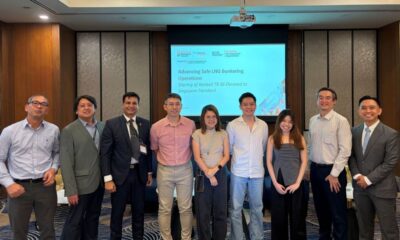
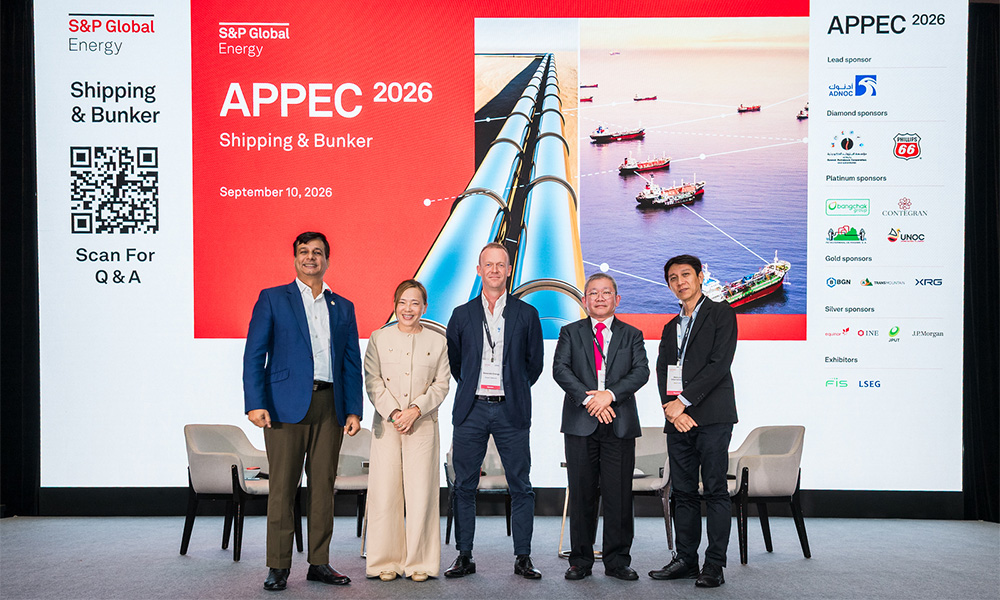
Representatives across the marine fuels supply chain consisting of Singapore bunker supplier Hong Lam Marine, shipowner and operator Ocean Network Express (ONE), bunker buyer Seascale Energy and mass flow meter (MFM) conformity assessment body Metcore International met at APPEC 2026 on Thursday (10 September) to examine the digitisation of bunkering.

The panel Addressing the Transition into Digital Bunker in APAC moderated by Saunak Rai, Member Marine Fuels Committee, Singapore Shipping Association, agreed bunkering’s digitalisation is not merely a paper-to-screen swap and must deliver transparency and trust.

They concluded technology is pivotal, but human relationships and judgement remain indispensable.

The following points were raised by panel members during discussion:

Caroline Yang, Chief Executive Officer, Hong Lam Marine, believed digitalisation in bunkering is a fundamental transformation, not merely a “paper-to-screen” shift.

She highlighted Singapore’s mandatory MFM system as a benchmark for success, noting its seven-year development – involving industry collaboration and strict enforcement – established a trusted, independent method for quantity measurement that levelled the playing field.

Building on the above, she explained electronic bunker delivery notes (eBDNs) extend this trust to documentation by ensuring authenticity, verification, and auditability.

She credited the Maritime and Port Authority of Singapore (MPA) for extensive industry consultation, emphasising success relies on stringent platform approval criteria, particularly regarding cybersecurity and controlled stakeholder access.

Addressing the commercial impact, Ms Yang clarified digitalisation does not directly increase revenue for bunker craft operators; in fact, it initially raised costs due to verification and testing requirements.

However, digitalisation significantly enhanced operational efficiency, saving approximately 2 to 3 hours per bunkering operation and reducing quantity disputes. She advocated for a “digital corridor” between ports to improve interoperability.

Looking ahead, Ms Yang predicted paper BDNs will be obsolete in Singapore within 36 months, though emphasising manual soundings must remain as a necessary fallback.

Richard Ho, Vice President, Fuel, ONE, emphasised the “GIGO” (Garbage In, Garbage Out) principle, asserting the value of digitalisation depended entirely on data integrity and robust regulatory frameworks.

Managing high volumes of bunkering transactions annually, Mr Ho pointed out ONE relies on established internal verification processes for bunker purchases. While he views eBDNs as a valuable, authoritative source for transparency, he notes the transition requires careful validation before automated verification can replace human checks.

Mr Ho highlighted the modern marine fuel market has been increasingly complex due to the introduction of new bunker fuel types, geopolitical instability, and port congestion.

Consequently, he argued that while digital tools enhance efficiency and enable potential auto-payment systems, bunker buyers must still actively balance leveraging scale with maintaining flexible, resilient supply partnerships.

Ultimately, he believed technology should support, rather than replace, the critical human oversight required to manage bunker fuel procurements effectively.

Kasper Sorensen, Head of Marine Fuels Sourcing, East, Seascale Energy, represents a major marine fuel procurement consolidator for more than 50 shipowners/operators.

He championed transparency, noting Singapore’s policed MFM system remains the global gold standard. To replicate this success, he helped launch a voluntary framework in Rotterdam, arguing that buyer-side consolidation is essential to match the consolidated seller market and drive best practices.

Mr Sorensen pointed out recent geopolitical instability has fundamentally shifted industry priorities from bunker prices alone to supply security and resilience.

He advocated for the “three R’s” – Risk, Resilience, and Relationships – as the framework for navigating modern challenges.

“We might buy bunkers for more than 3,000 vessels, but the most important ship is friendship,” he stated.

Moving forward, Mr Sorensen believed while digital tools are vital, true strength lies in collaborative partnerships, which are proven and solidified only when crises occur.

Daryl Lim, Quality Manager, Metcore International, provided the technical perspective on bunkering digitalisation, drawing on his experience in legal metrology and conformity assessment of marine fuel measurement systems.

He highlighted that MFM technology forms the foundation for generating reliable, traceable, and independently verifiable measurement data. While eBDNs create an efficient pathway for transmitting information among stakeholders, Mr Lim noted that data consistency, standardisation, and governance remain key areas requiring continued industry focus.

He emphasised that confidence in digitalisation depends not only on the accuracy of the measurement system, but also on the integrity and traceability of data throughout the entire digital value chain. Consistent data structures, verification mechanisms, and secure governance frameworks are therefore essential to maintaining trust among stakeholders.

Furthermore, he noted that interoperability between digital platforms will be critical to enabling seamless data exchange, reducing operational risks, and supporting a more transparent and verifiable bunkering ecosystem.

Looking ahead, Mr Lim expects the industry to progressively transition towards greater automation in validation and verification processes, supported by trusted measurement technologies, standardised digital frameworks, and robust conformity assessment practices.


Photo credit: S&P Global
Published: 14 September 2026

Continue Reading

Wind-assisted

LDA’s methanol-powered “Spirit of Toulouse” gets Norsepower rotor sail in Shanghai

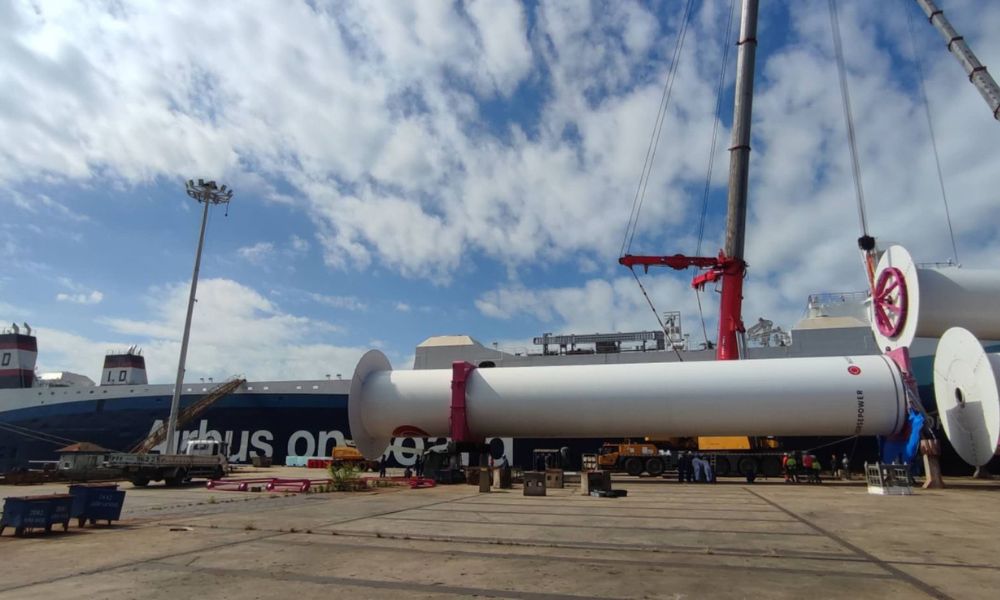
Now in Shanghai, the installation of the vessel’s innovative wind-assisted propulsion system has begun with the fitting of the first of its six 35-metre-high rotors.
Admin

Published

on

By

LDA’s methanol-powered “Spirit of Toulouse” gets Norsepower rotor sail in Shanghai

French shipowner LD Armateurs on Thursday (10 September) said its new RoRo vessel has reached another major milestone in her construction journey with the start of the installation of a wind-assisted propulsion system. 

Following its launch earlier this year, Spirit of Toulouse has completed a journey along the Yangtze River to Shanghai. 

Now in Shanghai, the installation of the vessel’s innovative wind-assisted propulsion system has begun with the fitting of the first of its six 35-metre-high rotors. 

“This highly visible phase marked a significant step forward in bringing to life the world’s biggest low-emission RoRo vessels ever built,” the company said. 

Combining six Norsepower Rotor Sails ™ and two dual-fuel engines capable of running on e-/bio-methanol or marine diesel oil, the Spirit of Toulouse has been specifically designed to substantially reduce emissions while maintaining the highest standards of operational performance and reliability. 

The ship will operate on the Atlantic route, transporting aircraft elements for Airbus between European production sites and the final assembly line in the US. 

“As work progresses in Shanghai, the silhouette of the Spirit of Toulouse is beginning to take shape, bringing this unique vessel one step closer to entering service and setting new standards for sustainable maritime transport,” the company added. 


Photo credit: LD Armateurs
Published: 14 September, 2026

Continue Reading

Ammonia

Amogy and LOTTE Fine Chemical to explore ammonia bunkering in South Korea

Under a MoU, both will explore supplying ammonia to vessels equipped with Amogy’s Ammonia-to-Power technology, leveraging LFC’s ammonia terminal at Ulsan Port and ship-bunkering capabilities.

Admin

Published

on

By

Amogy, LOTTE Fine Chemical to explore ammonia bunkering in South Korea

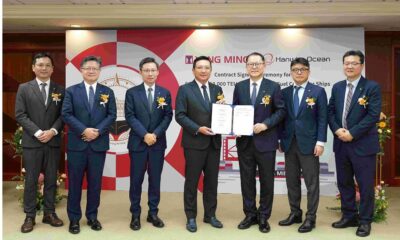
Ammonia-to-power solutions provider Amogy and LOTTE Fine Chemical Co Ltd (LFC) on Thursday (10 September) announced the signing of a Memorandum of Understanding (MoU) to jointly advance ammonia-to-hydrogen and ammonia-to-power solutions in South Korea.

Under the MoU, Amogy and LFC will explore collaboration across three priority areas that combine LFC’s ammonia supply and infrastructure capabilities with Amogy’s downstream ammonia cracking and power generation technology.

In hydrogen refuelling infrastructure, LFC would supply green ammonia through its overseas procurement and domestic infrastructure, with Amogy’s ammonia cracking technology converting the ammonia into high-purity hydrogen on-site for use at hydrogen refueling stations. 

For distributed ammonia-to-power generation at commercial and community-scale sites, LFC would provide ammonia supply, storage, and logistics, while Amogy would provide its Ammonia-to-Power generation modules, including fuel cell or internal combustion engine configurations. 

In marine ammonia bunkering, the companies would explore supplying ammonia to vessels equipped with Amogy’s Ammonia-to-Power technology, leveraging LFC’s ammonia terminal at Ulsan Port and ship-bunkering capabilities.

“As Korea continues to build out its clean ammonia and hydrogen infrastructure, partnerships that connect upstream supply with downstream technology are essential to accelerating deployment,” said Seonghoon Woo, CEO of Amogy.

“LOTTE Fine Chemical’s ammonia infrastructure, paired with our ammonia-to-hydrogen and ammonia-to-power technology, gives us a strong foundation to advance hydrogen refuelling, distributed power, and marine applications across the region.”

“LFC has built the infrastructure to import, store, and supply ammonia safely and at scale, including the world’s first ship-bunkering supply of ammonia,” said Suk Min Hwang, Vice President of Ammonia Business Division at LOTTE Fine Chemical. 

“This collaboration with Amogy allows us to extend that infrastructure into new downstream applications, supporting Korea’s transition to a clean ammonia and hydrogen economy.”

LFC has achieved the world’s first commercial import of green ammonia in addition to the world’s first domestic ship-bunkering supply using green ammonia.

Amogy’s proprietary ammonia cracking technology enables the efficient conversion of ammonia into hydrogen, supporting both high-purity hydrogen production and ammonia-to-power generation across stationary, distributed, and marine applications.

Building on the MoU, Amogy and LFC will continue joint evaluation of collaboration opportunities across hydrogen refuelling, distributed power, and marine ammonia bunkering, with further details on project scope and timing to be finalised for execution.


Photo credit: Amogy
Published: 11 September, 2026

Continue Reading
Advertisement

OUR INDUSTRY PARTNERS


Trending