Connect with us

Nuclear

Long Beach becomes first US port to partner with MARAD on nuclear-powered shipping

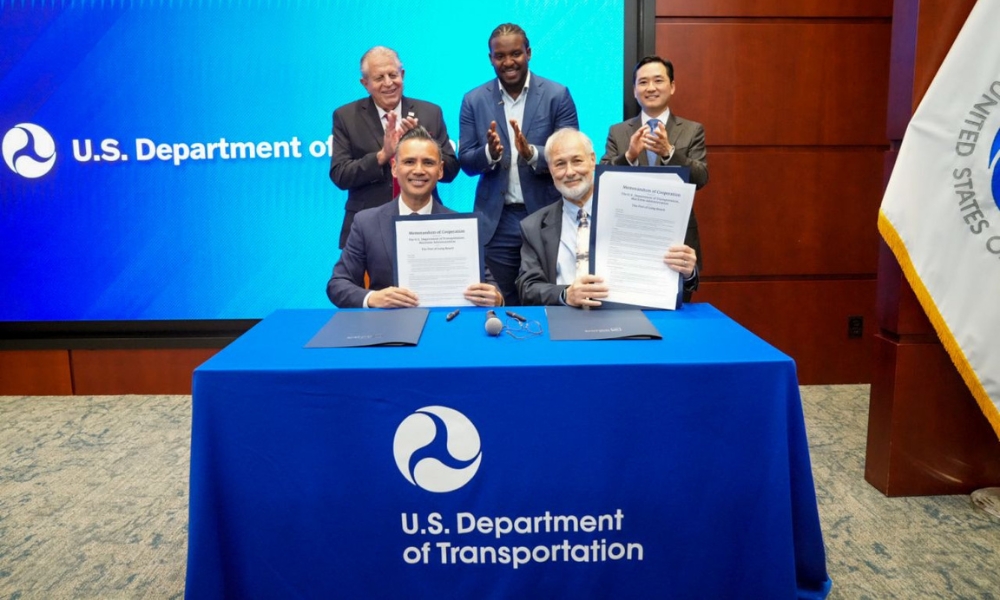
It became the first Port in the nation to sign a Memorandum of Cooperation with MARAD to advance work on development of SMR technology to power commercial vessels, ports and other maritime assets.

Admin

Published

on

Long Beach becomes first US port to partner with MARAD on nuclear shipping

The Port of Long Beach on Wednesday (22 July) said it became the first Port in the nation to sign a Memorandum of Cooperation with the US Department of Transportation’s Maritime Administration (MARAD) to advance work on development of small modular reactor (SMR) technology to power commercial vessels, ports and other maritime assets.

The agreement represents a significant milestone, making Long Beach the first US seaport to formalise a partnership with MARAD to establish nuclear-powered vessels for commercial service.

“This first-of-its-kind partnership with MARAD allows us to leverage strong federal leadership and private sector innovation to catalyse SMR technology as we safely and securely support the next generation of shipping,” said Port of Long Beach CEO Dr. Noel Hacegaba. 

“We’re building the Port of the Future in Long Beach, where we’ve led in global trade by moving USD 300 billion in cargo annually to support 2.7 million American jobs, and we will continue our tradition of leadership as we partner to advance nuclear energy in maritime and beyond.”

“Under President Trump’s and Secretary Duffy’s leadership, MARAD is taking decisive action to revitalise US shipbuilding and secure our national energy dominance,” said Maritime Administrator Stephen M. Carmel.

“This milestone agreement with the Port of Long Beach brings cutting-edge Small Modular Reactor technology into active testing. It ensures our maritime supply chains stay operational under any contingency while training the next generation of high-skilled American mariners.”

The agreement builds on momentum from MARAD’s Request for Information on 7 May, issued in the Federal Register, seeking industry input on the development of a US-built, scalable and commercially viable SMR for the nation’s marine transportation system. 

It also complements the Port’s new lease agreement with BlueCore Energy Inc., which allows the company to assemble, test and store maritime power modules, adding private-sector expertise to this the partnership with an American energy and technology company on the forefront of SMR development.

Demand for reliable electricity sources is forecast to grow substantially as the Port pursues a goal to double container volume by 2050. Under the agreement, the Port and MARAD will collaborate with the U.S. Coast Guard, the Department of Energy and the Nuclear Regulatory Commission to help define the operational protocols, safety standards and inspection processes needed to support the safe arrival and servicing of SMR-powered vessels at US ports, as well as to develop and share other best practices. 


Photo credit: Port of Long Beach
Published: 24 July, 2026

Continue Reading

Bunker Fuel Availability

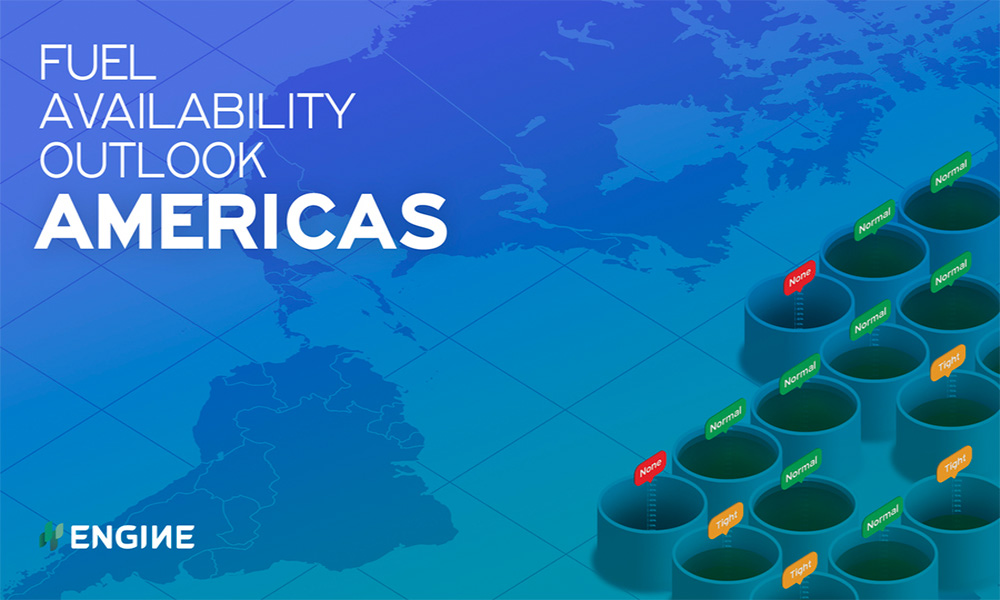
ENGINE: Americas Bunker Fuel Availability Outlook (23 July 2026)

Tropical storm disrupts US Gulf bunkering; Panama demand dips; VLSFO and LSMGO tight in Paranagua and Rio Grande.
Admin

Published

on

By

RESIZED ENGINE Americas

The following article regarding bunker fuel availability in the Americas region has been provided by online marine fuel procurement platform ENGINE for post on Singapore bunkering publication Manifold Times:

  • Tropical storm disrupts US Gulf bunkering
  • Panama demand dips
  • VLSFO and LSMGO tight in Paranagua and Rio Grande

North America

In the port of Houston, bunker demand has ticked up over the past week, while availability of all three conventional fuel grades is normal, a trader tells ENGINE.

Recommended lead times for VLSFO and HSFO are at 5-6 days, and LSMGO is available from most suppliers with lead times of 3-4 days.

In the Galveston Offshore Lightering Area (GOLA), bunkering is currently underway on a first-come, first-served basis. Availability of VLSFO and LSMGO is okay, with both grades typically requiring lead times of 6-7 days over the past week.

HSFO availability is comparatively tighter, and longer lead times are expected at the anchorage, a source told ENGINE.

The Atlantic hurricane season is ongoing, and the National Hurricane Center has issued advisories for Tropical Storm Bertha.

The storm is expected to dominate weather conditions across the US Gulf through the end of the week, bringing strong to severe thunderstorms, gale-force gusts, sustained winds of up to 40 knots near the storm, and rough seas.

In the US Gulf, the passing of Bertha could cause bunker delays, a trader said.

“Mobile, Pascagoula, New Orleans, Lake Charles, Beaumont, Houston, Galveston, Freeport and GOLA are all possibly in the line of the storm,” the trader added.

On the US East Coast, the port of New York is seeing steady bunker demand, with neither significant highs nor lows, a trader said.

Recommended lead times for HSFO and VLSFO are at 5-7 days. LSMGO can be delivered by most suppliers in less than five days. Weather conditions at the port are expected to remain calm, with winds of 5-10 knots and waves of 1-2 feet.

On the West Coast, the ports of Los Angeles and Long Beach have recorded strong bunker demand. Prompt availability of all three conventional fuel grades is tight.

Suppliers have recommended lead times of 7-8 days for HSFO, VLSFO and LSMGO.

This week, the Port of Long Beach and the US Maritime Administration (MARAD) announced they have partnered to study small modular reactors (SMRs) for commercial shipping and port operations, signalling growing interest in nuclear-powered shipping.

In Canada’s Vancouver, bunker demand is steady. Availability is good at the port, with all three conventional fuel grades requiring lead times of 4-5 days.

Latin America and the Caribbean

In Panama, fuel demand has dipped this week. Balboa and Cristobal continue to see normal availability.

Suppliers recommend lead times of 3-5 days for VLSFO and LSMGO, while HSFO requires around seven days.

Drought conditions linked to El Niño have renewed concerns over water levels in the Panama Canal. Shipping agent Norton Lilly said the Panama Canal Authority will temporarily reduce vessel booking slots, which could increase congestion by the key trade route.

In Colombia, the ports of Cartagena, Santa Marta and Barranquilla have good availability of VLSFO and LSMGO, with the earliest delivery dates in 3-4 days, a trader said.

The Brazilian port of Santos is experiencing congestion, but bunker availability is okay this week. Lead times are 5-8 days, depending on the size of the enquiry and the fuel grade, a trader said.

At Rio de Janeiro, VLSFO availability is okay, and deliveries can be made within 4-5 days. LSMGO is available only with prior consultation.

For Belem and Vila do Conde, availability for both VLSFO and LSMGO is okay, and deliveries can be made within 4-5 days.

In Paranaguá, both VLSFO and LSMGO are tight this week. The earliest delivery date for both grades is between 1-2 August.

Availability of these two grades is very tight at Rio Grande. The earliest expected delivery date is 31 July, a trader said.

In Argentina, construction of the new crude oil terminal at Punta Colorada is ongoing. The project is moving into the pipeline installation phase following the completion of a single point mooring anchor, Antares Ship Agents said.

Once completed, the new terminal will support tanker loading operations.

At Argentina’s Zona Comun anchorage, availability of VLSFO and LSMGO is good, with both grades deliverable in 5-7 days.

Operations are currently ongoing on a first-come, first-served basis. On Saturday, however, delays and disruptions are possible at the anchorage due to dense fog, a source said.

By Gautamee Hazarika


Photo credit and source: ENGINE
Published: 24 July, 2026

Continue Reading

Nuclear

ABS awards AiP to Korean institute for SMR-powered container ship concept design

KRISO says AiP recognises the technical feasibility and safety of its concept design, marking an important milestone toward the development of next-generation nuclear-powered commercial ships.
Admin

Published

on

By

ABS awards AiP to Korean institute for SMR-powered container ship concept design

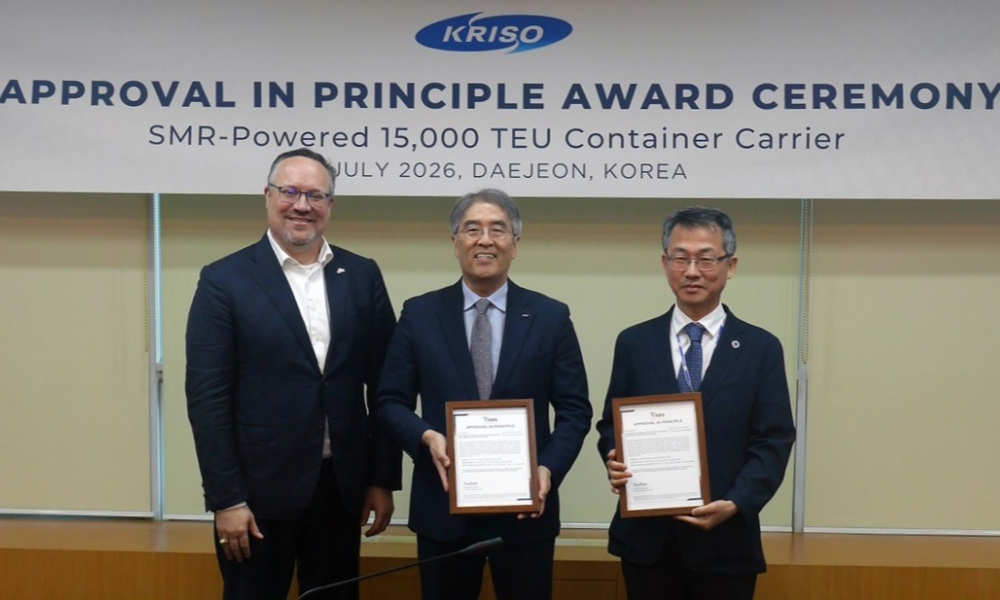
Korea Research Institute of Ships & Ocean Engineering (KRISO) on Thursday (16 July) received Approval in Principle (AiP) from the American Bureau of Shipping (ABS) for its concept design of a 15,000 TEU Small Modular Reactor (SMR)-powered container ship utilising Molten Salt Reactor (MSR) technology.

KRISO said the AiP recognises the technical feasibility and safety of its concept design, marking an important milestone toward the development of next-generation nuclear-powered commercial ships.

“This achievement demonstrates international recognition of KRISO’s technological capabilities in the rapidly evolving field of nuclear-powered shipping, supporting the transition toward low-carbon maritime transport,” it said. 

Building on this milestone, KRISO will continue advancing basic and detailed ship design, paving the way for future demonstration and commercialisation of SMR-powered vessels. 

Through continued R&D and international collaboration, KRISO remains committed to strengthening next-generation maritime technologies and contributing to the safe deployment of nuclear propulsion in the maritime industry.


Photo credit: Korea Research Institute of Ships & Ocean Engineering
Published: 21 July, 2026

Continue Reading

Nuclear

LR: Rotterdam study sets out pathway for nuclear-powered commercial ship port calls

New joint study has found that existing port safety and risk-management frameworks could provide a credible starting point for assessing nuclear-powered ship calls within a major European port environment.
Admin

Published

on

By

RESIZED Shaah Shahidh on Unsplash

A new joint study using the Port of Rotterdam as a case study has found that existing port safety and risk-management frameworks could provide a credible starting point for assessing nuclear-powered commercial ship calls within a major European port environment, according to Lloyd’s Register (LR) on Thursday (11 June). 

The desktop study, Enabling Nuclear-Powered Feeder Ships: A Joint Development Project on Port Call Feasibility and Regulatory Pathways, carried out through a joint development project involving LR, the Port of Rotterdam Authority, CORE POWER and A.P. Moller – Maersk, sets out the questions that ports, regulators and industry would need to answer in order to assess nuclear-powered vessels in a structured and responsible way. 

It also identified further work that would be required before routine operation could be contemplated, including regulatory alignment, emergency preparedness, security, liability and public engagement.

Its publication comes at a time of growing pressure on the shipping industry to identify even more scalable zero-emission technologies capable of meeting increasingly demanding decarbonisation requirements while preserving operational reliability, endurance and flexibility.

The report argued that maritime nuclear propulsion should be evaluated as part of the wider discussion around shipping decarbonisation, energy resilience and long-term industrial competitiveness.

While much of the current EU policy discussion has focused on alternative fuels such as hydrogen, ammonia and e-fuels, the report notes that segments of global shipping may ultimately require additional propulsion solutions capable of supporting endurance, reliability and operational flexibility at scale.

The Port of Rotterdam participated as a case study because it provides a real-world European port environment through which to examine how emerging energy and shipping technologies could interact with existing port safety frameworks, operations and regulatory processes.

Importantly, the study concluded that existing risk-based port safety frameworks already familiar to European ports could provide a credible starting point for assessing nuclear-powered vessels, provided nuclear-specific safety, security and operational considerations are systematically integrated and supported by appropriate national and international guidance.

The findings suggested that the real challenge for future maritime nuclear propulsion is likely to centre on regulatory alignment, governance, integration between nuclear and maritime safety regimes, and public and institutional preparedness.

The study identifies several key findings:

  • Existing port safety and risk-management frameworks provide a credible starting point for the assessment of nuclear-powered commercial vessels within the defined case study scenario.
  • Further work is needed on regulatory alignment, governance coordination, nuclear-specific safety and security, emergency preparedness, liability and insurance, operational integration and public engagement before routine commercial operation could be contemplated.
  • Current IMO provisions relating to nuclear-powered ships were developed for an earlier era and require modernisation to support any future civil commercial nuclear propulsion pathway.
  • Current European maritime decarbonisation discussions remain heavily focused on alternative fuels, with comparatively limited consideration of high-density, zero-emission propulsion systems capable of supporting long-range and high-utilisation shipping operations.
  • Major ports and maritime Member States may play an important role in shaping how nuclear propulsion is assessed and potentially integrated into future shipping strategies.


Photo credit: Shaah Shahidh on Unsplash
Published: 16 June, 2026

Continue Reading

Trending