Connect with us

Biofuel

MSC Cruises ship completes 2,000-hour trial with Enilive HVO bio bunker fuel

Test showed HVO is an immediately applicable solution even for marine engines and without the need for technological upgrades, while ensuring performance in line with traditional marine fossil fuels.

Admin

Published

on

MSC Cruises ship completes 2,000-hour trial with Eni HVO bio bunker fuel

Integrated energy company Eni and MSC Cruises on Tuesday (12 May) announced the completion of a test of the use of Enilive’s Hydrogenated Vegetable Oil (HVO) diesel. 

This test confirmed the technical feasibility of using the biofuel in its pure form in the maritime sector to power cruise ship engines.

The initiative highlighted the value of HVO as a strategic energy carrier to support the decarbonisation of maritime transport and the reduction of life-cycle greenhouse gas (GHG) emissions, enabling shipowners to significantly cut emission-related costs and to meet the targets set by FuelEU Maritime regulation.

The trial was jointly carried out by Eni and MSC Cruises: during the tests, one of the engines of the cruise ship MSC Opera was powered for approximately 2,000 hours with pure HVO, without any engine modifications, while performance and emissions data were recorded.

This test demonstrated that HVO is an immediately applicable solution even for marine engines and without the need for technological upgrades, while ensuring performance in line with traditional marine fossil fuels.

The test also recorded lower emissions of both NOx (-16%) and particulate, as well as a significant reduction in GHG emissions inherent to the origin of the HVO product of around -80% compared to the use of traditional fuel; the reduction is due to the usage of 100% biogenic feedstocks in the HVO production process.

Technical data on engine performance and associated emissions were collected and assessed with the support of Wärtsilä, the engine manufacturer, and Bureau Veritas, which acted as an independent certifier to validate the experimental results.

Stefano Ballista, Chief Executive Officer of Enilive, said: “The trial with MSC has demonstrated how HVO diesel biofuel can contribute immediately to the decarbonization of maritime transport. It can be used in its pure form in marine engines validated for its use, allowing a reduction in climate-altering emissions – calculated along the entire supply chain – of between 65% and 90% compared to traditional marine fossil fuels. 

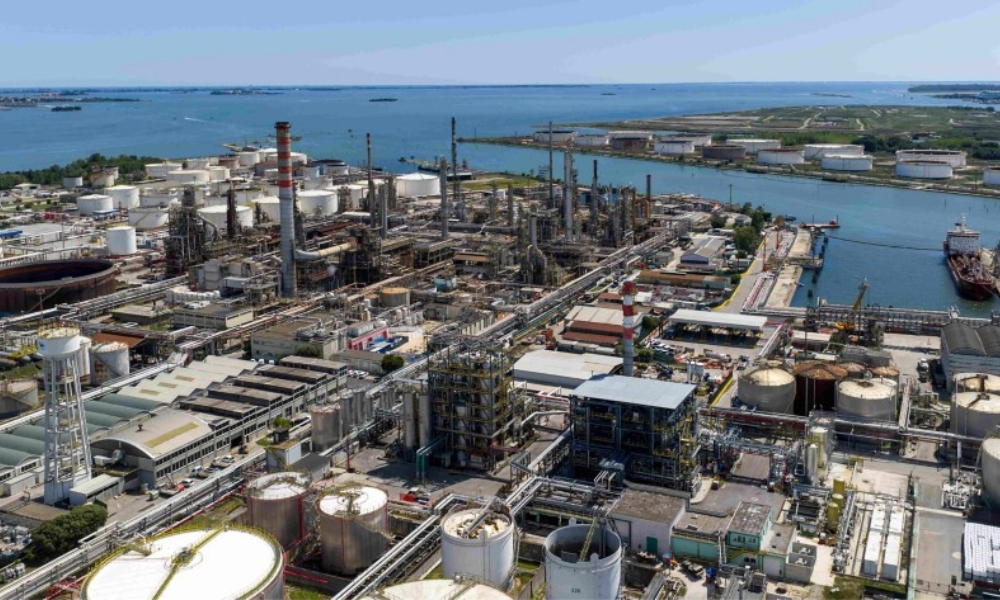
“HVO is produced at Enilive’s biorefineries in Venice and Gela, mainly from waste feedstocks such as used cooking oils, animal fats, and residues from the agri-food industry. For several months now, Enilive’s marine HVO diesel has been available at the ports of Genoa, Ravenna and Venice for direct delivery from the terminal to vessels via barge. The use of this fuel represents a viable solution for the decarbonization of maritime transport, contributing to compliance with the obligations set by the FuelEU Maritime regulation and reducing the emission-related costs.”

Michele Francioni, Chief Energy Transition Officer di MSC Cruises, said: “We are very pleased to have satisfactorily confirmed the technical feasibility of 100% HVO on our cruise ship as part of our continuous decarbonization efforts. 

“We believe HVO may play an important role in the decarbonisation of shipping and together with other immediately available fuels such as LNG and bio-LNG, constitutes an immediate opportunity that could be deployed on board cruise ships to accelerate the transition towards renewable fuels, bringing us a step closer to our ultimate goal of reaching net zero GHG emissions by 2050”.

Manifold Times previously reported Eni and shipping and logistics provider MSC Mediterranean Shipping Company signing a Memorandum of Understanding (MoU) aimed at developing joint initiatives in the field of sustainability and energy transition. 

The agreement includes the potential use of LNG as well as lower-carbon energy carriers, such as HVO and bio-LNG biofuels, as well as lubricants from renewable raw materials, for use on MSC fleets dedicated to both logistics and cruise transport. 

Related: Eni and MSC to jointly explore potential use of LNG and bio bunker fuels


Photo credit: Eni
Published: 12 May, 2026

Continue Reading

Alternative Fuels

ICS report: LNG and biofuels seen as most viable marine fuels over next decade

This was followed closely by HFO combined with abatement technologies while methanol ranked in fourth place, according to ICS’s new Maritime Barometer Report.

Admin

Published

on

By

RESIZED william william on Unsplash

A new report by the International Chamber of Shipping (ICS), published on Tuesday (23 June) found that  LNG and biofuels are seen as the most viable marine fuels over the next decade.

This was followed closely by HFO (Heavy Fuel Oil) combined with abatement technologies while methanol ranked in fourth place. 

The report found that in 2025 to 2026, maritime leaders are displaying a preference for traditional fuels that have established supply mechanisms. 

The ICS Maritime Barometer Report 2025–2026 surveyed C-suite level leaders, shipowners, and operators worldwide to identify the key risk areas shaping shipping. 

Despite slight decline, LNG shared top spot with biofuels as one of three most viable future fuels over the next decade. 

LNG maintained its position as a joint leading fuel in the Barometer, with roughly 51.35% of leaders naming it as one of the most viable fuels over the next decade. 

“This is despite a marginal softening in sentiment amongst maritime leaders compared to last year’s survey, reflecting its continued role as the most immediately scalable alternative within the current fuel mix,” the report said. 

However, the report noted that this positioning is increasingly shaped not just by infrastructure maturity, but by how geopolitical instability translates into fuel-specific perceptions of security, routing exposure, and price volatility across global trade flows.

This is particularly evident in Asia-Pacific and the Middle East, where LNG’s role is reinforced through continued investment in import and bunkering infrastructure.

Singapore remains the world’s leading LNG bunkering hub, supported by expanding small-scale supply chains and vessel availability, while South Korea and China are rapidly scaling receiving and bunkering capacity to support both shipping and power demand growth.

Biofuels record one of the sharpest increases in sentiment across the future fuels landscape to match LNG at 51.35% in this year’s report.

“This could reflect a shift driven less by structural conviction and more by operational response to heightened uncertainty in global energy and trade systems,” it said. 

Their growing prominence could be closely linked to the increasing attractiveness of low-friction compliance options in a context where alternative fuels remain constrained by uneven infrastructure development, fragmented regulatory alignment, and delayed capital deployment across key regions.

Compared with LNG, which is shaped by infrastructure lock-in and geopolitical price exposure, biofuels offer immediate operational flexibility.

Japan has emerged as a key driver of marine biofuel adoption, with government-backed trials involving major shipping lines such as NYK testing biofuel blends on international routes. China has also expanded pilot programmes using biodiesel and waste-derived fuels in coastal shipping, reflecting a pragmatic approach to emissions reduction in regional trade flows.

Note: The ‘ICS Maritime Barometer Report 2025–2026’ can be viewed here


Photo credit: william william on Unsplash
Published: 26 June, 2026

Continue Reading

Biofuel

ExxonMobil completes first sea trial of bio bunker fuel blend made from FAME

Firm supplied a B30 VLSFO, made using FAME Distillation Residue, to Wallenius Wilhelmsen’s vehicle carrier “Titus” in Zeebrugge.

Admin

Published

on

By

ExxonMobil completes first sea trial of bio bunker fuel blend made from FAME

US oil major ExxonMobil on Tuesday (23 June) said it has successfully supplied a B30 0.50% sulphur marine residual fuel blend (B30 VLSFO), made using fatty acid methyl ester (FAME) Distillation Residue, to Wallenius Wilhelmsen. 

The bio marine fuel blend was bunkered by the vehicle carrier Titus in Zeebrugge ahead of the sea trial, marking a significant milestone in ExxonMobil’s journey towards supplying the marine industry with lower GHG emission fuels. 

The B30 VLSFO fuel meets the RMG380 residual fuel oil classification and complies with ISO 8217:2017 with the exception of the bio blend component. It shares similar drop-in properties to a B30 VLSFO made with FAME produced from used cooking oil (UCOME). 

The fuel has the potential to reduce lifecycle GHG emissions compared to conventional fuels. 

Importantly, marine fuels made with FAME Distillation Residue have a major advantage over FAME itself, as there is currently no competition for this material from other transport sectors. 

Additionally, when compared to FAME in VLSFO blends, several key properties of the FAME Distillation Residue are closer to the VLSFO component, such as density and viscosity. This is beneficial as users will see a lower reduction in viscosity than that of a FAME in VLSFO blend, which makes it comparatively easier to handle onboard ships. Further, extensive lab testing has shown good compatibility between petroleum-based VLSFOs and this B30 VLSFO made with FAME Distillation Residue. 

The sea trial was successfully completed with no operational concerns. The B30 VLSFO batch was bunkered without issue. The onboard storage and handling of B30 VLSFO did not result in any filtration or purification issues. Engine performance remained stable, as confirmed by comparing key parameters recorded in the performance and condition monitoring reports before, during and after the trial. 

“This successful sea trial highlights a practical, cost-effective pathway for customers to reduce their lifecycle greenhouse gas emissions while maintaining operational performance. By leveraging FAME Distillation Residue, ExxonMobil can offer a drop-in solution that supports compliance with evolving EU regulations and helps operators advance their lower GHG emission goals confidence,” said Gideon Simmelink, Account Manager Marine Fuels, ExxonMobil. 

“Wallenius Wilhelmsen has a long-standing collaboration with ExxonMobil. This trial supports our efforts to assess new fuel options and advance our decarbonization ambitions,” said Kari Haugen, Senior Manager Energy Sourcing, Wallenius Wilhelmsen. 

Subject to regional availability, ExxonMobil offers a range of bio marine fuel blends (Bio VLSFO, Bio ULSFO, Bio MGO and Bio HSFO), which we have supplied into the ARA (Amsterdam-Rotterdam-Antwerp) region (VLSFO and USLFO), the UK (MGO and HSFO) and Singapore (VLSFO). 

These solutions are designed to help meet the diverse needs of the shipping industry while helping support GHG emission reductions. Always consult with engine manufacturers as OEMs may limit bio blend percentages or specific bio components for certain engine designs.


Photo credit: ExxonMobil
Published: 25 June, 2026

Continue Reading

Biofuel

G2 Ocean rolls out book-and-claim service backed by biofuel voyages

Company has launched Emission Reduction Certificates, a new service enabling customers to reduce emissions associated with their transportation services through the use of marine biofuel.

Admin

Published

on

By

G2 Ocean rolls out book-and-claim service backed by biofuel voyages

Ship operator G2 Ocean on Wednesday (24 June) said it has launched Emission Reduction Certificates, a new service enabling customers to reduce emissions associated with their transportation services.

The service allows cargo owners and transport buyers to reduce their emissions from transportation by purchasing verified emission reductions generated from the use of biofuel in G2 Ocean’s operations.

The service is available to any company with emissions from transportation (Scope 3). It does not require cargo to be transported on specific low-emission G2 Ocean voyages.

For most companies, emissions from shipping are classified as indirect emissions (Scope 3) and sit outside their direct control. Reducing these emissions requires collaboration across the value chain.

Emission Reduction Certificates use a book-and-claim model, enabling customers to invest in emission reductions linked directly to maritime transport and to account for them in their climate reporting. The revenue will be reinvested in new biofuel voyages, helping create a cost-sharing model for biofuel and narrowing the gap between biofuel and regular fuel.

“Supply chain decarbonisation requires practical solutions. With our new service, Emission Reduction Certificates, customers can take immediate action to reduce their transport emissions while supporting the increased use of lower-emission fuels,” says Arthur English, Chief Executive Officer at G2 Ocean.

The emission reductions come from the use of certified biofuels on G2 Ocean voyages. They are verified and documented before being issued as digital certificates in a blockchain-connected registry. This registry tracks ownership and establishes a clear chain of custody for each certificate, ensuring that every certificate is unique and not double-counted or double-claimed.

“The certificates can be purchased and used by any company with emissions from transportation. The verified reductions are supported by audit documentation that enables credible climate reporting and emission accounting,” says Sigrid Bakken, ESG and Communications Director at G2 Ocean.

This ensures transparency, traceability and safeguards against double counting, providing customers with credible claims for decision-making, reporting and stakeholder communication.


Photo credit: G2 Ocean
Published: 25 June, 2026

Continue Reading

Trending