Connect with us
DNV Decarbonization Insight Series August 2026 - What maritime professionals should know about AI Training

Association

IBIA Chair issues statement on situation in the Middle East

‘The priority must be to limit further risk, support those exposed, and keep the safety of crews and vessels firmly in view,’ says Constantinos Capetanakis.

Admin

Published

on

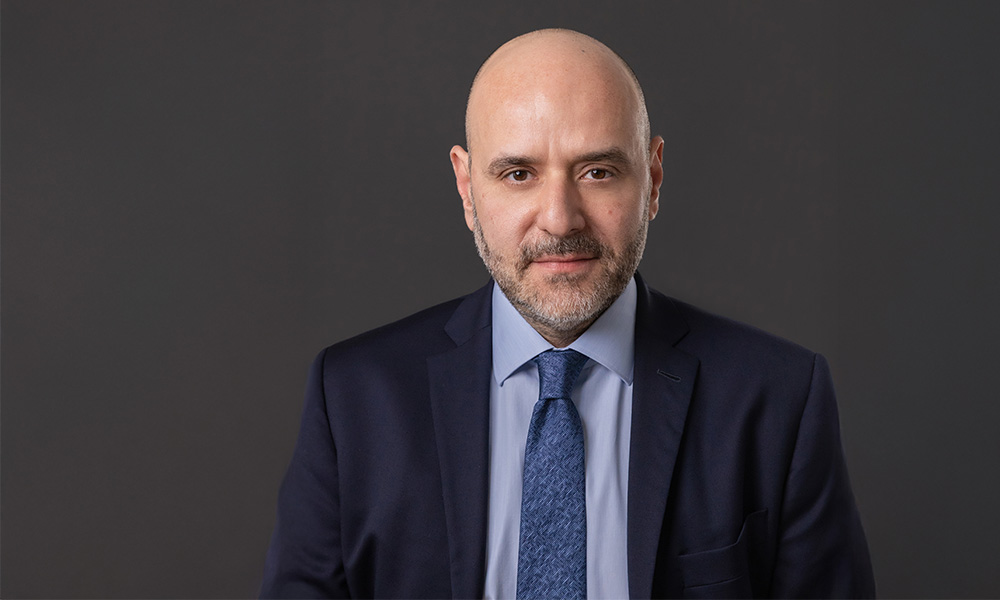
constantinos final MT

The International Bunker Industry Association (IBIA) on Friday (13 March) issued a statement on a message from its Chair, Constantinos Capetanakis, on the situation in the Middle East: 

Behind every voyage, every delivery and every commercial decision are human beings carrying a very real burden.

While many may focus on headlines and state actors, there are also thousands of men and women across shipping and the marine fuels sector who continue to do their work under mounting uncertainty, heightened risk, and strain. They are not decision-makers in this crisis, yet they are among those directly exposed to its consequences.

As Chair of IBIA, I believe we must keep sight of that human dimension. The consequences of conflict do not stop at national borders. They travel across supply chains, across shipping lanes, and across the lives of the people who keep global commerce moving.

This is a moment for seriousness and steadiness. Protecting those at sea, preserving safe navigation and reducing further risk must remain at the centre of attention. Composure matters. So does responsibility. The priority must be to limit further risk, support those exposed, and keep the safety of crews and vessels firmly in view.

The impact extends into marine energy as well, with uncertainty, disrupted flows and operational pressure affecting a sector that depends on stability, predictability and the safe movement of vessels at sea. As IBIA secretariat has separately stated, we stand ready to support our members and the wider marine energy community.


Photo credit: International Bunker Industry Association
Published: 16 March, 2026

Continue Reading

Interview

Exclusive: Caroline Yang takes helm on future of IBIA Asia

The newly appointed Chair of IBIA’s Regional Board – Asia, shares her plans to strengthen bunkering standards while promoting transparency and industry collaboration across key Asian maritime hubs.

Admin

Published

on

By

Exclusive: Caroline Yang takes helm on future of IBIA Asia

Caroline Yang, CEO of Hong Lam Marine Pte Ltd, outlines her plans for IBIA Asia in her first interview with Manifold Times since becoming Chair of the Regional Board – Asia:

MT: Why is IBIA important to the bunkering market in Asia?

IBIA Asia is amongst five regional boards operating under the umbrella of London-based IBIA Global. Its presence in Asia is vital because the region, excluding the Middle East, accounts for more than 50% of global bunkering volume.

While Singapore continues to maintain its strong lead as the world’s busiest bunkering port with almost 56 million mt of marine fuel delivered in 2025, several ports in China are showing to be strong bunkering ports as well; these developments take place on the back of a forecast for China to be amongst the leading suppliers of green fuels such as methanol.

Based on this alone, IBIA Asia has to play an important role in raising and addressing issues of suppliers and shipowners and the other parties in the regional bunkering eco-system.

MT: What is the overall state of bunkering standards at major Asian ports and how can IBIA elevate this?

Singapore is the clear leader in standards, acting as a “flag bearer” with established protocols including SS 600 for bunkering, SS 648 for bunker mass flow metering, SS 524 for quality management of bunker supply chain, TR 56 for LNG bunkering, and TR 80 for meter verification using master MFM.

While other Asian ports are adopting mass flow meters – a positive step – IBIA Asia’s role is to disseminate these best practices while maintaining deep respect for local operational realities and regulatory environments.

MT: As Chair of the Regional Board – Asia, what are your plans to make this happen? Are there any topics you will be focusing on?

The IBIA Asia regional board of 10 members from comes from a diverse group of suppliers, shipowners, bunker buyers, fuels testers and bunker tanker owners. Backed by a strong secretariat, we are committed to move the needle for bunkering in Asia.

Our initial strategy is outreach-driven, progressing beyond a Singapore-centric approach. For starters, the board will be concentrating on Hong Kong, Zhoushan, and Shanghai, with potential expansion to Japan and South Korea.

The core objective is to promote the quality, transparency, and integrity of bunkers lifted in Asia. This includes building on existing MOUs such as the collaboration with Hong Kong Shipowners Association (HKSOA) to explore alternative bunker fuels, and participation in regional maritime week programmes.

MT: Do you expect to encounter any challenges? What do you think are the solutions?

Challenges, without a doubt; these include macro-level standards and topical quality issues, such as those highlighted in a recent FOBAS report.

We are aware most solutions will not have instant results, but produce short-term, mid-term and long-term responses.

The solution lies in structured communication and feedback loops involving industry, regulators, and experts. Success requires an altruistic approach where stakeholders prioritise the health of the bunkering ecosystem to achieve win-win outcomes, even at the compromise of individual sectors.

MT: Is participation of local/regional IBIA members included within your plan? How will they be involved?

Member participation is the foundation of an association’s strength. The plan involves active outreach – meeting members where they operate and integrating them into meetings to ensure the board’s positions reflect representative industry views. We must push out credible, strong messages to encourage active engagement. If there is anyone in the maritime bunkering in these areas and reading this interview, reach out to us so we can start our conversations!

The Secretariat and some board members have scheduled to visit and attend bunkering events in Hong Kong and China. In November 2026, IBIA will participate in the Hong Kong Maritime Week by organising a one-day conference. We hope to be also participating in the Shanghai Pudong Maritime Conference and the 9th International Petroleum and Natural Gas Enterprises Conference (IPEC 2026), also known as the “Zhoushan Bunker Oil conference”, in late October.

MT: How will previous experience gained at SSA, ICS, MPA, SMF, and Hong Lam Marine contribute to your role at IBIA?

As CEO of Hong Lam Marine, our bunker tankers supply about 10% of bunkering volume in Singapore, so we are an involved and relevant stakeholder. My experiences in the above-mentioned organisations have taught me how to crystallise and articulate important issues, engage effectively with diverse stakeholders, and leverage on pre-existing professional connections to engage more effectively for IBIA Asia.

Related: IBIA announces Caroline Yang as new Regional Board Chair for Asia
Related: IBIA and Hong Kong Shipowners Association to collaborate on alternative bunker fuels
Related: FOBAS report warns of growing operational risks from ISO-compliant bunker fuels


Photo credit: Manifold Times
Published: 6 August 2026

Continue Reading

Business

Asian Shipowners Association among groups to raise concerns on Hormuz tolls

Eight shipping organisations wrote an open letter to the UN and IMO to raise concerns regarding the potential imposition of tolls or service fees in the Strait of Hormuz.

Admin

Published

on

By

RESIZED william william on Unsplash

Eight shipping organisations wrote an open letter to the United Nations (UN) and the International Maritime Organization (IMO) to raise concerns regarding the potential imposition of tolls or service fees in the Strait of Hormuz, warning that such a move would undermine international law and disrupt global trade.

In an open letter dated 3 August to UN Secretary-General António Guterres and IMO Secretary-General Arsenio Dominguez, the organisations said the safety of seafarers and the principle of freedom of navigation must remain paramount amid ongoing uncertainty surrounding the strategic waterway.

The signatories comprise the Asian Shipowners’ Association (ASA), BIMCO, Cruise Lines International Association (CLIA), European Shipowners (ECSA), International Chamber of Shipping (ICS), INTERCARGO, INTERTANKO and the World Shipping Council (WSC). 

“Introducing compulsory charges for transit, or service fees that are a toll in all but name, through the Strait of Hormuz would represent a significant departure from established international practice,” the groups said in the letter. 

“Beyond the immediate financial implications for global trade, it would establish a precedent that could undermine the internationally recognised legal framework governing straits used for international navigation and transit passage.”

“Once such a precedent is established, it becomes increasingly difficult to resist similar measures elsewhere, creating uncertainty for international shipping and global commerce.”

The groups also said any additional costs imposed on maritime transport inevitably flow through international supply chains.

“These consequences extend beyond shipping costs, contributing to higher energy prices, higher inflation, and higher economic uncertainty,” they added.

“Ultimately, these impacts will carry a human cost, affecting livelihoods around the world. It is vital that we continue supporting the preservation of freedom of navigation as the foundation of international maritime governance.”


Photo credit: william william on Unsplash
Published: 6 August, 2026

Continue Reading

Bunker Fuel Quality

IBIA: Shale oil presence alone do not indicate bunker fuel non-compliance

IBIA says available evidence does not establish a direct causal relationship between the presence of shale oil and the operational issues reported.

Admin

Published

on

By

IBIA new logo

The International Bunker Industry Association (IBIA) on Monday (27 July) said it is aware of recent reports highlighting operational issues observed in connection with certain residual marine fuels containing components which may indicate the presence of shale oil. 

IBIA said its Technical Working Group has reviewed the information currently available and noted that, while these reports raise legitimate questions that warrant further investigation, the available evidence does not establish a direct causal relationship between the presence of these compounds and the operational issues reported. 

“Shale oil-derived hydrocarbons are a permitted feedstock under ISO 8217. Their presence alone should not be regarded as evidence of fuel quality deficiencies or non-compliance,” IBIA said in a statement. 

“The relevant consideration is whether the finished fuel, as delivered, meets the requirements of ISO 8217, including the provisions relating to fuel composition and operational fitness for use. 

“The reported cases nevertheless reinforce the importance of understanding how increasingly complex marine fuel blends perform in practice.”

Manifold Times previously reported Lloyd’s Register Fuel Oil Bunkering Analysis (FOBAS) stating that tests on several fuels from Singapore identified a chemical fingerprint consistent with Estonian shale oil, while vessels using these fuels reported operational issues. 

Marine fuels testing company VPS reported it has seen an increase in the levels of shale oil components in marine fuels bunkered recently in Singapore

As the industry continues to diversify feedstocks and blend components, greater transparency, traceability, IBIA said quality assurance and information sharing across the supply chain will become increasingly important. 

“IBIA supports further technical investigation, industry collaboration and data sharing to improve understanding of fuel behavior and operational performance. Such work will help ensure confidence in marine fuel quality while supporting the safe, reliable and efficient operation of ships,” it added. 

Related: FOBAS: Estonian shale oil and stability issues found in marine fuels from Singapore
Related: VPS: Shale oil components detected in marine fuels in Singapore


Photo credit: International Bunker Industry Association
Published: 28 July, 2026

Continue Reading

Trending