
Technology
StormGeo adds Bearing AI to partner network, boosting AI-powered voyage optimisation
StormGeo’s Voyage Optimization Service will integrate Bearing AI’s advanced vessel performance models to deliver more precise fuel consumption predictions, efficient route planning, and reduced emissions.


Mass Flowmeter
TFG Marine deploys first MFM-equipped bunker barge in Jamaica
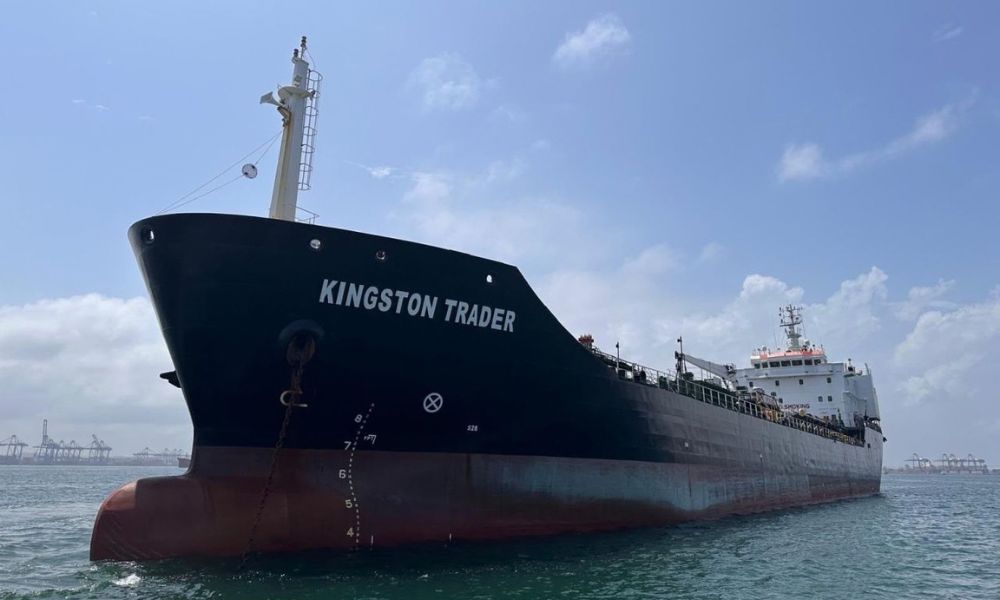
Bunker barge “Kingston Trader” is currently on its way to Jamaica following the successful installation of a Coriolis mass flow meter (MFM) system, certified to ISO 22192.
Mass Flowmeter
Endress+Hauser TECH Centre in Singapore helps maritime customers master MFM bunkering
TECH Centre showcases technical knowledge, operational reliability, and transparency of MFM bunker fuel deliveries across Singapore’s maritime sector, states Jiang Jun Xuan, Head of Marketing.
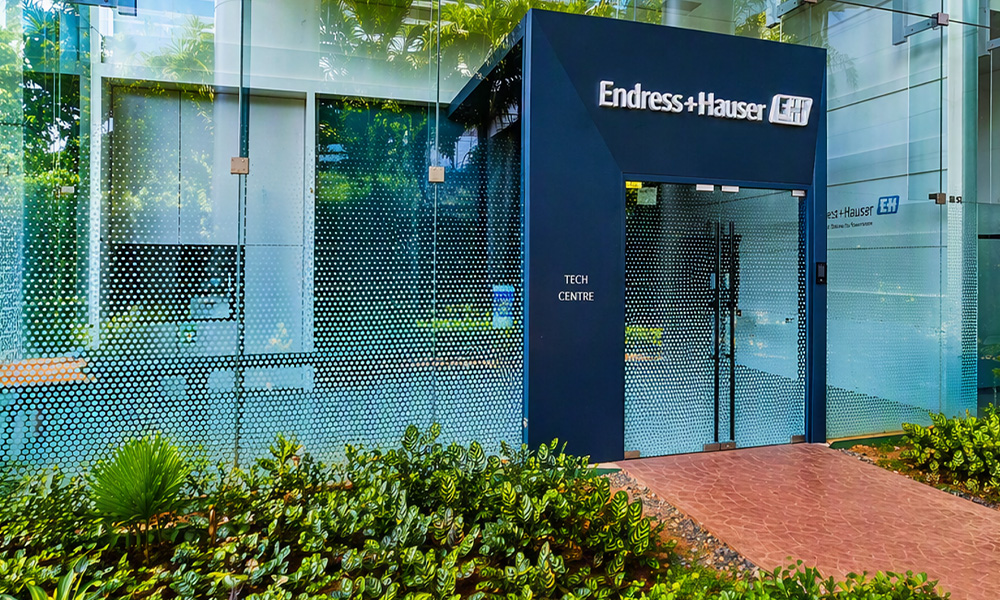
The Endress+Hauser Technological and Calibration Hub (TECH Centre) in Singapore helps maritime customers master Mass Flowmeter (MFM) bunkering by offering hands-on process training and real-world technology simulations under one roof, states Jiang Jun Xuan, Head of Marketing, Endress+Hauser.
“The use of MFM system for bunkering is not a ‘plug & play’ system,” Mr Jiang told Manifold Times in an interview.
“While the technology has become an important foundation for transparent fuel delivery, its effectiveness still depends heavily on how well users understand the installation requirements, operating procedures, data outputs, and limitations of the system in actual bunkering conditions.
“As a primary technology provider with more than half of bunker tankers operating in Singapore equipped with Endress+Hauser MFM bunker metering systems, our TECH Centre serves as a critical educational hub for suppliers, surveyors, and shipowners alike wishing to better understand MFM bunkering.”
According to Mr Jiang, a continuous stream of digital data, with enough information to detect changes in operating conditions, is captured during MFM bunkering operations.
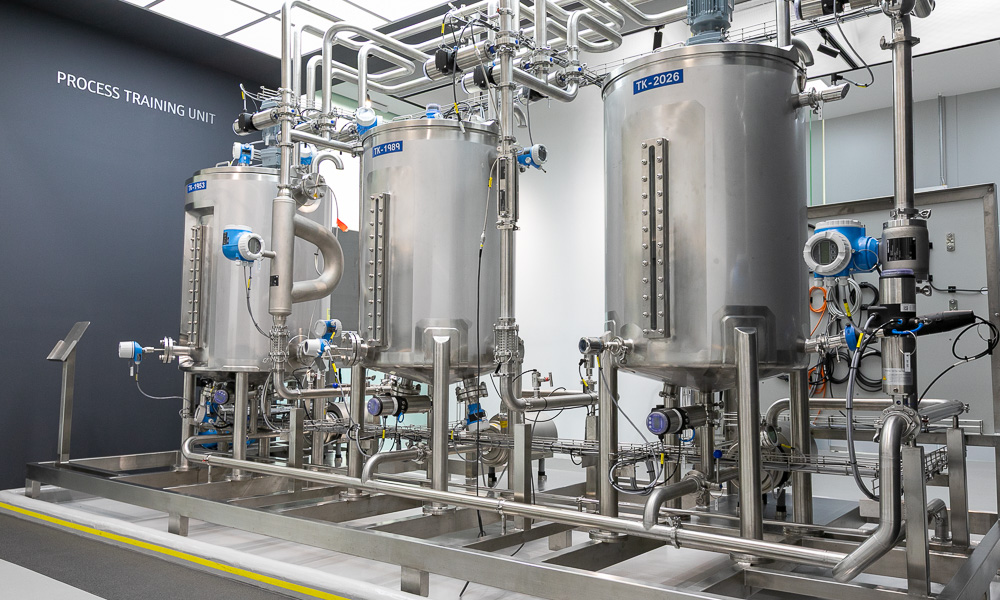
“The TECH Centre offers visitors from the bunkering sector an opportunity to experience coriolis mass flow measurement technology in a practical setting and simulate processes under a controlled environment that closely reflects actual bunkering operations,” he added.
“Further, our experts on hand will be able to explain how the meter directly measures mass to eliminate traditional, error-prone volume-to-mass calculations during these demonstrations, while also showing how changes in flow conditions, entrained air, and operational practices can be identified through the data generated by the system.”
Looking ahead, Mr Jiang said the TECH Centre also gives stakeholders a structured environment to observe system behaviour, ask technical questions, and relate classroom learning to practical bunker delivery scenarios.
“This allows customers to better understand not only how MFM technology works, but why correct installation, operation, and interpretation of meter data are essential to achieving reliable, transparent, and dispute-free bunker deliveries,” he explained.
“The experience translates Endress+Hauser’s global expertise into local, application-specific value by connecting classroom-style learning with practical demonstrations that reflect the day-to-day realities faced by bunker suppliers, surveyors, and shipowners in Singapore’s bunkering ecosystem.”
Launched in March 2026, the Endress+Hauser TECH Centre supports closer collaboration with customers throughout the lifecycle of their processes, strengthening Endress+Hauser’s ability to address practical, industry-specific challenges across Singapore and Southeast Asia.
Note: Manifold Times readers may request for a guided tour at the TECH Centre here.
Related: Endress+Hauser launches new TECH Centre in Singapore
Photo credit: Manifold Times
Published: 25 September, 2026
Technology
Ofiniti steps up Singapore investment with ZeroNorth eBDN acquisition
Ofiniti has agreed to acquire ZeroNorth’s eBDN solution, including Singapore-based BTS Pte Ltd, as the company increases its multimillion-dollar investment in the city-state.


OUR INDUSTRY PARTNERS

Shell Singapore charged over Pulau Bukom oil leaks, reporting delays

MPA probes Singapore Strait collision involving fishing vessel, bulk carrier

TFG Marine deploys first MFM-equipped bunker barge in Jamaica

Seascale Energy names Gaetan Perret co-CEO as Olivier Josse prepares to retire

DNV: New research shows how regulation could reshape shipping

Stena Line orders two new hybrid ferries for Sweden – Denmark route

ENGINE: Americas Bunker Fuel Availability Outlook (24 Sep 2026)

Singapore: Marine fuel testing firm CCIC Singapore faces winding up application

High Court of Singapore issues winding up order against Hengli Petrochemical International

APPEC 2026: Digitalisation in bunkering not merely a ‘paper-to-screen’ swap, states panellists

APPEC 2026: Panellists navigate maritime decarbonisation and alternative marine fuel strategies

LDA’s methanol-powered “Spirit of Toulouse” gets Norsepower rotor sail in Shanghai

Goldwind green methanol facility completes trial production, ships first 500 mt

Singapore: Bunker fuel sales down by 4% on year in August 2026
-
 Winding up2 weeks ago
Singapore: Marine fuel testing firm CCIC Singapore faces winding up application
-
 Winding up2 weeks ago
High Court of Singapore issues winding up order against Hengli Petrochemical International
-
 Technology2 weeks ago
APPEC 2026: Digitalisation in bunkering not merely a ‘paper-to-screen’ swap, states panellists
-
 Alternative Fuels2 weeks ago
APPEC 2026: Panellists navigate maritime decarbonisation and alternative marine fuel strategies
-
 Wind-assisted2 weeks ago
LDA’s methanol-powered “Spirit of Toulouse” gets Norsepower rotor sail in Shanghai
-
 Methanol2 weeks ago
Goldwind green methanol facility completes trial production, ships first 500 mt
-
 Alternative Fuels2 weeks ago
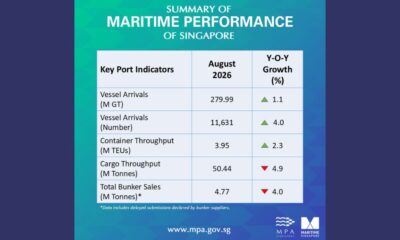
Singapore: Bunker fuel sales down by 4% on year in August 2026
-
 Bunker Fuel2 weeks ago
APPEC 2026: Equatorial and Kuwait Petroleum Corporation discuss Middle East bunker market dynamics