
Biofuel
FOBAS: Importance of accurate energy content determination in bio bunker fuels
FOBAS elaborates on the importance of accurate energy content determination and strongly recommends specifying Net Specific Energy according to ASTM D240 method when a bunker fuel contains FAME.


Lloyd’s Register’s Fuel Oil Bunkering Analysis and Advisory Service (FOBAS) on Wednesday (2 April) released a bulletin to elaborate on the importance of accurate energy content determination and strongly recommended specifying the Net Specific Energy (NSE) according to ASTM D240 method when a bunker fuel contains FAME:
Last year, ISO TC28/SC4/WG6 introduced the latest edition of the ISO 8217 standard, marking a significant shift in marine fuel quality specifications. One of the most notable changes is the integration of drop-in biofuels from renewable sources into the marine fuel mix. These bio-derived fuels are gaining traction due to their ability to reduce greenhouse gas emissions on a life cycle basis, all without requiring modifications to marine engines or the existing fuel supply infrastructure.
Among the predominant bio-derived fuels are fatty acid methyl esters (FAME), already standardized in EN 14214 and ASTM D6751. The latest edition of ISO 8217 (2024) introduces new fuel grades, specifications, and testing requirements under Table 3 for residual blends containing FAME, while Table 1 permits up to 100% FAME in DF grades. However, conventional DM and RM grades must remain FAME-free, with only trace levels allowed. Additionally, hydrotreated vegetable oil (HVO), another bio-derived drop-in fuel, can be used as a blend component in any ratio (up to 100%).
Despite these provisions, the most common biofuel blend in the market is 30% FAME mixed with 70% conventional fuel.
For conventional petroleum-based fuels, ISO 8217:2024 – Annex J provides a calculation method for Net Specific Energy (NSE) and Gross Specific Energy (GSE) based on tested density, sulfur, water, and ash contents. This method has been sufficiently precise for ship operators to estimate fuel consumption and adjust engine settings accordingly.
However, as biofuels have inherently lower calorific values than fossil fuels, their energy content varies depending on the blend ratio. The current ISO 8217 formula does not account for biofuels, as the energy content when FAME is present is overestimated. This discrepancy can lead to inefficiencies in fuel management. Some of the electronically controlled engines require fuels NSE values to be used as an input to the engine management system. Hence, if the value is inaccurate, it may result in inefficient engine performance.
To address this, the ASTM D240 Bomb Calorimeter method is recommended for accurate determination of heat of combustion, particularly for biofuel blends. For example, FAME has a typical energy value of 37 MJ/kg, whereas residual fuels average around 41 MJ/kg. Chart 1 highlights the discrepancies between the calculated NSE (using ISO 8217’s calculation method) and the measured values (ASTM D240) for VLSFO biofuel blends containing 10-100 %v/v FAME. The data reveals that the calculated values consistently overestimate the actual energy content, with discrepancies ranging from 0.83 MJ/kg up to 5.22 MJ/kg, increasing as the FAME content rises.
It is worth mentioning that for B30 blend, i.e. containing FAME at 30 %v/v, which is considered as the most popular marine bioblend, the discrepancy is approx. 1.50 MJ/kg. This overestimation can lead to inaccurate fuel consumption predictions, potentially causing operational inefficiencies, miscalculations in voyage planning, and higher-than-expected fuel costs. The findings reinforce the limitations of ISO 8217’s formula and emphasize the importance of direct Net Specific Energy value using ASTM D240 to ensure accurate energy assessments for biofuel blends. This point has also been emphasized in clause 6.18 of ISO 8217:2024.

The ASTM D240 method involves burning a weighed sample of the test fuel in an oxygen bomb calorimeter under controlled conditions. ASTM D240 is utilised for fuels consisting only of carbon, hydrogen, nitrogen, oxygen and sulphur, so it is suitable for both distillate and residual fuel containing FAME as well as B100. The gross heat of combustion (at constant volume) is calculated using the measured temperature rise (corrected), the measured energy (MJ/°C), and relevant thermochemical corrections, one of which allows for the correction for the heat of formation of sulphuric acid.
To apply this correction, the mass percent of Sulphur within the sample must be known. The net heat of combustion is subsequently calculated using the gross heat of combustion at constant volume (MJ/kg) and the mass percent of hydrogen in the sample which is determined using a suitable method, typically ASTM D5291 or ASTM D1018.
As the maritime industry transitions toward sustainable fuels, accurate energy content determination is crucial for efficient fuel management. Since ISO 8217’s calculation method for Net Specific Energy (NSE) is no longer applicable when FAME is present, the ISO 8217:2024 standard specifies the ASTM D240 method for determining the NSE of biofuel blends, whether RF or DF, containing FAME.
Given the increasing adoption of biofuels to meet decarbonization goals, reliable energy measurement is essential for achieving operational efficiency. In light of this, FOBAS has adopted this change and strongly recommends specifying the NSE according to ASTM D240 when a bunker fuel contains FAME.
Photo credit: Louis Reed from Unsplash
Published: 4 April, 2025
Alternative Fuels
DNV: Alternative-fuelled vessel orders hit highest monthly level since October 2024
LNG-fuelled vessels accounted for the vast majority of August activity while the strong summer performance marked a significant acceleration in ordering activity after a relatively slow start to the year.
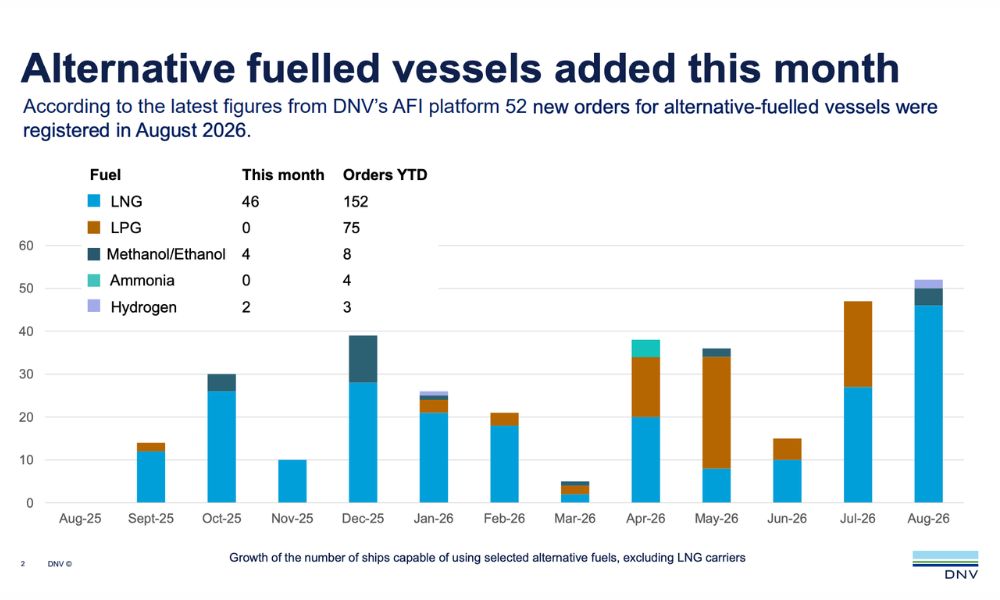
Latest data from classification society DNV’s Alternative Fuels Insight (AFI) platform alternative-fuelled vessel ordering was strong in August, with 52 new vessels added to the platform.
This is the highest monthly total since October 2024 and follows another active month in July, when 47 vessels were added to the database.
LNG-fuelled vessels accounted for the vast majority of August activity, with 46 orders recorded. The container segment led the way with 30 orders, while the car carrier segment contributed a further 12 LNG-fuelled vessels. In addition, four ethanol-fuelled bulk carriers and two hydrogen-powered bulk carriers were added during the month, as well as one LNG bunker vessel.
The strong summer performance marked a significant acceleration in ordering activity after a relatively slow start to the year. In total, 242 alternative-fuelled vessel orders have been placed in the first eight months of 2026, representing a 27% increase compared with the same period in 2025.
LNG remains the dominant fuel choice, accounting for 63% of all alternative-fuelled vessel orders registered so far this year. Container vessels represent the largest share of these LNG orders (59%), followed by car carriers (30%).
Jason Stefanatos, Global Decarbonization Director at DNV Maritime, said: “The past two months have been particularly strong for alternative-fuelled vessel ordering, with August recording the highest monthly total we’ve seen since October 2024. This has helped lift year-to-date orders to a level well above the same period last year.
“LNG remains the leading fuel choice, driven largely by activity in the container and car carrier segments. These sectors have been among the earliest adopters of alternative fuels, supported by predictable liner operations and increasing demand from cargo owners to reduce emissions across supply chains.
“For many owners, LNG offers a combination of emissions reductions, fuel availability and future flexibility while the longer-term fuel landscape continues to evolve.
“At the same time, the latest figures include orders for ethanol- and hydrogen-fuelled vessels, highlighting that owners continue to explore a range of decarbonization pathways. Different segments are making different fuel choices, but the overall level of activity demonstrates continued investment in lower-emission shipping.”
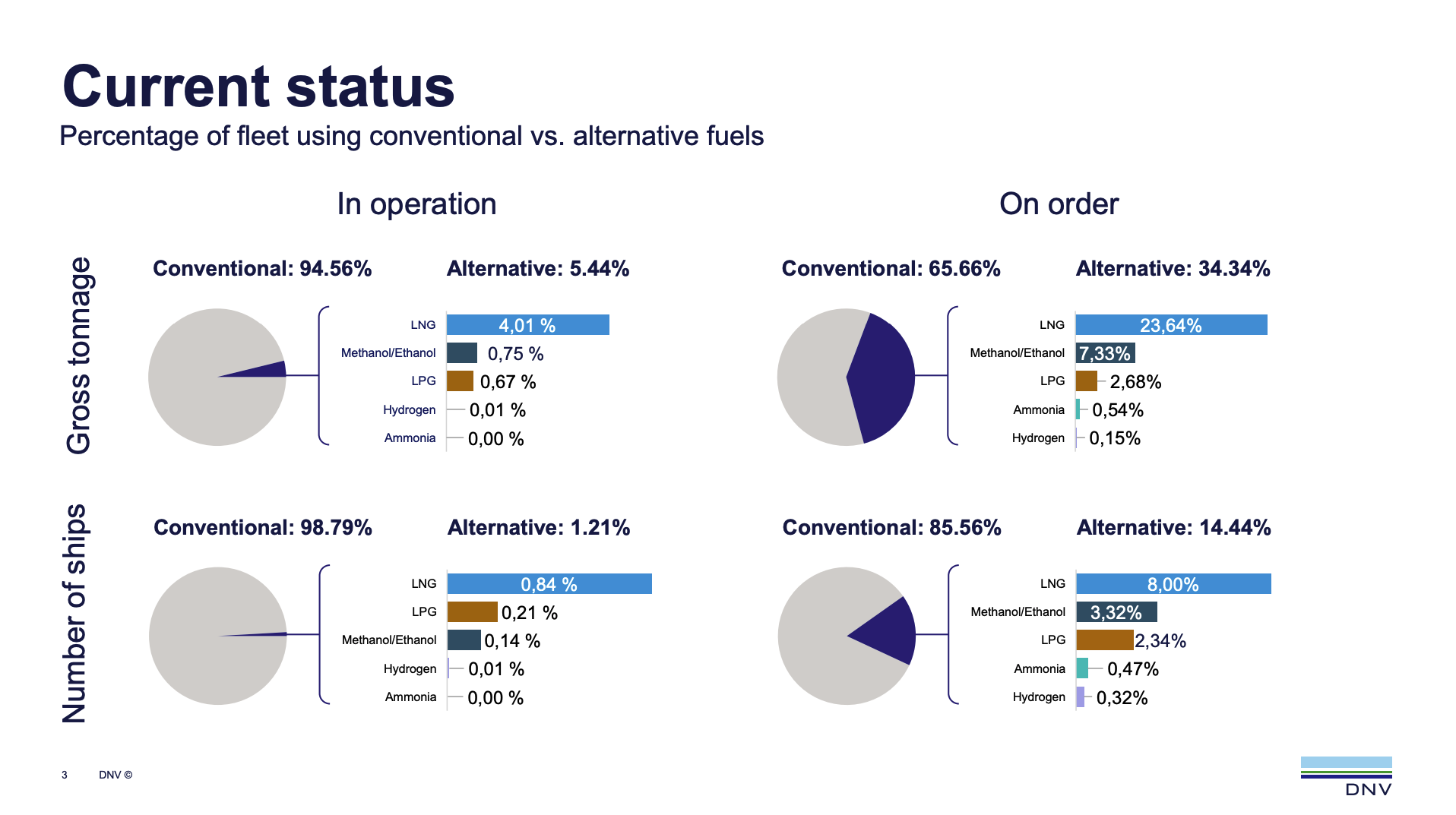
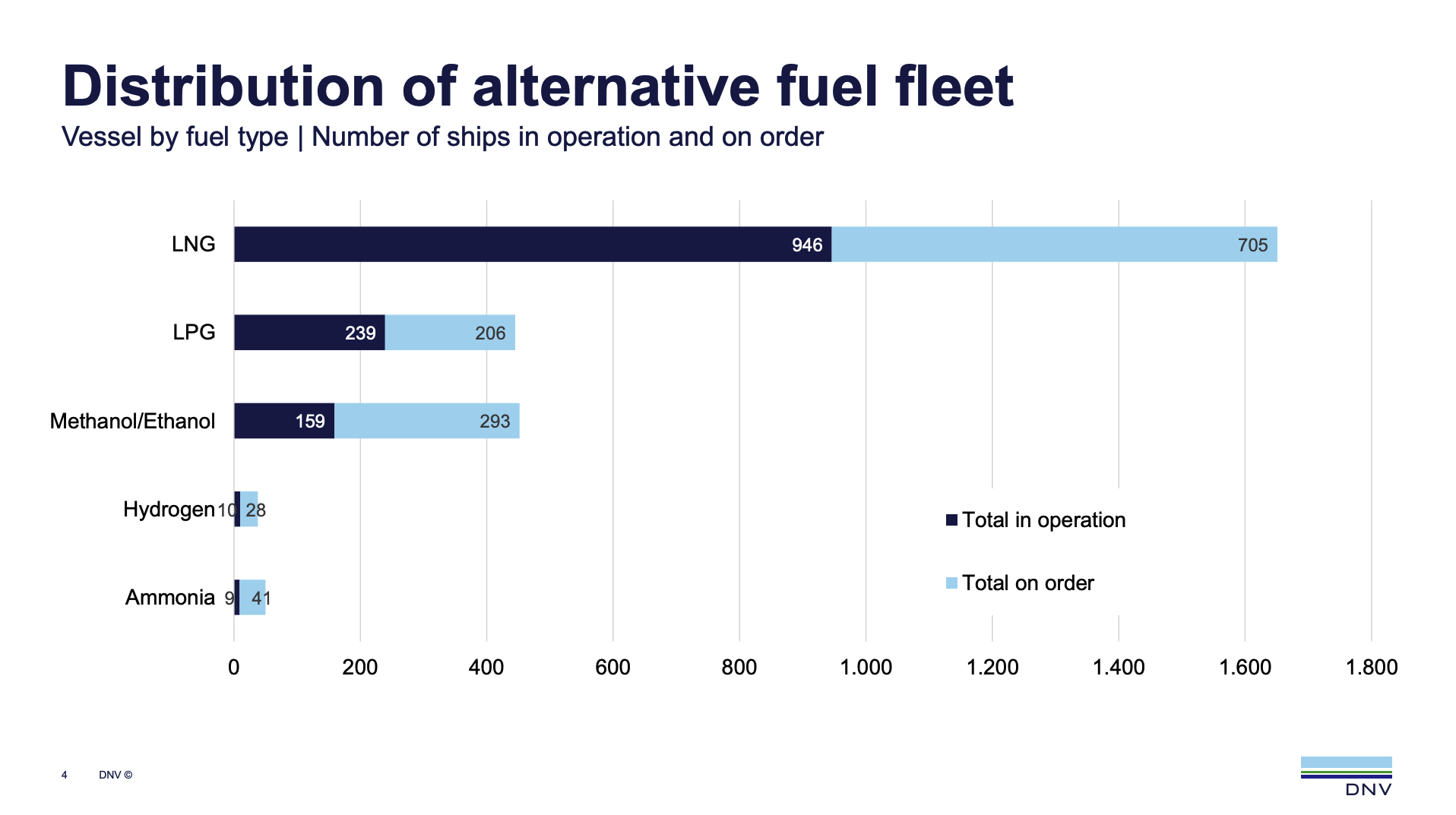
Photo credit: DNV
Published: 4 September, 2026
Alternative Fuels
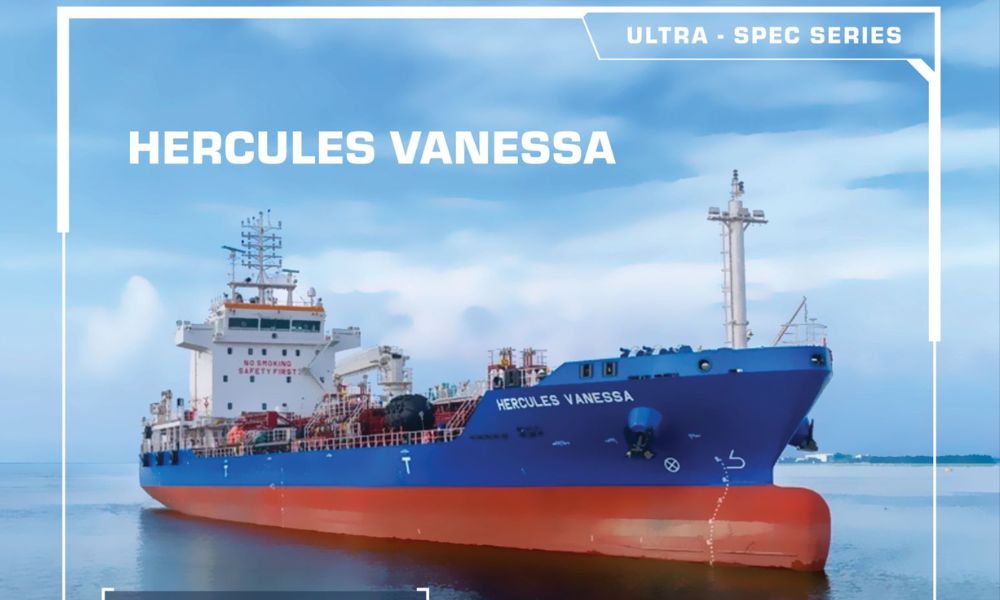
Hercules Tanker Management’s ‘Ultra-Spec Series’ tanker “Vanessa” begins maiden voyage
Designed for worldwide deployment, the series can transport and supply conventional marine fuels as well as alternative fuels up to B100 and methanol.
Alternative Fuels
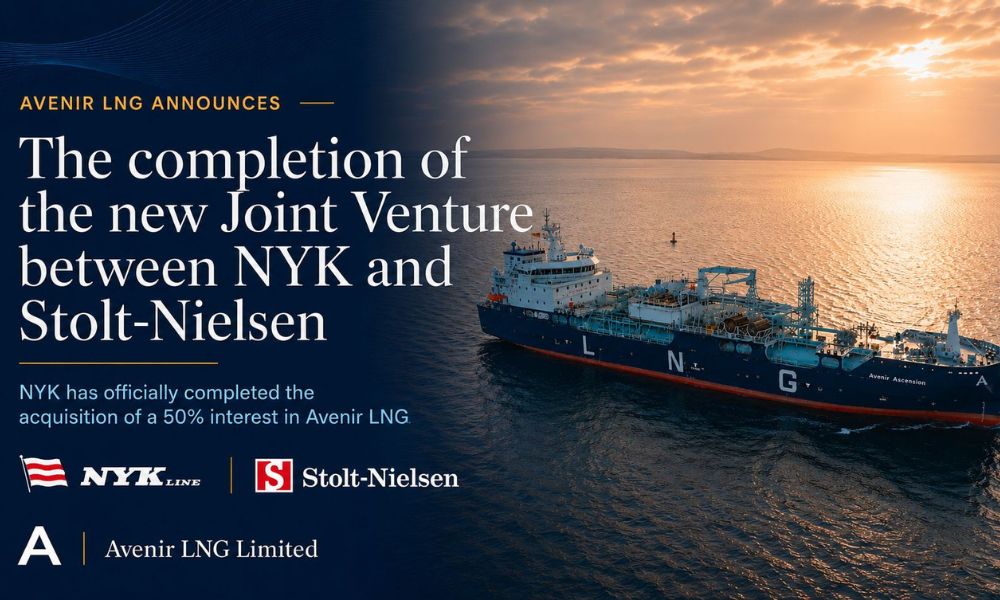
NYK and Stolt-Nielsen target LNG, bio-LNG bunkering growth through Avenir LNG JV
NYK says joint venture will pursue opportunities in LNG and bio-LNG bunkering, supporting the maritime industry’s transition to lower-emission fuels.

OUR INDUSTRY PARTNERS

Yang Ming orders six LNG dual-fuel, ammonia-ready containerships from Hanwha Ocean

LR, China’s MARIC unveil tanker concept ready for three future bunker fuels

DNV: Alternative-fuelled vessel orders hit highest monthly level since October 2024

TFG Marine advances global MFM rollout with two US Gulf bunker barges

GENA Solutions: Total renewable and low-carbon methanol project pipeline increases from 61.8 to 62.2 Mt by 2032

Baltic Exchange: Bunker Report (3 September 2026)

ENGINE: Americas Fuel Availability Outlook (3 September 2026)

Singapore-flagged tugboat “Kim Heng 3203” placed under Sheriff’s arrest

US targets five bunker companies in latest sanctions campaign against Iran

Singapore bunkering community supports Living Hope Evangelism’s 7th anniversary outreach for residents in need

China’s bunker market reshaped by tax rebates, trade flows and refining changes, says economist

Hengli Petrochemical’s ex-Singapore trading arm faces winding up application

Rajah & Tann: Bunker disputes are won in the first 48 hours

Report: GCMD outlines practical approach to quantity assurance in marine biofuel supply chains
-
 Vessel Arrest2 weeks ago
Singapore-flagged tugboat “Kim Heng 3203” placed under Sheriff’s arrest
-
 Sanctions2 weeks ago
US targets five bunker companies in latest sanctions campaign against Iran
-
 Events2 weeks ago
Singapore bunkering community supports Living Hope Evangelism’s 7th anniversary outreach for residents in need
-
 Interview1 week ago
China’s bunker market reshaped by tax rebates, trade flows and refining changes, says economist
-
 Winding up2 weeks ago
Hengli Petrochemical’s ex-Singapore trading arm faces winding up application
-
 Bunker Claim5 days ago
Rajah & Tann: Bunker disputes are won in the first 48 hours
-
 Biofuel2 weeks ago
Report: GCMD outlines practical approach to quantity assurance in marine biofuel supply chains
-

 Winding up1 week ago
Singapore: Notices of annual meeting issued for Vroon Shipping Asia and related firms