Connect with us

Alternative Fuels

Tallink Grupp’s new LNG-fuelled ferry “MyStar” to be delivered on 7 December

Start of operations of MyStar, the newest and most technologically advanced vessel on the Baltic Sea, will take place on 13 December at 13.30 from Tallinn to Helsinki.

Admin

Published

on

161 2

Tallink Grupp’s new ferry MyStar will be delivered to the company by Rauma Marine Constructions (RMC) on 7 December 2022 at Rauma shipyard in Finland, according to Tallink Grupp on Monday (5 December).

The announcement came following a delay in the vessel’s start of operation, which initially was scheduled to be on 1 December.

The long-awaited start of operations of MyStar, the newest and most technologically advanced vessel on the Baltic Sea, will take place on Tuesday, 13 December at 13.30 from Tallinn to Helsinki. 

CEO of Tallink Grupp, Paavo Nõgene, said: “We are very pleased that the time has now come this week for us to welcome and receive the newest member of our fleet, the brightest star on the Baltic Sea, MyStar into our fleet. Her much-awaited arrival marks the beginning of yet another new era for the Tallinn-Helsinki route, with customer service standards now even higher, passenger comfort even greater and sustainability even more at the heart of our operations.”

“The world has changed greatly since we started building our newest fleet member in spring 2020 with more hurdles along the way than we have ever experienced, but we have met all the challenges head on and are happy that our beautiful MyStar has now been completed and will welcome everyone on board from 13 December onwards. I want to thank the whole Tallink MyStar project team, Rauma Shipyard and all our partners who have contributed to making our dream of the brightest new star on the Baltic Sea a reality.”

Mika Heiskanen, CEO, RMC, said: “I want to thank Tallink for their excellent cooperation which has allowed us to bring the project to completion together despite challenging circumstances. I would also like to thank the partners and the classification society. MyStar represents Finland’s strong expertise in shipbuilding. It has been an honour for us to design and build such a technologically advanced vessel that upholds sustainable values. We wish MyStar the best of luck with the sailings.”

MyStar is expected to depart from Rauma shipyard on Friday, 9 December and to arrive at the Old City Harbour of the Port of Tallinn at 10am on Saturday, 10 December. 

The first commercial voyage of MyStar will take place on 13 December 2022, departing from Tallinn to  Helsinki at 13.30 local time, replacing Megastar in the current Shuttle service timetable. MyStar’s crew of 208 is headed by three captains in total – masters Vahur Ausmees, Aivar Moorus and Ain Aksalu. 

The construction of the vessel cost EUR 247 million (USD 259 million) and is financed with a loan of EUR 196,3 million from KfW IPEX-Bank GmbH. 

The construction of MyStar started in April 2020. 

The most technologically advanced and energy efficient vessel in Tallink’s fleet, MyStar is 212.4 metres long and has capacity to carry 2800 passengers. The ship’s five 8-cylinder dual-fuel main engines are capable of running on liquefied natural gas (LNG) and marine diesel fuel. The ship is using diesel-electric propulsion combined with fixed pitch propellers giving the best efficiency. 

The ship comes equipped with shore-to-ship power solution and smart car deck solution. The vessel has design speed of up to 27 knots and will join company’s vessels Megastar and Star on the company’s Tallinn-Helsinki shuttle service route.

MyStar Fact Box: 

  • Passengers: 2800
  • Passenger cabins: 46
  • Decks: 12 
  • Length: 212.4 m 
  • Width: 30.6 m 
  • Speed: 27 knots 
  • Lane meters: 3,190 m 
  • Ice class: 1A 
  • Main engine output: 42,000 kW 
  • Gross Tonnage: 50,629 
  • Fuel: dual fuel – LNG and/or diesel
  • Interior design by dSign Vertti Kivi & Co
  • Reference vessel is Tallink’s shuttle vessel Megastar

Related: Tallink Grupp’s new LNG-fuelled shuttle vessel “MyStar” start of operations delayed


Photo credit: Tallink Grupp
Published: 6 December, 2022

Continue Reading

Biofuel

South Korea: S-Oil launches B30-VLSFO bio bunker fuel supply

Company says it has established an integrated operating system in the Ulsan region covering the entire value chain, from feedstock procurement and blending to supply.
Admin

Published

on

By

South Korea: S-Oil launches B30-VLSFO bio bunker fuel supply

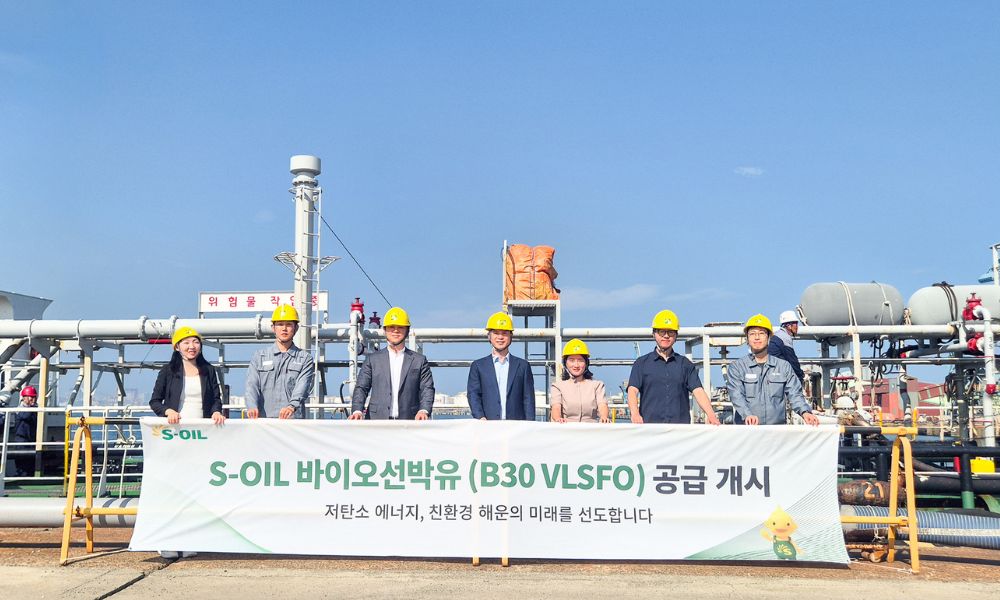
South Korean petroleum and refining company S-Oil on Wednesday (22 July) said it has started supplying B30 very low sulphur fuel oil (VLSFO), as the company seeks to support shipping’s decarbonisation efforts and growing demand for lower-carbon bunker fuels.

The company said its B30 VLSFO contains 30% sustainable biofuel blended with conventional VLSFO and can be used without requiring modifications to existing vessels, enabling shipowners to comply more readily with emissions regulations from the International Maritime Organization (IMO) and the European Union (EU).

S-Oil said it has established an integrated operating system in the Ulsan region covering the entire value chain, from feedstock procurement and blending to supply. The system combines VLSFO produced at its Onsan refinery with biofuel production facilities and storage infrastructure in the Ulsan region, allowing the entire process to be carried out within a single logistics hub.

According to the company, the integrated supply chain reduces transportation requirements during production while improving supply efficiency and reliability.

S-Oil also highlighted Ulsan Port as a strategic location for marine biofuel supply, noting the port has strong demand for bio-bunker fuels, particularly from car carriers, enabling prompt and stable deliveries to key customers.

An S-Oil official stated: “In the bio-marine fuel market, not only product quality but also securing a stable supply of raw materials and an efficient supply system are important competitive advantages.

“Based on our existing bunkering business capabilities and the excellent supply infrastructure in the Onsan area, we plan to supply stable and competitive low-carbon fuel.”


Photo credit: S-Oil
Published: 23 July, 2026

Continue Reading

Bunker Fuel

Antwerp-Bruges biofuel bunker sales drops 36% on year in Q2 2026, LNG down 13.4%

Biofuel recorded 26,833 mt in Q2 2026 with 41,939 mt recorded in the same period the year before while port data showed 76,513 mt of LNG being delivered in Q2 2026, down from 88,328 mt.
Admin

Published

on

By

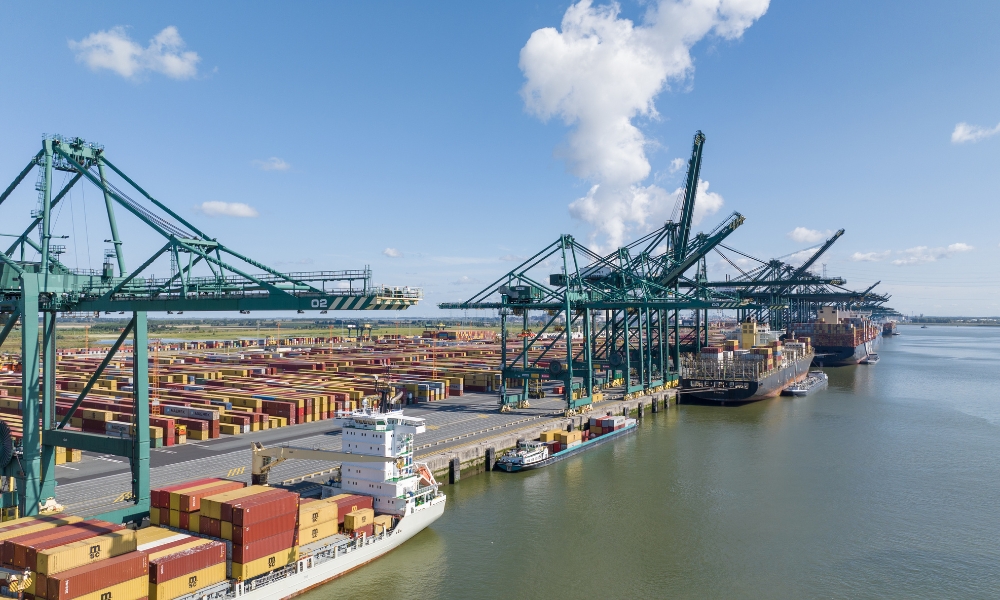
Port of Antwerp-Bruges, Deurganck Dock

The Port of Antwerp-Bruges recently published bunker fuel sales data for the second quarter (Q2) of 2026.

Total bunker sales at the port was 2.05 million metric tonnes (mt) in Q2 2026, compared to sales of 1.99 million mt (+3%) during the similar period in 2025.

Deliveries of ultra low sulphur fuel oil, very low sulphur fuel oil, high sulphur fuel oil and marine gas oil in Q2 2026 (against on year) recorded respectively 164,987 mt (+43.6%  from 114,917 mt), 537,926 mt (+12.8% from 476,746 mt), 659,182 mt (+11.6% from 590,544 mt) and 366,329 (-15.7% from 434,766 mt).

Biofuel recorded 26,833 mt in Q2 2026 with 41,939 mt (-36%) recorded in the same period the year before. 

Port data showed 76,513 mt of liquefied natural gas (LNG) being delivered as a marine fuel in Q2 2026, down by 13.4% from 88,328 mt in Q2 2025. Meanwhile, there has been no deliveries of methanol at the port for the year so far.

Related: Antwerp-Bruges biofuel bunker sales plunge 50.6% on year in Q1 2026, LNG soars 214%


Photo credit: Port of Antwerp-Bruges
Published: 23 July, 2026

Continue Reading

Methanol

World Fuel and partners complete first green methanol bunkering of car carrier in Shanghai

Operation involved the delivery of approximately 2,800 MT of green methanol to “Arctic Tern” via a ship-to-ship transfer using SIPG Energy’s dedicated methanol bunkering vessel “M/V Hai Gang Zhi Yuan”.
Admin

Published

on

By

World Fuel and partners complete first green methanol bunkering of car carrier in Shanghai

Marine fuel provider World Fuel on Tuesday (21 July) said it successfully completed the first green methanol bunkering of M/V Arctic Tern, with EUKOR Car Carriers and SIPG Energy at the Port of Shanghai. 

Arctic Tern is the first vessel in the new Shaper Class series of car carriers. 

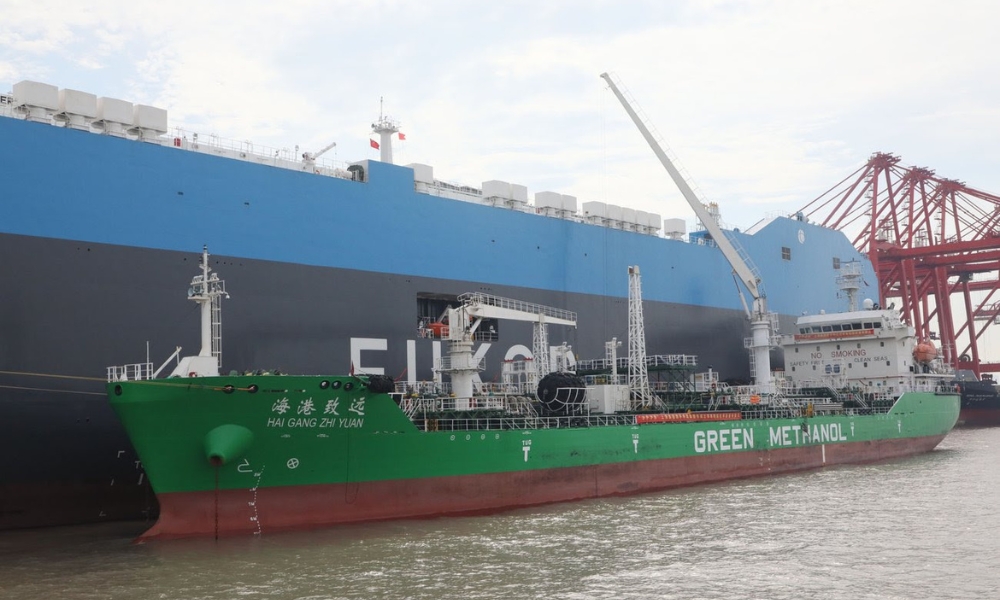
The operation involved the delivery of approximately 2,800 MT of green methanol to Arctic Tern via a ship-to-ship transfer using SIPG Energy’s dedicated methanol bunkering vessel M/V Hai Gang Zhi Yuan, the largest vessel of its kind in operation. 

The bunkering operation was carried out at Haitong Terminal, Waigaoqiao Port Area, Shanghai Port, with cargo handling operations conducted simultaneously during bunkering.

This marks EUKOR Car Carriers’ first green methanol operation and the first time Arctic Tern has bunkered methanol since its delivery on 9 July. The operation marked the first bunkering at Shanghai Port of green methanol produced locally in Shanghai for an international PCTC operator. 

It also demonstrated the city’s integrated green methanol value chain, spanning local production, storage and bunkering, and established a replicable “Shanghai Model” for green methanol supply.

World Fuel arranged the supply and delivery of the fuel on behalf of EUKOR Car Carriers, working with SIPG Energy as the physical supplier at the Port of Shanghai.

The green methanol supplied was produced from municipal solid waste, ISCC-EU certified, and had a carbon intensity value below 25 gCO₂e/MJ.

Arctic Tern is the first of fourteen Shaper Class vessels ordered by Wallenius Wilhelmsen. With a capacity of 9,300 car equivalent units and methanol dual-fuel capability, the vessel will be operated by EUKOR Car Carriers, jointly owned by Wallenius Wilhelmsen and Hyundai Motor Group. Following her first green methanol bunkering, Arctic Tern will continue her maiden voyage from Asia to Europe.

Xavier Leroi, COO Shipping Services at Wallenius Wilhelmsen and CEO of EUKOR Car Carriers, said: “Completing Arctic Tern’s first green methanol bunkering shortly after delivery is a significant milestone towards our decarbonisation ambition for both EUKOR Car Carriers and Wallenius Wilhelmsen. It demonstrates how investments in next-generation vessel technology and fuel flexibility are being translated into real-world operations. 

“This achievement reflects the strong collaboration between all parties involved. Together, we have shown how partnerships across the maritime value chain can help make lower-emission fuels available and operationally viable at scale.”

Mark Tamsitt, SVP Global Marine Sales at World Fuel, said, “The first bunkering event with a new fuel is a significant moment for any shipowner, and our role is to make it as seamless as possible. By connecting EUKOR Car Carriers with SIPG Energy’s proven green methanol capability at the Port of Shanghai, we were able to deliver on reliable supply, fuel quality, and safe processes. As more of our customers bring methanol dual-fuel tonnage into service, we are committed to being the partner that makes these kinds of operations routine.”

Mr. Zhang Da, General Manager of SIPG Energy, said, “Welcoming Arctic Tern to the Port of Shanghai for her first green methanol bunkering demonstrates the strength and maturity of our supply capability. Building on our well-established methanol ship-to-ship bunkering services for container vessels, we have already extended such services to pure car and truck carriers (PCTCs). This bunkering sets a new record for the largest single SIMOPs green methanol bunkering for PCTCs in China, marking another step in building Shanghai’s position as a global green energy hub for international shipping.”

This operation follows Wallenius Wilhelmsen’s announcement on 9 July that Arctic Tern would complete her first methanol bunkering shortly after delivery. The vessel entered service on routes between Asia and Europe immediately following handover from China Merchants Jinling Shipyard in Nanjing.


Photo credit: World Fuel
Published: 22 July, 2026

Continue Reading

Trending