
Alternative Fuels
Lloyd’s Register awards Approval in Principle to EXMAR for its ammonia-fuelled gas carrier
Jiangnan Shipyard was responsible for the ship design while Wärtsilä Gas Solutions provided input for the ammonia fuel gas supply system of the 40,000 m3 Midsize Gas Carrier.

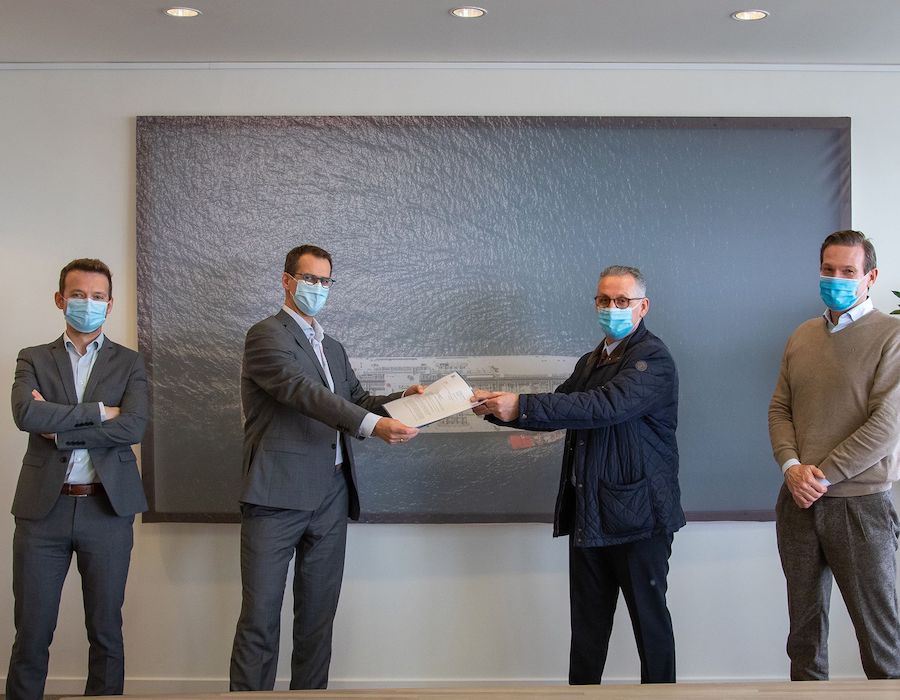
Belgium-based shipping company EXMAR on Wednesday (10 March) received an Approval in Principle from Lloyd’s Register (LR) for its ammonia (NH3) fuelled 40,000 m3 Midsize Gas Carrier design, it says.
Jiangnan Shipyard was responsible for the ship design while Wärtsilä Gas Solutions provided all input for the ammonia fuel gas supply system.
The Novel Technology Evaluation included an overall examination of fundamental aspects of the design and compliance with LR’s Rules and Regulations for the Classification of Ships and for the Carriage of Liquefied Gases in Bulk (for Gas Ships), incorporating the International Code of the Construction and Equipment of Ships Carrying Liquefied Gases in Bulk (IGC Code).
A risk assessment was also conducted, using EXMAR’s extensive knowledge and experience of operating Ammonia carriers, to ensure that risks arising from the use of ammonia fuel affecting persons onboard, the structural strength or the integrity of the ship are addressed in accordance with LR’s ShipRight Procedure for Risk-Based Designs (RBD). This included a Hazard Identification (HAZID) study which led to the Approval in Principle.
Ed Fort, LR’s Global Head of Engineering Systems, said:
“Lloyd’s Register is immensely proud to have awarded EXMAR Approval in Principle for its ammonia-fuelled Medium Gas Carrier, demonstrating our commitment to shipping by supporting clients with novel designs. This is a significant milestone in progressing alternative fuels for shipping’s transition to zero-carbon, proving the possibility of the use of ammonia as a fuel and how adaptable the fuel is to gas carriers, especially if carrying ammonia as cargo.”
Jens Ismar, Executive Director Shipping at EXMAR, said:
“This approval in principle is an important milestone in the process of developing low CO2 emission gas carriers. EXMAR continues its steps towards further innovation and decarbonisation by demonstrating the possibility of using ammonia as fuel onboard gas carriers. This follows EXMAR’s initiative of introducing LPG as a fuel in 2012 which is being implemented on our world’s first order of two dual fuel VLGCs currently under construction.”
“This work, together with EXMAR, Jiangnan and Lloyd’s Register for an Ammonia fuelled MGC, is an important step along the road towards decarbonising the shipping fleet. During the AiP process, we have provided the details for the Ammonia fuel system developed by WGS and also jointly conducted required studies for evaluating the readiness of the systems. We are proud to have played our part in having the AiP granted from Lloyd’s Register,” said Kjell Ove Ulstein (Director Sales and Marketing) at Wärtsilä Gas Solutions.
Hu Keyi, Chief of Corporate Technology of Jiangnan Shipyard, said:
“Jiangnan is continuously making efforts to find practical solutions for carbon natural and zero carbon transportation. Jiangnan, as leading gas carrier shipbuilder in China, has cooperated with LR and WGS, to deliver gas fuelled gas carriers to reputable ship owners, like EXMAR. We believe this project of ammonia-fuelled Medium Gas Carrier is not only a low CO2 emission ship, but it will also be a significant landmark on the roadmap of IMO 2050.”


Photo credit: EXMAR
Published: 12 March, 2021
Alternative Fuels
DNV at SMM: Chinese shipbuilders, European owners seek closer ties on alternative bunker fuels
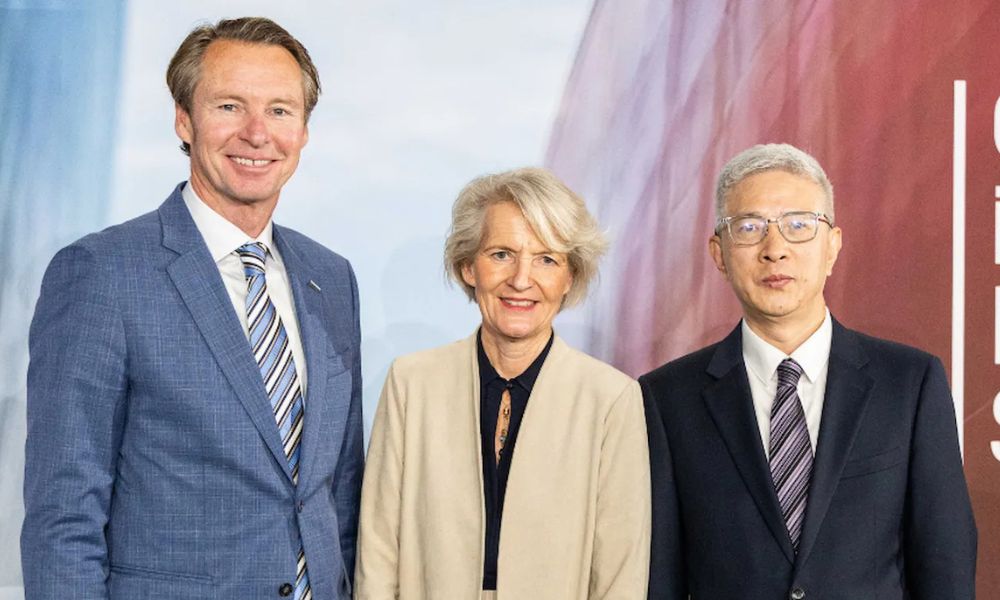
Chinese shipbuilders and European shipowners called for closer collaboration on vessel development, alternative fuels and digitalization during the inaugural China-Europe Maritime Summit at SMM 2026.
Alternative Fuels
Auramarine: Marine fuel flexibility will be key to shipping’s energy transition
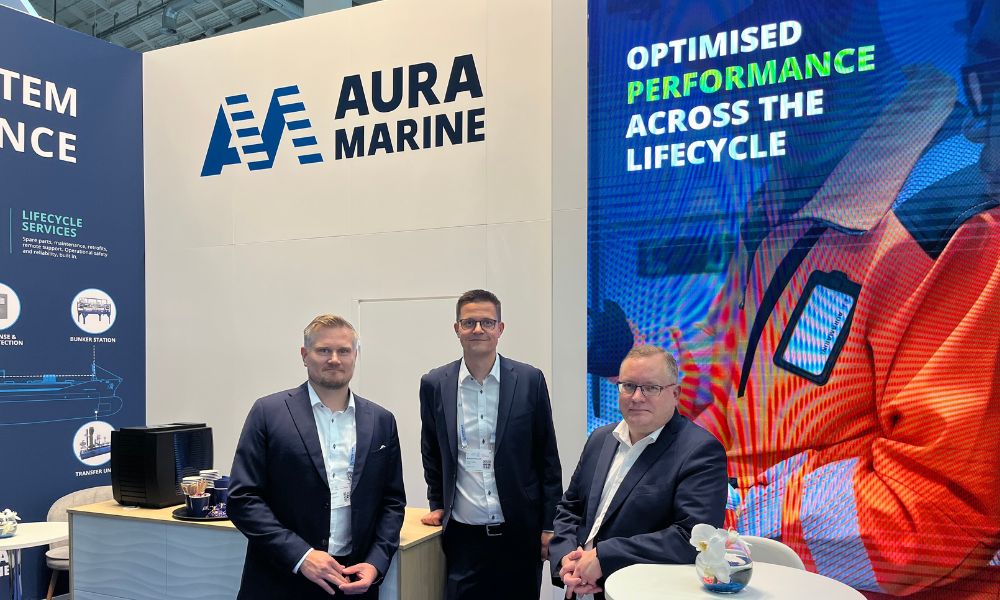
Operators who adapt best will be the ones who built in the flexibility to their marine fuel strategy to respond as conditions change, says CEO John Bergman.
Alternative Fuels
Yang Ming orders six LNG dual-fuel, ammonia-ready containerships from Hanwha Ocean
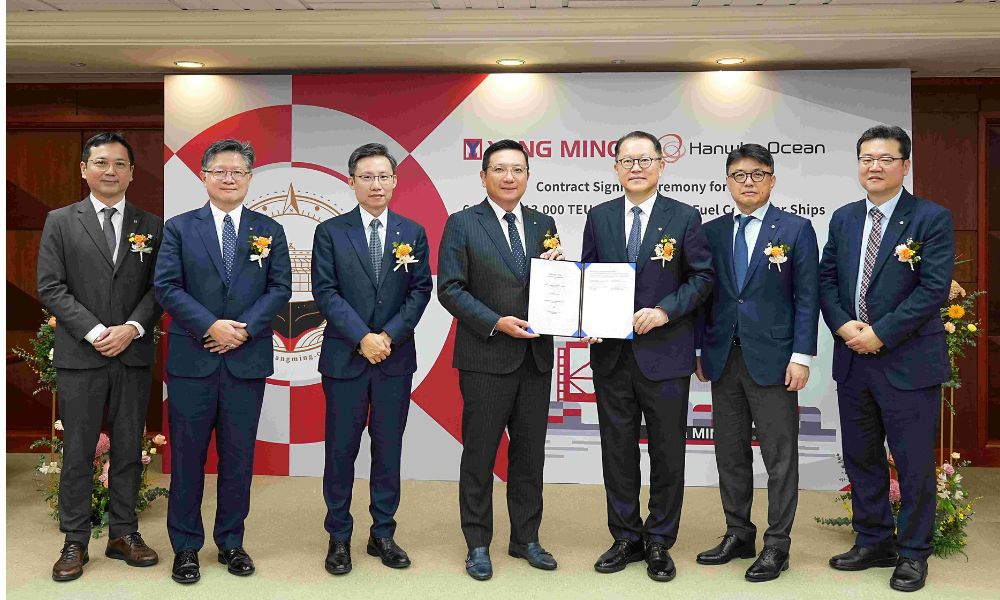
Each of the six new vessels will have a capacity of up to 13,650 TEU and feature LNG dual-fuel propulsion and Ammonia Fuel Ready specifications.

OUR INDUSTRY PARTNERS

DNV at SMM: Chinese shipbuilders, European owners seek closer ties on alternative bunker fuels

Auramarine: Marine fuel flexibility will be key to shipping’s energy transition

Yang Ming orders six LNG dual-fuel, ammonia-ready containerships from Hanwha Ocean

LR, China’s MARIC unveil tanker concept ready for three future bunker fuels

DNV: Alternative-fuelled vessel orders hit highest monthly level since October 2024

TFG Marine advances global MFM rollout with two US Gulf bunker barges

GENA Solutions: Total renewable and low-carbon methanol project pipeline increases from 61.8 to 62.2 Mt by 2032

Singapore-flagged tugboat “Kim Heng 3203” placed under Sheriff’s arrest

US targets five bunker companies in latest sanctions campaign against Iran

Singapore bunkering community supports Living Hope Evangelism’s 7th anniversary outreach for residents in need

China’s bunker market reshaped by tax rebates, trade flows and refining changes, says economist

Hengli Petrochemical’s ex-Singapore trading arm faces winding up application

Rajah & Tann: Bunker disputes are won in the first 48 hours

Report: GCMD outlines practical approach to quantity assurance in marine biofuel supply chains
-
 Vessel Arrest2 weeks ago
Singapore-flagged tugboat “Kim Heng 3203” placed under Sheriff’s arrest
-
 Sanctions2 weeks ago
US targets five bunker companies in latest sanctions campaign against Iran
-
 Events2 weeks ago
Singapore bunkering community supports Living Hope Evangelism’s 7th anniversary outreach for residents in need
-
 Interview1 week ago
China’s bunker market reshaped by tax rebates, trade flows and refining changes, says economist
-
 Winding up2 weeks ago
Hengli Petrochemical’s ex-Singapore trading arm faces winding up application
-
 Bunker Claim5 days ago
Rajah & Tann: Bunker disputes are won in the first 48 hours
-
 Biofuel2 weeks ago
Report: GCMD outlines practical approach to quantity assurance in marine biofuel supply chains
-

 Winding up1 week ago
Singapore: Notices of annual meeting issued for Vroon Shipping Asia and related firms