Connect with us

Business

Singapore Shipping Association provides clarity on Covid-19 measures for bunkering and surveying sectors

Caroline Yang, President of SSA, addresses issues earlier raised by players; including PMC No. 04, the seven-day restriction, contactless bunkering, sampling point, hose connection, and more.

Admin

Published

on

SSA logo updated

The Singapore Shipping Association (SSA) on Thursday (21 January) provided clarification towards queries raised by bunker suppliers and surveyors regarding the latest Covid-19 (Coronavirus Disease 2019) measures introduced at Singapore port.

The SSA was responding to a recent article published by Singapore bunkering publication Manifold Times where several industry players believe the latest changes could adversely affect waterfront operations.

Caroline Yang, President of SSA, addressed comments earlier raised by them; including topics related to Port Marine Circular (PMC No. 04), the seven-day restriction, contactless bunkering, sampling point, hose connection, loading operations, and crew licenses.

Background of PMC No. 04 of 2021

“The spirit of PMC No. 04 came about when Covid-19 cases involving shore-based personnel surfacing during the new year, including a case involving a Cargo Officer onboard NewOcean 6,” Yang told Manifold Times.

Almost at the same time, a Class Surveyor infected himself and his family with Covid-19 after boarding an oceangoing vessel, while a Harbour Pilot contracted the disease without any links.

“PMC No. 04 came in to protect the Singapore shipping community where we want to avoid an increase in the number of Covid-19 community cases to the extent where maritime sector has to come to a hard stop,” she said.

“Oceangoing ships [on a gross tonnage basis] coming to Singapore have increased by 1.7% on year in 2020 and not many countries, unlike Singapore, have introduced safe protocols to enable safe crew change.

“Our government has identified the maritime sector as vital industry that is too essential to stop. So, MPA, in consultation with the industry, have developed PMC No. 04 to ‘bubble wrap’ local shore-based personnel who needs to go on board vessel to work such as harbour craft crew, so they can safely continue operations.”

Seven-day Restriction for Shore-based Personnel

Yang sought to clarify Paragraph 10 of PMC No. 04 which seemed to have caused confusion in the local bunkering and surveying sectors where players questioned if the words ‘harbour craft’ and ‘pleasure craft’ includes launch craft.

In summary, paragraph 10 of PMC No. 04 states:

Shore-based personnel who have carried out a job on board an ocean-going vessel in the port of Singapore must not, in the next 7 days, go on board a harbour craft or pleasure craft, to carry out a job.

“To explain, paragraph 10 mentions the affected shore-based personnel are only restricted to carry out a job onboard the harbour craft or pleasure craft after working on the ocean-going vessel,” she says.

“Though launch craft are part of harbour craft, bunker surveyors are just using the launch craft as a means of transportation from the pier to the vessel and vice versa; they are not carrying out any jobs onboard the launch craft and as such are unaffected.”

Contactless Bunkering

According to Yang, the topic of contactless bunkering was discussed during a bunker craft community meeting on 7 January, 2021 where about 180 attendees were briefed on their responsibility to exercise diligence as well as possible new measures, so as to minimise the risk of their shore personnel’s exposure to oceangoing vessels.

The industry briefing was attended by SSA members which includes, ship owners, managers, agents. A separate industry briefing for SSA bunker craft operators, which forms between 85-90% of the bunker craft community in Singapore, was also held on the same day.

“Operationally, we have to adapt to contactless bunkering because we understand the rationale behind it,” she notes.

“We aim to minimise contact with oceangoing vessels crew as we are not sure where the vessels are from and where the crew change has been conducted. Because of that, we as a bunkering community have to adapt to contactless bunkering.

“To avoid cross-mingling, it would be prudent for the bunker surveyor not to move from the receiving vessel to the bunker tanker. The bunker surveyor will be sent the seals on the bunker tanker using an intrinsically-safe camera. To date, we have not received complaints from our members using this method.”

Sampling Point and SS600

Further, Yang pointed out SSA members accepting the flange of receiving vessel as the bunker sampling point; in accordance to Singapore bunkering procedures SS600, SS648 and international regulation MARPOL.

“This location will be the final binding sample. If you are a bunker tanker owner and are concerned with how samples are being taken it is commercial decision for you to appoint a surveyor,” she says.

“Other workarounds can be taken; sometimes if the bunker tanker is high enough you can watch the sampling process taking place, from the bridge. But it is clear the final and binding location for obtaining bunker samples is the flange of the receiving vessel.”

Hose Connection and SS600

Yang acknowledges the process of having bunker tanker crew connect the fuel hose to the receiving ship is part of the Singapore Standard Code of Practice for Bunkering (SS600).

However, the operation of having crew of a receiving vessel connect the fuel hose from the bunker tanker is actually a common practise at other ports around the world. Singapore is one of the very few countries still using crew from the bunker tanker for this task.

She notes the SSA Marine Fuels Committee was already in conversations to consider approaching MPA to change this practice, before Covid-19, due to safety issues.

“This contactless bunkering is introduced due to the Covid-19 and when the situation improves, we will engage with MPA on their views again.”

“There is indeed liability when a bunker spill happens due to the hose not being connected properly. However, it must be clear liability comes from where the fault lies and this is a legal issue unrelated to SS600.”

Loading Operations

Regarding loading operations of bunker cargoes from Singapore-based terminals to local bunker tankers, Yang pointed out PMC No. 04 was targeted towards only contactless bunkering operations.

“As such, loading operations conducted at Singapore oil terminals are simply subjected to the safe management measures introduced by the Singapore government as terminal operator staff are all based in Singapore,” she clarified.

“This includes the locally based Loading Master and Shore Gang whose jobs are to connect the oil terminal hose to the bunker tanker; they are also the only staff from the oil terminal allowed on the bunker tanker.

“The above scenario only applies for Singapore-based bunker tankers approaching the local oil terminals; if the bunker tanker previously conducted an operation outside the Singapore port limit such as Tanjong Pelepas they will be issued a ‘Not to Land’ instruction for 14 days to protect the community.”

License of Crew

Yang noted, to date, the extension of license of crew has been given due to the Covid-19 without issues.

“The crew cannot come down the vessel due to the stop in crew change and thus can’t travel back to his country; so far the extension has not been an issue and we will continue to monitor the situation.”

TAKING THE OVERALL SITUATION IN CONTEXT

“Everything needs to be taken in context. We need to remember that we are in a pandemic crisis,” stressed Yang.

“Because of this, there will be the need for additional Covid-19 measures which means everyone has to bear increases in cost. If you do not pay for this increased cost and suffer from an infected bunker tanker which has to undergo quarantine, you may even lose your business.

“This is a shared experience across all sectors (not just bunkering sector).  Businesses have acknowledged that is necessary to invest and spend for additional measures to in order to sustain their business operations or risk shutting down.

“As far as we are concerned, we are paying for costs which are necessary. The whole world is suffering and we have to work with constraints in the ‘new norm’. These are not peace times; we have a common global enemy in the form of Covid-19.

“PMC No. 04 came out as an extensive circular with many instructions. Many have different understanding and there will be various scenarios, questions and queries. We are now consolidating queries and seeking clarification from MPA on these.

“The right forum will be to go through industry associations and have consultation and engagement sessions MPA. That’s what SSA has been doing and we encourage any company in the maritime community to join SSA as a member to participate in such consultations with MPA on a regular basis. Not just on this Covid-19 crisis but also other regulatory matters.”

The Chairman of SSA’s Marine Fuels Committee speaks for bunker surveyors

Captain Rahul Choudhuri, Managing Director AMEA of international fuel testing and inspection firm Veritas Petroleum Services (VPS), was keen to provide his thoughts on the latest Covid-19 measures introduced by MPA.

“There are already a number of circulars touching on best practises for Covid-19 measures issued by MPA throughout last year and these should be followed, while PMC No. 04 carries on the good work by MPA,” said Captain Choudhuri, who is also the Chair of SSA’s Marine Fuels Committee.

“As far as we are concerned, even post implementation of this PMC is going smoothly. The fact bunker surveyors are not going onboard bunker tankers is a positive safety development to avoid further Covid-19 incidents.

“Bunker surveyors are well able to monitor the bunker tanker meter readings such as zero verification, operational seals, and MFM meter profile remotely. One thing we noticed was sometimes details such as seal numbers are not as clear on certain photos; but this is part of a surveyor’s job to rectify.

“With a bunker surveyor present, witnessing of the sampling process is still fully compliant with SS648. There has been satisfactory communication with the Chief Engineer and bunker tanker and the role of the bunker surveyor continues very positively; even our largest customers understand these measures.

“We also saw some receiving vessels not wanting the bunker tanker crew to go onboard and MPA came in as an advisor to the SSA’s Marine Fuels Committee and after joint discussion we decide it will be best to appoint a surveyor if the receiving vessel of a bunker tanker is facing difficulty.

“From a maritime point of view, if the bunkering cannot be done then a proper statement of fact is recommended to record why certain parts of the operation cannot take place for given reasons.

“Surveyors can play a key role in bunker sampling. The MARPOL sample can only be taken from the receiving vessel and not the bunker. The position is clear. This has already been discussed since meeting last year and this was not something introduced last minute.”

Related: Singapore: Latest Covid-19 measures cause confusion, disruption for bunkering and surveying sectors


Photo credit: Manifold Times
Published: 22 January, 2021

Continue Reading

Alternative Fuels

Yang Ming orders six LNG dual-fuel, ammonia-ready containerships from Hanwha Ocean

Each of the six new vessels will have a capacity of up to 13,650 TEU and feature LNG dual-fuel propulsion and Ammonia Fuel Ready specifications.
Admin

Published

on

By

Yang Ming orders six LNG dual-fuel, ammonia-ready containerships from Hanwha Ocean

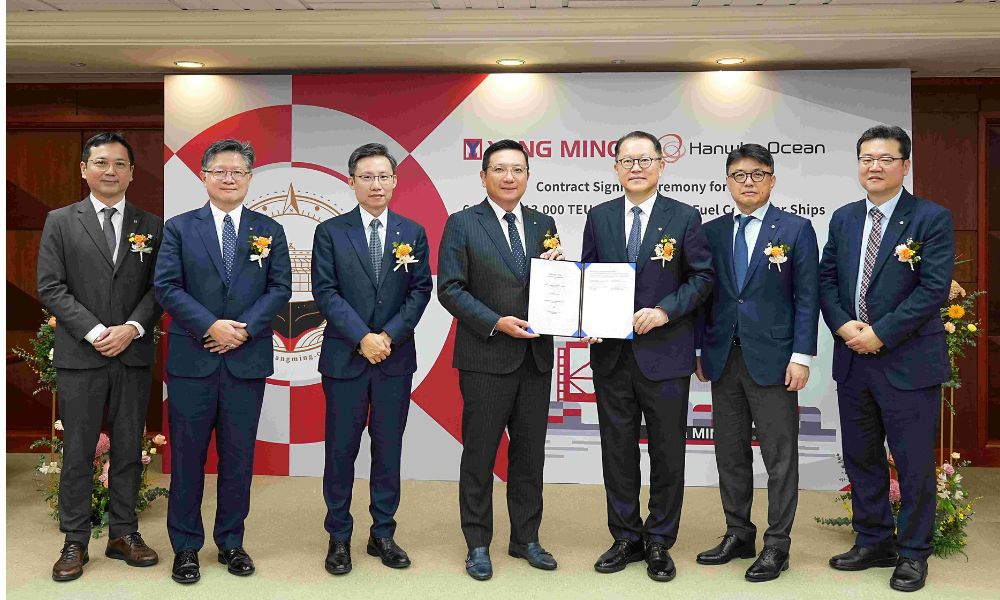
Taiwanese shipping firm Yang Ming Marine Transport Corporation (Yang Ming) and South Korean shipbuilder Hanwha Ocean on Wednesday (2 September) signed a shipbuilding contract for six 13,000 TEU class LNG dual-fuel container vessels. 

The contract was signed by Dr. Chuck Tsai, Chairman of Yang Ming, and Mr. Charles Kim, CEO of Hanwha Ocean. The vessels are scheduled for delivery between 2028 and 2029. 

They will complement Yang Ming’s existing fleet of 10,000+ TEU vessels and serve as key vessels on East-West services, with deployment flexibility across trade lanes connecting Asia with the East and West Coasts of North America, South America, and the Mediterranean. 

Each of the six new vessels will have a capacity of up to 13,650 TEU and feature LNG dual-fuel propulsion and Ammonia Fuel Ready specifications.

“As Yang Ming transitions toward net-zero emissions, LNG provides a relatively mature and economically viable alternative fuel solution, capable of reducing greenhouse gas emissions by approximately 20%,” the company said. 

“At the same time, ammonia can serve as a carbon-free fuel by utilising converted LNG storage facilities, while offering relatively lower conversion costs and comparatively well-developed supply chains and infrastructure. The Ammonia Fuel Ready design will therefore provide Yang Ming with greater flexibility in responding to increasingly stringent international regulations on greenhouse gas emissions.”

In addition, the vessels will be equipped with Type B LNG fuel tanks with a design pressure of 1.0 bar to enhance the safety and efficiency of LNG operations, together with a range of energy-saving technologies, including Wind Shields, Rudder Bulbs, Pre-Swirl Stators, and Shore Power Systems. Smart ship technologies and cybersecurity protection features will also be incorporated to enhance operational efficiency, safety, and reliability while effectively reducing fuel consumption and greenhouse gas emissions.

Deliveries under Yang Ming’s next-generation fleet optimization plan commenced earlier this year. By 2030, a total of 24 new vessels are expected to enter service. 

This includes 18 LNG dual-fuel vessels—comprising five 15,500 TEU, seven 16,000 TEU, and the six 13,000 TEU vessels under this contract—alongside six 8,000 TEU methanol dual-fuel-ready ships. 


Photo credit: Yang Ming Marine Transport
Published: 4 September, 2026

Continue Reading

Alternative Fuels

LR, China’s MARIC unveil tanker concept ready for three future bunker fuels

Both secured AiP for a new 114,000 DWT product and crude oil tanker designed to accommodate future conversion to LNG, methanol or ammonia.
Admin

Published

on

By

LR, China’s MARIC unveil tanker concept ready for three future bunker fuels

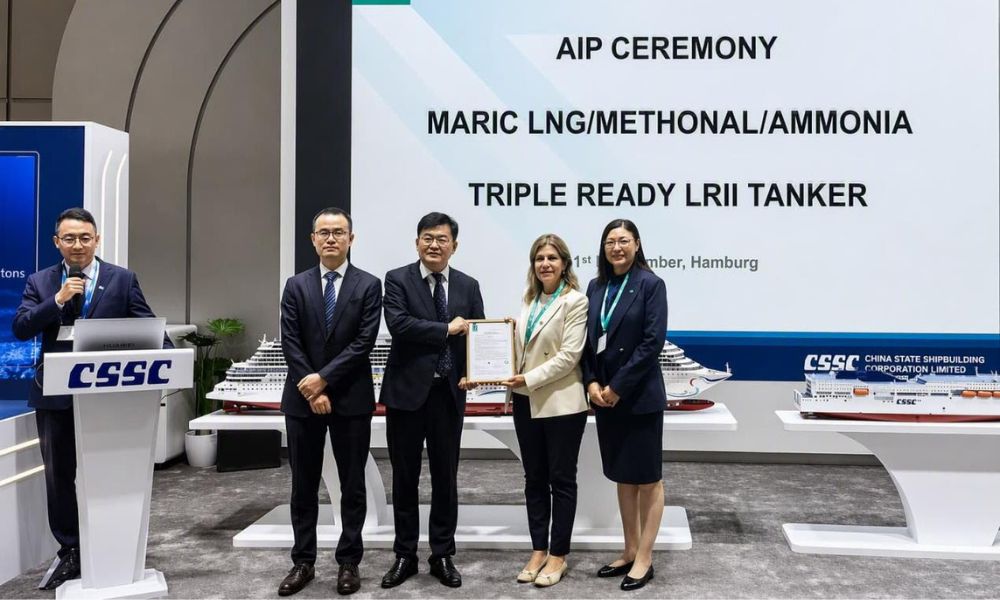
Lloyd’s Register (LR) and the Marine Design and Research Institute of China (MARIC) on Thursday (3 September) have secured Approval in Principle (AiP) for a new 114,000 DWT product and crude oil tanker designed to accommodate future conversion to LNG, methanol or ammonia.

Announced at SMM 2026, the concept addresses one of the biggest investment challenges facing shipping today: the need to develop vessels and capabilities that can support a range of alternative fuel options and pathways as technologies, infrastructure and regulations evolve.

While LNG is already a mature fuel pathway, methanol and ammonia remain at an earlier stage of development, with questions around global fuel availability, infrastructure development, economics and long-term adoption.

The 114,000 DWT tanker concept has been designed as a product and crude oil carrier that can accommodate future conversion to LNG, methanol or ammonia as technologies, regulations and fuel supply chains mature. By incorporating conversion readiness at the design stage, the concept aims to reduce future retrofit complexity and provide owners with greater confidence when planning long-term fleet investments.

The design concept was reviewed against LR’s July 2026 class rules and regulations, including requirements relating to ships using gases and other low-flashpoint fuels, alongside relevant IACS Common Structural Rules for oil tankers. Final classification and statutory approval remain subject to full compliance with all applicable rules and regulations.

Theo Kourmpelis, Global Business Director for Tankers, Lloyd’s Register, said: “Shipowners are being asked to make major investment decisions today despite continued uncertainty around which fuels will dominate in the decades ahead. Alternative fuel solutions each offer potential pathways to compliance, but fuel infrastructure, regulation and economics continue to evolve at different speeds around the world.

“Designs that preserve flexibility will be critical in helping owners manage risk while preparing for multiple future scenarios.”

Si Nan, Marine & Offshore Marketing Department Vice Director, MARIC, said: “As the industry explores different decarbonisation pathways, shipowners need vessel designs that can adapt alongside technological and regulatory developments. This concept was developed specifically to provide greater fuel flexibility and long-term resilience, allowing owners to respond to changing market requirements without being locked into a single fuel strategy.

“Receiving Approval in Principle from Lloyd’s Register is an important milestone that validates the design concept and supports its future development.”


Photo credit: Lloyd’s Register
Published: 4 September, 2026

Continue Reading

Alternative Fuels

DNV: Alternative-fuelled vessel orders hit highest monthly level since October 2024

LNG-fuelled vessels accounted for the vast majority of August activity while the strong summer performance marked a significant acceleration in ordering activity after a relatively slow start to the year.
Admin

Published

on

By

DNV: Alternative-fuelled vessel orders hit highest monthly level since October 2024

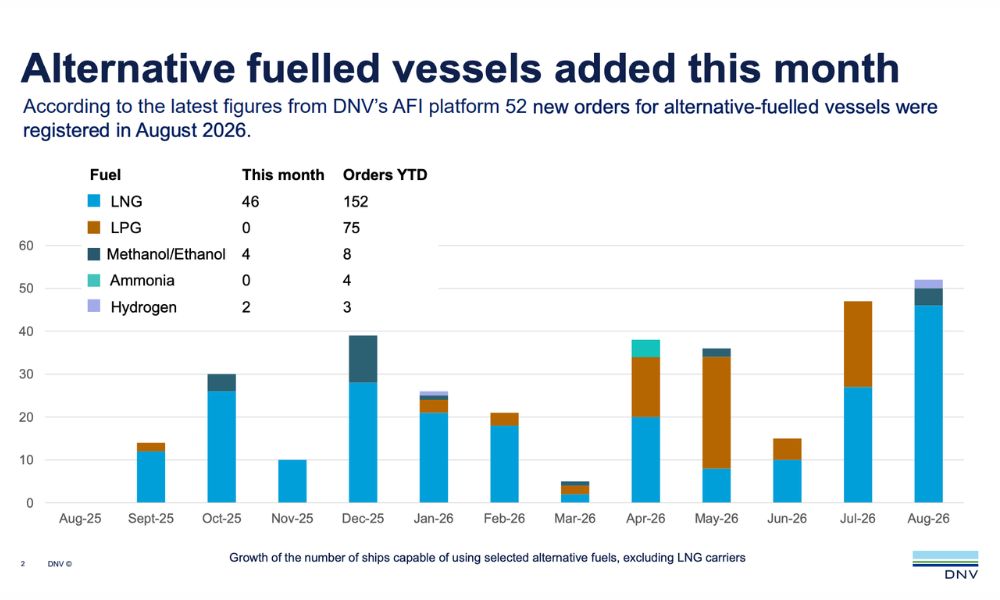
Latest data from classification society DNV’s Alternative Fuels Insight (AFI) platform alternative-fuelled vessel ordering was strong in August, with 52 new vessels added to the platform.

This is the highest monthly total since October 2024 and follows another active month in July, when 47 vessels were added to the database.

LNG-fuelled vessels accounted for the vast majority of August activity, with 46 orders recorded. The container segment led the way with 30 orders, while the car carrier segment contributed a further 12 LNG-fuelled vessels. In addition, four ethanol-fuelled bulk carriers and two hydrogen-powered bulk carriers were added during the month, as well as one LNG bunker vessel.

The strong summer performance marked a significant acceleration in ordering activity after a relatively slow start to the year. In total, 242 alternative-fuelled vessel orders have been placed in the first eight months of 2026, representing a 27% increase compared with the same period in 2025.

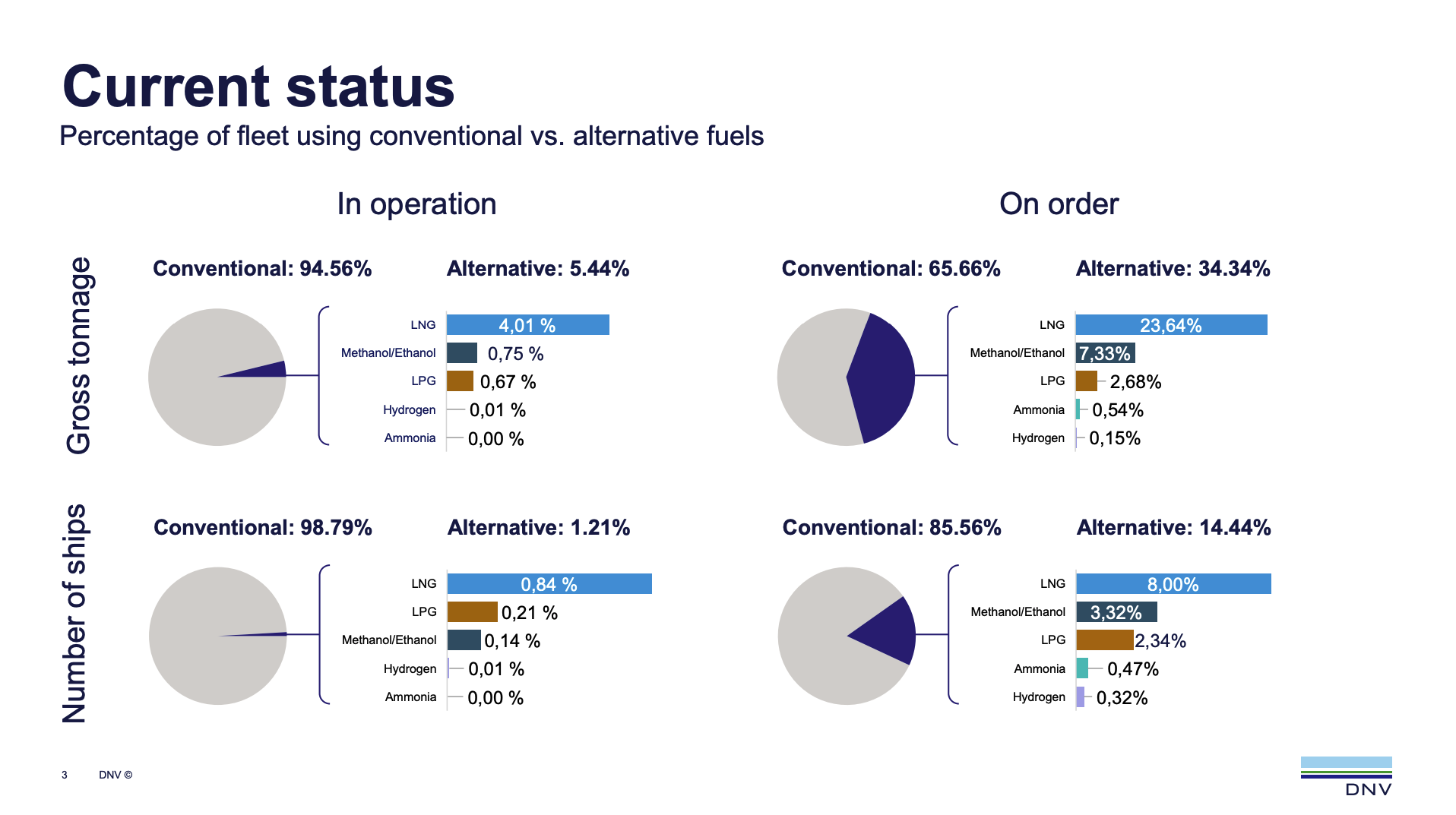
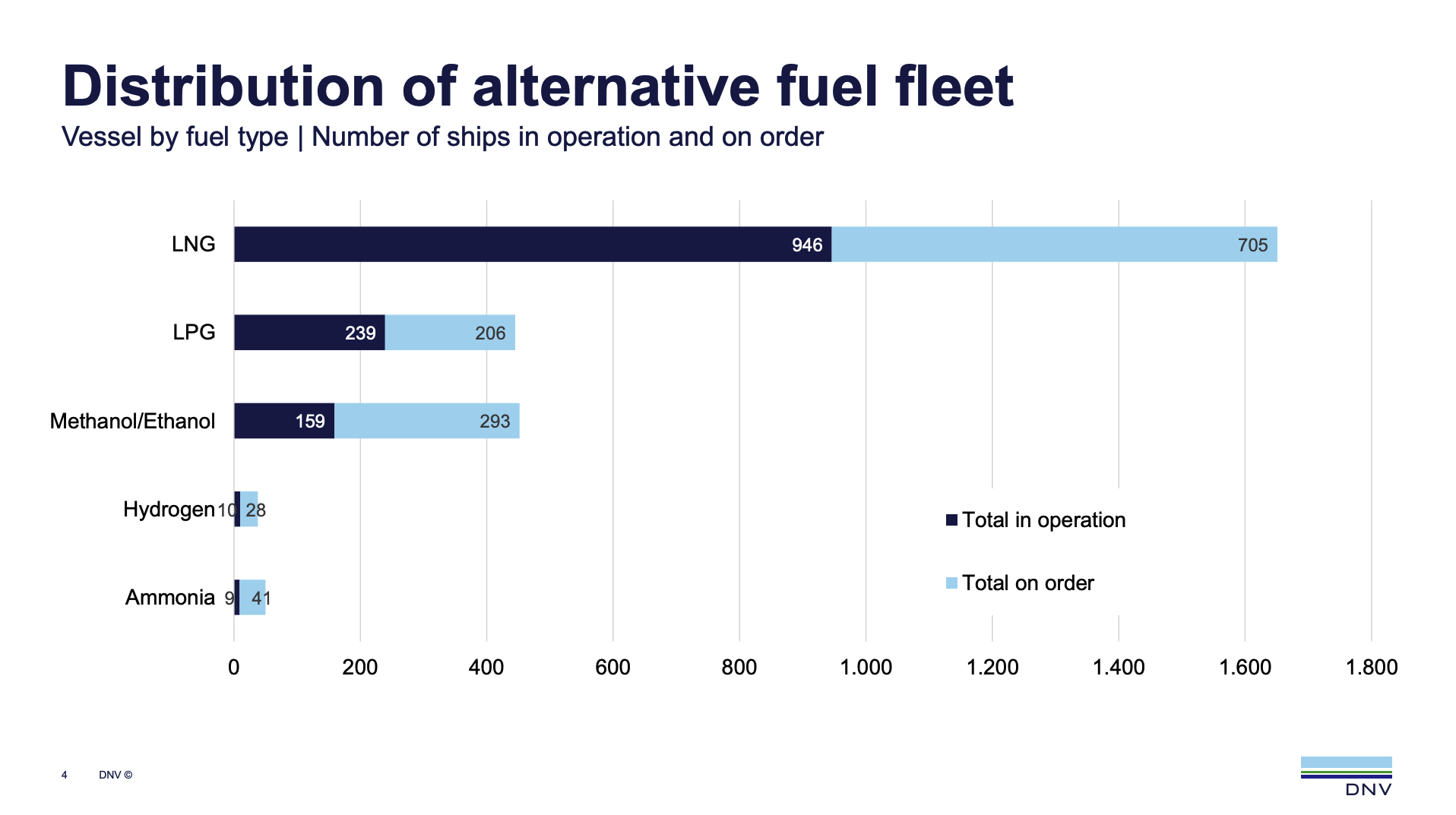
LNG remains the dominant fuel choice, accounting for 63% of all alternative-fuelled vessel orders registered so far this year. Container vessels represent the largest share of these LNG orders (59%), followed by car carriers (30%).

Jason Stefanatos, Global Decarbonization Director at DNV Maritime, said: “The past two months have been particularly strong for alternative-fuelled vessel ordering, with August recording the highest monthly total we’ve seen since October 2024. This has helped lift year-to-date orders to a level well above the same period last year.

“LNG remains the leading fuel choice, driven largely by activity in the container and car carrier segments. These sectors have been among the earliest adopters of alternative fuels, supported by predictable liner operations and increasing demand from cargo owners to reduce emissions across supply chains. 

“For many owners, LNG offers a combination of emissions reductions, fuel availability and future flexibility while the longer-term fuel landscape continues to evolve. 

“At the same time, the latest figures include orders for ethanol- and hydrogen-fuelled vessels, highlighting that owners continue to explore a range of decarbonization pathways. Different segments are making different fuel choices, but the overall level of activity demonstrates continued investment in lower-emission shipping.”
Screenshot 2026 09 04 at 12.29.26 PM Screenshot 2026 09 04 at 12.29.36 PM


Photo credit: DNV
Published: 4 September, 2026

Continue Reading
Advertisement

OUR INDUSTRY PARTNERS


Trending