
Alternative Fuels
Industry leaders collaborate on standard design for methanol-powered product tanker
Hyundai Mipo Dockyard, MAN Energy Solutions, and the Methanol Institute have developed a design that meets safety requirements and is economically viable.

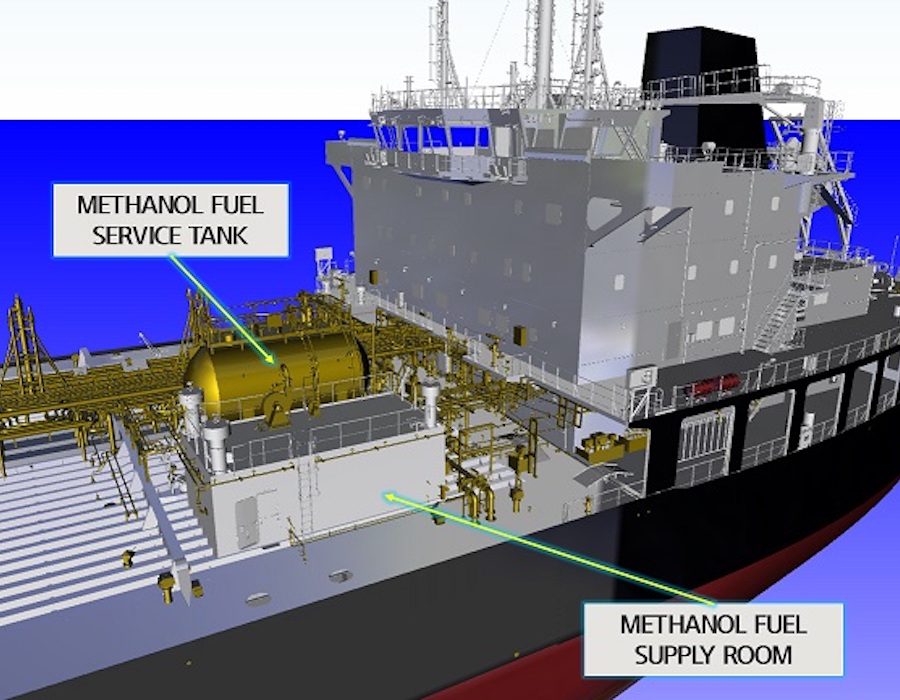
Hyundai Mipo Dockyard, MAN Energy Solutions, and the Methanol Institute on Wednesday (9 December said) they have collaborated on a Joint Industry Project to enable product tanker charterers and shipowners to utilise Methanol as fuel regardless of the cargo carried.
The coalition said they worked together to develop a design that meets all prevailing safety requirements with minimal loss of cargo capacity and low additional build costs.
DNV GL reviewed the designs for the vessels in accordance with the relevant rules and regulations and provided technical advice and recommendations to help enhance the design development.
The resulting design – Low Emission Advanced Products Tanker (LEAP) – has been granted Approval in Principle by classification society DNV GL, which acted as verification body to the project, assessing and approving the design in conformity to its rules and the latest amendments to the IMO IGF Code.
The vessel has a service speed of 14.5 knots and effective range of 17,400 nautical miles using Methanol as primary fuel and cargo capacity is 54,000 cu m – a reduction of just 300 cu m compared to a diesel-only vessel.
The LEAP design has additional newbuild costs of just 10% compared to additional capex of 22% for LNG-dual fuel, and using Methanol as fuel would have daily CO2 emissions of 54.7 tonnes per day at service speed, compared to 64.7tpd for diesel.
The design uses two slop tanks of 2,600 cu m to store Methanol as fuel, positioned aft of the cargo tanks, protected by a cofferdam, with the fuel supply system connecting to the engine room via an on-deck service tank. Methanol is bunkered by an independent manifold and the design includes tanks for VLSFO and MDO storage to provide complete operational flexibility.
MAN Energy Solutions provided input to the arrangement of the fuel supply and propulsion system, based on application of its proven ME-LGIM two-stroke Methanol-capable main engine.
There is no significant additional ‘footprint’ for the Methanol fuel system as the service tank, methanol pipelines and methanol fuel supply room are located on deck.
“HMD is pleased to have provided initial and detailed design for the LEAP vessel design using the experience accumulated from successful dual fuel methanol carriers for numerous international owners,” said YH Chung, Head of Initial Design Department, Hyundai Mipo Dockyard.
“This design results in estimated cargo loss of 0.5% for a low construction premium, providing shipowners with the ability to build a low emissions vessel today.”
“Methanol ticks the boxes from an emissions point of view, with no sulfur, very low PM and carbon dioxide emissions around 15% lower than conventional marine fuel oil,” added Kjeld Aabo, Head of Marine and Offshore Sales, 2 and 4 stroke engines, MAN Energy Solutions.
“To meet IMO NOx Tier III requirements, Methanol can be blended with water which brings the ship into compliance without the need for expensive exhaust gas after treatment.”
“DNV GL has assessed this design in accordance with its rules and all international standards and is pleased to provide Approval in Principle for a vessel which can make a significant contribution to lower emissions,” noted Vidar Dolonen, Regional Manager of DNV GL Korea and Japan.
“In the drive to decarbonize shipping, DNV GL has identified an important role for methanol produced from biomass or renewable energy sources.”
The Methanol Institute said it believes the next few years will be crucial ones for the adoption of fuels that can begin to have an impact on global carbon emissions from shipping.
“Governments, NGOs, policy-makers, academics and technical experts all agree that conventional Methanol provides a safe, clean and practical pathway to short term emissions reductions,” said Chris Chatterton, Chief Operating Officer, The Methanol Institute.
“This vessel design demonstrates that newbuild or conversion can be straightforward and cost effective and extends the trading life of the asset as it can use renewable Methanol as more becomes available.”


Photo credit: Hyundai Mipo Dockyard (HMD), DNV GL, MAN ES, Methanol Institute
Published: 10 December, 2020
Alternative Fuels
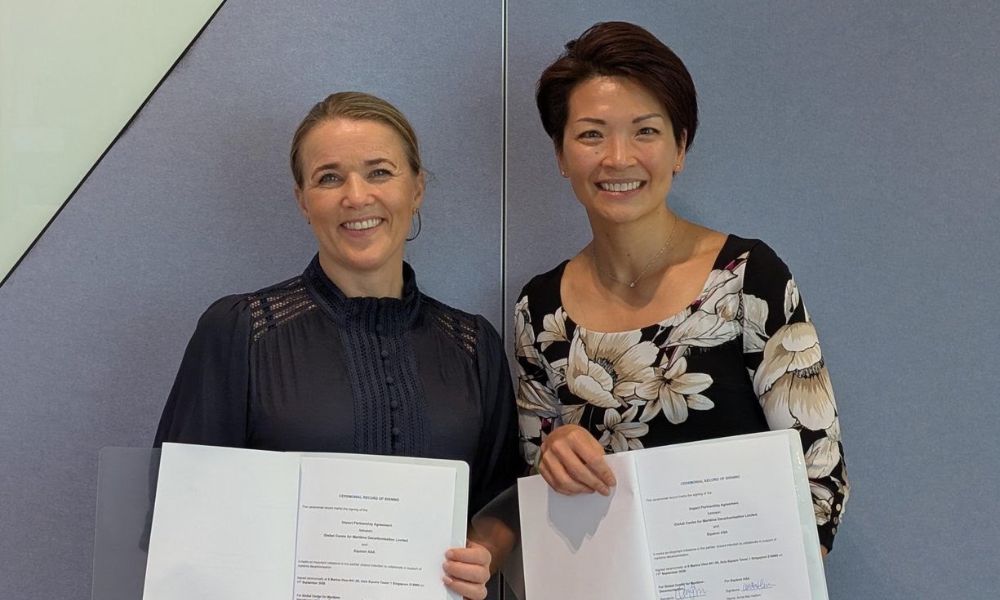
GCMD, Equinor to combine expertise on alternative bunker fuels, decarbonisation solutions
Equinor brings extensive experience to partnership as a vessel charterer and marine fuel supplier, including chartering dual-fuel LNG and methanol tankers, testing biofuels and supplying methanol.
Decarbonisation
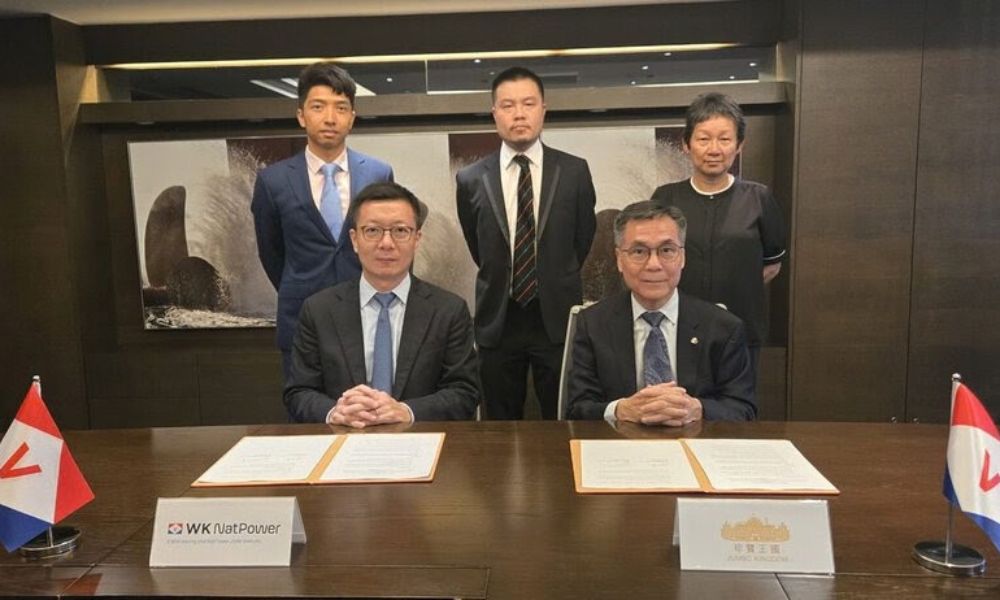
Wah Kwong NatPower, AREL partner on maritime electrification in Hong Kong
Collaboration will examine opportunities to deploy shore power facilities, vessel charging infrastructure and battery energy storage solutions, alongside the development of electric vessels.
Ammonia
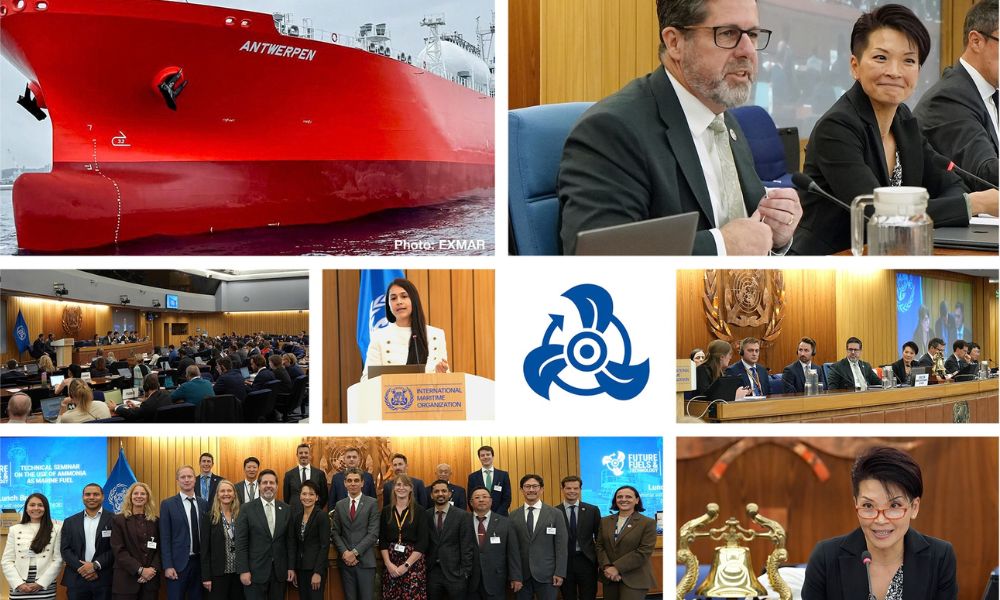
IMO technical seminar examines ammonia bunkering and infrastructure
Around 800 participants exchanged technical information and experiences on the potential use of ammonia as a marine fuel, including developments in production and bunkering and infrastructure.

OUR INDUSTRY PARTNERS

MPA: 25 crew rescued after abandoning “MSC HERMES III” east of Vietnam

GCMD, Equinor to combine expertise on alternative bunker fuels, decarbonisation solutions

Wah Kwong NatPower, AREL partner on maritime electrification in Hong Kong

IMO technical seminar examines ammonia bunkering and infrastructure

Spring Marine to expand use of Sulnox Eco with four-year supply agreement

PortXchange: Rotterdam bunker volume shift offers warning as Spain adopts fuel law

ENGINE: East of Suez Fuel Availability Outlook (22 Sep 2026)

Singapore: Marine fuel testing firm CCIC Singapore faces winding up application

Peninsula confirms one fatality, crew member missing from bunker tanker “Hercules Star”

Singapore: MPA working with industry on next phase of digital bunkering, says Deputy CE

Amogy and LOTTE Fine Chemical to explore ammonia bunkering in South Korea

High Court of Singapore issues winding up order against Hengli Petrochemical International

Polaris Shipping orders WinGD engines capable of running on methanol, ethanol

APPEC 2026: Digitalisation in bunkering not merely a ‘paper-to-screen’ swap, states panellists
-
 Winding up1 week ago
Singapore: Marine fuel testing firm CCIC Singapore faces winding up application
-
 Incident2 weeks ago
Peninsula confirms one fatality, crew member missing from bunker tanker “Hercules Star”
-
 Technology2 weeks ago
Singapore: MPA working with industry on next phase of digital bunkering, says Deputy CE
-
 Ammonia2 weeks ago
Amogy and LOTTE Fine Chemical to explore ammonia bunkering in South Korea
-
 Winding up1 week ago
High Court of Singapore issues winding up order against Hengli Petrochemical International
-
 Engine2 weeks ago
Polaris Shipping orders WinGD engines capable of running on methanol, ethanol
-
 Technology1 week ago
APPEC 2026: Digitalisation in bunkering not merely a ‘paper-to-screen’ swap, states panellists
-
 Financial Result2 weeks ago
Singapore-based Uni-Fuels H1 2026 net income jumps 1,415% to USD 1.4 million