Connect with us

Alternative Fuels

LNG-powered “Viking Energy” to undergo ammonia powered fuel cell conversion

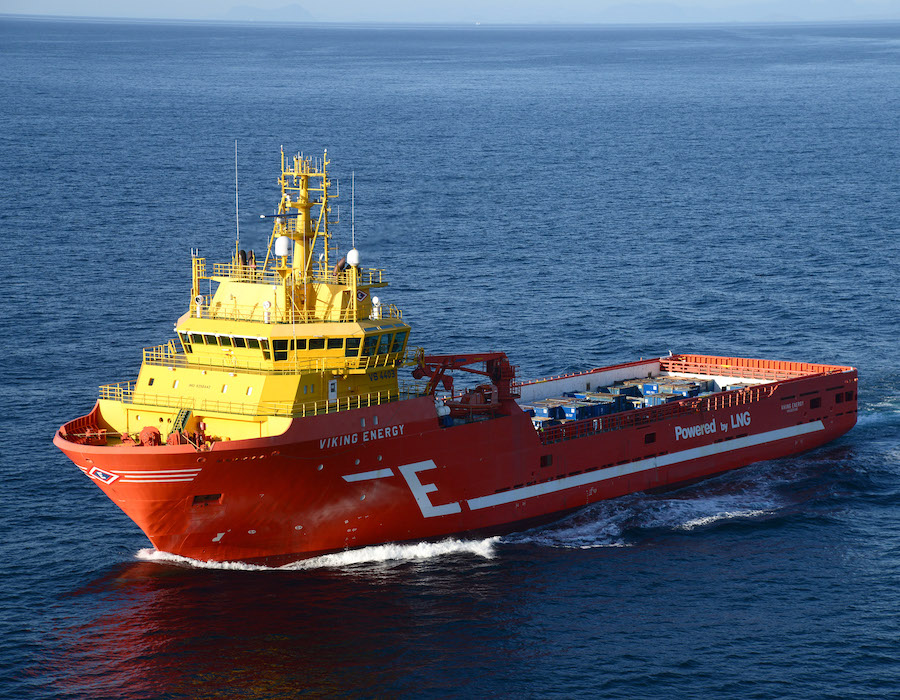
Viking Energy will have a large 2MW ammonia fuel cell retrofitted, allowing it to sail solely on the clean fuel for up to 3,000 hours annually.

Admin

Published

on

Presse2 FCH Europa

Maritime innovation project ShipFC recently announced its objective to install the world’s first ammonia-powered fuel cell on an offshore supply vessel Viking Energy; the project has been awarded EUR 10 million funding from the European Union. 

The project is being run by a consortium of 14 European companies and institutions that is coordinated by the Norwegian cluster organisation NCE Maritime CleanTech, and has been awarded backing from the EU’s Research and Innovation programme Horizon 2020 under its Fuel Cells and Hydrogen Joint Undertaking (FCH JU).

One of the major project milestones is to demonstrate the possibility of a long-range zero-emission voyages with high power on larger ships by installing a large 2MW ammonia fuel cell retrofitted into an offshore vessel Viking Energy.

This will allow Viking Energy to sail solely on the clean fuel for up to 3,000 hours annually.

ShipFC will also be aiming to achieve the following milestones:

  • To ensure that a large fuel cell can deliver total electric power to shipboards systems safely and effectively. 
  • A significant part of the project will be the scale up of a 100-kilowatt fuel cell to 2 megawatts. 
  • The fuel cell is tested on land in a parallel project and development and construction will be undertaken by Prototech. 
  • Testing will be executed at the Sustainable Energy Norwegian Catapult Centre. 
  • The ship-side ammonia system will be supplied by Wärtsilä. 
  • Norwegian crop nutrition company Yara has been contracted to supply the green ammonia which will be produced by electrolysis and delivered to Viking Energy containerised to enable easy and safe refuelling.
  • Perform studies on three other vessel types, namely offshore construction vessels and two cargo vessel types, to illustrate the ability to transfer this technology to other segments of the shipping industry.

The ammonia fuel cell system will be installed in Viking Energy in late 2023.

The project represents the latest stage in the long running collaboration between Equinor, Eidesvik and Wärtsilä. 

The 6013 dwt Viking Energy was the first liquefied natural gas (LNG) powered ocean going vessels in 2003, and Eidesvik and Wärtsilä also collaborated on the 2009-built Viking Lady, another LNG-fueled vessel that was seen as a milestone in the transition of shipping with its installation of fuel cells and marine batteries.

“This is a result of hard work over time as we have continued to collaborate with Equinor on transformative projects,” said Eidesvik President & Chief Executive Jan Fredrik Meling.

“We are proud to be pioneers when it comes to introducing new energy carriers and fuels into the industry. This project to install the world’s first ammonia-powered fuel cell will help us continue our journey towards a decarbonized future and help maintain our competitive role”.

 “We see projects such as the ShipFC conversion to use ammonia on a high-powered marine fuel cell as an important step in finding the right sustainable and clean solutions in the future,” said Equinor Senior Vice President for Joint Operations Support Cecilie Rønning.

NCE Maritime Cleantech cluster chief executive Hege Økland said ammonia is an abundant energy source and can easily be made from renewable resources, making it one of the fuels that will likely meet part of shipping’s future energy demand.

“Fair wind to the ShipFC project as it trials the route of maritime decarbonisation with green ammonia as a fuel and Solid Oxide Fuel Cell as a powertrain,” said FCH JU Director Bart Biebuyck.

Bart Biebuyck believes the project complements the portfolio of maritime projects supported by FCH2 JU: MARANDA and FLAGSHIPS, which use hydrogen as a fuel and Proton Exchange Membrane Fuel Cells.

Alongside NCE Maritime Cleantech (NO), Eidesvik Shipping (NO), Equinor (NO), Prototech (NO) and Yara (NO) in the European consortium are:

  • Wärtsilä Norway (NO) which will work on the fuel systems, any changes to the ship’s design and stability and the energy management of the vessel. 
  • Fraunhofer IMM(GE), an institute of the leading German organisation for applied research, has expertise with fuel cell process development and will assist Prototech in the development and construction of the ammonia fuel cell system. 
  • A specialised SME Persee (FR) is an expert in energy management controls and data. 
  • The University of Strathclyde (UK) and National Centre for Scientific Research Demokritis (GR) are consortium members assessing any safety criteria. 
  • The three test cases that will look at the ability to transfer the technology to other vessels has led to North Sea Shipping (NO), Capital-Executive Ship Management (GR) and Star Bulk Ship Management (CY) also being part of the consortium. 
  • One of the five Catapult centres in Norway, Sustainable Energy Norwegian Catapult Centre, has responsibility for testing autonomous sustainable energy systems as well as scale-up of the ammonia fuel cell.


Photo credit: FCH Europa
Published: 28 January, 2020

Continue Reading

Alternative Fuels

China: Guangzhou completes first bio-methanol STS bunkering operation

A total of 1,021 metric tonnes of bio-methanol was supplied to the world’s first methanol dual-fuel Ultramax bulk carrier in Guangzhou anchorage.
Admin

Published

on

By

China: Guangzhou completes first bio-methanol STS bunkering operation

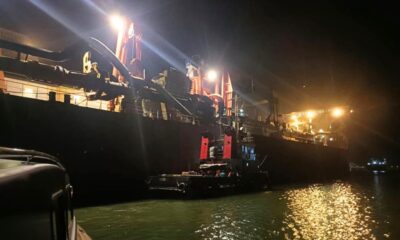
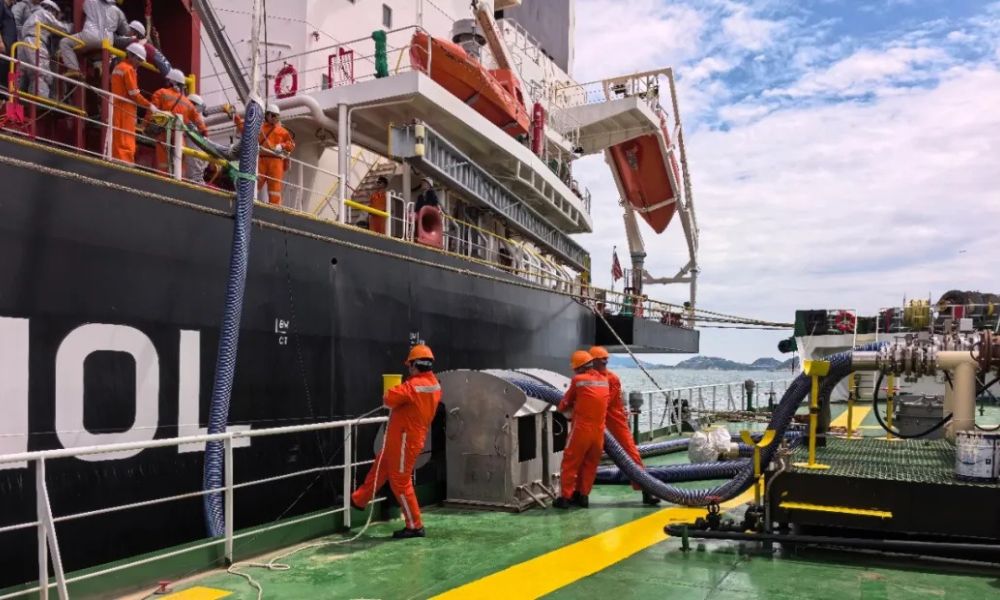
Clean energy equipment and services provider CIMC Enric on Monday (7 September) said China’s first green methanol bunkering operation for a bulk carrier was completed at Guangzhou anchorage.

The company said the bunkering operation also marked the first bio-methanol STS bunkering operation at Guangzhou Port.

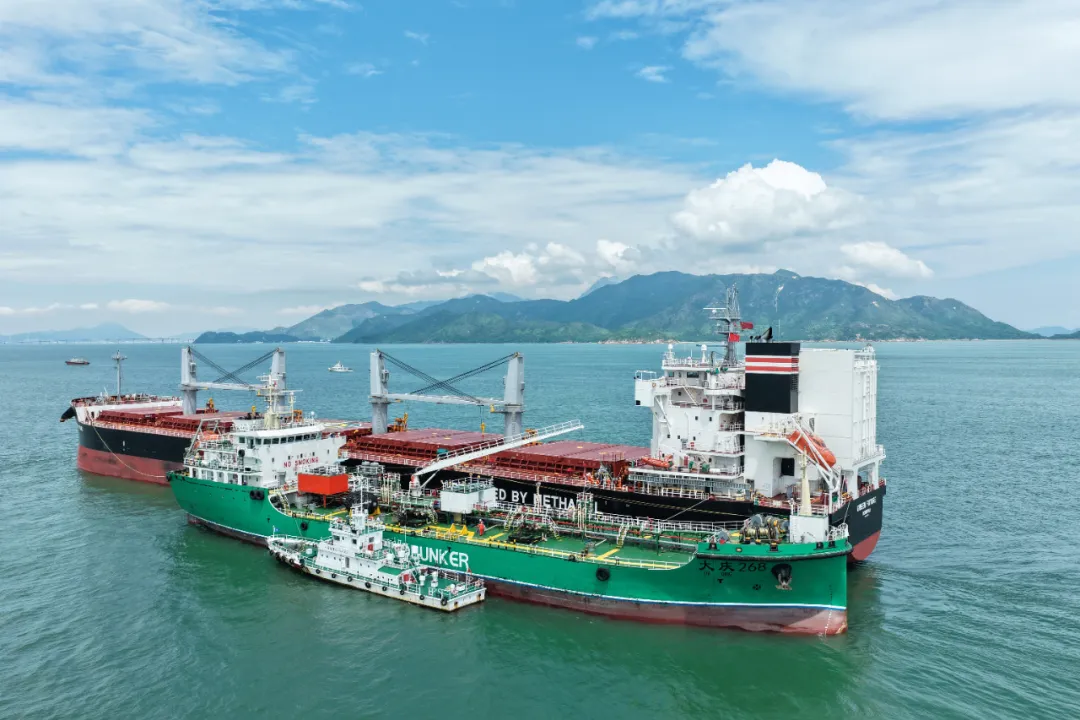
A total of 1,021 metric tonnes (mt) of bio-methanol was supplied ship-to-ship (STS) to the world’s first methanol dual-fuel Ultramax bulk carrier.

The operation was completed on 6 September by China Shipping & Sinopec Suppliers Co Ltd’s Da Qing 268, which carried bio-methanol produced at CIMC Enric’s green methanol facility in Zhanjiang.
China: Guangzhou completes first bio-methanol STS bunkering operation

The successful operation in Guangzhou, following previous green methanol bunkering operations in Shenzhen and Hong Kong, means that Guangdong-produced bio-based methanol has established a supply network across the Guangdong-Hong Kong-Macao Greater Bay Area.

The company said the development connects the production, storage, transportation and bunkering segments of the green methanol supply chain, moving the region beyond individual pilot projects towards coordinated operations across the Greater Bay Area.

CIMC Enric described its Zhanjiang green methanol facility as China’s first commercial-scale bio-methanol production plant.

Since beginning production, the Zhanjiang facility has maintained a stable production and delivery schedule, supplying bio-based methanol to major ports across China, with delivery volumes continuing to increase, according to the company.

The first phase of the facility has an annual production capacity of 50,000 metric tonnes (mt), while its methanol products have a carbon emission reduction rate of more than 85%, CIMC Enric said.

The products have also obtained ISCC EU sustainability certification, with the company saying their specifications meet international requirements for shipping decarbonisation and can support the low-carbon operation of vessels.


Photo credit: CIMC Enric
Published: 9 September, 2026

Continue Reading

Alternative Fuels

NTU Singapore-led study urges robust fuel certification as shipping scales up green marine fuels

Research, led by MESD at NTU Singapore and commissioned by Pacific Environment, calls for improved traceability, fuel “fingerprinting” and centralised digital database to log all fuel transactions.
Admin

Published

on

By

NTU Singapore-led study urges robust fuel certification as shipping scales up clean marine fuels

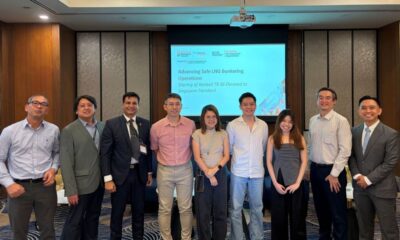
Environmental non-profit Pacific Environment and Nanyang Technological University, Singapore (NTU Singapore) on Tuesday (8 September) have issued a new study highlighting that strict and reliable fuel certification is essential to keep the global shipping industry’s transition to clean fuels “honest and fraud-free”.

The study titled “The role of sustainable fuels certification schemes in maritime decarbonisation,” was led by the Maritime Energy & Sustainable Development Centre of Excellence (MESD) at NTU Singapore.

It evaluates established certification systems — including those by the International Sustainability & Carbon Certification (ISCC) and Roundtable on Sustainable Biomaterials (RSB), Brazil’s RenovaBio, the California Air Resources Board’s Low Carbon Fuel Standard (CARB LCFS), and the U.S. Environmental Protection Agency’s Renewable Fuel Standard (U.S. EPA RFS) — to guide the International Maritime Organisation (IMO) as it establishes global standards for Sustainable Fuel Certification Schemes (SFCS).  

These existing frameworks provide critical blueprints for measuring full-lifecycle carbon emissions, tracking fuel ownership, and ensuring broader environmental sustainability.

Singapore climate specialist, Lim Jie Ying, Pacific Environment, said, “Certification systems will play an essential role in ensuring that zero- and near-zero-emission fuels deliver genuine environmental benefits. As shipping scales up the use of these fuels, we need certification systems that are robust enough to guard against fraud and unsustainable production, while also being practical and workable across complex international supply chains.”

The study outlines major gaps in global fuel supply chains that leave them vulnerable to cheating. For example, documented cases of fraud involving recycled waste, such as used cooking oil and palm oil mill effluent, demonstrate the limitations of verification systems relying purely on paper documentation without physical origin checks.

To tackle these risks, the study recommends chemical testing or fuel “fingerprinting” to verify fuel authenticity independently, alongside stronger cross-checks.  It also calls for a centralised digital database to log all fuel transactions, preventing suppliers from falsely claiming the same batch of green fuel more than once.

Lead researcher of the study, Dr Yeoh Keat Ping, Research Lead at MESD, NTU Singapore, said: “Strengthening the traceability of sustainable fuels through continued research and innovation will be critical in supporting the maritime energy transition. This requires a combined effort across policy formulation, laboratory validation, digital tools and shared industry knowledge. As traded volumes of sustainable fuels grow, these solutions must be robust enough to keep pace with an evolving landscape.”

Additionally, the study addresses the risk of Indirect Land-Use Change (ILUC), where clearing land for fuel crops causes deforestation and displaces food production elsewhere. It urges the IMO to adopt a balanced risk-based approach to cap- or phase-out high-risk crop feedstocks, protecting both ecosystems and global food security.

For Singapore, Pacific Environment notes that the study highlights a key opportunity to strengthen the country’s role as a trusted green maritime hub. By expanding training for local sustainability auditors and adopting fuel fingerprinting techniques, Singapore could ensure high supply chain integrity for alternative fuels moving through Southeast Asia.

Note: The study titled ‘The role of sustainable fuels certification schemes in maritime decarbonisation’ can be found here


Photo credit: NTU Singapore
Published: 9 September, 2026

Continue Reading

LNG Bunkering

“Titan Vision” LNG reload underscores Klaipėda’s Baltic bunkering role

Growing activity at LNG terminal strengthens Klaipėda’s role as a regional LNG reloading hub, enabling LNG to be reloaded for further delivery to smaller terminals and for bunkering across Baltic Sea region.
Admin

Published

on

By

“Titan Vision” LNG reload underscores Klaipėda’s Baltic bunkering role

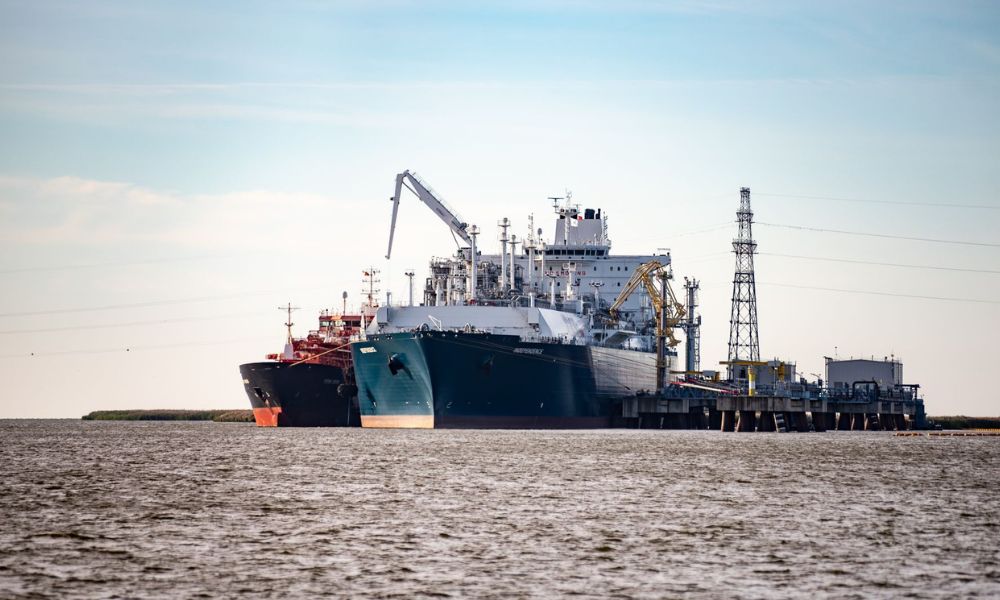
International energy terminal operator KN Energies on Tuesday (8 September) said bunker vessel Titan Vision arrived at the Klaipėda LNG terminal on the same day for the vessel’s first LNG reloading operation in Klaipėda. 

During the operation, more than 11,000 m³ of LNG will be reloaded to Titan Vision, a 12,000 m³ LNG bunker vessel designed for terminal runs and LNG bunkering operations across Europe.

KN Energies said Titan, part of Molgas, supplies LNG and BioLNG to the maritime sector and has been developing LNG bunkering solutions in Europe for more than a decade.

 “The operation is the result of continued cooperation between the KN Energies and Titan teams and reflects the flexibility of the Klaipėda LNG terminal in serving different LNG market needs,” the company said.

“So far this year, 65 ship-to-ship LNG operations have been carried out at the terminal, 36 of them involving small-scale LNG vessels.

“This growing activity strengthens Klaipėda’s role as a regional LNG reloading hub, enabling LNG to be reloaded for further delivery to smaller terminals and for bunkering across the Baltic Sea region.”


Photo credit: KN Energies
Published: 9 September, 2026

Continue Reading
Advertisement

OUR INDUSTRY PARTNERS


Trending