Connect with us

Business

Wartsila and Eidesvik Offshore in world’s first ammonia conversion project for OSV

Ultimate goal is to achieve operation with 100% ammonia and with a minimum ignition fuel requirement with its completion target by end of 2023.

Admin

Published

on

Eidisvik

Technology group Wartsila and Norwegian ship owner Eidesvik Offshore ASA on Friday (8 October) said they have signed an agreement to cooperate in converting an offshore supply vessel (OSV) to operate with an ammonia-fuelled combustion engine with the required bunker fuel supply and safety systems.

The project will be the first of its kind ever in the world and has a provisional completion target by the end of 2023, it states.

The OSV considered for a retrofit currently has Wärtsilä dual-fuel engines operating primarily with liquefied natural gas (LNG) fuel. The conversion will allow the vessel to operate with a 70% ammonia blend. Wärtsilä has already successfully laboratory tested an engine fuelled with a 70% ammonia blend. The ultimate goal is to achieve operation with 100% ammonia and with a minimum ignition fuel requirement.

As a fuel, ammonia has the potential to drastically reduce emissions of CO2. Both Wärtsilä and Eidesvik have stated their commitment to supporting the industry’s efforts to decarbonise its operations.

“Using ammonia as a fuel is seen as a key future contributor to shipping’s energy transition, and we’re excited to be the first offshore ship owner taking this step. This project is yet another confirmation of our strong reputation as a pioneer in implementing new environmental technologies in both newbuilds and the existing fleet,” said Eidesvik CEO & President, Jan Fredrik Meling.

“Collaborating with Eidesvik on this groundbreaking project is an exciting and important step towards carbon-free shipping. Naturally we are also working with classification societies on measures to ensure safe and environmentally sustainable use,” says Hans Petter Nesse, Managing Director of Wärtsilä Norway.

“We are already well advanced in the development of ammonia as a viable marine fuel, and are actively working on other future carbon-free fuels as well. Our strong in-house competences are very much being utilised to support our commitment to decarbonising shipping.”

Wärtsilä and Eidesvik are also partners in the EU-funded ShipFC project to equip a platform supply vessel, the ‘Viking Energy’ with a 2MW fuel cell running on green ammonia. The installation is scheduled to take place in late 2023.

The ammonia conversion project also ties in with one of the ongoing work streams of the Wärtsilä-led Zero Emissions Energy Distribution at Sea (ZEEDS) project, aimed at developing ammonia-powered newbuilds and converting suitable existing vessels.


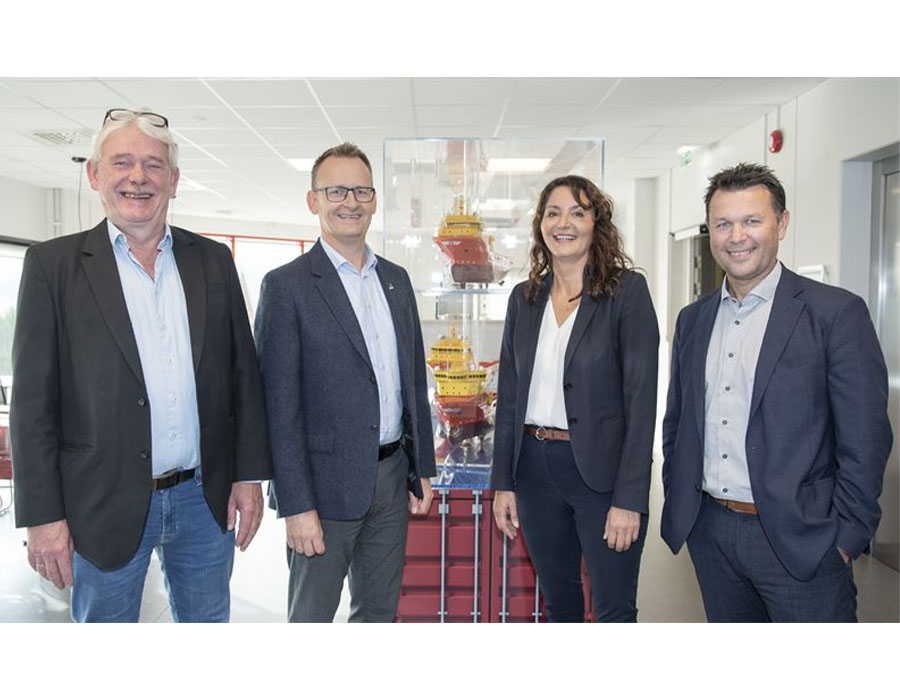
Photo credit: Wartsila
Published: 13 October, 2021

Continue Reading

Newbuilding

“K” Line orders four LNG dual-fuel car carriers from Chinese yard

Firm says it has signed shipbuilding contracts with China Merchants Jinling Shipyard (Nanjing) for four 1,380-vehicle capacity LNG dual-fuel car carriers, designed for European short sea shipping operations.

Admin

Published

on

By

RESIZED scott graham

Japanese shipping giant Kawasaki Kisen Kaisha (“K” LINE) on Thursday (4 June) announced that it has signed shipbuilding contracts with China Merchants Jinling Shipyard (Nanjing) Co Ltd for four 1,380-vehicle capacity LNG dual-fuel car carriers. 

The vessels were ordered for “K” Line European Sea Highway Services GmbH (KESS), the “K” LINE’s European subsidiary.

The vessels are designed for the frequent transport of small lots in European short sea shipping. They are also designed to comply with size restrictions, which some European ports for imported cars have. “K” LINE is confident that these vessel specifications will give KESS a competitive advantage in its European short sea shipping operations.

The use of LNG fuel is expected to reduce emissions of carbon dioxide (CO2), a greenhouse gas (GHG), by 25% to 30% and emissions of sulfur oxides (SOx), which cause air pollution, by almost 100% compared to conventional vessels using heavy fuel oil. Additionally, to further reduce GHG emissions throughout the “K” LINE Group, the company will consider using bio-diesel and bio-LNG fuel, or liquefied bio methane, in addition to LNG fuel.

The vessels each use a high-pressure type ME-GI engine with a shaft generator, reducing emissions of methane slip (unburst gas), which is a greenhouse gas (GHG). While boil-off gas (BOG) generated from LNG tanks is generally used as fuel for generator engines on a vessel with a high-pressure main engine, these vessels are equipped with vacuum-insulated LNG tanks to reduce the generation of BOG. This enables a machinery configuration with lower methane slip emissions.

Under the Group’s long-term environmental policy, the “K” LINE Group set the target of achieving net-zero GHG emissions in 2050. In line with this, “K” LINE has been working to introduce and operate LNG-fuelled ships. The continuous use of bio-LNG is one of its key initiatives for achieving this target. 


Photo credit: Scott Graham
Published: 25 May, 2026

Continue Reading

Shipping Corridor

Industry partners launch Brazil-Belgium e-fuel green shipping corridor initiative

A new consortium facilitated by the Global Maritime Forum and RMI will work to establish a green shipping corridor between the Port of Açu in Brazil and the Port of Antwerp-Bruges in Belgium.

Admin

Published

on

By

RESIZED william william on Unsplash

A new consortium facilitated by the Global Maritime Forum and RMI will work to establish a green shipping corridor between the Port of Açu in Brazil and the Port of Antwerp-Bruges in Belgium, according to Global Maritime Forum on Thursday (4 June). 

In addition to the port teams on both ends of the corridor, the consortium includes HIF Global, Fuella, NYK Line, Höegh Autoliners, and Wallenius Wilhelmsen. 

The consortium will assess infrastructure, vessels, and business models to create a roadmap for transporting zero-carbon fuels produced in Açu, such as e-ammonia or e-methanol. The transport itself would also be powered by the same zero- or near-zero-emission fuels.

“We’re thrilled to be working with these partners to take these important steps towards Brazil’s e-fuel production and bunkering opportunity, whilst supporting the growing demand for e-fuels in Europe,” said Eleanor Wells, a senior project manager at the Global Maritime Forum.

The new consortium builds on a pre-feasibility study developed by RMI and the Global Maritime Forum in November 2025. 

The study highlighted the competitive projected costs of e-fuel produced in Açu, due to Brazilian policies supportive of green hydrogen production, the country’s largely renewable electricity grid, its abundance of renewable energy sources, and a relatively low cost of capital. A 2024 report from the same two organisations, Oceans of Opportunity, identified the Port of Açu as a high-potential e-fuel export hub.

Green shipping corridors are dedicated trade routes where the feasibility of zero-emission shipping is catalysed by public and private action. These routes are seen as central to delivering on the shipping industry’s goal of having zero-emission fuels account for 5% of all fuels by 2030. 

While green corridors have rapidly expanded in popularity worldwide, and a handful of initiatives have now reached the realisation stage, the most recent edition of the Annual Progress Report on Green Shipping Corridors warned that progress is being stalled by a ‘feasibility wall’ created by the cost gap between conventional and zero-emission fuels.

The Global Maritime Forum and RMI will continue to facilitate the realisation of the Açu-Antwerp green corridor, with work already moving at pace to progress beyond pre-feasibility and develop a feasibility analysis for the corridor. The feasibility analysis is expected to be published by the end of the year, with the consortium meeting regularly in the meantime.


Photo credit: william william on Unsplash
Published: 25 May, 2026

Continue Reading

Mass Flowmeter

Hong Kong backs MFM adoption with voluntary scheme to boost bunkering competitiveness

Hong Kong’s Marine Department launched the Quality Bunker Operator Scheme to encourage bunker operators to install and use mass flow meter systems on their bunker vessels.

Admin

Published

on

By

RESIZED EH dual mfm setup

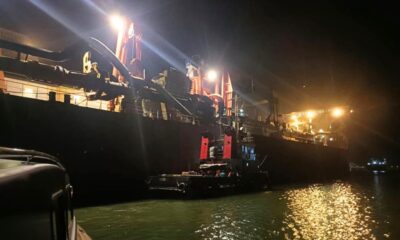
Hong Kong’s Marine Department (MD) on Wednesday (3 June) launched the Quality Bunker Operator Scheme to encourage bunker operators to install and use mass flow meter systems (MFM systems) on their bunker vessels.

MD said the scheme aims to enhance Hong Kong’s bunkering service quality and the competitiveness of Hong Kong ports, thereby further consolidating Hong Kong’s position as an international maritime centre and a major bunkering port.

Under the Scheme, bunker operators of traditional maritime fuel and biodiesel that install and use MFM systems on their bunker vessels, with the MFM systems inspected and certified by an accredited body in accordance with the International Organization for Standardization’s ISO 22192 Standard or equivalent requirements, can apply to the MD for inclusion in the scheme’s “List of Quality Bunker Vessels”, provided they meet the relevant technical and operational requirements. 

Details of the bunker vessels successfully included in the List will be published on a dedicated page on the MD’s website for reference by shipping companies and relevant stakeholders.

Participation in the Scheme is voluntary. In addition to receiving recognition from the MD, participating bunker operators will benefit from enhanced corporate image and competitiveness through the adoption of MFM systems, thereby boosting customers’ confidence and helping to create new business opportunities.

 A spokesman for the MD, said: “As an international maritime centre supported by our country, Hong Kong has a strategic location adjacent to major international fairways. Coupled with years of development in marine fuel bunkering, Hong Kong possesses rich experience and talent in the field. For many years, Hong Kong has consistently ranked as the seventh-largest bunkering port globally, the second-largest in our country, and the largest in the Greater Bay Area, providing reliable and competitive fuel bunkering services to ocean-going vessels from around the world. 

“As the international shipping industry has an increasing demand for accuracy and transparency in bunkering services, service quality and measurement precision in bunkering operations have become important indicators of a bunkering port’s competitiveness. The Scheme will enhance bunkering accuracy and transparency, further enhancing the quality of Hong Kong’s bunkering services.

The spokesman added that comprehensive port services are one of Hong Kong’s key advantages as an international maritime centre.

“We will also mandate the use of MFM systems on all methanol bunker vessels this year to ensure that Hong Kong continues to provide high-quality bunkering services in the era of green maritime fuels.” 

Note: The application form for the Scheme can be found on the MD’s website. Interested bunker operators can download the application form from the website or contact the MD’s Green Maritime Fuel Team via email ([email protected]) for details.


Photo credit: Manifold Times
Published: 4 June, 2026

Continue Reading

Trending