Connect with us

Business

ReCAAP 2019 report highlights 82 incidents of piracy activities against ships in Asia

Figure represents an increase of 8% (6 incidents) in the total number of incidents and an increase of 15% (9 incidents) in actual incidents, compared to 2018

Admin

Published

on

ReCAAP 2019 report highlights 82 incidents of piracy activities against ships in Asia

[vc_row][vc_column][vc_column_text]The ReCaap Information Sharing Centre (ISC) on Wednesday (15 January) released its Annual Report 2019 highlighting piracy and armed robbery rates against ships in Asia during January to December 2019. Highlights of the report are as follows:

Overall Situation

  •  A total of 82 incidents of piracy and armed robbery against ships in Asia were reported from January to December 2019, comprising 71 actual incidents and 11 attempted incidents.
  • This represents an increase of 8% (6 incidents) in the total number of incidentsand an increase of 15% (9 incidents) in actual incidents, compared to 2018.
  • Despite an increase from 2018, these numbers are still the second lowest since 2007when ReCAAP ISC started the report of incidents (2018 being the year of the lowest number of incidents).
  • The severity levelof incidents has not worsened in 2019 compared to 2018:
    • 2 incidents of Category 1 (same as in 2018)
    • Decrease of Category 2 (from 8 to 6)
    • 69% of incidents were Category 4 (perpetrators not armed, crew not  harmed)

Area of Improvement

  • There was a decrease of incidents mainly at ports and anchoragesin Bangladesh, Indonesia and the Philippines:
    • Bangladesh: zero incident from 11 in 2018
    • Indonesia: 23 incidents from 27 in 2018
    • The Philippines: 6 incidents from 9 in 2018

Increase of incidents 

  • There was an increase of incidents in two locations, compared to 2018:
    • The Singapore Strait: 31 incidents from 7 in 2018
    • Off Bandar Penawar, Johor, Malaysia: 5 incidents from zero in 2018

Situation in the Singapore Strait

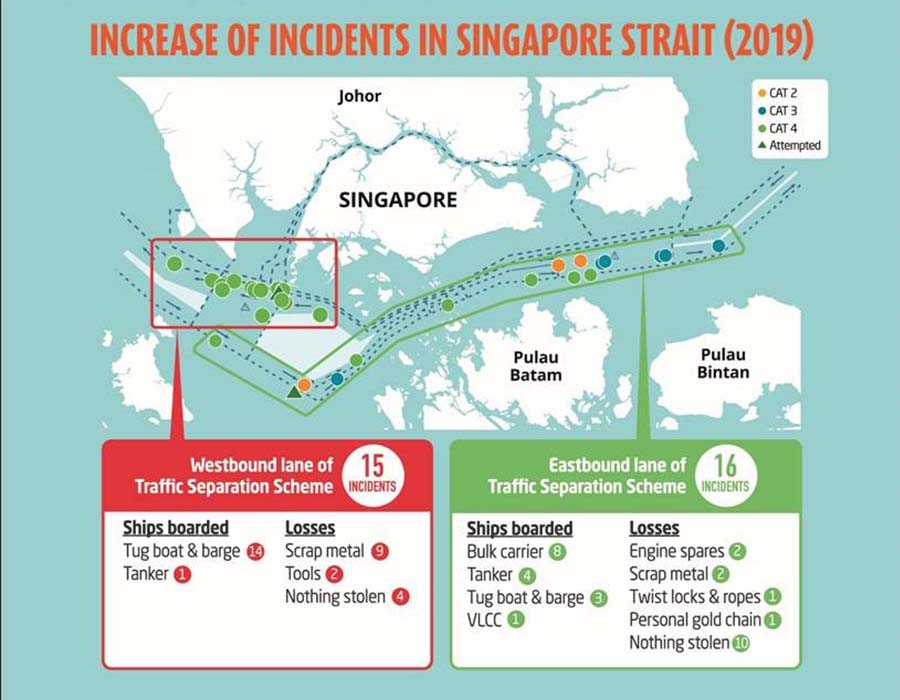
  • In 2019, a total of 31 incidentsoccurred in the Singapore Strait, of which 15 occurred in westbound lane of the Traffic Separation Scheme (TSS) mostly from January to August, and 16 in the eastbound lane of the TSS from the end of September to December.
  • 14 out of 15 incidents in the westbound laneof the TSS were on board barges towed by tug boats:
    • The stolen items were mainly scrap metals from barges (9 incidents)
    • Since barges were unmanned, there was no confrontation between the crew and perpetrators and no injury of the crew
  • 16 ships boarded in the eastbound laneof the TSS were bulk carriers (8), tankers (4), barges towed by tug boats (3), and VLCC (1):
    • In 10 incidents, nothing was stolen since the perpetrators escaped empty-handed once an alarm was activated
    • In 6 incidents, items such as engine spares, scrap metals, locks and ropes and personal belongings were stolen
    • In 7 incidents, the perpetrators were discovered in the engine room; this may indicate that they targeted engine parts
    • There were confrontations between the crew and perpetrators; in one incident, two crew members received minor injuries and in three incidents, some crew members were tied up
  • A medium-term trend in the Singapore Strait:
    • 99 incidents in 2015, 2 incidents in 2016, 8 incidents in 2017 and 7 incidents in 2018, 31 incidents in 2019
  • ReCAAP ISC calls upon the littoral States to step up surveillance and patrol as well as to enhance their cooperation. The shipping industry is advised to exercise utmost vigilance, adopt preventive measures and report all incidents immediately to the nearest coastal State.

Situation in the Sulu-Celebes Seas and Waters off Eastern Sabah

  • In 2019, there were two actual incidents of abduction of crewin the Sulu-Celebes Seas and waters off Eastern Sabah (2 actual and 1 attempted incidents in 2018).
  • On 8 June 2019, nine crew were abducted from two fishing boats in the waters off Eastern Sabah, Malaysia; all crew were released on 21 June 2019.
  • On 23 September 2019, three crew were abducted from a fishing boat in the waters off Eastern Sabah, Malaysia; two crew were rescued on 22 December 2019 and one crew still remains in captivity.
  • As a medium-term trend, the number of incidents has been decreasing since 2016:
    • In 2016: 12 actual and 6 attempted incidents
    • In 2017: 3 actual and 4 attempted incidents
    • In 2018: 2 actual and 1 attempted incidents
    • In 2019: 2 actual incidents
  • The risk of abduction of crew still remains in the area. Shipping companies are advised to refer to the Guidance on Abduction of Crew published by ReCAAP ISC in July 2019.

Incidents off Bandar Penawar, Johor, Malaysia

  • In 2019, five incidentsoccurred on board ships anchored off Bandar Penawar, outside the designated anchorage areas of the littoral States. Ship masters are advised to anchor the ships in the designated anchorage areas for better surveillance.

The Annual Report 2019 was released at the 11th Nautical Forum in Singapore which was attended by more than 120 participants from shipping companies, industry associations, government agencies, diplomatic missions as well as academic institutions.

“The 15% year-on-year increase in the actual number of incidents in 2019 as well as a spike of incidents in the Singapore Strait are a stark reminder that government agencies and the shipping industry should continuously uphold their respective efforts as a shared responsibility,” said ReCAAP ISC Executive Director Masafumi Kuroki.

“Regional cooperation among coastal States and mutual cooperation between government agencies and the shipping industry are key to ensure the safety of seafarers and safe navigation of ships,” he concluded.


Photo credit: ReCaap Information Sharing Centre
Published: 16 January, 2020[/vc_column_text][/vc_column][/vc_row][vc_row][vc_column][vc_gallery type=”image_grid” images=”2549,2550″ title=”ReCAAP Annual Report 2019 “][/vc_column][/vc_row]

Continue Reading

Biofuel

Petrochina International blends over 30,000 mt of marine biofuel since March

Company has been developing marine biofuel blending operations at China (Zhejiang) Pilot Free Trade Zone, leveraging storage and logistics facilities at its Aoshan base.
Admin

Published

on

By

Zhoushan completes China’s first batch of marine biofuel blending under pilot programme

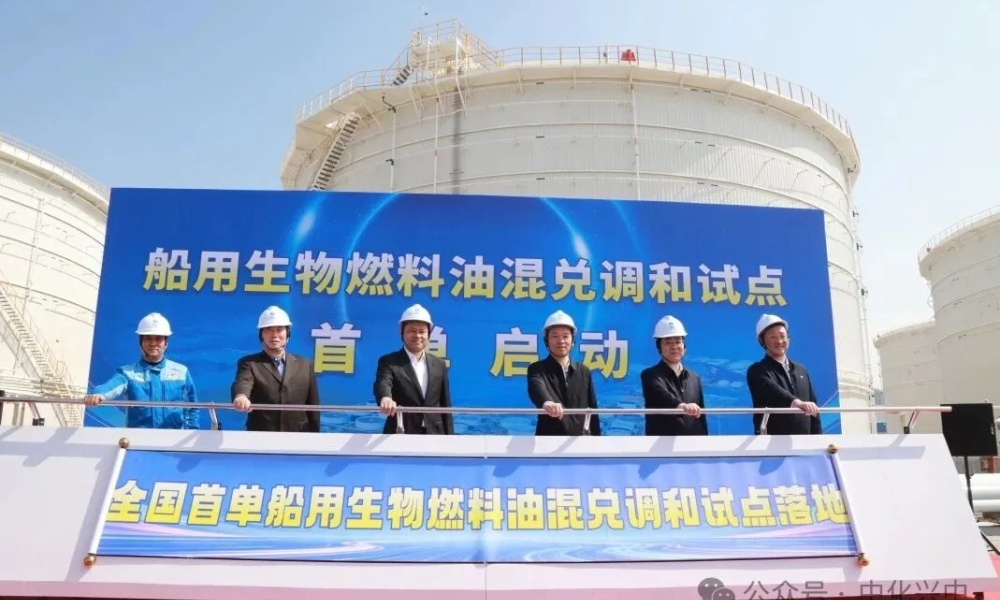
Petrochina International Co Ltd recently said it has blended more than 30,000 metric tonnes (mt) mt of biofuel since completing the country’s first biofuel marine fuel blending operation on 13 March.

The company said the milestone demonstrates its ability to conduct continuous and large-scale biofuel marine fuel blending operations.

The company has been developing marine biofuel blending operations at China (Zhejiang) Pilot Free Trade Zone, leveraging storage and logistics facilities at its Aoshan base.

Its latest product, B24 marine fuel containing 24% biofuel component, meets relevant International Maritime Organization (IMO) requirements and marine fuel standards, according to the company. It said the product can be supplied for bunkering vessels operating on international routes.

It has used its global trading network to secure feedstock supplies and support cost control and supply security for the blending operations, it added.

The company said the large-scale blending of its marine biofuel products marks a development in China’s marine biofuel blending market.

It plans to work with upstream and downstream businesses within its group to support the development of Zhoushan Port as a major bonded marine fuel bunkering hub and contribute to its parent group’s transition towards lower-carbon energy.

Manifold Times previously reported China (Zhejiang) Pilot Free Trade Zone launching the first pilot programme for marine biofuel blending in China with the completion of the first batch of B24-HSFO. 

The launch was marked with the blending of 2,000 mt of biodiesel and 6,300 mt of high sulphur fuel oil (HSFO) in storage tank F-02 of Sinochem-Xingzhong Oil Staging (Zhoushan), producing 8,300 mt of B24-HSFO. 

Manifold Times also reported the first cross-regional bonded bunkering operation of blended biofuel in East China was successfully completed at the Meishan Port Area of ​​Ningbo-Zhoushan Port. 

The B24-HSFO used in the bunkering operation was supplied by the Aoshan Petroleum Base in Zhoushan from the first pilot programme for marine biofuel blending in China. 

Related: Zhoushan completes China’s first batch of marine biofuel blending under pilot programme
Related: Ningbo wraps up East China’s first cross-regional biofuel blending and bunkering
Related: China debuts first marine biofuel blending pilot programme in Zhoushan
Related: China’s first batch of domestically blended marine biofuel delivered to Qingdao for bunkering


Photo credit: Sinochem-Xingzhong Oil Staging (Zhoushan)
Published: 21 September, 2026

Continue Reading

Winding up

Singapore: Final general meetings scheduled for Dromond Shipping, related firms

A member is entitled to attend the meetings and should notify the liquidators’ team office via email no later than 48 hours prior to the meeting.

Admin

Published

on

By

steve pb from Pixabay

The final general meetings of Dromond Shipping Pte Ltd  and related companies have been scheduled to take place on 19 October, according to the company’s liquidator on a notice posted on Friday (18 September) on the Government Gazette.

The other companies are Tidewater Emergency Response Services Pte Ltd, Tidewater Production Solutions Pte Ltd and Tidewater Salvage Pte Ltd. 

The final general meetings of the members of the companies will be held via electronic means on 19 October 2026 at 2.00 pm, 2.30 pm, 3.00 pm and 3.30 pm (Singapore time), respectively.

The meetings are being held for the purpose of having accounts laid before the members showing the manner in which the winding up of the respective companies has been conducted and how the property of the respective companies has been disposed of and to hear any explanation that may be given by the liquidators. 

The details of the liquidator is as follows:

Tan Kim Han
Joint and Several Liquidators
137 Amoy Street, #02-03, Far East Square
Singapore 049965

Note: A member is entitled to attend the above meeting and should notify the Liquidators’ team office via email to [email protected] or [email protected] no later than 48 hours prior to the meeting.


Photo credit: steve pb from Pixabay
Published: 21 September, 2026

Continue Reading

Ammonia

NYK wraps up first STS ammonia bunkering operation in Japan

Ammonia fuel was transferred from the ammonia carrier “Shoei Maru” via the STS method to an ammonia-fuelled medium gas carrier, scheduled for delivery in November 2026.
Admin

Published

on

By

NYK wraps up first STS ammonia bunkering operation in Japan

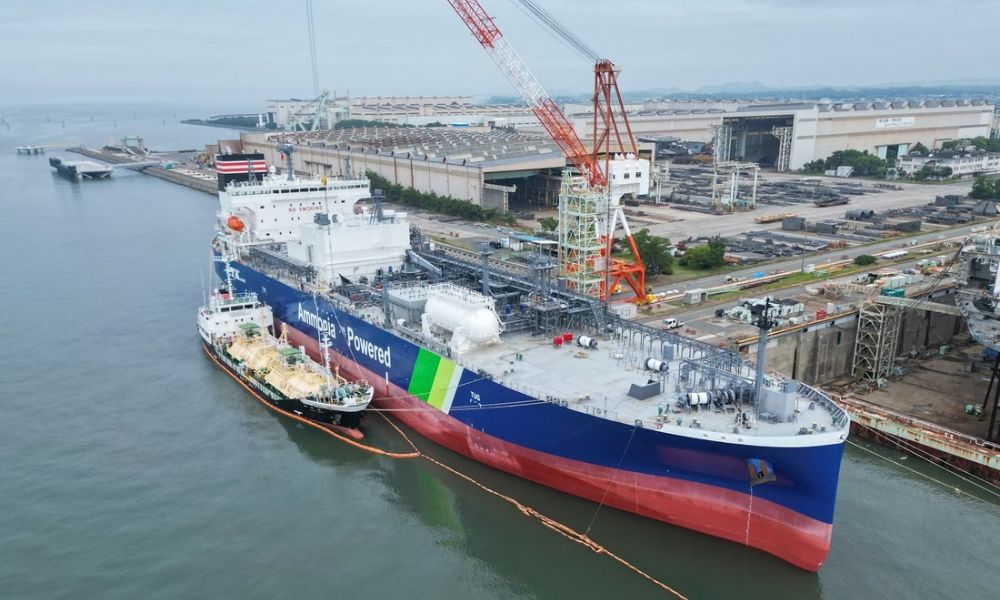
NYK Line, on Thursday (17 September) with Japan Marine United Corporation, Nihon Shipyard Co Ltd, Mitsubishi Gas Chemical Company, and Kokuka Sangyo Co Ltd, has completed the world’s first ship-to-ship (STS) ammonia bunkering operation to an ammonia-fuelled vessel. 

At a quay within Japan Marine United Corporation’s Ariake Shipyard, ammonia fuel was transferred from the ammonia carrier Shoei Maru via the STS method to an ammonia-fuelled medium gas carrier (AFMGC) scheduled for delivery in November 2026. 

The operation was conducted in preparation for sea trials of the AFMGC using fuel ammonia.

“This achievement represents an important initiative that has put into practice an operation essential for the future practical deployment of ammonia-fuelled vessels,” the company said. 

The bunkering operation was conducted following extensive discussions among the companies involved. Safe operating procedures and work processes were established prior to the operation, enabling the transfer to be completed safely. Through this initiative, we have accumulated practical insights regarding safe fuel supply operations.

This operation serves as a pioneering example of the fuel-supply framework that will be required for the widespread adoption of ammonia-fuelled vessels. 

The AFMGC is currently in the final stage of construction and is scheduled for delivery in November 2026. 

“The successful completion of this operation marks a significant milestone toward the broader commercial use of fuel ammonia and the practical deployment of ammonia-fuelled vessels. It also represents an important step forward in establishing an ammonia supply chain,” the company added. 


Photo credit: NYK
Published: 21 September, 2026

Continue Reading

Trending