Connect with us

Bunker Fuel

Orim Energy to commence bunkering operations in Gibraltar from mid-June

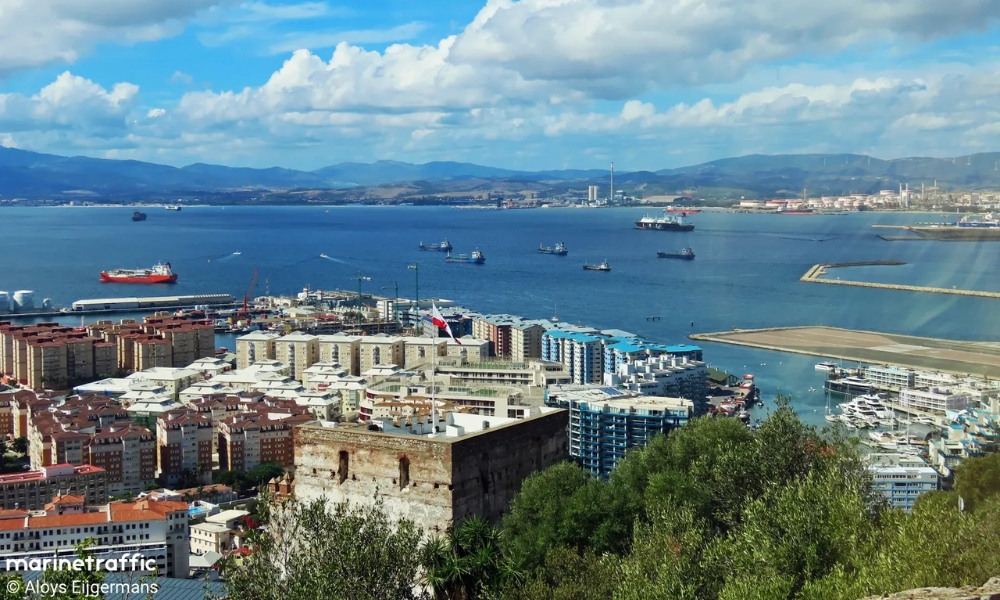
Company will be launching its bunkering operations in the Strait of Gibraltar, the largest bunkering hub in the new MED-ECA zone with its dedicated bunkering infrastructure of tanks and barges.

Admin

Published

on

MarineTraffic / Aloys Eijgermans

Orim Energy, an oil trading company that specialises in the blending and bunkering of sustainable marine energy, on Wednesday (11 June) said it has opened an office in Gibraltar and is fully geared to start bunkering operations in the region from mid-June 2025 onwards.

With the launch of its bunkering operations in the Strait of Gibraltar, the largest bunkering hub in the new MED-ECA zone (Emission Control Area), Orim Energy is strengthening its presence in the Mediterranean (MED) and renewing its commitment to fuelling cleaner, smarter shipping in the region.

“Creating a second operational foothold in the MED – the company already has operations in Malta – is a key step forward and fits Orim Energy’s growth strategy,” the company said on its website. 

“With its dedicated bunkering infrastructure – tanks and barges – and a highly experienced local team at the Gibraltar office, Orim Energy is fully geared to start reliable 24/7 bunker supply to all types of vessels in the region in June.”

The company added the introduction of the ECA zone – requiring all ships operating in the Mediterranean Sea to use compliant marine fuels not exceeding a 0.10% sulphur content – offers unique opportunities to optimise operational efficiency, while reducing environmental impact.


Photo credit: MarineTraffic / Aloys Eijgermans
Published: 12 June, 2025

Continue Reading

LNG Bunkering

Singapore-based EPS takes delivery of three LNG dual-fuel bulk carriers

Three vessels are the third, fourth and fifth in the company’s series of 14 Newcastlemaxes being built at the yard, and were delivered five months ahead of their contracted delivery dates.
Admin

Published

on

By

35

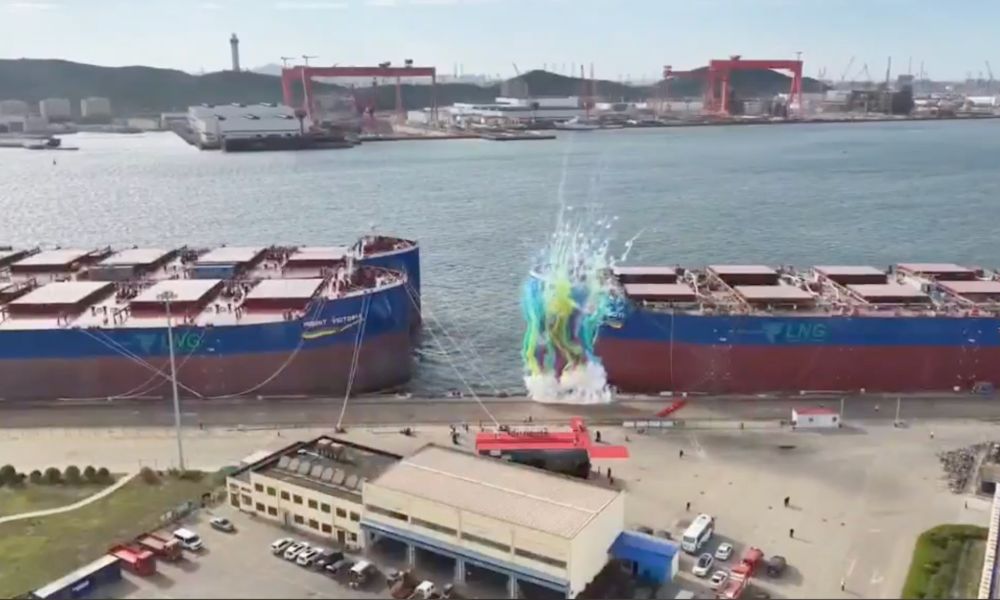
Singapore-based Eastern Pacific Shipping (EPS) on Friday (4 September) announced the naming and delivery of three new LNG dual-fuel Newcastlemax bulk carriers from China’s Qingdao Beihai Shipbuilding. 

Cyril Ducau, CEO of EPS, said the vessels were named Mount Victoria, Mount Yulong and Mount Wuyi

The three vessels are the third, fourth and fifth in the company’s series of 14 Newcastlemaxes being built at the yard, and were delivered five months ahead of their contracted delivery dates.

“A big thank you to CSSC Group and Qingdao Beihai Shipbuilding, working alongside our EPS team, for the tremendous collaboration and commitment behind this achievement,” Ducau said in a social media post.  


Photo credit: Eastern Pacific Shipping
Published: 7 September, 2026

Continue Reading

Port & Regulatory

UCL on ISWG-GHG 22: Majority back GHG pricing, centralised fund in IMO NZF talks

A significant majority of IMO member states backed a centralised system for collecting revenues to reward early adopters and support a just transition, according to UCL.
Admin

Published

on

By

34

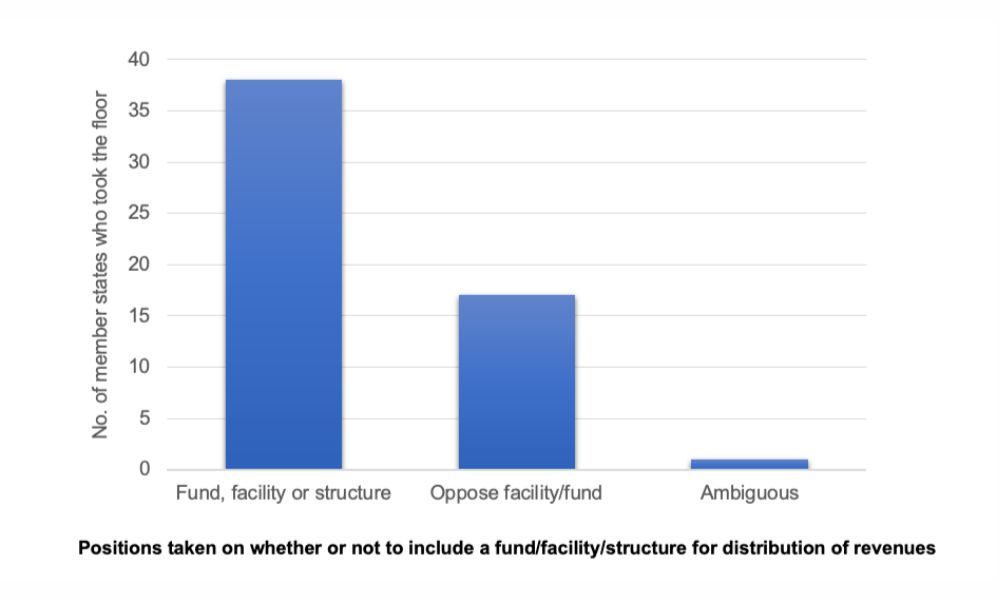
UCL Shipping and Oceans Research Group on Friday (4 September) said the IMO’s 22nd Intersessional Working Group on GHG emissions has concluded with significant majority of member states supporting a centralised system for collecting revenues, operationalised through a GHG price (RU price), and disbursing it for rewards for early adopters and supporting a just and equitable transition. 

The group of member states focused on a technical-only solution and abandonment of GHG pricing, remained small and consistently composed of strongly fossil fuel aligned governments.

Just as at MEPC 84, the political dynamics observed at MEPC.ES2 did not occur in this meeting. 

The discussions were more representative of the ISWG-GHG 19 and MEPC 83 negotiating dynamics, but this does not rule out the potential for the dynamics that occurred at MEPC.ES2 returning in future meetings. That said, there was reassuring evidence from the week that reduces that risk, including in the contrast between strong public (press) positions taken against the IMO’s NZF, and the substance of how delegations negotiated in the meeting.

Dr Tristan Smith, Professor of Energy and Transport at UCL Shipping and Oceans Research Group, said: “Whilst there are many positives to take away – there is clear potential for a return to a strong policy solution and decision making this December, there remains high uncertainty in the extent that both industry’s transition and low-income countries’ transitions will be supported. 

“There remains high risk that in the effort to find a creative way forwards, the equilibrium between these two aspects, that enabled the NZF in the first place, is lost to the detriment of the outcome overall.”

In addition to the discussion on centralised system for revenue collection and disbursement, the meeting discussed a number of other items as guided by the chair, discussed in detail with member state positions in the readout. Some of these included:

  • GFI (Global Fuel Intensity) reduction pathway: GFI is likely to be softened initially (around 2030), but then steeper in the period to 2040. 
  • ZNZ rewards: ZNZ reward still broadly supported and a priority to many member states, but the broad support for a multiplier, despite it being taken off the table at the last meeting, could yet lead this to be incorporated to provide incentivisation. 
  • Compliance approaches
  • Most interventions confirmed support for the compliance mechanisms as setup in NZF ‘as is’. The strongest support was for the two least controversial options common to all proposals: reducing GHG intensity and pooling/transfer of SU. 
  • Direct contributions: Japan’s proposal to replace GHG pricing with shipowner-directed contributions was robustly rejected, particularly by the member states that would need to ‘swing’ to support it for this to start to build momentum. 
  • SU (Surplus Units) trading: Majority of member states opposed the inclusion of energy efficiency SU credits and the concept of printing SU’s to manage an SU price shock, citing various reasons, primarily a concern that this would destabilise the SU market and undermine investment predictability. 
  • Netting: China’s proposal to balance of RU and reward payments that could be netted to form a single transaction received broad support. However, the details of the concept will now need to be set out in guidelines and there remain a number of issues regarding this approach, as raised by several delegations.

Note: The full article can be read here


Photo credit: UCL Shipping and Oceans Research Group
Published: 7 September, 2026

Continue Reading

LNG Bunkering

LR awards AiP to CSSC Huangpu Wenchong for 12,500 m³ LNG bunker vessel design

Vessel design incorporates Type C LNG cargo tanks and has been evaluated against a range of class notations covering gas operations, automation, environmental performance and cyber resilience.
Admin

Published

on

By

33

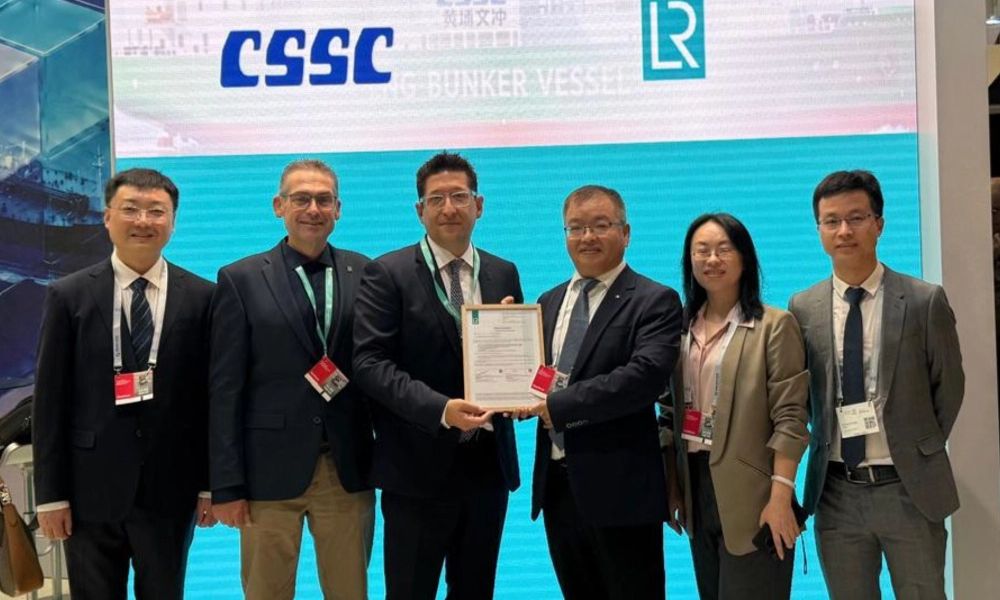
Classification society Lloyd’s Register (LR) on Thursday (3 September) said it has awarded Approval in Principle (AiP) to CSSC Huangpu Wenchong Shipbuilding Co., Ltd. for a new 12,500 m³ LNG bunkering vessel design.

The AiP was signed at SMM 2026 in Hamburg and confirms that the vessel concept has successfully completed an independent design assessment against LR’s latest classification requirements.

The new 12,500 m³ vessel design incorporates Type C LNG cargo tanks and has been evaluated against a comprehensive range of class notations covering gas operations, automation, environmental performance and cyber resilience.

LR’s assessment was carried out in accordance with its Rules and Regulations for the Classification of Ships and Rules and Regulations for the Construction and Classification of Ships for the Carriage of Liquefied Gas in Bulk.

Constantinos Chaelis, LR’s Global Gas Segment Director, said: “This project demonstrates the continued market confidence in LNG and the importance of building the supporting infrastructure that enables owners to make practical emissions reductions today, while maintaining flexibility for the future. Through early engagement between shipyard and class, we can accelerate the delivery of robust designs that meet both operational and regulatory requirements.”

A Huangpu Wenchong spokesperson, said: “This Approval in Principle from Lloyd’s Register validates the technical approach and provides a strong foundation for future development. We believe vessels of this type will play an increasingly important role in supporting the energy transition by helping ensure LNG is available where shipowners need it most.”


Photo credit: Lloyd’s Register
Published: 7 September, 2026

Continue Reading
Advertisement

OUR INDUSTRY PARTNERS


Trending