Connect with us

Alternative Fuels

IBIA: The Future is Ours

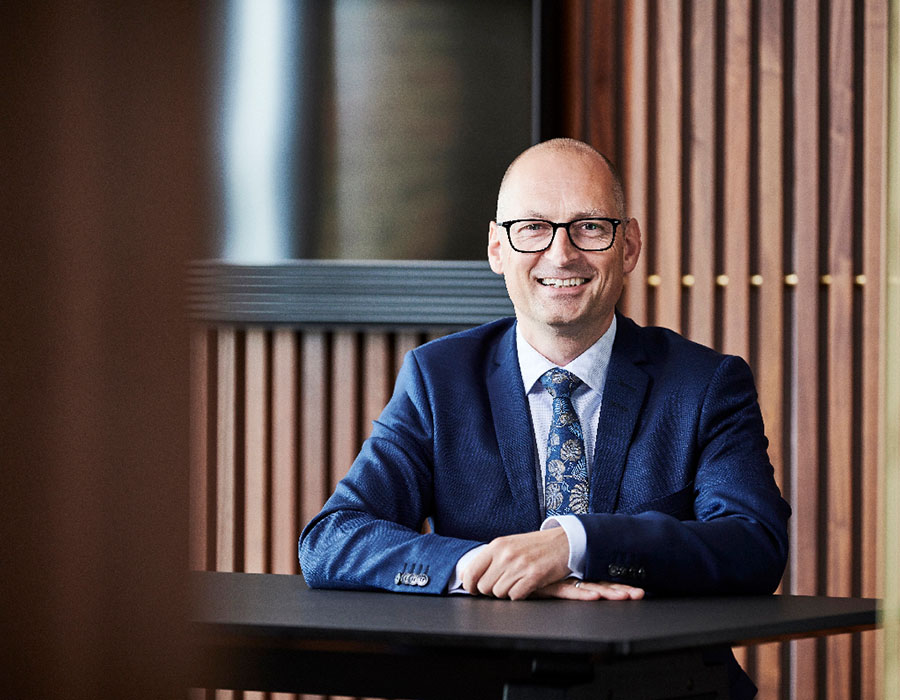
Henrik Zederkof, Chairman of IBIA, has published a report on the organisation’s activities to date; sharing positive developments for the bunkering sector.

Admin

Published

on

Henrik Zederkof 1 re sized

The Chairman of the International Bunker Industry Association on Tuesday (16 June) published a report on the organisation’s activities to date; the report has been shared with Singapore bunkering publication Manifold Times:

Dear IBIA members,

The future of our industry complex and the uncertainty can sometimes be overwhelming as the path forward seems blurry and confusing with the many roads towards a greener and more digitalized future.

However, this complexity will be the accelerator of our industry for transforming it to the next level beyond IMO’s 2030 and 2050 greenhouse gas (GHG) emission reduction targets, toward the ultimate goal of carbon neutral transportation.

During the next decade, we will be part of a transformation that will change the bunker industry forever and bring us fast forward to the future where green solutions will be key for worldwide sea transport.

To cope with such a large transformation, we have in IBIA been preparing for some time, working on three major areas of focus:

  • IBIA ORGANISATION DEVELOPMENT
  • BUNKER LICENSING SCHEME AND MFM
  • IMO 2030 & 2050 ENGAGEMENT

I am delighted to say that all three areas have had a lift-off during the past six months, despite the Covid-19 challenges, and that IBIA is moving faster than ever before on those areas with the clear ambition of preparing IBIA as an organisation to guide, gather and influence our industry towards the future.

IBIA remains the voice of the bunker industry at IMO – the UN organ for maritime affairs – where IBIA’s director Unni Einemo has raised our concerns and points of view and made an effort to influence the future for our industry where it really matters.

The work and effort that the IBIA working groups, secretariat and a wide range of members put into the preparation and understanding of the complex, political and highly sensitive discussion at the IMO is a huge inspiration for me as IBIA chairman. I am again and again amazed by the quality of the work IBIA is capable of bringing to the table at IMO.

This unique position that we in IBIA have worked for and today fulfill on behalf of the bunker industry is something that we will continue to focus on as the decisions that IMO takes will have a large influence on all our businesses, hence the importance of continuing the dedicated work that IBIA does at IMO.

IBIA ORGANISATION DEVELOPMENT

The process of establishing IBIA regional boards organization is well underway. Presently, the global board is reviewing the proposal to establish an interim regional IBIA board for Africa and we expect to be able to launch this during July 2021.

In Asia our interim regional IBIA board has been active for more than a year with great success. The regional board has proven to us all that with the right local involvement, IBIA can bring even more value, both for the region and the overall work and influence at IBIA, as the distance from the regions to the global board has become much shorter. IBIA, as a membership-based organization, has benefitted greatly by this development.

Next in line will be the Americas where we are getting closer to taking a decision on the regional interim board.  This work is led by Adrian Tolson with strong assistance from Eugenia Benavides, Nicolas Vukelja and Steve Simms, who are all members of the IBIA global board. With these people we are confident that we have a very capable team on this task.

We trust that we will be able to share further updates about progress with the interim regional board for Americas at the IBIA Conference on 1–2 September this year.

IBIA WORKING GROUPS

The IBIA working groups have always been a fundamental part of the value that IBIA has provided its members.

Recently we have launched two new dedicated work groups, who together with our existing Legal working group all work on dedicated tasks that support IBIA’s three focus areas.

One of these is the Future Fuels working group that will support IBIA’s ambition to manage the GHG challenges for the shipping industry. The chairman of this working group is IBIA board member Constantinos Capetanakis of Star Bulk and many IBIA members have volunteered to participate in this important work.

The other is the IBIA Bunker Licensing & MFM working group, where we have been fortunate to have Alexander Prokopakis, the CEO of ProBunkers, taking the helm as chairman.

This dedicated working group directly supports IBIA’s ambition of a more transparent and aligned view on Bunker Licensing & MFM in the major bunker hubs.

Both groups are off to a roaring start and when I look at the members who have joined the working groups, I feel that we at IBIA can be very proud of both the diversity among the members and the power in these working groups. This confirms that IBIA’s influence and position in the industry is second to none.

Finally, one of the largest and more complex assignments is the transformation of IBIA to have both a global board and regional boards.  IBIA’s board members are determined to ensure that the future will be based on a fair and transparent election process for both the regional and global boards, and we have given this difficult task to the Legal working group.

Once again, I am positive when I see the list of the members who are already engaged in this. The legal capacity and geographical reach are impressive, and I am confident that our Legal working group will be able to overcome the challenging task ahead of them.

The IBIA working groups are one of many of our membership offerings where we see IBIA adding value both for those who actively participate in the working groups and for all members. When sharing conclusions and findings from our working groups with the members, or the results become part of IBIA politics and future direction; that is where we experience that we are adding value.

I want to thank all the members and chairmen of our working groups for your efforts. It is your work that forms a large and important part of the direction of IBIA and continues to make IBIA relevant and influential in the industry.

I am confident that the future will continue bringing us challenges, but with a strong platform, we can ensure that IBIA members with different views and background can meet and learn from each other and together better overcome whatever we will be faced with in the future.


Henrik Zederkof
IBIA Chairman


Photo credit: International Bunker Industry Association
Published: 17 June, 2021

Continue Reading

LNG Bunkering

PIL’s LNG dual-fuel boxship “Kota Elok” arrives in Singapore on maiden call

As the first of 13 new 13,000 TEU vessels joining its fleet, Kota Elok is equipped to operate on LNG and low-sulphur fuel oil that helps reduce our greenhouse gas emissions.

Admin

Published

on

By

PIL's LNG dual-fuel boxship “Kota Elok” arrives in Singapore on maiden call

Singapore-based Pacific International Lines Pte Ltd on Monday (20 July) said its first 13,000 TEU LNG dual-fuel container vessel, Kota Elok, recently made her maiden call to Singapore on 15 July.

As the first of 13 new 13,000 TEU vessels joining its fleet, Kota Elok is equipped to operate on liquefied natural gas (LNG) and low-sulphur fuel oil that helps reduce our greenhouse gas emissions. 

The vessel also incorporated energy-saving features and digital technologies to reduce fuel consumption and enhance operational performance, as well as a bow windshield to improve aerodynamics, contributing to improved fuel efficiency and lower emissions over the course of long-haul voyages.

“Following Singapore, Kota Elok will continue her voyage on our East Coast Service 1 (ES1) route to South America, calling at ports in Brazil, Uruguay, and Argentina before returning to Asia,” the company said in a social media post. 

Kota Elok also became PIL’s first vessel to receive Lloyd’s Register certification for compliance with the IACS UR E26 and UR E27 cyber security requirements.

Developed by the International Association of Classification Societies (IACS), UR E26 and UR E27 are mandatory cyber resilience requirements for newbuild vessels contracted from 1 July 2024. 


Photo credit: Pacific International Lines
Published: 21 July, 2026

Continue Reading

LNG Bunkering

CIMC SOE secures order for 12,000-cbm LNG bunkering vessel from Sinopec Clean Energy

Once operational, the vessel is expected to strengthen Sinopec’s domestic coastal LNG bunkering network and help address gaps in China’s alternative fuel bunkering infrastructure.

Admin

Published

on

By

CIMC SOE secures order for 12,000-cbm LNG bunkering vessel from Sinopec Clean Energy

China’s Nantong CIMC Sinopacific Offshore & Engineering Co., Ltd. (CIMC SOE) recently signed a contract with Sinopec (Beijing) Clean Energy Co., Ltd. to build a 12,000-cubic metre (m3) LNG bunkering vessel, according to Chinese maritime media.

The vessel is scheduled for delivery in 2028 and will support Sinopec’s efforts to expand its presence in the marine clean energy sector.

Once operational, the vessel is expected to strengthen Sinopec’s domestic coastal LNG bunkering network and help address gaps in China’s LNG bunkering infrastructure.

With this signing , CIMC Pacific Offshore Engineering’s LNG bunkering vessel orderbook is further strengthened, maintaining its leading position in the global market for small and medium-sized LNG bunkering vessels.

The contract also marked another milestone for CIMC SOE, which has seen a sharp increase in orders and business performance this year amid a surge in domestic LNG vessel demand.


Photo credit: Nantong CIMC Sinopacific Offshore & Engineering
Published: 21 July, 2026

Continue Reading

Nuclear

ABS awards AiP to Korean institute for SMR-powered container ship concept design

KRISO says AiP recognises the technical feasibility and safety of its concept design, marking an important milestone toward the development of next-generation nuclear-powered commercial ships.

Admin

Published

on

By

ABS awards AiP to Korean institute for SMR-powered container ship concept design

Korea Research Institute of Ships & Ocean Engineering (KRISO) on Thursday (16 July) received Approval in Principle (AiP) from the American Bureau of Shipping (ABS) for its concept design of a 15,000 TEU Small Modular Reactor (SMR)-powered container ship utilising Molten Salt Reactor (MSR) technology.

KRISO said the AiP recognises the technical feasibility and safety of its concept design, marking an important milestone toward the development of next-generation nuclear-powered commercial ships.

“This achievement demonstrates international recognition of KRISO’s technological capabilities in the rapidly evolving field of nuclear-powered shipping, supporting the transition toward low-carbon maritime transport,” it said. 

Building on this milestone, KRISO will continue advancing basic and detailed ship design, paving the way for future demonstration and commercialisation of SMR-powered vessels. 

Through continued R&D and international collaboration, KRISO remains committed to strengthening next-generation maritime technologies and contributing to the safe deployment of nuclear propulsion in the maritime industry.


Photo credit: Korea Research Institute of Ships & Ocean Engineering
Published: 21 July, 2026

Continue Reading

Trending