Connect with us

Bunker Fuel

ENGINE: East of Suez Fuel Availability Outlook (8 Sep 2026)

Availability tight in Singapore; bunker demand low in Zhoushan; supply tight across grades in Fujairah.

Admin

Published

on

RESIZED ENGINE East of Suez

The following article regarding regional bunker fuel availability outlook for the East of Suez region has been provided by online marine fuels procurement platform ENGINE for publication on Singapore bunkering publication Manifold Times:

  • Availability tight in Singapore
  • Bunker demand low in Zhoushan
  • Supply tight across grades in Fujairah

Singapore and Malaysia

Despite subdued demand, bunker supply in Singapore remains constrained. Recommended lead times for VLSFO are 12-15 days, compared with 9-16 days a week earlier. A source attributed the tight availability to reduced supply and a shortage of blending components.

HSFO supply is also tight, with advised lead times of 10-12 days, compared with 8-16 days previously. LSMGO lead times are around 7-10 days.

At Malaysia’s Port Klang, bunker supply remains constrained. Prompt VLSFO availability is tight, while LSMGO remains limited and HSFO continues to face supply pressure.

East Asia

Bunker demand is weak, while fuel availability remains tight in Zhoushan, with suppliers quoting lead times of around 10 days for VLSFO, LSMGO and HSFO. VLSFO lead times are broadly unchanged from a week earlier.

The persistent supply constraints stem largely from disruptions caused by adverse weather. Bunkering operations were suspended for about two weeks following Typhoon Dolphin in early August, leaving suppliers with substantial delivery backlogs. Supply tightened further toward the end of August, when rough seas linked to four consecutive tropical systems prompted another suspension at Zhoushan’s inner and outer anchorages, a source said.

Bunkering resumed on 31 August at the more sheltered Xiushandong and inner Mazhi anchorages after a six-day weather-related suspension. However, operations at Xiushandong were suspended again on 3 September after Typhoon Saudel made its third landfall in China along the Fujian coast. Bunkering resumed at the anchorage on Monday.

Suppliers remain uncertain about when Zhoushan’s bunkering operations will return to full capacity, with activity continuing to depend heavily on weather conditions, the source added.

Supply conditions remain mixed across other Chinese ports. Dalian and Qingdao have adequate VLSFO and LSMGO supplies, although HSFO remains tight in Qingdao. All three major grades remain constrained in Tianjin, while VLSFO and HSFO availability is limited in Shanghai, with relatively stable LSMGO supply.

Southern China is also facing supply pressure. VLSFO and LSMGO grades are in short supply in Fuzhou, while Xiamen has sufficient VLSFO stock but limited LSMGO supply. VLSFO and LSMGO availability is constrained in both Yangpu and Guangzhou.

Supply conditions in Hong Kong’s bunker market remains largely unchanged, with suppliers maintaining lead times of around seven days for all major grades.

Taiwan is comparatively well supplied. VLSFO and LSMGO can be delivered in around two days at Hualien, Taichung and Keelung, while lead times at Kaohsiung are about three days. Availability across all four ports is broadly unchanged from last week.

Separately, CPC Corporation said its bunker barge Chung Yu No. 18 has resumed operations at Keelung Port after completing repairs to an equipment failure that had kept the vessel out of service since late July.

Bunker demand across South Korea has weakened as firmer Brent futures have pushed benchmark fuel prices higher. Busan’s VLSFO price has risen by around $70/mt over the past week to approximately $900/mt, according to a South Korean trader.

Fuel availability has improved marginally at southern ports, including Busan, Ulsan, Masan, Onsan, Yeosu and Kwangyang. Lead times for all grades have shortened to 7-11 days, compared with 9-18 days a week earlier. Western ports, including Incheon, Daesan, Dangjin, Pyeongtaek and Taean, have seen a similar improvement, with VLSFO, LSMGO and HSFO lead times narrowing to 7-11 days from 9-18 days.

Weather disruptions are likely to hamper bunkering operations at Busan and Ulsan from 8-11 September, Yeosu from 9-10 September and Daesan on 9 September.

In Japan, lead times for VLSFO, LSMGO and HSFO are around 7-10 days at Tokyo, Chiba and Kawasaki, while suppliers at Nagoya, Yokkaichi, Osaka, Kobe, Mizushima, Tokuyama and Oita are indicating 10-12 days. Kashima remains tight for VLSFO and HSFO.

Oceania

Bunker supply in Western Australia remains stable, with VLSFO readily available at Kwinana and Fremantle. Suppliers are indicating lead times of around seven days at both ports. Each port is served by a single supplier, with all deliveries carried out by barge.

Supply conditions are more varied along Australia’s east coast. Port Kembla can take VLSFO deliveries by either truck or pipeline, while Sydney has adequate stocks of VLSFO and LSMGO. HSFO availability in Sydney is comparatively tighter, with suppliers generally requiring around seven days’ notice.

In Queensland, VLSFO and LSMGO remain readily available at Brisbane and Gladstone, with delivery windows of about one week. Further south, VLSFO stocks in Melbourne and Geelong are comfortable, although both ports rely on a single bunker barge, keeping lead times at around seven days. HSFO availability has tightened further at both Melbourne and Brisbane.

Separately, one supplier is offering VLSFO, LSMGO and HSFO in Brisbane, Sydney and Melbourne with lead times of roughly five days.

In Western Australia, pipeline bunker deliveries at Dampier Cargo Wharf (DCW) are expected to remain suspended until around the end of September as repair work continues. Limited truck deliveries are available, subject to vessel size. During the outage, the supplier has designated the Toll Supply Base (TSB) in Dampier as the preferred bunkering location, according to a source.

Across the Tasman Sea, New Zealand’s bunker market remains largely steady. VLSFO is readily available at Tauranga and Auckland, with suppliers indicating lead times of around four days. At Marsden Point, vessels can receive VLSFO and LSMGO directly via pipeline.

Weather continues to pose the main operational risk in New Zealand, with Wellington and ports across the South Island particularly susceptible to bunker delivery delays during adverse conditions.

South Asia

Bunker supply remains tight across several Indian ports. VLSFO availability is constrained in Kakinada, Krishnapatnam, Haldia and Chennai, while HSFO is tight across a broader range of ports, including Visakhapatnam, Kakinada, Gangavaram, Krishnapatnam, Paradip, Haldia, Chennai, Tuticorin and New Mangalore, according to an India-based source.

Weather conditions could place additional strain on bunker operations in the coming days. Rough seas are forecast to disrupt bunkering at Visakhapatnam from 8-12 September.

Sri Lanka’s bunker market remains broadly stable, with all major grades available at Colombo and Hambantota. However, one supplier has extended its lead time to around seven days from four days previously. Intermittent weather disruptions are also expected at Colombo and Trincomalee from 8-12 September, potentially delaying bunker deliveries.

In Pakistan, a supplier at Muhammad Bin Qasim is indicating earliest VLSFO delivery around mid-September.

Middle East

US-Iran tensions over the Strait of Hormuz continue to disrupt bunker fuel availability in Fujairah. Supplies of all major grades are described as “super tight”, with fuel oil imports falling sharply amid heightened regional tensions.

Tight supply is also being reported at the nearby port of Khor Fakkan, where availability across all grades remains constrained, according to a Middle East-based source.

In Saudi Arabia, VLSFO and LSMGO supply in Jeddah remains steady. At Qatar’s Ras Laffan, however, bunker availability continues to be restricted, with both VLSFO and LSMGO in limited supply.

Meanwhile, adverse weather could potentially disrupt bunker operations in Oman. Rough weather conditions are forecast at Salalah from 8-12 September, potentially disrupting bunkering operations, according to a source.

In Egypt, bunker inventories at Port Suez have fallen to critically low levels across all three conventional fuel grades.

Further south, bunker availability remains limited across all major grades in Djibouti.

By Tuhin Roy


Photo credit and source: ENGINE
Published: 9 September, 2026

Continue Reading

Alternative Fuels

China: Guangzhou completes first bio-methanol STS bunkering operation

A total of 1,021 metric tonnes of bio-methanol was supplied to the world’s first methanol dual-fuel Ultramax bulk carrier in Guangzhou anchorage.
Admin

Published

on

By

China: Guangzhou completes first bio-methanol STS bunkering operation

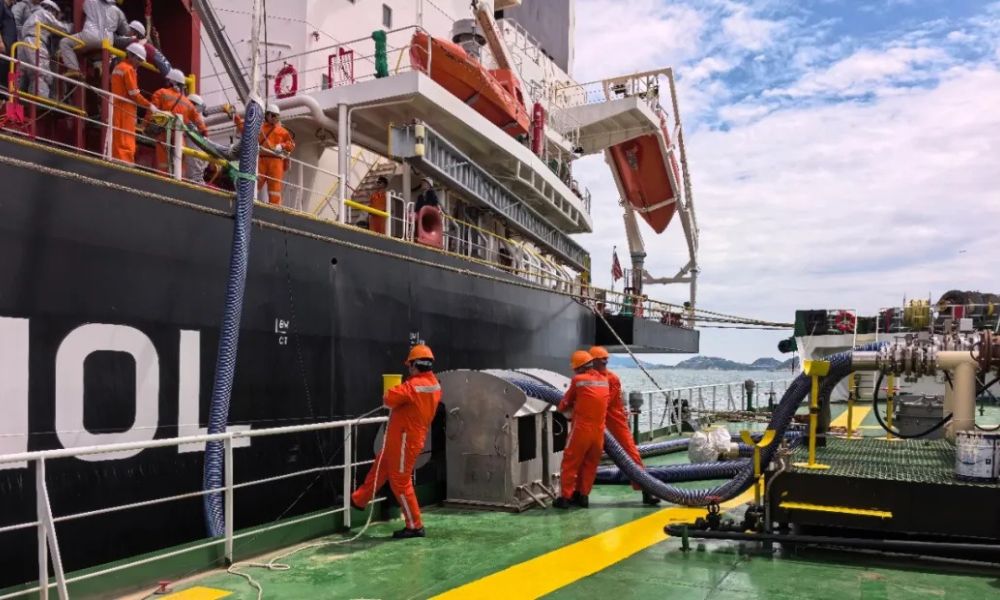
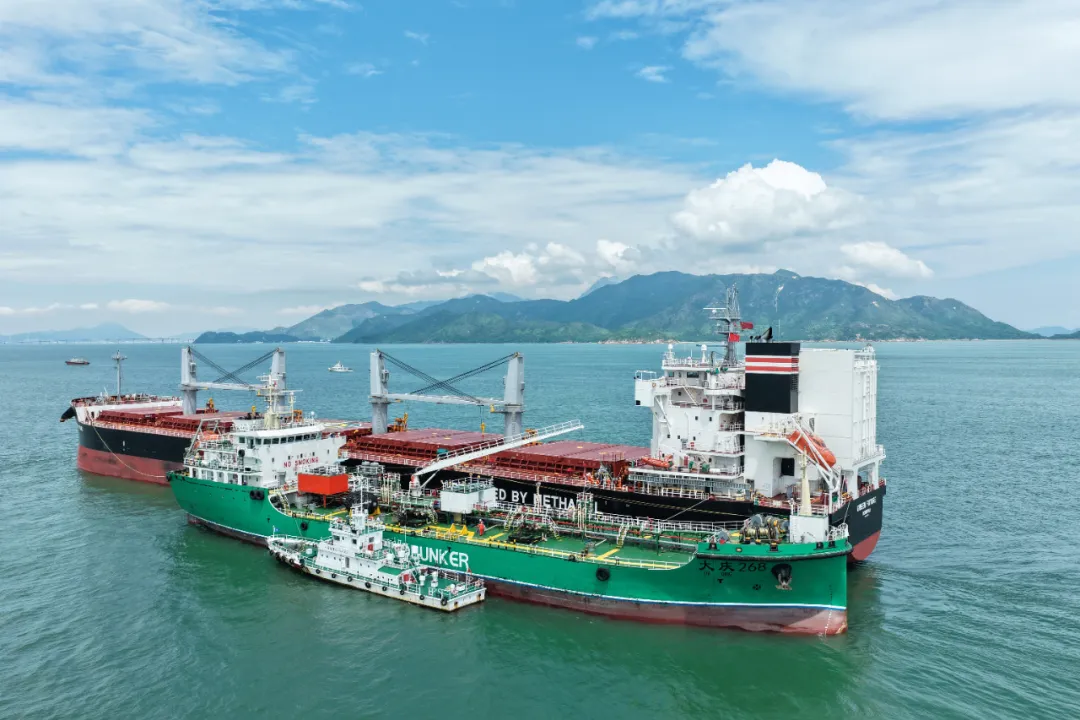
Clean energy equipment and services provider CIMC Enric on Monday (7 September) said China’s first green methanol bunkering operation for a bulk carrier was completed at Guangzhou anchorage.

The company said the bunkering operation also marked the first bio-methanol STS bunkering operation at Guangzhou Port.

A total of 1,021 metric tonnes (mt) of bio-methanol was supplied ship-to-ship (STS) to the world’s first methanol dual-fuel Ultramax bulk carrier.

The operation was completed on 6 September by China Shipping & Sinopec Suppliers Co Ltd’s Da Qing 268, which carried bio-methanol produced at CIMC Enric’s green methanol facility in Zhanjiang.
China: Guangzhou completes first bio-methanol STS bunkering operation

The successful operation in Guangzhou, following previous green methanol bunkering operations in Shenzhen and Hong Kong, means that Guangdong-produced bio-based methanol has established a supply network across the Guangdong-Hong Kong-Macao Greater Bay Area.

The company said the development connects the production, storage, transportation and bunkering segments of the green methanol supply chain, moving the region beyond individual pilot projects towards coordinated operations across the Greater Bay Area.

CIMC Enric described its Zhanjiang green methanol facility as China’s first commercial-scale bio-methanol production plant.

Since beginning production, the Zhanjiang facility has maintained a stable production and delivery schedule, supplying bio-based methanol to major ports across China, with delivery volumes continuing to increase, according to the company.

The first phase of the facility has an annual production capacity of 50,000 metric tonnes (mt), while its methanol products have a carbon emission reduction rate of more than 85%, CIMC Enric said.

The products have also obtained ISCC EU sustainability certification, with the company saying their specifications meet international requirements for shipping decarbonisation and can support the low-carbon operation of vessels.


Photo credit: CIMC Enric
Published: 9 September, 2026

Continue Reading

Alternative Fuels

NTU Singapore-led study urges robust fuel certification as shipping scales up green marine fuels

Research, led by MESD at NTU Singapore and commissioned by Pacific Environment, calls for improved traceability, fuel “fingerprinting” and centralised digital database to log all fuel transactions.
Admin

Published

on

By

NTU Singapore-led study urges robust fuel certification as shipping scales up clean marine fuels

Environmental non-profit Pacific Environment and Nanyang Technological University, Singapore (NTU Singapore) on Tuesday (8 September) have issued a new study highlighting that strict and reliable fuel certification is essential to keep the global shipping industry’s transition to clean fuels “honest and fraud-free”.

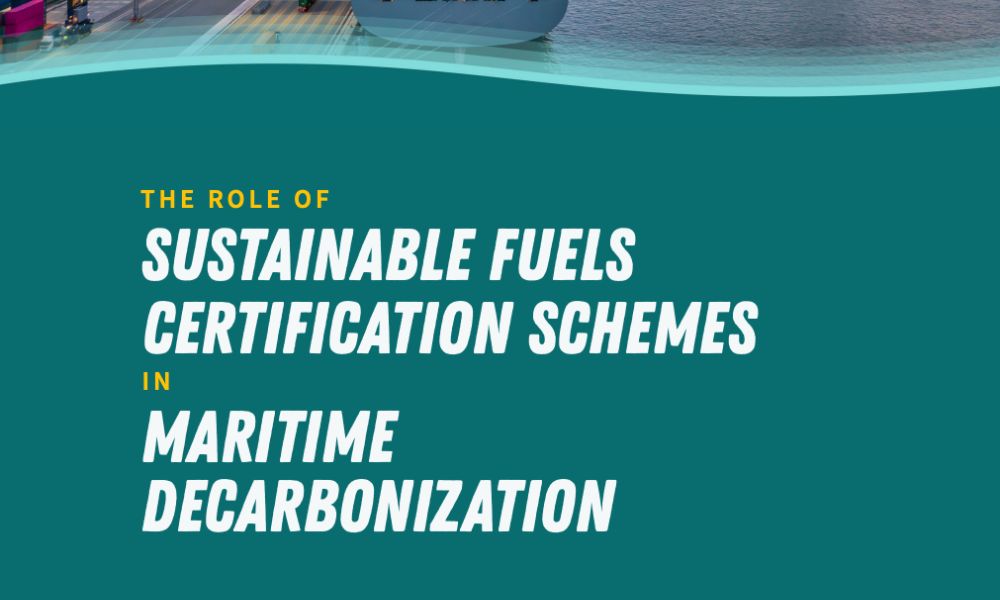
The study titled “The role of sustainable fuels certification schemes in maritime decarbonisation,” was led by the Maritime Energy & Sustainable Development Centre of Excellence (MESD) at NTU Singapore.

It evaluates established certification systems — including those by the International Sustainability & Carbon Certification (ISCC) and Roundtable on Sustainable Biomaterials (RSB), Brazil’s RenovaBio, the California Air Resources Board’s Low Carbon Fuel Standard (CARB LCFS), and the U.S. Environmental Protection Agency’s Renewable Fuel Standard (U.S. EPA RFS) — to guide the International Maritime Organisation (IMO) as it establishes global standards for Sustainable Fuel Certification Schemes (SFCS).  

These existing frameworks provide critical blueprints for measuring full-lifecycle carbon emissions, tracking fuel ownership, and ensuring broader environmental sustainability.

Singapore climate specialist, Lim Jie Ying, Pacific Environment, said, “Certification systems will play an essential role in ensuring that zero- and near-zero-emission fuels deliver genuine environmental benefits. As shipping scales up the use of these fuels, we need certification systems that are robust enough to guard against fraud and unsustainable production, while also being practical and workable across complex international supply chains.”

The study outlines major gaps in global fuel supply chains that leave them vulnerable to cheating. For example, documented cases of fraud involving recycled waste, such as used cooking oil and palm oil mill effluent, demonstrate the limitations of verification systems relying purely on paper documentation without physical origin checks.

To tackle these risks, the study recommends chemical testing or fuel “fingerprinting” to verify fuel authenticity independently, alongside stronger cross-checks.  It also calls for a centralised digital database to log all fuel transactions, preventing suppliers from falsely claiming the same batch of green fuel more than once.

Lead researcher of the study, Dr Yeoh Keat Ping, Research Lead at MESD, NTU Singapore, said: “Strengthening the traceability of sustainable fuels through continued research and innovation will be critical in supporting the maritime energy transition. This requires a combined effort across policy formulation, laboratory validation, digital tools and shared industry knowledge. As traded volumes of sustainable fuels grow, these solutions must be robust enough to keep pace with an evolving landscape.”

Additionally, the study addresses the risk of Indirect Land-Use Change (ILUC), where clearing land for fuel crops causes deforestation and displaces food production elsewhere. It urges the IMO to adopt a balanced risk-based approach to cap- or phase-out high-risk crop feedstocks, protecting both ecosystems and global food security.

For Singapore, Pacific Environment notes that the study highlights a key opportunity to strengthen the country’s role as a trusted green maritime hub. By expanding training for local sustainability auditors and adopting fuel fingerprinting techniques, Singapore could ensure high supply chain integrity for alternative fuels moving through Southeast Asia.

Note: The study titled ‘The role of sustainable fuels certification schemes in maritime decarbonisation’ can be found here


Photo credit: NTU Singapore
Published: 9 September, 2026

Continue Reading

LNG Bunkering

“Titan Vision” LNG reload underscores Klaipėda’s Baltic bunkering role

Growing activity at LNG terminal strengthens Klaipėda’s role as a regional LNG reloading hub, enabling LNG to be reloaded for further delivery to smaller terminals and for bunkering across Baltic Sea region.
Admin

Published

on

By

“Titan Vision” LNG reload underscores Klaipėda’s Baltic bunkering role

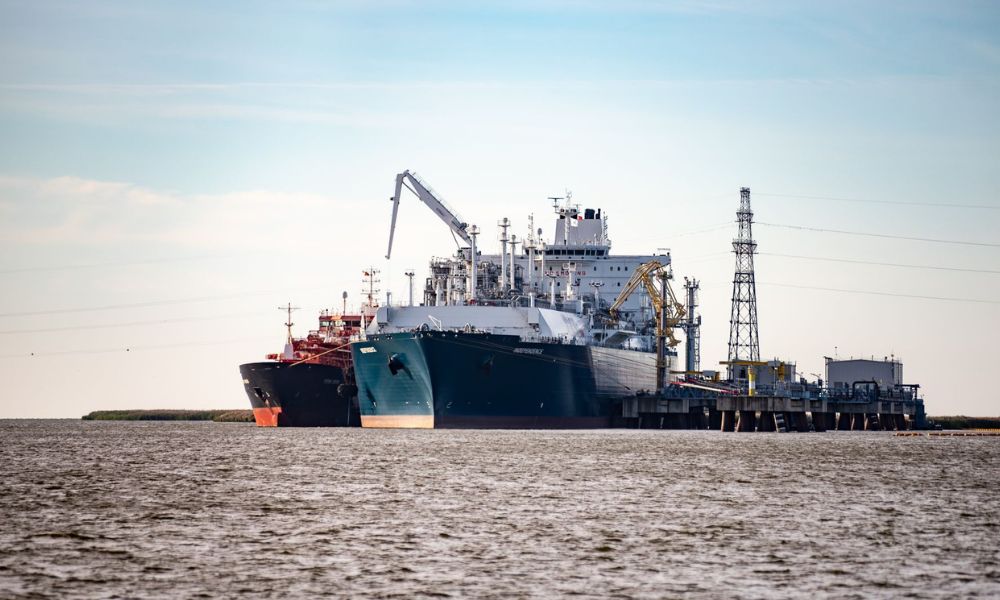
International energy terminal operator KN Energies on Tuesday (8 September) said bunker vessel Titan Vision arrived at the Klaipėda LNG terminal on the same day for the vessel’s first LNG reloading operation in Klaipėda. 

During the operation, more than 11,000 m³ of LNG will be reloaded to Titan Vision, a 12,000 m³ LNG bunker vessel designed for terminal runs and LNG bunkering operations across Europe.

KN Energies said Titan, part of Molgas, supplies LNG and BioLNG to the maritime sector and has been developing LNG bunkering solutions in Europe for more than a decade.

 “The operation is the result of continued cooperation between the KN Energies and Titan teams and reflects the flexibility of the Klaipėda LNG terminal in serving different LNG market needs,” the company said.

“So far this year, 65 ship-to-ship LNG operations have been carried out at the terminal, 36 of them involving small-scale LNG vessels.

“This growing activity strengthens Klaipėda’s role as a regional LNG reloading hub, enabling LNG to be reloaded for further delivery to smaller terminals and for bunkering across the Baltic Sea region.”


Photo credit: KN Energies
Published: 9 September, 2026

Continue Reading
Advertisement

OUR INDUSTRY PARTNERS


Trending