Connect with us

Bunker Fuel Quality

IBIA: Shale oil presence alone do not indicate bunker fuel non-compliance

IBIA says available evidence does not establish a direct causal relationship between the presence of shale oil and the operational issues reported.

Admin

Published

on

IBIA new logo

The International Bunker Industry Association (IBIA) on Monday (27 July) said it is aware of recent reports highlighting operational issues observed in connection with certain residual marine fuels containing components which may indicate the presence of shale oil. 

IBIA said its Technical Working Group has reviewed the information currently available and noted that, while these reports raise legitimate questions that warrant further investigation, the available evidence does not establish a direct causal relationship between the presence of these compounds and the operational issues reported. 

“Shale oil-derived hydrocarbons are a permitted feedstock under ISO 8217. Their presence alone should not be regarded as evidence of fuel quality deficiencies or non-compliance,” IBIA said in a statement. 

“The relevant consideration is whether the finished fuel, as delivered, meets the requirements of ISO 8217, including the provisions relating to fuel composition and operational fitness for use. 

“The reported cases nevertheless reinforce the importance of understanding how increasingly complex marine fuel blends perform in practice.”

Manifold Times previously reported Lloyd’s Register Fuel Oil Bunkering Analysis (FOBAS) stating that tests on several fuels from Singapore identified a chemical fingerprint consistent with Estonian shale oil, while vessels using these fuels reported operational issues. 

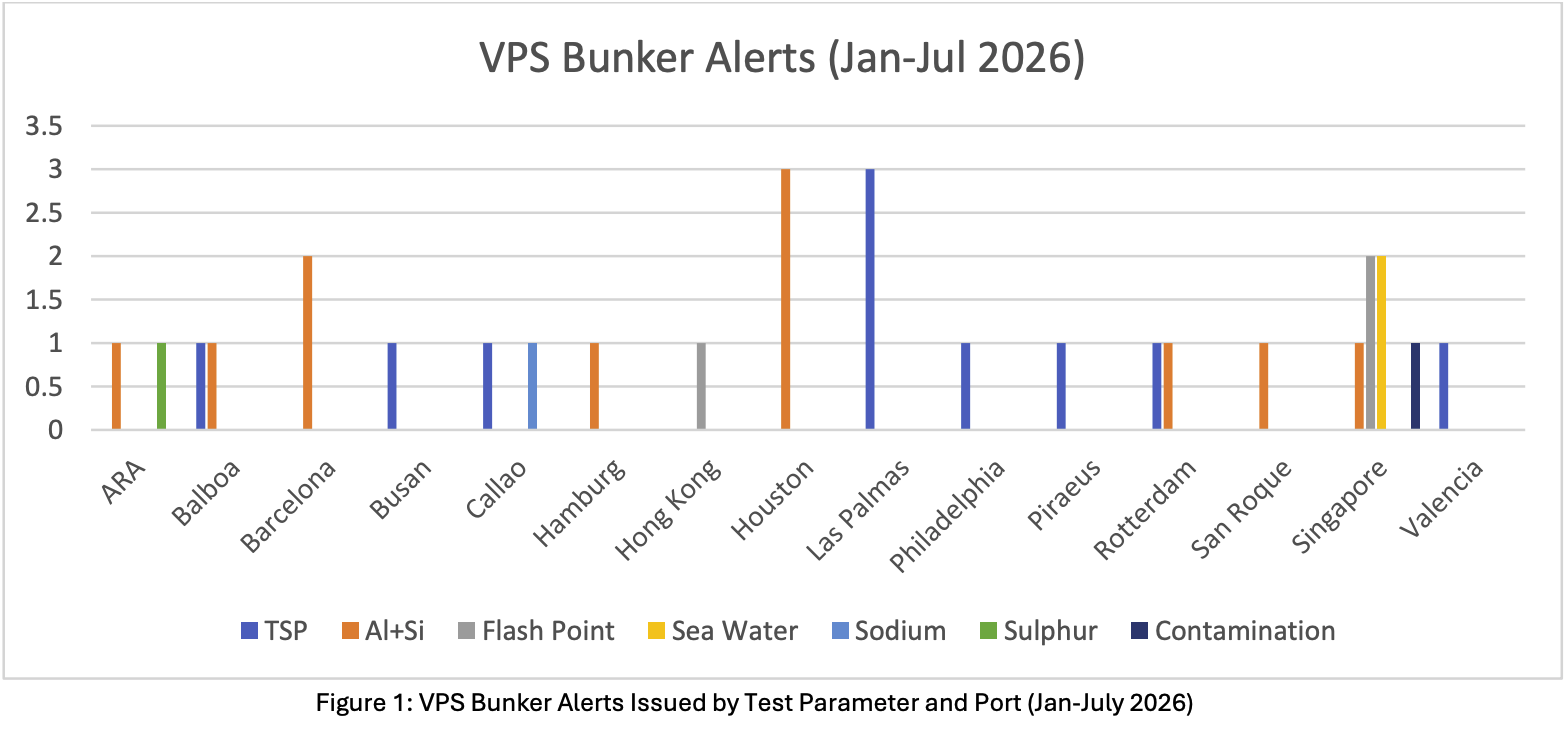
Marine fuels testing company VPS reported it has seen an increase in the levels of shale oil components in marine fuels bunkered recently in Singapore

As the industry continues to diversify feedstocks and blend components, greater transparency, traceability, IBIA said quality assurance and information sharing across the supply chain will become increasingly important. 

“IBIA supports further technical investigation, industry collaboration and data sharing to improve understanding of fuel behavior and operational performance. Such work will help ensure confidence in marine fuel quality while supporting the safe, reliable and efficient operation of ships,” it added. 

Related: FOBAS: Estonian shale oil and stability issues found in marine fuels from Singapore
Related: VPS: Shale oil components detected in marine fuels in Singapore


Photo credit: International Bunker Industry Association
Published: 28 July, 2026

Continue Reading

Bunker Fuel

Bureau Veritas: VeriFuel publishes overview of Q2 2026 global bunker fuel quality

Elevated Al+Si levels in VLSFO 0.50% continue to be observed in ports such as Port Klang and Singapore, while sediment-related concerns were identified in several European locations.

Admin

Published

on

By

Bureau Veritas: VeriFuel Fuel Quality Testing Annual Report 2024

French testing, inspection and certification firm Bureau Veritas recently provided Singapore bunkering publication Manifold Times a copy of its VeriFuel Fuel Quality Testing Q2 2026 Report which provides an overview of marine fuel quality, emerging trends, and compliance levels based on all tested bunker samples across its laboratories. The following is an overview of the report:

VLSFO

Global Quarterly Averages

Global VLSFO quality indicators in Q2 2026 remain stable. Viscosity, density and cat fines have slightly increased compared to Q1 2026. The overall off-spec rate increased slightly to 1.5%, although still remaining within historical norms.

Global Monthly Averages

Monthly data for Q2 2026 show relatively limited variability across all key parameters. Viscosity increased progressively from April to June, while sulphur and sediment levels remained stable. Off-spec incidence declined throughout the quarter, suggesting an improvement in regards to ISO.

Global Quarterly Pour Point Distribution

The pour point distribution in Q2 2026 remains largely consistent with previous quarters. Majority of samples continue to fall within low temperature ranges (≤ 21 °C) while cases at or slightly above limit are very limited.

Global Quarterly Out-of-Spec Parameters

Sulphur, water, sediments and cat fines continue to represent the primary causes of VLSFO non-compliance in Q2 2026 while the ratio of all properties have increased compacted to Q1 2026.

VLSFO 0.50% Port Averages

Regional variations remain evident across fuel properties. Elevated Al+Si levels continue to be observed in ports such as Port Klang and Singapore, while sediment-related concerns were identified in several European locations. Sulphur remains the most commonly reported cause of non-compliance across major bunkering hubs.

Screenshot 2026 07 28 at 1.27.27 PM

Screenshot 2026 07 28 at 1.27.41 PM

Sediments by Quarter

The percentage of fuels exceeding the sediment threshold (≥0.07% m/m) increased compared to Q1 2026. While most fuels remain within ISO 8217 limits, the rising trend highlights the continued importance of good housekeeping and management on board vessels. Most notable increase is observed in Gothenburg and Skagen.

Cat Fines (Al+Si) by Quarter

The proportion of VLSFO samples containing elevated cat fines increased slightly during Q2 2026. Although most fuels remain compliant with ISO 8217 limits, proper treatment on board remain a critical aspect in order to meet engine manufacturer recommendation of max 10 mg/kg at engine inlet.

Acid Number by Quarter

Acid number levels in Q2 2026 remain generally stable and well below the 1.2 mg KOH/g threshold for the majority of samples. However, isolated ports continue to report elevated average acid numbers, particularly in Singapore and Zhoushan, warranting ongoing monitoring of blend composition and feedstock sources.

HSFO 

Global Quarterly Averages

HSFO quality indicators in Q2 2026 remained generally stable. Sulphur content continued its downward trend and density declined slightly, while cat fines increased. The overall off-spec rate increased significantly to 2.4%, representing the highest level observed since early 2024 and indicating a deterioration in overall conformity.

Screenshot 2026 07 28 at 2.14.21 PM

Global Monthly Averages

Monthly trends during Q2 2026 show limited parameter variability, with sulphur decreasing steadily from April through June. Off-spec frequency increased sharply after April and remained elevated during May and June, suggesting persistent quality challenges during the quarter.

Screenshot 2026 07 28 at 2.14.10 PM

Global Quarterly Out-of-Spec Parameters

Water, density, sediments and viscosity remain the leading contributors to HSFO non-compliance in Q2 2026. Compared with previous quarters, water is noted as the leader cause of ISO8217 non-compliance followed by sediments.

HSFO 0.50% Port Averages

Significant regional variability continues to be observed in fuel properties. Several ports such as New Orleans, Houston, Balboa and Algeciras reported average Al+Si levels approaching or exceeding 36 mg/kg. Water and sediment lead as the most frequent non-compliant properties across most locations.

Sediments by Quarter

The proportion of HSFO samples exceeding the sediment threshold (≥0.07% m/m) increased further during Q2 2026 compared with both Q1 2026 and the corresponding quarters of 2025. The rising trend highlights the continued importance of good housekeeping and management on board vessels.

Cat Fines (Al+Si) by Quarter

The proportion of HSFO samples containing elevated cat fines increased slightly during Q2 2026. Although most fuels remain compliant with ISO 8217 limits, proper treatment on board remain a critical aspect in order to meet engine manufacturer recommendation of max 10 mg/kg at engine inlet. Most notable increase was observed in Damietta, Houston and New Orleans ports.

Acid Number by Quarter

Acid number above 1.2 mg KOH/g remain concentrated in a limited number of regions. ARA, Singapore and Zhoushan are the most notable for which some extra attention is required especially related to the fuel composition and nature of acids origin in the fuel.

Screenshot 2026 07 28 at 2.12.03 PM

DMA

Global Quarterly Averages

Global DMA quality indicators in Q2 2026 remained stable. Viscosity increased slightly compared with Q1 2026, while sulphur content declined and cetane index remained unchanged. The overall off-spec rate slightly improved to 2.4 compared to previous quarters.

Global Monthly Averages

Monthly averages for Q2 2026 demonstrate limited variation across fuel properties. Off-spec frequency remained relatively moderate with no clear upward or downward trend throughout the quarter.

Global Quarterly Out-of-Spec Parameters

Appearance usually combined with water as well as pour point and sulphur remain the principal contributors to DMA non-compliance in Q2 2026. Based on individual values the Pour Point and Sulphur are considered of higher importance compared to water content.

DMA 0.10% Port Averages

Substantial regional differences remain evident across regions. Water continues to be the most frequently reported cause of non-compliance across several major bunkering locations, while isolated cases of viscosity, sulphur and pour point related non-conformities persist.

CFPP by Quarter

The proportion of DMA samples with CFPP values exceeding 6°C increased slightly during Q2 2026. This reflects seasonal and regional supply effects and emphasizes the importance of selecting fuels appropriate for the expected operating regions.

Pour Point by Quarter

Pour point exceedances above 0°C remain present in Q2 2026 and show a slight increase compared with Q1 2026. Although cases are limited, operators should continue considering ambient conditions when planning fuel procurement.

Water by Quarter

The proportion of DMA samples containing water in excess of 300 mg/kg remained a recurring concern in Q2 2026. Water-related non-compliance continues to be mainly associated with European and Mediterranean supply locations, reinforcing the importance of good storage, transfer and housekeeping practices. At least positive remain the fact that operational issues due to water presence remain limited.


Photo credit: Bureau Veritas
Published: 28 July, 2026

Continue Reading

Bunker Fuel Quality

FOBAS report warns of growing operational risks from ISO-compliant bunker fuels

LR’s latest FOBAS Fuel Quality Report reveals that the biggest fuel quality risks are no longer confined to off-specification fuels, with some compliant fuels creating operational challenges.

Admin

Published

on

By

New FOBAS report warns growing operational risks from ISO-compliant bunker fuels

Classification society Lloyd’s Register (LR) on Tuesday (14 July) warned that ship operators are facing a growing risk from fuels that appear compliant under routine ISO 8217 testing but still present operational risks once onboard.

According to LR’s latest Fuel Oil Bunker Analysis and Advisory Service (FOBAS) Fuel Quality Report, covering the first half of 2026, off-specification fuels remain a persistent challenge. 

However, some of the most disruptive cases now involve fuels that pass routine compliance testing but show poor stability or compatibility, or contain non-conventional blend components that are only identified through more detailed investigative analysis.

Several incidents investigated highlighted this trend. In March and April, a number of vessels reported operational difficulties after bunkering fuel in a major bunkering hub. Further forensic analysis found that many of the fuels contained elevated concentrations of Estonian shale oil, in some cases estimated to be around 10-15%.

While shale oil is recognised within ISO 8217 as an acceptable blend component, FOBAS investigations found that higher concentrations can be associated with fuel instability and operational issues affecting filters, separators and fuel pumps.

The report also shows that fuel quality variability remains stubbornly high. Off-specification cases remained elevated throughout the first six months of 2026, suggesting that quality issues are no longer isolated events but a more persistent feature of today’s marine fuel supply chain.

The most common recurring issues included sulphur exceedances, excessive water content, sediment and stability problems, elevated catalytic fines, sodium contamination and low flash point distillate fuels.

At the same time, biofuels (especially FAME blends) are continuing to grow without being a primary source of quality issues. Where issues occurred in blended fuels, they were generally associated with the conventional VLSFO component rather than the FAME fraction.

The report concluded that operators will need to adopt a more proactive approach to fuel management as marine fuels become more diverse and fuel quality risks become harder to identify through routine compliance testing alone.

Greater emphasis on fuel stability, compatibility and understanding fuel composition will be critical to reducing operational disruption and maintaining vessel performance.

Murray Kirkwood, Fuel Specialist Consultant, Lloyd’s Register, said: “The findings from our latest report show that fuel quality risk is evolving. The challenge is no longer simply identifying fuels that fail specification. Increasingly, operators are encountering fuels that meet the required limits but still create operational difficulties once they are stored, handled and used onboard.

“As fuel blending becomes more complex, the distinction that matters is increasingly not between on-spec and off-spec fuel, but between fuels that are operationally resilient and fuels that are operationally fragile. Understanding that difference is becoming essential for shipowners and operators.”

The latest findings reinforced FOBAS’ long-standing view that effective fuel management increasingly depends on understanding fuel behaviour rather than relying solely on pass-or-fail specification testing.

By combining routine fuel quality monitoring with forensic investigation of operational incidents, FOBAS provides shipowners with a clearer understanding of emerging fuel quality risks as the industry continues its transition to a more diverse and complex fuel landscape.

Note: The FOBAS Fuel Insight: Fuel Quality Report H1 2026 is available at FOBAS Fuel Insight: Fuel quality reports | LR


Photo credit: Lloyd’s Register
Published: 15 July, 2026

Continue Reading

Bunker Fuel Quality

VPS on lifeboat fuel quality: A safety of life at sea critical risk

Neil Chapman and Steve Bee said regular fuel testing, correct fuel selection, and proactive fuel management are essential to ensure lifeboats are ready when they’re needed most.

Admin

Published

on

By

RESIZED VPS logo

Neil Chapman, Managing Director of Americas, and Steve Bee, Group Marketing and Strategic Projects Director of marine fuels testing company VPS, on Monday (13 July) said regular fuel testing, correct fuel selection, and proactive fuel management are essential to ensure lifeboats are ready when they’re needed most: 

Performance when its most critical

In an emergency, a lifeboat engine is not simply a mechanical asset, it is a life-saving system. If the fuel in that system is of poor quality due to degradation, contamination, or simply unsuitable for the operating environment, then the result may be failure to launch, manoeuvre, or sustain operation, when human lives depend on it. Fuel failures in lifeboats onboard Cruise Liners are high-consequence life-safety risk as the engine may be the only power source available during an emergency. It is a key SOLAS (Safety of Life at Sea) requirement that lifeboats should hold sufficient fuel to enable them to run at 6 knots for no less than 25 hours.

The primary consequence of a lifeboat failure is not the commercial  loss, but the potential failure of a safety-critical system during an abandon-ship scenario. Financial, legal and reputational consequences will undoubtedly follow but the immediate risk is to life.

Now with the inclusion of Biofuels and FAME in the marine fuel mix and assuming the same fuel used in the main engines may be used in the emergency systems, how do you verify the operability of the lifeboats in times of crisis?

Fuel grade DMX within the ISO8217 specification is specifically intended for use within emergency equipment. However, since this is not a mandatory requirement, marine gas oil (MGO grade DMA) used for other purposes on board, is often used to fill up lifeboat fuel tanks. This could lead to hazardous outcomes as the DMA grade fuel might not be suitable for its intended use. DMA fuel whilst acceptable for general machinery use, will unlikely provide the same assurance of low-temperature operability, ignition quality, storage reliability, or starting reliability required for emergency craft. The quality of the fuel in the lifeboat tanks may also deteriorate during storage. Hence it is essential to test and ensure that the quality of the fuel being taken into the tanks is ’fit for purpose’ and monitored at regular intervals. DMX fuel should be chosen due to its ability to operate at a lower temperature, superior ignition quality and  improved starting capabilities. However, this fuel only accounts for approximately 1-2% of the global supply, compared to the regular DMA grade.

Failure Modes in Emergency Operations

SOLAS compliance should not be viewed only in terms of carrying the required quality of fuel. The fuel must also remain fit-for-purpose regarding stability, cleanliness and be capable of supporting reliable engine operation throughout the vessel’s operation. Lifeboat failures are rarely a singular dramatic event, rather a chain of events. These are typically caused by degraded fuel, filter blockages or storage issues.  Incorrect handling and storage can result in the ingress of water, which with modern fuels, can promote the growth of filter blocking bacteria rendering the engine inoperable.  So rather than the issue being no fuel, it is more likely to be an issue of fuel that is of poor quality. As lifeboat engines may sit idle for long periods it potentially allows the fuel to degrade, if the correct due care and attention is not paid to this key piece of emergency equipment.

The handling and storage of fuel, coupled with the observance of quality operating procedures can lessen the risk of these failures, but are unlikely to eliminate them completely. However, the failure to follow established procedures can result in issues that are likely to cause catastrophic financial and reputational damage to the cruise line operator.

The most common failure modes in emergency lifeboats can be categorised as follows:

  • Fuel Starvation
  • Contamination
  • Degraded Fuel
  • Blocked Filter/Injectors

Contamination in the engine due to the presence of water, as previously mentioned, can be catastrophic as this can induce corrosion and oxidation, along with promoting microbial growth which results in filter blocking and fuel starvation to the engine.

If an engine fails to start, or runs poorly under load, due to fuel related issues this would likely cause a secondary emergency, compounding the reason the lifeboat was required in the first instance.

The danger with degraded fuel is that the risk is often hidden. A lifeboat may appear available, inspected and compliant, whilst he fuel inside its tank is steadily losing the properties required for reliable emergency operation.

IMO guidelines indicate that inspectors and regulators are increasingly looking at emergency systems for fuel compliance, highlighting its importance in the operation of a vessel.

Seasonal & Regional Fuel Requirements

Often overlooked are the cold flow properties of diesel and biofuels.  While hydrocarbon-based diesel has very good (low temperature) cold flow properties, this is not the case for biofuels, so lifeboats fuelled in the Caribbean for the summer season may be completely inoperable if the vessels are transferred to the Northeast or higher location, for a winter period.

Root Cause Failure Mechanisms

The failure to follow the appropriate standards which result in engine failure can be categorised as follows:

image 45

The Effect of Biofuels on Marine Fuel Quality

In a study recently completed by a major shipping line, blends of biofuels were tested for a wide range of parameters.  The findings were:

Biological growth appeared within the first month, increasing rapidly with exposure to light.

Within 3 months oxidative corrosion started to occur requiring regular monitoring.

46 CFR § 169.837 states:

“(2) The fuel tanks of motor propelled lifeboats have been emptied, and fuel changed once every twelve months.”

Yet the evidence shows fuel stability effectively starts to deteriorate within the first month and can be unusable by month 3.

Prevention Strategy

Fuel testing should be viewed as part of the vessel’s safety assurance programme. It provides evidence that the lifeboat fuel remains fit-for-purpose, not only on the day it was supplied, but throughout storage and across changing operational conditions. A strong housekeeping policy requires a multi-pronged approach to ensure operability in times of crisis; such steps include:

  • Housekeeping – ensuring the fuel system remains closed when not in use to eliminate the ingress of water.
  • Operation – frequently run the engines so that fuel and lubricants are cycled through the units.
  • Testing program – likely to be cheaper and more efficient than changing out the fuel. A well-developed fuel testing program can eliminate the need to change the fuel.
  • Documentation – by recording all the actions taken to protect the emergency systems historic data can be tracked.

Advanced Testing Programs

Due to the importance of these emergency assets several different tests should be considered to ensure the suitability of the fuel.  Testing should include:

  • Cold-Flow properties using Pour Point, Cold Filter plugging Point, Cloud Point
  • Water content for moisture
  • BYF for Microbial testing
  • Acid Number for corrosion tendencies
  • FAME for biofuels content
  • Sulphur for MARPOL Annex VI compliance
  • Visual Appearance
  • Viscosity for flow properties
  • Density
  • Flash Point for SOLAS compliance
  • Cetane Index

Conclusion

It is possible to avoid engine failures, but this can only be achieved with a well-documented and well-followed operating procedure.  Regular fuel sampling and testing along with general good housekeeping techniques will ensure these units are ready go when they are most needed. Once they are seen as an active safety-critical asset rather than a dormant emergency component the value in this process will be realized.

Lifeboat fuel quality is not a housekeeping detail, it is a Safety of Life at Sea issue. Emergency craft must be capable of starting manoeuvring and operating for the required duration whenever called upon. Sub-standard, degraded, contaminated, or unsuitable fuel can compromise that capability and turn an emergency response into a secondary emergency. Regular testing, correct fuel choice, controlled storage and documented fuel management provide the evidence and assurance that lifeboats remain ready when lives depend on them.


Photo credit: VPS
Published: 14 July, 2026

Continue Reading

Trending