
Business
Shipergy names Lina Molfetas Trading Manager, promotes two traders
Lina Molfetas has been appointed Trading Manager in London, while Tasos Aliferis has been promoted to Head of Trading – Greece and Sotirios Tsesmelis to Senior Trader.

Alternative Fuels
China: Guangzhou completes first bio-methanol STS bunkering operation
A total of 1,021 metric tonnes of bio-methanol was supplied to the world’s first methanol dual-fuel Ultramax bulk carrier in Guangzhou anchorage.
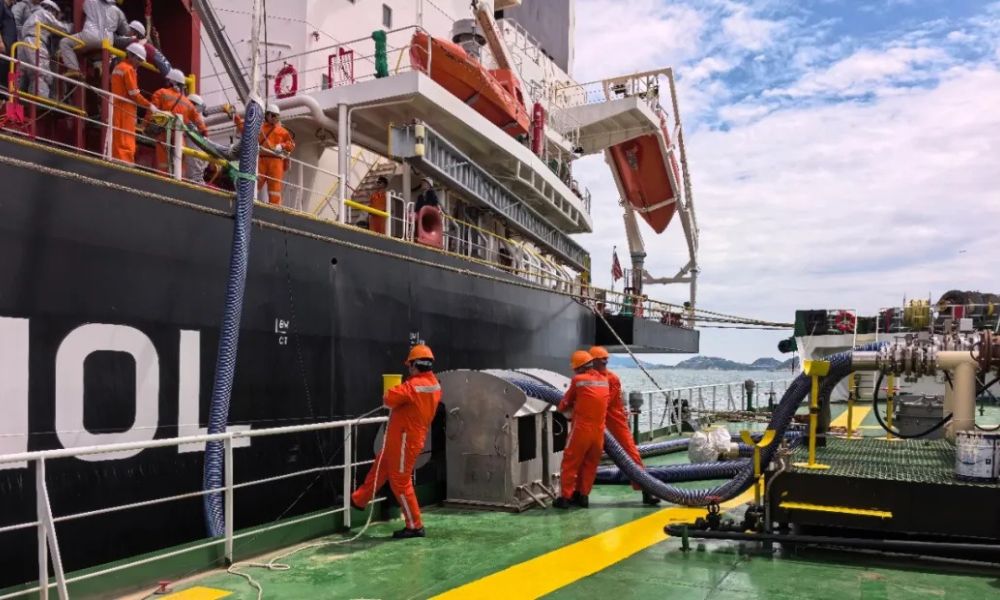
Clean energy equipment and services provider CIMC Enric on Monday (7 September) said China’s first green methanol bunkering operation for a bulk carrier was completed at Guangzhou anchorage.
The company said the bunkering operation also marked the first bio-methanol STS bunkering operation at Guangzhou Port.
A total of 1,021 metric tonnes (mt) of bio-methanol was supplied ship-to-ship (STS) to the world’s first methanol dual-fuel Ultramax bulk carrier.
The operation was completed on 6 September by China Shipping & Sinopec Suppliers Co Ltd’s Da Qing 268, which carried bio-methanol produced at CIMC Enric’s green methanol facility in Zhanjiang.
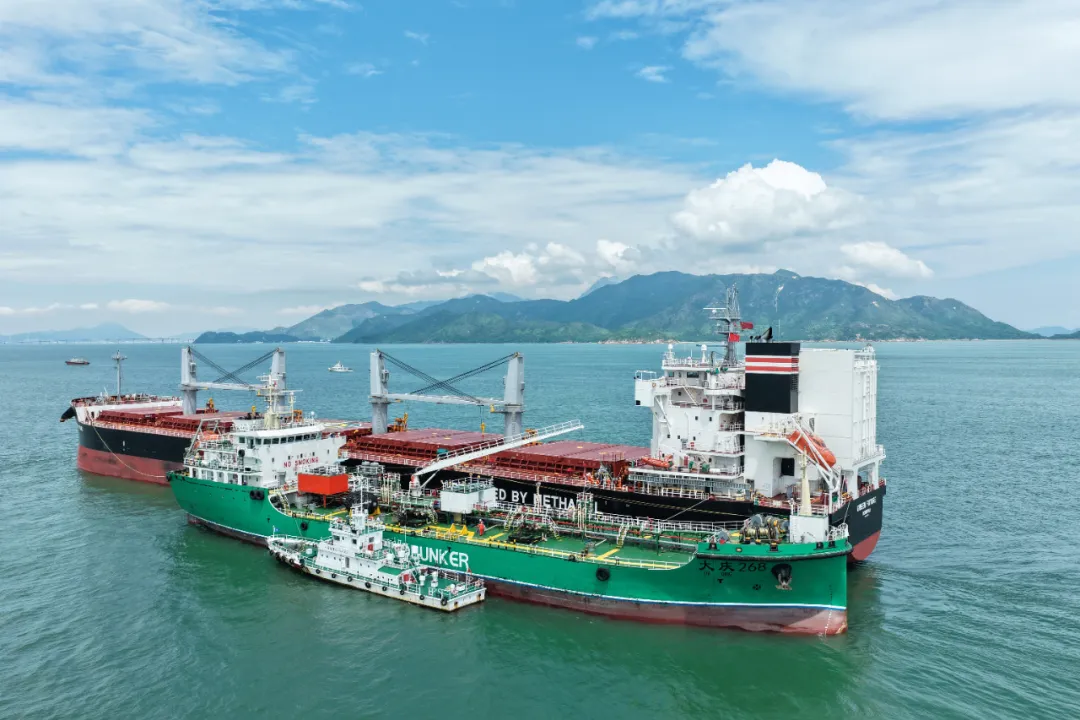
The successful operation in Guangzhou, following previous green methanol bunkering operations in Shenzhen and Hong Kong, means that Guangdong-produced bio-based methanol has established a supply network across the Guangdong-Hong Kong-Macao Greater Bay Area.
The company said the development connects the production, storage, transportation and bunkering segments of the green methanol supply chain, moving the region beyond individual pilot projects towards coordinated operations across the Greater Bay Area.
CIMC Enric described its Zhanjiang green methanol facility as China’s first commercial-scale bio-methanol production plant.
Since beginning production, the Zhanjiang facility has maintained a stable production and delivery schedule, supplying bio-based methanol to major ports across China, with delivery volumes continuing to increase, according to the company.
The first phase of the facility has an annual production capacity of 50,000 metric tonnes (mt), while its methanol products have a carbon emission reduction rate of more than 85%, CIMC Enric said.
The products have also obtained ISCC EU sustainability certification, with the company saying their specifications meet international requirements for shipping decarbonisation and can support the low-carbon operation of vessels.
Photo credit: CIMC Enric
Published: 9 September, 2026
Alternative Fuels
NTU Singapore-led study urges robust fuel certification as shipping scales up green marine fuels
Research, led by MESD at NTU Singapore and commissioned by Pacific Environment, calls for improved traceability, fuel “fingerprinting” and centralised digital database to log all fuel transactions.
LNG Bunkering
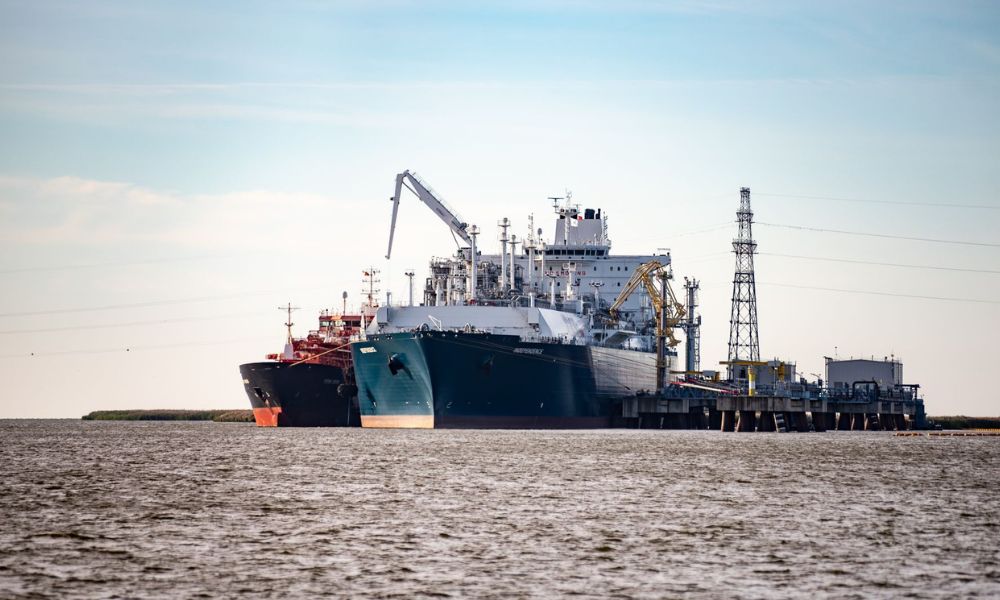
“Titan Vision” LNG reload underscores Klaipėda’s Baltic bunkering role
Growing activity at LNG terminal strengthens Klaipėda’s role as a regional LNG reloading hub, enabling LNG to be reloaded for further delivery to smaller terminals and for bunkering across Baltic Sea region.

OUR INDUSTRY PARTNERS

China: Guangzhou completes first bio-methanol STS bunkering operation

NTU Singapore-led study urges robust fuel certification as shipping scales up green marine fuels

“Titan Vision” LNG reload underscores Klaipėda’s Baltic bunkering role

IBIA joins newly launched UK coalition to accelerate access to alternative marine fuels

DNV, GRSE ink MoU covering low-carbon propulsion and alternative marine fuels

ENGINE: East of Suez Fuel Availability Outlook (8 Sep 2026)

FLEX Commodities appoints Euwyn Tan as Senior Marine Fuels Trader in Singapore

Singapore-flagged tugboat “Kim Heng 3203” placed under Sheriff’s arrest

China’s bunker market reshaped by tax rebates, trade flows and refining changes, says economist

Rajah & Tann: Bunker disputes are won in the first 48 hours

Singapore: Notices of annual meeting issued for Vroon Shipping Asia and related firms

Report: GCMD outlines practical approach to quantity assurance in marine biofuel supply chains

Malaysia: MMEA detains two vessels over suspected illegal ship-to-ship transfer off Johor

NAPA: Why operational efficiency remains shipping’s golden ticket
-
 Vessel Arrest2 weeks ago
Singapore-flagged tugboat “Kim Heng 3203” placed under Sheriff’s arrest
-
 Interview2 weeks ago
China’s bunker market reshaped by tax rebates, trade flows and refining changes, says economist
-
 Bunker Claim1 week ago
Rajah & Tann: Bunker disputes are won in the first 48 hours
-
 Winding up2 weeks ago
Singapore: Notices of annual meeting issued for Vroon Shipping Asia and related firms
-
 Biofuel2 weeks ago
Report: GCMD outlines practical approach to quantity assurance in marine biofuel supply chains
-
 Vessel Arrest6 days ago
Malaysia: MMEA detains two vessels over suspected illegal ship-to-ship transfer off Johor
-
 Decarbonisation2 weeks ago
NAPA: Why operational efficiency remains shipping’s golden ticket
-
 LNG Bunkering1 week ago
Singapore strengthens LNG bunkering framework with new SS 727 standard