
Business
VPS: Why do VLSFOs still require quality considerations?
VLSFO play an important role, comprising 55% of marine fuel samples; while no official ISO8217 specs exist, VLFSOs demand careful management due to unique properties.

Steve Bee, Group Commercial & Business Development Director of marine fuels testing company VPS, on Thursday (18 August) shared that in the pursuit of greener shipping, the shipping industry should not overlook the importance of quality fuel management for traditional fossil fuels.
Very Low Sulphur Fuels (VLSFO) play an important role, comprising 55% of marine fuel samples. While no official ISO8217 specs exist, VLFSOs demand careful management due to unique properties:
As the world of shipping quite rightly focuses on reducing its carbon footprint and endeavours to comply with a host of decarbonisation legislation, it may be easy to forget that traditional fossil fuels are still the main energy source for the majority of the global fleet. As such, the fuel management of fossil fuels and their quality, continues to be an important factor in protecting vessels, their crew and the environment.
As the most widely used fossil fuel, Very Low Sulphur Fuels (VLSFOs) require more focus than others, in terms of their fuel management. VLSFOs currently account for 55% of all marine fuel samples received by VPS for fuel quality testing. There are still no official standard specifications within ISO8217 for VLSFOs.
As such, most VLSFOs are tested against the RMG380 specifications, knowing that the viscosities of VLSFOs in particular, are very much lower than 380cSt. Currently, 68% of all VLSFOs tested have a viscosity between 20cSt-180cSt. This can have a significant impact on the transfer and injection temperatures onboard a vessel, requiring much less heating of the fuel to achieve the optimum injection viscosity. It would be beneficial to see the introduction of a minimum viscosity specification limit for VLSFOs, as well as a current maximum viscosity limit within ISO8217?
Currently 3.8% of all VLSFOs tested have at least one off-specification parameter. This compares favourably with the off-specification rates for HSFO fuels at 11.4% and MGO fuels at 16.9%. However, the VLSFO off-specifications are potentially more concerning than some of those associated with HSFO and MGO. Sulphur, water, cold-flow properties and cat-fines are the most frequent of VLSFO off-specification parameters.

Sulphur off-specification is the most common of all VLSFO off-specifications, with over 30% of all off-specifications being attributed to this one parameter. However, recent test results have shown that sulphur off-specification is certainly better today than it was back in 2021, with only 1.6% of VLSFOs tested being >0.50% Sulphur compared to 2.4% >0.50% in 2021.
Also, it would appear that so far this year, suppliers are producing more fuel in the 0.41%-0.46% Sulphur range, than the 0.47%-0.50% range, than over the past two years, which means that there is less chance of the VLSFOs falling outside of the 95%-confidence interval, or being off-specification.

Due to the higher level of paraffinic content of VLSFOs over HSFO fuels, it is more likely to see wax precipitation occur with VLSFOs, when subjected to colder temperatures.
The formation of wax crystals during storage and consumption is a potential major source of operational problems with VLSFOs. Therefore, it is vitally important to test for wax appearance (WAT) and wax disappearance temperatures (WDT), as the pour point of the fuel is not a reliable indicator of potential cold-flow issues.
During 2019, VPS developed a proprietary test to be able to measure both WAT and WDT in VLSFOs, which many of our customers have become reliant upon to safeguard their vessels from wax precipitation and it’s potentially damaging consequences.
Current global averages show VLSFO Pour Point is 16°C, whilst the average WAT is 38°C, and the average WDT is 48°C. These figures illustrate why using +10°C above the pour point as an indicator of the cold-flow properties of VLSFO blends is simply insufficient, as well as inappropriate as a risk mitigation measure.
When WAT and WDT results are high, vessels need to consider raising the temperatures of their onboard separators, as well as the temperatures within storage, settling and service tanks.
However, VLSFOs with a short shelf life and high WAT may not be suitable for storing, as heating such fuel accelerates the ageing process and increases the likelihood of fuel sludging.
VLSFOs with low viscosity but high WAT & WDT, need to be heated to ensure a stable flow and to prevent wax formation. Such fuels will likely need to be cooled before entering the main engine, due to their low viscosity. This could present operational issues such as wax formation when the fuel temperature drops below the WAT.

Stability issues relating to VLSFOs have been a concern since their introduction in 2019. To this day we still witness spikes in Total Sediment Potential (TSP) across the world.

Some VLSFO blends appear stable on bunkering but become unstable over time (within a week or two). Heating the fuel in the tanks (to maintain suitable storage and transfer) and purifiers (to achieve efficient purification) deteriorates the fuel’s stability and fastens the ageing process.
VLSFOs that are incompatible can cause separator sludging and clogging of filters. As such, numerous vessels have witnessed incompatibility issues when the vessels change from MGO to VLSFO or (vice versa).
VLSFOs with high WAT/WDT and high cat-fines create a need to operate separators at higher temperatures, at shorter discharge intervals. When this is practice is undertaken, wax starts to form, affecting purifier operation as well as clogging the fuel system’s filters.
Finally, regarding stability, VLSFOs with high WAT/WDT, that also have chemical contamination, followed by low viscosity, will unlikely to be handled on-board of vessels. In such cases, the only solution is to de-bunker the fuel.
Between Feb-July 2023, VPS detected contamination in VLSFO fuels in Houston. This contamination saw the presence of two specific isomers of Dicyclopentadiene (DCPD) at concentrations between 1,000ppm-40,000ppm.
The specific isomers were:
- Di-hydro dicyclopentadiene Chemical CAS Number: 4488-57-7
- Tetra-hydro dicyclopentadiene Chemical CAS Number: 6004-38-2
DCPD’s are unsaturated chemical compounds which can polymerise and oxidise under certain conditions. When DCPD polymerises, the fuel begins to exhibit a level of stickiness and becomes more viscous, making it difficult for moving components, eg fuel pump plungers & fuel injector spindles to move freely. These effects cause damage to the fuel injection system. Over a period of time excessive sludge formation is likely to be experienced.
This specific case saw 12 vessels which bunkered the fuel in Houston suffer major operational issues and damages to auxiliary engines & fuel delivery systems, from fuel supplied by 4 suppliers. The type of problems witnessed were fuel leakage in the ICU (Injection Control Unit) units and fuel pumps not being able to develop the required fuel pressure.

In order to mitigate the risks associated with chemical contamination of VLSFOs, VPS recommend their GCMS-HS Chemical Screening service with each VLSFO bunkering. This service is a pre-burn, rapid, low-cost test, which can identify the presence of volatile chemicals within VLSFOs such as styrene, DCPD and chlorinated hydrocarbons, to name but a few and provide an elevated level of protection to the vessel.
To summarise, VLSFOs as the most widely used marine fuel powering today’s global fleet, can potentially create numerous operational and compliance issues, due to their varying quality. In order to mitigate the potential risks caused by, poor cold-flow parameters, fuel stability, chemical contamination, low viscosity and sulphur non-compliance, effective fuel management and testing can certainly help reduce and even eliminate such risks.
Related: VPS identifies new bunker fuel contamination at Houston
Related: FOBAS: Possible bunker fuel contamination in Houston and US Gulf area
Related: Viswa Group gives update on bunker fuel issues in Houston
Related: FuelTrust analysis finds fuel content discrepancies in 39% of global bunker deliveries
Related: VPS: Houston contaminated VLSFO bunker fuel was also supplied in Singapore
Related: BREAKING: Vessels supplied in Singapore yet to report engine issues due to contaminated bunkers, following Houston VLSFO case
Photo credit: VPS
Published: 21 August, 2023
Port & Regulatory
ISWG-GHG 22: IMO working group aims to present NZF text at MEPC 85
The Chair expressed his observation of a genuine willingness within the Group to make concrete further progress at the next ISWG-GHG meeting and work towards presenting text to MEPC 85.

Port & Regulatory
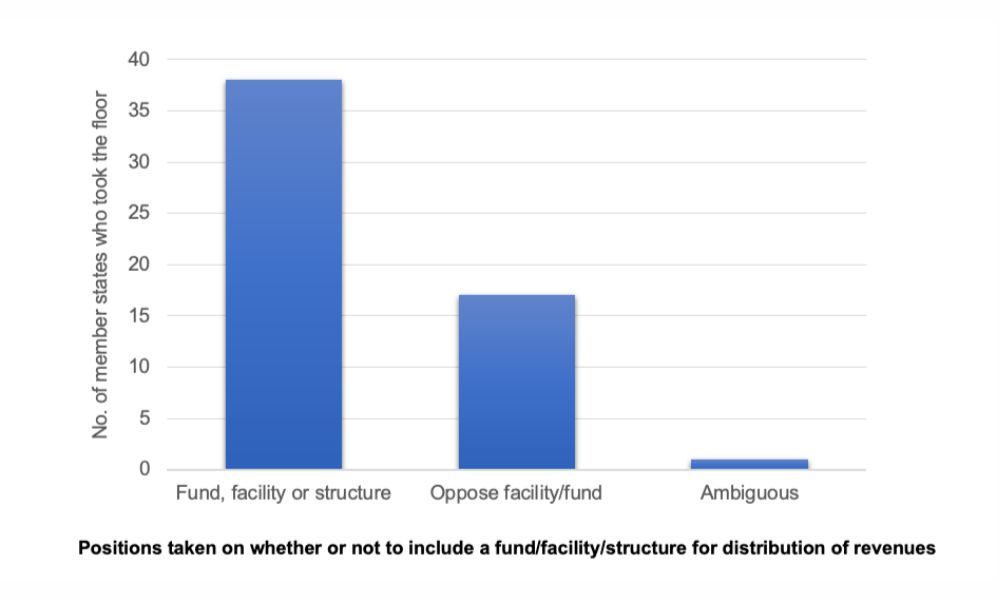
UCL on ISWG-GHG 22: Majority back GHG pricing, centralised fund in IMO NZF talks
A significant majority of IMO member states backed a centralised system for collecting revenues to reward early adopters and support a just transition, according to UCL.
LNG Bunkering
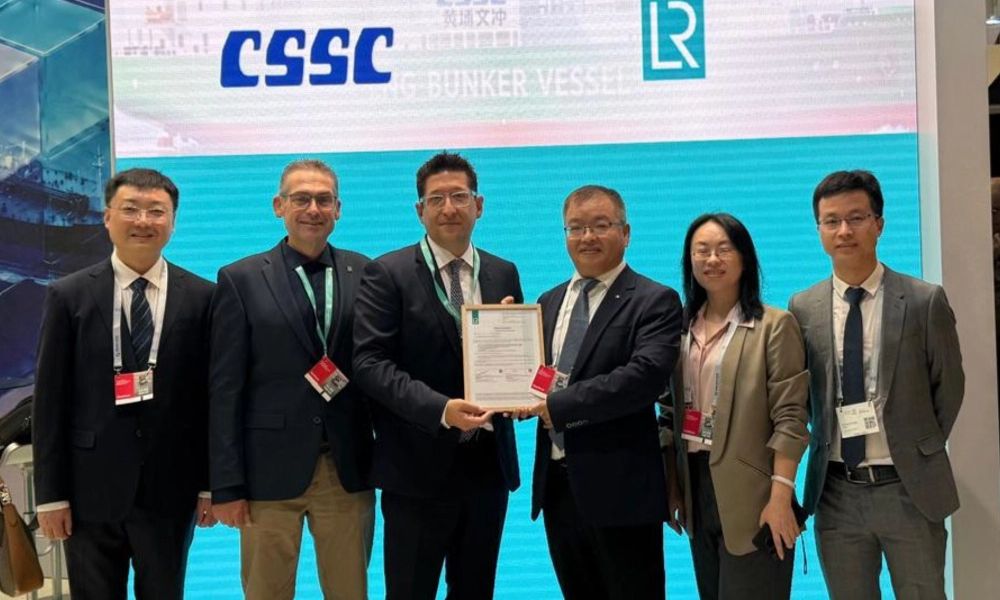
LR awards AiP to CSSC Huangpu Wenchong for 12,500 m³ LNG bunker vessel design
Vessel design incorporates Type C LNG cargo tanks and has been evaluated against a range of class notations covering gas operations, automation, environmental performance and cyber resilience.

OUR INDUSTRY PARTNERS

ISWG-GHG 22: IMO working group aims to present NZF text at MEPC 85

UCL on ISWG-GHG 22: Majority back GHG pricing, centralised fund in IMO NZF talks

LR awards AiP to CSSC Huangpu Wenchong for 12,500 m³ LNG bunker vessel design

DNV at SMM: Chinese shipbuilders, European owners seek closer ties on alternative bunker fuels

Auramarine: Marine fuel flexibility will be key to shipping’s energy transition

Yang Ming orders six LNG dual-fuel, ammonia-ready containerships from Hanwha Ocean

LR, China’s MARIC unveil tanker concept ready for three future bunker fuels

Singapore-flagged tugboat “Kim Heng 3203” placed under Sheriff’s arrest

US targets five bunker companies in latest sanctions campaign against Iran

Singapore bunkering community supports Living Hope Evangelism’s 7th anniversary outreach for residents in need

China’s bunker market reshaped by tax rebates, trade flows and refining changes, says economist

Hengli Petrochemical’s ex-Singapore trading arm faces winding up application

Rajah & Tann: Bunker disputes are won in the first 48 hours

Report: GCMD outlines practical approach to quantity assurance in marine biofuel supply chains
-
 Vessel Arrest2 weeks ago
Singapore-flagged tugboat “Kim Heng 3203” placed under Sheriff’s arrest
-
 Sanctions2 weeks ago
US targets five bunker companies in latest sanctions campaign against Iran
-
 Events2 weeks ago
Singapore bunkering community supports Living Hope Evangelism’s 7th anniversary outreach for residents in need
-
 Interview1 week ago
China’s bunker market reshaped by tax rebates, trade flows and refining changes, says economist
-
 Winding up2 weeks ago
Hengli Petrochemical’s ex-Singapore trading arm faces winding up application
-
 Bunker Claim5 days ago
Rajah & Tann: Bunker disputes are won in the first 48 hours
-
 Biofuel2 weeks ago
Report: GCMD outlines practical approach to quantity assurance in marine biofuel supply chains
-

 Winding up1 week ago
Singapore: Notices of annual meeting issued for Vroon Shipping Asia and related firms