Connect with us

Business

TotalEnergies, Colorado State University to develop protocol for qualification of methane emissions measurements

Both will collaborate using their platforms to develop protocols to certify the accuracy, detection limits, and operational restrictions of the measurement methods used for methane accounting.

Admin

Published

on

271

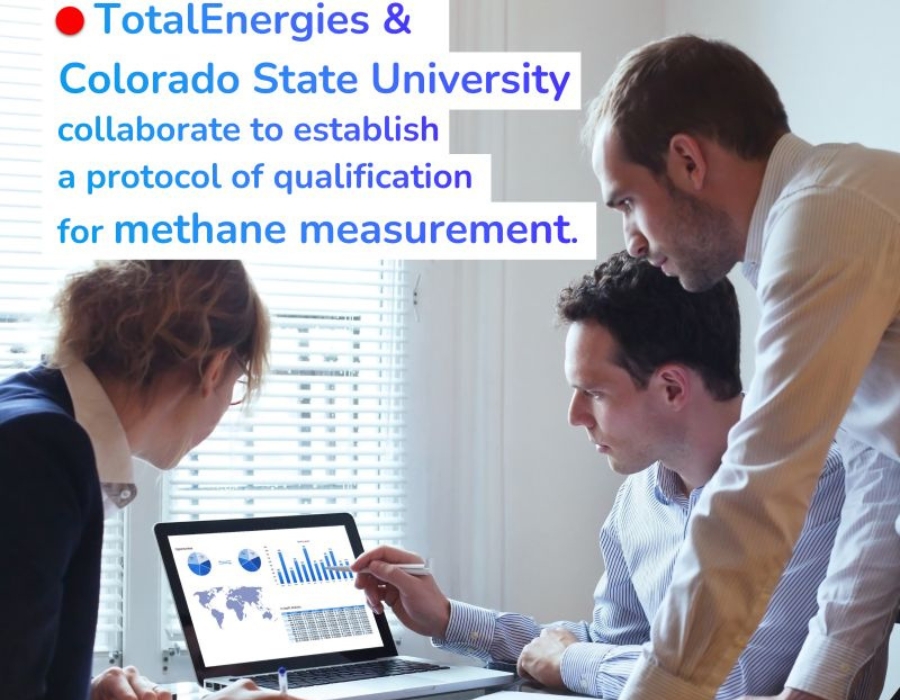
TotalEnergies on Wednesday (24 May) said it is partnering with Colorado State University to develop an international protocol for the qualification of methane emissions measurements.

As part of the Global Methane Pledge, the US Department of Energy (DOE) and the European Commission’s Directorate-General for Energy (DG-ENER) recognised the excellence and relevance of the Transverse Anomaly Detection Initiatives (TADI) developed by TotalEnergies’ Pôle d’Etudes et de Recherche de Lacq in France and the Methane Emission Technology Evaluation Center (METEC) of Colorado State University in the US, in order to become world references for the qualification of methane emission quantification technologies.

“Such a transatlantic initiative is needed because there currently exists no agreement on how to validate methane emissions measurement methods, which is indispensable to compare reported emissions regardless of technology,” TotalEnergies said. 

TotalEnergies and Colorado State University will collaborate using their platforms for this scientific partnership to:

  • develop protocols to certify the accuracy, detection limits, and operational restrictions of the measurement methods used for methane accounting 
  • develop a method for estimating annual methane measurements from point measurements.

“TotalEnergies is committed to reducing methane emissions in line with its target of reducing them by 80% by 2030, as compared to 2020. The reduction of methane emissions requires an accurate quantification of these emissions. Defining a standard that certifies the accuracy of measurements and compare measurements between equipment and continents is a must,” said Marie-Noëlle Semeria, Chief Technology Officer at TotalEnergies.

“To this point, there was no standard that people could access to make their solutions viable around the world. I think we are taking a step toward that. There is a commercially enabling aspect to this that we find very exciting. There is a clear need for international engagement on methane measurement and reporting methods. It’s required if measurement results will be broadly accepted,” said Daniel Zimmerle, METEC Director.


Photo credit: TotalEnergies
Published: 25 May, 2023

Continue Reading

Alternative Fuels

NTU Singapore-led study urges robust fuel certification as shipping scales up green marine fuels

Research, led by MESD at NTU Singapore and commissioned by Pacific Environment, calls for improved traceability, fuel “fingerprinting” and centralised digital database to log all fuel transactions.
Admin

Published

on

By

NTU Singapore-led study urges robust fuel certification as shipping scales up clean marine fuels

Environmental non-profit Pacific Environment and Nanyang Technological University, Singapore (NTU Singapore) on Tuesday (8 September) have issued a new study highlighting that strict and reliable fuel certification is essential to keep the global shipping industry’s transition to clean fuels “honest and fraud-free”.

The study titled “The role of sustainable fuels certification schemes in maritime decarbonisation,” was led by the Maritime Energy & Sustainable Development Centre of Excellence (MESD) at NTU Singapore.

It evaluates established certification systems — including those by the International Sustainability & Carbon Certification (ISCC) and Roundtable on Sustainable Biomaterials (RSB), Brazil’s RenovaBio, the California Air Resources Board’s Low Carbon Fuel Standard (CARB LCFS), and the U.S. Environmental Protection Agency’s Renewable Fuel Standard (U.S. EPA RFS) — to guide the International Maritime Organisation (IMO) as it establishes global standards for Sustainable Fuel Certification Schemes (SFCS).  

These existing frameworks provide critical blueprints for measuring full-lifecycle carbon emissions, tracking fuel ownership, and ensuring broader environmental sustainability.

Singapore climate specialist, Lim Jie Ying, Pacific Environment, said, “Certification systems will play an essential role in ensuring that zero- and near-zero-emission fuels deliver genuine environmental benefits. As shipping scales up the use of these fuels, we need certification systems that are robust enough to guard against fraud and unsustainable production, while also being practical and workable across complex international supply chains.”

The study outlines major gaps in global fuel supply chains that leave them vulnerable to cheating. For example, documented cases of fraud involving recycled waste, such as used cooking oil and palm oil mill effluent, demonstrate the limitations of verification systems relying purely on paper documentation without physical origin checks.

To tackle these risks, the study recommends chemical testing or fuel “fingerprinting” to verify fuel authenticity independently, alongside stronger cross-checks.  It also calls for a centralised digital database to log all fuel transactions, preventing suppliers from falsely claiming the same batch of green fuel more than once.

Lead researcher of the study, Dr Yeoh Keat Ping, Research Lead at MESD, NTU Singapore, said: “Strengthening the traceability of sustainable fuels through continued research and innovation will be critical in supporting the maritime energy transition. This requires a combined effort across policy formulation, laboratory validation, digital tools and shared industry knowledge. As traded volumes of sustainable fuels grow, these solutions must be robust enough to keep pace with an evolving landscape.”

Additionally, the study addresses the risk of Indirect Land-Use Change (ILUC), where clearing land for fuel crops causes deforestation and displaces food production elsewhere. It urges the IMO to adopt a balanced risk-based approach to cap- or phase-out high-risk crop feedstocks, protecting both ecosystems and global food security.

For Singapore, Pacific Environment notes that the study highlights a key opportunity to strengthen the country’s role as a trusted green maritime hub. By expanding training for local sustainability auditors and adopting fuel fingerprinting techniques, Singapore could ensure high supply chain integrity for alternative fuels moving through Southeast Asia.

Note: The study titled ‘The role of sustainable fuels certification schemes in maritime decarbonisation’ can be found here


Photo credit: NTU Singapore
Published: 9 September, 2026

Continue Reading

LNG Bunkering

“Titan Vision” LNG reload underscores Klaipėda’s Baltic bunkering role

Growing activity at LNG terminal strengthens Klaipėda’s role as a regional LNG reloading hub, enabling LNG to be reloaded for further delivery to smaller terminals and for bunkering across Baltic Sea region.
Admin

Published

on

By

“Titan Vision” LNG reload underscores Klaipėda’s Baltic bunkering role

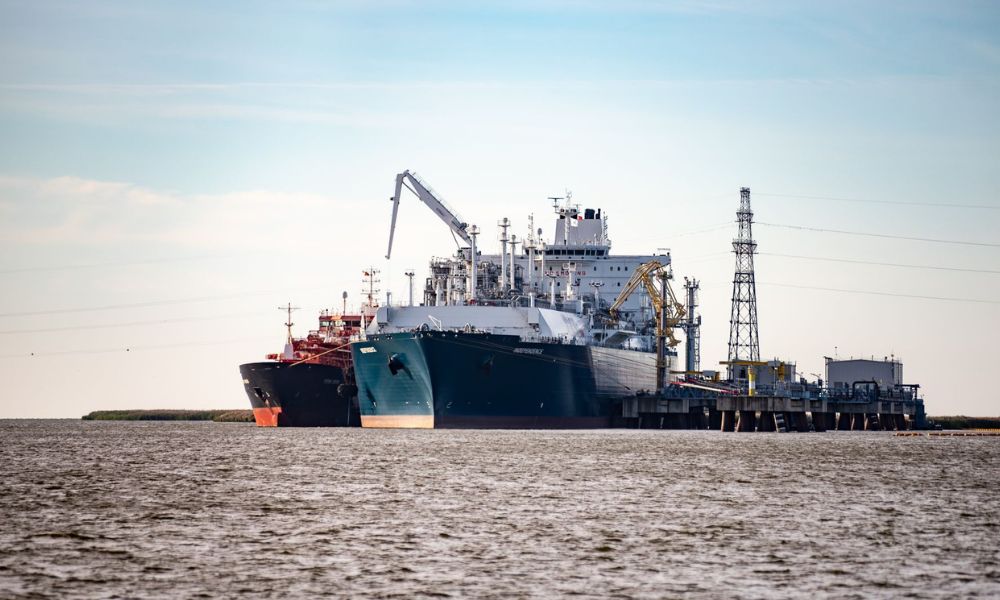
International energy terminal operator KN Energies on Tuesday (8 September) said bunker vessel Titan Vision arrived at the Klaipėda LNG terminal on the same day for the vessel’s first LNG reloading operation in Klaipėda. 

During the operation, more than 11,000 m³ of LNG will be reloaded to Titan Vision, a 12,000 m³ LNG bunker vessel designed for terminal runs and LNG bunkering operations across Europe.

KN Energies said Titan, part of Molgas, supplies LNG and BioLNG to the maritime sector and has been developing LNG bunkering solutions in Europe for more than a decade.

 “The operation is the result of continued cooperation between the KN Energies and Titan teams and reflects the flexibility of the Klaipėda LNG terminal in serving different LNG market needs,” the company said.

“So far this year, 65 ship-to-ship LNG operations have been carried out at the terminal, 36 of them involving small-scale LNG vessels.

“This growing activity strengthens Klaipėda’s role as a regional LNG reloading hub, enabling LNG to be reloaded for further delivery to smaller terminals and for bunkering across the Baltic Sea region.”


Photo credit: KN Energies
Published: 9 September, 2026

Continue Reading

Alternative Fuels

IBIA joins newly launched UK coalition to accelerate access to alternative marine fuels

IBIA joined the UK Alternative Maritime Fuels Coalition, which brings together shipowners, fuel suppliers, fuel producers and maritime technology developers from across the maritime value chain.
Admin

Published

on

By

IBIA new logo

The International Bunker Industry Association (IBIA) on Tuesday (8 September) announced that it has joined the newly launched UK Alternative Maritime Fuels Coalition, a collaborative industry initiative aimed at accelerating access to alternative maritime fuels and supporting the shipping sector’s transition to net zero.

Facilitated by the UK Chamber of Shipping and Cruise Lines International Association (CLIA), the coalition brings together shipowners, fuel suppliers, fuel producers, maritime technology developers and industry associations from across the maritime value chain.

The coalition has been established to address one of the most significant challenges facing shipping’s decarbonisation journey: ensuring that the fuels, infrastructure, investment and policy frameworks required for the energy transition are developed at the pace and scale needed.

IBIA joins a diverse group of organisations SEA-LNG, UK Ammonia Alliance, eFuel Alliance, Carbon Capture and Storage Association, Hydrogen UK, The Anaerobic Digestion and Bioresources Association (ADBA), Renewable Transport Fuel Association and MI — The Global Methanol Alliance.

Together, coalition members will work to support practical solutions that enable the production, availability and uptake of alternative marine fuels in the UK.

The objectives of the coalition include:

  • Coordinate industry action to support the shipping sector’s energy transition.
  • Provide evidence-based input into the UK Government’s forthcoming consultation on domestic maritime fuel regulation.
  • Champion a technology-neutral approach that supports investment in alternative fuels, port infrastructure and enabling technologies.
  • Call for UK ETS maritime revenues to be directed towards maritime decarbonisation, including fuel production, port infrastructure and deployment.

Note: The joint statement can be read here


Photo credit: International Bunker Industry Association
Published: 9 September, 2026

Continue Reading
Advertisement

OUR INDUSTRY PARTNERS


Trending