Connect with us

Alternative Fuels

HPC to conduct concept study for a hydrogen bunker station in Helgoland

Study will require HPC to investigate the commercial and infrastructural suitability of the island as a potential location for hydrogen bunker fuel supply for shipping traffic on the North Sea.

Admin

Published

on

252

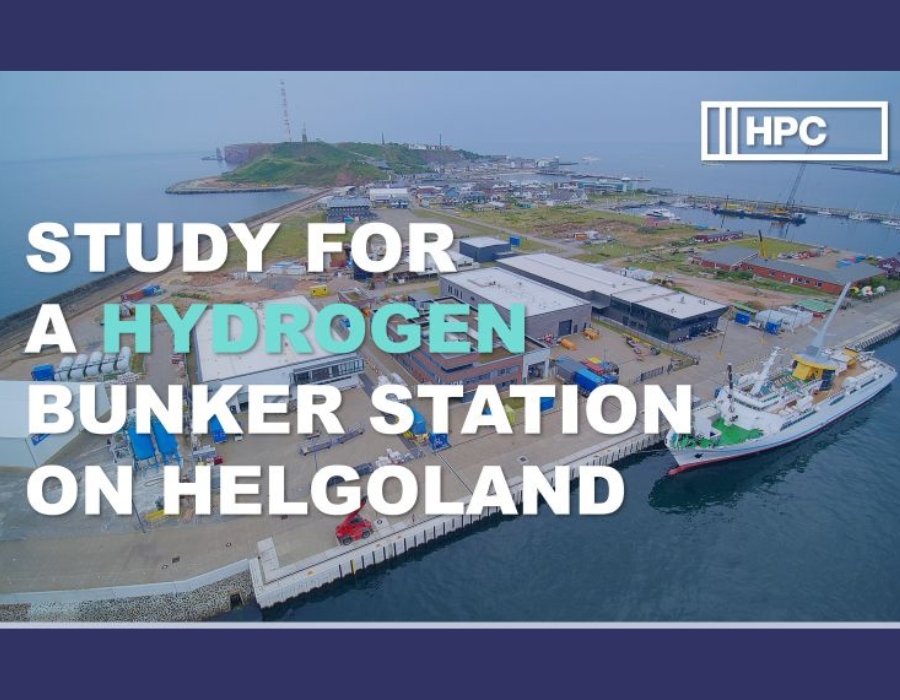
The municipality of Helgoland has commissioned HPC Hamburg Port Consulting to carry out a concept study for the construction of a hydrogen bunker station on the deep-sea island of Helgoland, according to the latter on Tuesday (7 February).

The study will require HPC to investigate the commercial and infrastructural suitability of the island as a potential location for H2 fuel supply for shipping traffic on the North Sea.

The island of Helgoland is frequented in particular by crew transfer vessels (CTVs), passenger and research ships and recreational craft. At the same time, green hydrogen from the AquaPrimus project will be available on Helgoland in the future.

“Taking into account the good availability of green hydrogen in the area of the island, we would like to examine the extent to which Helgoland can also reliably provide a supply for ships calling there in the future,” says Christoph Tewis, project manager for AquaCore and the TransHyDE project Helgoland.

The concept study carried out by HPC includes, on the one hand, evaluating the market potential of alternative fuels for island shipping with the aim of estimating the potential demand. Taking the local framework conditions into consideration, various refuelling concepts for hydrogen are then examined. Another focus is to investigate the conditions and prerequisites for the possible location of a hydrogen bunkering station with reference to suitable plans to ensure the logistics of supplying the fuel. In addition to evaluating and recommending such plans, the study will include initial estimates of the necessary investments.

“The results of the study will better enable the municipality of Helgoland and its partners to make an investment decision based on realistic costs,” says Patrick Specht, Head of Sustainability at HPC.

HPC is already credited with carrying out various national and international innovative energy projects for ship technologies and port infrastructure, including the preparation of a test centre for fuel cell vehicles in the port context for a Hamburg terminal operator.

The concept study for a hydrogen bunker station on Helgoland is funded by the German Federal Ministry of Education and Research as part of the hydrogen lead project TransHyDe. One of three hydrogen lead projects of the Ministry, TransHyDE supports the goals of the National Hydrogen Strategy, which was adopted by the Federal Government in 2020. The hydrogen lead projects involve the research and development of new technologies and application solutions for the production, storage and transport of green hydrogen.


Photo credit: HPC Hamburg Port Consulting
Published: 9 February, 2023

Continue Reading

Alternative Fuels

Singapore-based ONE celebrates maiden voyage of methanol-and-ammonia ready boxship

Following the successful deployment of “ONE Singapore” and its sister vessels, “ONE Solidarity” will be deployed on the Mediterranean Pacific South 2 (MS2) service.

Admin

Published

on

By

Singapore-based ONE celebrates maiden voyage of methanol-and-ammonia ready boxship

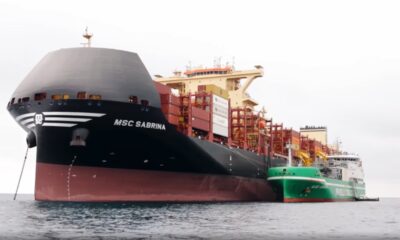
Singapore-based container shipping company Ocean Network Express (ONE) on Thursday (3 July) said it celebrated the maiden voyage of containership ONE Solidarity as the ship made its first-ever arrival in Shekou, China. 

“As one of our S-series methanol and ammonia ready container vessels, ONE Solidarity is another demonstration of ONE’s commitment to sustainable shipping,” the company said in a social media post. 

Following the successful deployment of ONE Singapore and its sister vessels, ONE Solidarity will be deployed on the Mediterranean Pacific South 2 (MS2) service. 

“Her deployment will boost our service capacity, ensuring faster, more reliable, and highly efficient shipping offerings across key global trade lanes,” the company added.


Photo credit: Ocean Network Express
Published: 3 July, 2026

Continue Reading

Alternative Fuels

“Lucia Cosulich” enters final preparation ahead of bunkering operations

Following delivery of the ship in China, it will now enter the final preparation phase ahead of its next operational steps, strengthening Fratelli Cosulich’s ability to provide reliable bunkering solutions.

Admin

Published

on

By

“Lucia Cosulich” enters final preparation ahead of bunkering operations

Fratelli Cosulich Marine Energy on Thursday (2 July) celebrated the delivery of Lucia Cosulich at Taizhou Maple Leaf Shipyard in China.

The vessel is the second of four sister methanol-ready IMO II bunker tankers developed within the Group’s fleet expansion programme and follows the launching ceremony held on 2 May 2026.

Designed to support the Group’s bunkering operations and future fuel requirements, Lucia Cosulich is part of the new generation of vessels developed by Fratelli Cosulich Marine Energy to combine operational reliability, safety and fuel flexibility.

Lucia Cosulich will now enter the final preparation phase ahead of its next operational steps, further strengthening the Group’s ability to provide reliable bunkering solutions.

“We wish Lucia Cosulich and her crew fair winds on the next stage of her journey,” the company said. 

Related: Fratelli Cosulich launches second methanol-ready bunker tanker in China


Photo credit: Fratelli Cosulich
Published: 3 July, 2026

Continue Reading

Alternative Fuels

DNV: Alternative-fuelled vessel orders down 11.6% in H1 2026

In total, 137 alternative-fuelled vessels were ordered in the first half of 2026 compared to 155 in the same period in 2025.

Admin

Published

on

By

DNV: Alternative-fuelled vessel orders down 11.6% in H1 2026

Latest data from classification society DNV’s Alternative Fuels Insight (AFI) platform showed a total of 15 new orders for alternative-fuelled vessels were placed in June 2026.

This consisted of 10 orders for LNG-fuelled vessels, nine of which were car carriers and one a CO2 carrier. The remaining five orders were for LPG/ethane carriers.

Two LNG-bunker vessels were also ordered in June, bringing the total in this segment to seven so far in 2026.

In total, 137 alternative-fuelled vessels were ordered in the first half of 2026, down 11.6% from 155 in the same period in 2025. 

Over half of these (73) were for LNG-fuelled vessels, with most coming from the container (42) and car carrier (21) segments. LPG/ethane carriers were also prominent, with 55 new orders, a significant uptick compared to the first half of 2025 (15). The remaining orders were for vessels fuelled by methanol (2), ethanol (2), ammonia (4), and hydrogen (1).

Deliveries in the first half of the year point to continued uptake of alternative-fuelled tonnage across several segments, with 61 LNG-fuelled vessels and 38 methanol-fuelled vessels delivered so far in 2026.

More recently, Exmar took delivery of what it described as the first oceangoing dual-fuel ammonia vessel, marking a step beyond earlier ammonia-fuelled deliveries, which have largely been associated with pilot or demonstration projects rather than commercial deployment.

DNV: Alternative-fuelled vessel orders down 11.6% in H1 2026

Jason Stefanatos, Global Decarbonization Director at DNV Maritime, said: “What we can take away from the first half of 2026, in terms of the alternative-fuels orderbook, is that we have a market progressing at different speeds depending on segment economics, fuel availability, and the regulatory landscape. Shipowners and other stakeholders are pursuing different pathways based on their individual priorities and requirements.

“LNG remains the leading near-term fuel option, with order activity continuing to be led by containers and car carriers. LPG and ethane carriers have also accounted for a significant share of activity in the first half of the year, while developments in areas such as ammonia and ethanol show that multiple pathways continue to be explored.”


Photo credit: DNV
Published: 3 July, 2026

Continue Reading

Trending