Connect with us

Business

ENGINE: Americas Bunker Fuel Availability Outlook

Low sulphur availability normal in major US ports; Vancouver tugboat strike, but limited bunkering impact; prompt supplies tight in Panama.

Admin

Published

on

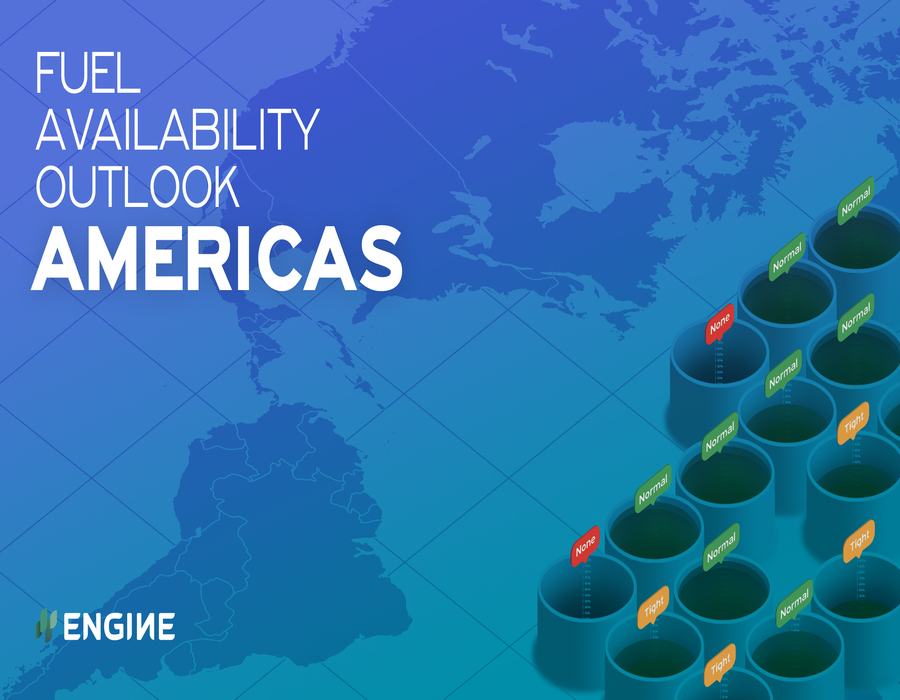
Resized Americas Bunker Fuel Availability Outlook image for Manifold Times

The following article regarding bunker fuel availability in the Americas region has been provided by online marine fuel procurement platform ENGINE for post on Singapore bunkering publication Manifold Times:

8 September 2022 

  • Low sulphur availability normal in major US ports
  • Vancouver tugboat strike, but limited bunkering impact
  • Prompt supplies tight in Panama


North America

Prompt VLSFO and LSMGO grades are readily available in the Houston area and off the US Gulf Coast. Availability of both grades is said to be tight for prompt delivery dates in Beaumont and Bolivar Roads.

A supplier is unable to commit to prompt deliveries in Beaumont due to a tight barge schedule, but can offer for delivery in Bolivar Roads with around six days of lead times, sources say. Another supplier in Bolivar Roads is fully booked for prompt dates.

VLSFO and LSMGO availability is normal at the New Orleans Outer Anchorage (NOLA). Two suppliers can offer both grades for prompt dates, while another awaits resupply cargoes set to arrive in the coming days, sources say.

VLSFO and LSMGO availability is normal in New York and two suppliers can offer deliveries for prompt dates.

All grades remain tight for very prompt dates in Long Beach and Los Angeles ports on the US West Coast. A supplier is hesitant to commit to supply VLSFO and LSMGO on prompt dates, while another requires 7-8 days of lead times.

Suppliers’ earliest HSFO delivery dates are mostly subject to enquiry across US Gulf Coast and West Coast ports, sources say.

LSMGO availability is good in Canada’s Quebec City and a supplier can supply stems at berth for prompt dates.

Bunker operations continue to run in Vancouver despite strike action led by the Canadian Merchant Service Guild (CMSG). The strike that began on 25 August has brought nearly 30 tugboats operated by Canadian maritime firm Seaspan to a standstill.

The Chamber of Shipping, which represents the marine industry on Canada’s west coast, said that among port operations in Vancouver, bunkering has been the least impacted by the tugboat strike. Another source said that bunkering was initially delayed while some suppliers continued to deliver stems as scheduled.


Caribbean and Latin America

Prompt availability of VLSFO and LSMGO is tight in Panama’s Balboa and Cristobal. One supplier requires 8-9 days of lead time to supply both grades, while another has a shorter lead time 6-7 days.

HSFO supply remains tight in Panama. A supplier requires at least 10 days of lead time, but is unable to guarantee deliveries upon arrival, sources say.

VLSFO supply has improved off Trinidad and its ports as a supplier received resupply with a VLSFO cargo on 3 September. Recommended lead times are about 3-4 days, while some can offer deliveries for prompter dates.

VLSFO and LSMGO is more readily available for prompt dates in Colombia’s Cartagena and Santa Marta. Bunker demand has been good in recent weeks in both ports.

Sources say that demand typically increases towards the end of the year in Colombian ports. Going forward, VLSFO supply could be affected in Cartagena and Santa Marta as a local refinery is unable to match production with demand because of obsolete machinery, a trader says.

VLSFO is generally tight for prompt dates in Brazil’s Rio Grande. Recommended lead times are about nine days in Rio Grande, while Rio de Janeiro has a shorter lead time of 4-7 days.

Availability of VLSFO and LSMGO is tight for very prompt dates in Zona Comun. Some suppliers can offer deliveries with five days of lead times.

Prompt VLSFO supplies are available in Argentina’s Bahia Blanca.

By Nithin Chandran


Photo credit and source: ENGINE
Published: 8 September 2022

Continue Reading

Winding up

Singapore: High Court to hear Norvic Shipping Asia winding up application on 31 July

Application for the winding up of Norvic Shipping Asia Pte Ltd was filed by Netherlands-registered Mur Shipping BV on 8 April, according to Government Gazette notice.

Admin

Published

on

By

RESIZED singapore high court

An application for the winding up of Norvic Shipping Asia Pte Ltd was filed by Netherlands-registered Mur Shipping BV on 8 April, according to a Tuesday (21 July) notice on the Government Gazette.

It noted the winding up application is directed to be heard before the Judge sitting in the General Division of the High Court at 10am on 31 July.

Any creditor or contributory of the company desiring to support or oppose the making of an order on the winding up application may appear at the time of hearing by himself or his counsel for that purpose.

A copy of the winding up application will be furnished to any creditor or contributory of the company requiring the copy of the winding up application by the solicitors of the applicant’s, Oon & Bazul LLC, on payment of the regulated charge for the same.

The Applicant’s address is Hiridostraat 5, Gebouw Prismatrium, 1101CW Amsterdam, The Netherlands.

The Applicant’s solicitors are Oon & Bazul LLC of 103 Penang Rd, #04-04/05/06 Singapore 238467. 

Queries on the winding up application may be directed to the following email addresses: [email protected] and [email protected].


Photo credit: Manifold Times
Published: 22 July, 2026

Continue Reading

Methanol

World Fuel and partners complete first green methanol bunkering of car carrier in Shanghai

Operation involved the delivery of approximately 2,800 MT of green methanol to “Arctic Tern” via a ship-to-ship transfer using SIPG Energy’s dedicated methanol bunkering vessel “M/V Hai Gang Zhi Yuan”.

Admin

Published

on

By

World Fuel and partners complete first green methanol bunkering of car carrier in Shanghai

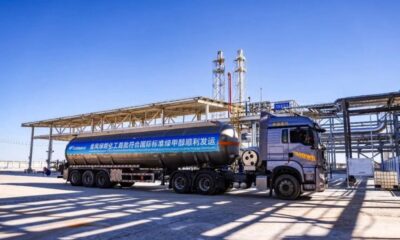
Marine fuel provider World Fuel on Tuesday (21 July) said it successfully completed the first green methanol bunkering of M/V Arctic Tern, with EUKOR Car Carriers and SIPG Energy at the Port of Shanghai. 

Arctic Tern is the first vessel in the new Shaper Class series of car carriers. 

The operation involved the delivery of approximately 2,800 MT of green methanol to Arctic Tern via a ship-to-ship transfer using SIPG Energy’s dedicated methanol bunkering vessel M/V Hai Gang Zhi Yuan, the largest vessel of its kind in operation. 

The bunkering operation was carried out at Haitong Terminal, Waigaoqiao Port Area, Shanghai Port, with cargo handling operations conducted simultaneously during bunkering.

This marks EUKOR Car Carriers’ first green methanol operation and the first time Arctic Tern has bunkered methanol since its delivery on 9 July. The operation marked the first bunkering at Shanghai Port of green methanol produced locally in Shanghai for an international PCTC operator. 

It also demonstrated the city’s integrated green methanol value chain, spanning local production, storage and bunkering, and established a replicable “Shanghai Model” for green methanol supply.

World Fuel arranged the supply and delivery of the fuel on behalf of EUKOR Car Carriers, working with SIPG Energy as the physical supplier at the Port of Shanghai.

The green methanol supplied was produced from municipal solid waste, ISCC-EU certified, and had a carbon intensity value below 25 gCO₂e/MJ.

Arctic Tern is the first of fourteen Shaper Class vessels ordered by Wallenius Wilhelmsen. With a capacity of 9,300 car equivalent units and methanol dual-fuel capability, the vessel will be operated by EUKOR Car Carriers, jointly owned by Wallenius Wilhelmsen and Hyundai Motor Group. Following her first green methanol bunkering, Arctic Tern will continue her maiden voyage from Asia to Europe.

Xavier Leroi, COO Shipping Services at Wallenius Wilhelmsen and CEO of EUKOR Car Carriers, said: “Completing Arctic Tern’s first green methanol bunkering shortly after delivery is a significant milestone towards our decarbonisation ambition for both EUKOR Car Carriers and Wallenius Wilhelmsen. It demonstrates how investments in next-generation vessel technology and fuel flexibility are being translated into real-world operations. 

“This achievement reflects the strong collaboration between all parties involved. Together, we have shown how partnerships across the maritime value chain can help make lower-emission fuels available and operationally viable at scale.”

Mark Tamsitt, SVP Global Marine Sales at World Fuel, said, “The first bunkering event with a new fuel is a significant moment for any shipowner, and our role is to make it as seamless as possible. By connecting EUKOR Car Carriers with SIPG Energy’s proven green methanol capability at the Port of Shanghai, we were able to deliver on reliable supply, fuel quality, and safe processes. As more of our customers bring methanol dual-fuel tonnage into service, we are committed to being the partner that makes these kinds of operations routine.”

Mr. Zhang Da, General Manager of SIPG Energy, said, “Welcoming Arctic Tern to the Port of Shanghai for her first green methanol bunkering demonstrates the strength and maturity of our supply capability. Building on our well-established methanol ship-to-ship bunkering services for container vessels, we have already extended such services to pure car and truck carriers (PCTCs). This bunkering sets a new record for the largest single SIMOPs green methanol bunkering for PCTCs in China, marking another step in building Shanghai’s position as a global green energy hub for international shipping.”

This operation follows Wallenius Wilhelmsen’s announcement on 9 July that Arctic Tern would complete her first methanol bunkering shortly after delivery. The vessel entered service on routes between Asia and Europe immediately following handover from China Merchants Jinling Shipyard in Nanjing.


Photo credit: World Fuel
Published: 22 July, 2026

Continue Reading

Ammonia

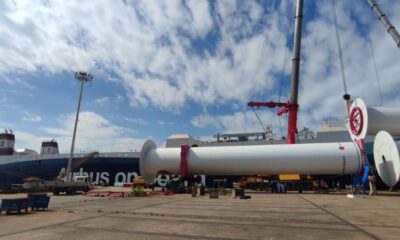
HPA and MB Energy develop safety concept for STS ammonia bunkering

HPA says the Port of Hamburg will become “bunker ready” for ammonia, laying the groundwork for safe and reliable ammonia bunkering in the future.

Admin

Published

on

By

HPA and MB Energy develop safety concept for STS ammonia bunkering

The Hamburg Port Authority (HPA) and integrated energy company MB Energy on Tuesday (21 July) said they have completed a comprehensive risk analysis and developed a dedicated safety concept for ship-to-ship ammonia bunkering.

MB Energy said the analysis lays the groundwork for the safe introduction of ammonia as a future marine fuel.

“With our planned ammonia import terminal in Hamburg-Blumensand, MB Energy intends to provide the reliable land side supply infrastructure needed to support this transition across northern German ports,” it said in a social media post. 

Mabanaft Group was renamed to MB Energy last year and merged over 50 existing brands under one identity. 

Separately, HPA said the Port of Hamburg will become “bunker ready” for ammonia, laying the groundwork for safe and reliable ammonia bunkering in the future.

“The focus is in particular on container ships, cruise ships as well as RoRo and ConRo (Container/RoRo) ships,” it said. 

“We expect ammonia to establish itself as an alternative marine marine fuel in the coming years. With our preparatory work, we are already creating the conditions to welcome the first ammonia-powered ships in Hamburg and to bunker them safely.:

HPA added that the import terminal for ammonia planned by MB Energy from 2029 will make a decisive contribution to ensuring the reliable availability of ammonia as a bunker fuel in northern German ports in the long term. 

“The use of an ammonia bunker barge is considered a possible addition to the landside infrastructure to enable ship bunkering in the port and beyond in the future,” it said.

Related: Mabanaft Group renames as MB Energy, merging over 50 brands under one identity


Photo credit: Hamburg Port Authority
Published: 22 July, 2026

Continue Reading

Trending