Rachel Hoyland, Senior Association, and Peter McDonnell, Trainee Solicitor, at international commercial law firm Hill Dickinson on Thursday (15 July) discussed the issues of alternative bunker fuels for decarbonisation and shipping:
As shipping pivots towards greener operations, and opportunities to increase ship efficiency decrease (as they inevitably must), a major issue the industry must get to grips with is fuel transition.
Shipping is heavily reliant on fossil fuels, and the huge majority of ships globally are powered today by hydrocarbon based fuel oils, albeit with some variation in grade and specification.
Burning this fuel releases large quantities of carbon dioxide into the atmosphere, which significantly contributes to its insulative properties and to global warming and climate change. Fuel oils have found favour in the marine industry, and almost all other industries, due to their high energy density, wide availability and the relative ease with which they may be stored, transported and handled. Although care is certainly needed, and fuel oils are not without inconveniences and difficulties, we live in a world almost universally well adapted to handling these.
Replacing ubiquitous and convenient fossil fuels is a challenge, which all industries face. However, some dimensions of the challenge specific to shipping include:
- limited storage capacity on board ships coupled with, in some cases, long distances between land based refuelling stops
- the necessary proximity of fuel storage and human living quarters on board ships
- uncertainty (in some cases) as to schedule and future ports of call and a preference to retain flexibility as to port calls (i.e. to be able to fuel anywhere globally)
- limited storage capacity ashore at ports and terminals
Alternative fuels – candidates
The industry has by no means agreed on a shortlist of alternative fuels. However, in order to illuminate some of the considerations at play, we take a quick look below at some pros and cons of three future fuel candidates:
Hydrogen
Pros: speed and ease of refuelling; green production by way of electrolysis powered by renewable energy is possible; suitable for use in fuel cells; already produced in substantial volumes for use in the chemical industry; falling cost of renewable energy may lower green production costs.
Cons: currently produced mostly from fossil fuel sources; green production currently expensive; low energy density, requiring 8 x more volume than fuel oils for equal power output, and consequent storage capacity issues; must be kept at -253C to be stored as a liquid; highly combustible and explosive, giving rise to safety issues; combustion produces nitrous oxides; fuel cells not currently capable of powering large vessels; large capital investment needed for storage and refuelling infrastructure for shipping.
Ammonia
Pros: speed and ease of refuelling; green production, using green hydrogen and renewable power for the conversion process, is possible; conversion process relatively cheap and uncomplicated; already produced in substantial volumes for the chemical industry; handling issues in relation to marine transportation are already well understood; higher energy density than hydrogen; storage requires refrigeration only.
Cons: highly toxic; the conversion process requires an additional input of energy compared to green hydrogen; requires energy input for refrigeration; less energy dense than fuel oils, requiring larger storage capacity and/or more frequent refuelling; large capital investment needed for storage and refuelling infrastructure for shipping.
Methanol
Pros: speed and ease of refuelling; low cost for conversion of existing engines; minor modifications to existing storage and bunkering facilities only; widely traded, well understood and already available in some ports for bunkering; biodegradable, with a lower impact on the environment in the event of spillage; more energy dense than hydrogen and ammonia; relatively clean burning with low levels of SOx and NOx; liquid at ambient temperatures, no need to heat or cool.
Cons: lower energy density than fuel oil, requiring larger storage tanks and/or more frequent bunkering; low flash point represents a fire risk; toxic when inhaled, ingested or handled; increased corrosion risks; large capital investment needed for more widespread storage and refuelling infrastructure for shipping
Can one fuel serve all needs?
Whilst early dialogue and vigorous speculation on this topic envisaged a single ‘new’ fuel might replace fuel oils in the future, discussion more recently has swung towards embracing a future in which multiple fuels will likely have a role to play in shipping’s green transition.
As the ongoing machinations of the International Maritime Organisation (IMO) testify, accomplishing a single solution for shipping globally is challenging, and even if the industry were to agree to switch to a single alternative fuel, it is not practically possible to flick the switch overnight.
Changing fuel means huge investments in fuel production, infrastructure and supply chains, retrofitting of ship engines and storage and bunkering facilities, modification of fuel tanks and fuel delivery systems, retraining of crew and terminal staff, adjustments to contracts, and reappraisal and recertification of equipment and processes. It requires foresight, planning and collaboration extending beyond the shipping industry. It also requires fuel availability, at scale and at a viable price.
Consequently, shipping finds itself in a classic ‘chicken and egg’ situation. Owners will understandably be reluctant to initiate the refitting of their vessels (or to order new vessels built to burn different fuels) whilst ever an alternative fuel is unproven at scale, not globally available, and comes with the high price tag that vast infrastructure projects tend to generate. Meanwhile, if there is no demand signal from shipping, energy producers will be slow to orientate their efforts towards creating shore side availability of alternative fuels and to start producing at sufficient scale to supply those sites.
The solution to moving beyond this impasse, seems to be emerging, as is true in relation to other aspects of the decarbonisation landscape, at a more local level.
Not all shipping operations are the same and neither are all ships. Needs, and the capacity for compromise, therefore vary significantly across the industry.
A ferry running between the same few ports on a regular schedule, and never at sea for more than a few hours, can utilise an alternative fuel option which would be simply unworkable for a vessel tramping the deep seas, away from port for weeks at a time and not always knowing which port it will arrive at next. As recognition of this reality spreads, owners and operators are increasingly looking to find a solution that is right for their fleet and its activity, rather than waiting for a one-size-fits-all solution, and pockets of new practise are now emerging around the world in the form of trials, and one to several ship experiments.
Keeping the big picture in mind
Two important considerations for the industry to keep in mind throughout its transition to alternative fuels, are that:
- the objective of reducing greenhouse gas emissions from shipping exists in the context of an urgent need to reduce greenhouse gas emissions from all human activities; and
- the move to alternative fuels in industries other than shipping is an opportunity for shipping to downsize, given that a large percentage of the cargo it carries (some put it as high as 40%) is fossil fuel.
In relation to both of these considerations, a critical question of any new fuel for shipping is: how green are its credentials?
Displacing emissions up the production chain, so as to burn a clean fuel on the ship, which has nonetheless emerged from a polluting production process, will do little to halt the climate crisis. Equally, where an opportunity exists to recreate the fuel production and supply chain, using fuel that has been unnecessarily transported around the world, instead of generated in facilities close to the source of demand, will be an incomplete answer to the emissions emergency.
Just as the blending of fuel oils to achieve a reduced sulphur content led to an increase in output of black carbon particles, sparking a debate about whether there in fact was a net benefit to reducing sulphur levels in marine fuels, the widespread use of alternative fuels in the marine industry may give rise to unforeseen adverse consequences. Being aware of that possibility, and approaching the issue with as broad a view as possible, should help to reduce the risk, although accomplishing this means keeping the big picture in mind at all times.
Conclusion
As things stand at present, it appears that the transition to alternative fuels for shipping is likely to be led by industry participants, rather than regulators, and that the future is likely to be diverse. A variety of fuels may be deployed across the industry with not all sectors, or even ships within sectors, utilising the same fuel and possibly even with some ships utilising multiple fuels, and fuel supplements such as wind and solar power, aboard.
Production and upstream pollution, and the emissions of combustion products other than CO2, will be factors for consideration when selecting alternative fuels and at some point the industry may start to downsize, as a result of a global drop in demand for fossil fuels. This may go hand in hand with older fossil fuel burning (and carrying) vessels naturally reaching their end of life, and could lead to a spike in ship disposals, as vessels become economically and environmentally obsolete. A new era of ships and shipping dawns.
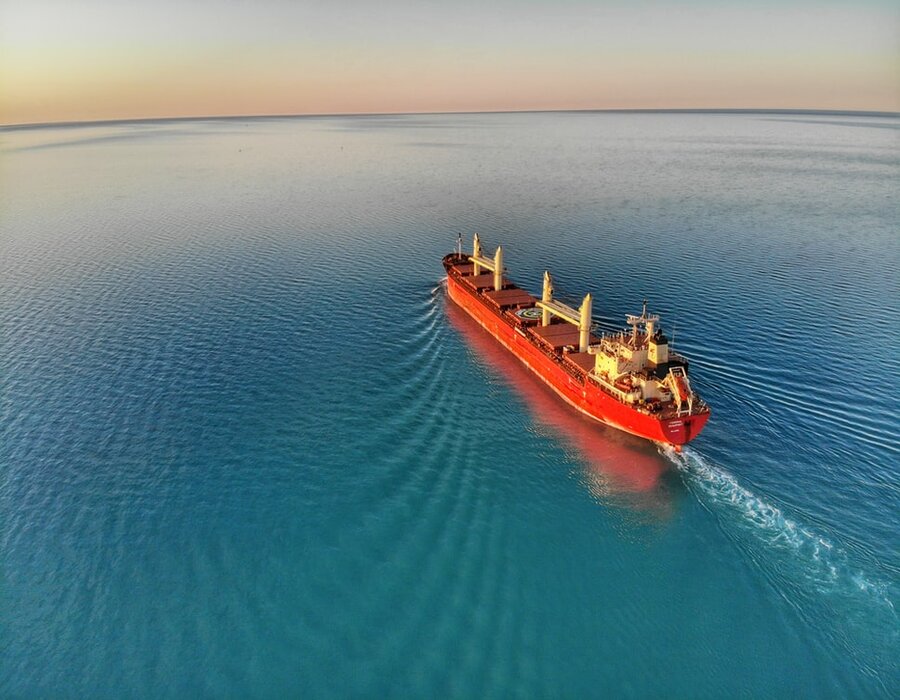
Photo credit: Chris Pagan on Unsplash
Source: Hill Dickinson
Published: 26 July, 2021













 Financial Result2 weeks ago