Connect with us

Alternative Fuels

Singapore: “Frontier Jacaranda” completes bunker biofuel trial in voyage

Toyota Tsusho Petroleum supplied the biodiesel blend (consisting of 7% biofuel and 93% regular fuel) produced by Alpha Biofuels via local shore tanks.

Admin

Published

on

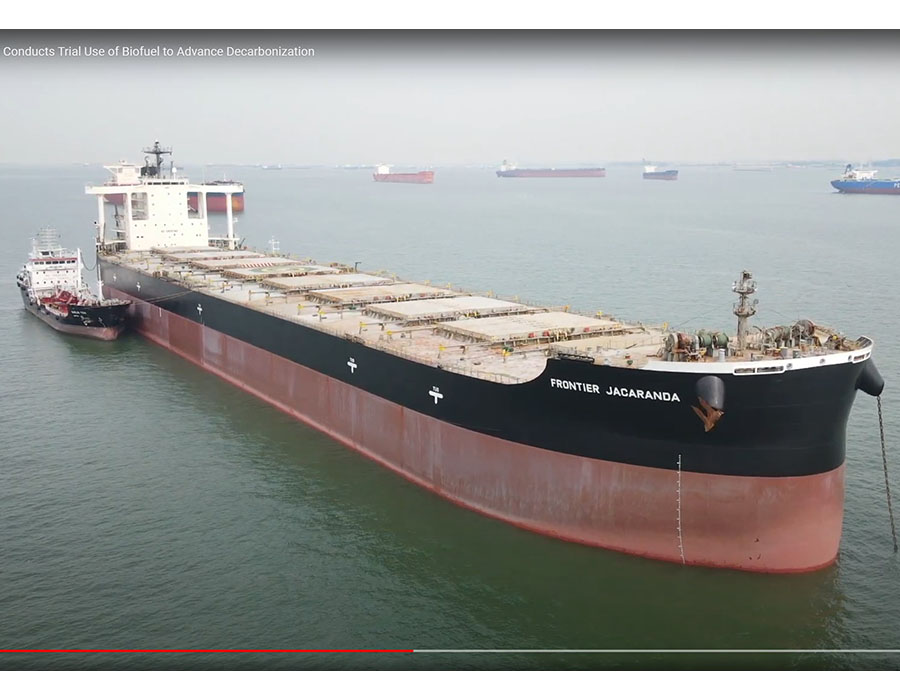
Frontier Jacaranda

Global mining firm Anglo American on Tuesday (29 June) said it has successfully trialled the use of biofuel to power a chartered capesize ship during a voyage from Singapore to South Africa.

Toyota Tsusho Petroleum supplied the biodiesel blend, consisting of 7% biofuel and 93% regular fuel.

The biodiesel blend, produced by converting waste cooking oil from Singapore’s food and beverage industry, was produced by Singapore firm Alpha Biofuels via local shore tanks.

The trial conducted onboard the Frontier Jacaranda, a capesize bulk carrier owned by Japanese shipping company NYK Line, was instrumental in verifying the stability of the biofuel in storage and its performance as a fuel, said Anglo American.

Peter Whitcutt, CEO of Anglo American’s Marketing business, explained: “Low emission ocean freight is crucial in driving the long-term sustainability of the maritime industry. Shaping an effective transition requires a comprehensive framework of complementary solutions, in which alternative marine fuels have an important role to play.

“We are partnering with like-minded industry players to improve our understanding of factors likely to impact the future scalability of this solution. The success of this trial marks an important step forward in establishing biofuel as a viable option, aligned with circular economic principles. These efforts also reinforce our commitment as an organisation to reduce emissions across the entire value chain, as we work towards carbon neutrality across our operations by 2040.”

Data gathered is providing new insights into wider efforts to introduce biofuel to the maritime sector, paving the way to improving its cost-effectiveness and using higher percentage blends in future trials.

The conversion of waste cooking oil into fuel for transportation aligns with the principles of the circular economy, by providing a fresh and environmentally beneficial use for what would otherwise be disposed of.

This combination reduces carbon dioxide emissions by around 5%, is compliant with the International Standard Organisation’s requirement for marine fuels and requires no substantial engine modifications.


Photo credit: NYK
Published: 30 June, 2021

Continue Reading

LNG Bunkering

PIL’s LNG dual-fuel boxship “Kota Elok” arrives in Singapore on maiden call

As the first of 13 new 13,000 TEU vessels joining its fleet, Kota Elok is equipped to operate on LNG and low-sulphur fuel oil that helps reduce our greenhouse gas emissions.
Admin

Published

on

By

PIL's LNG dual-fuel boxship “Kota Elok” arrives in Singapore on maiden call

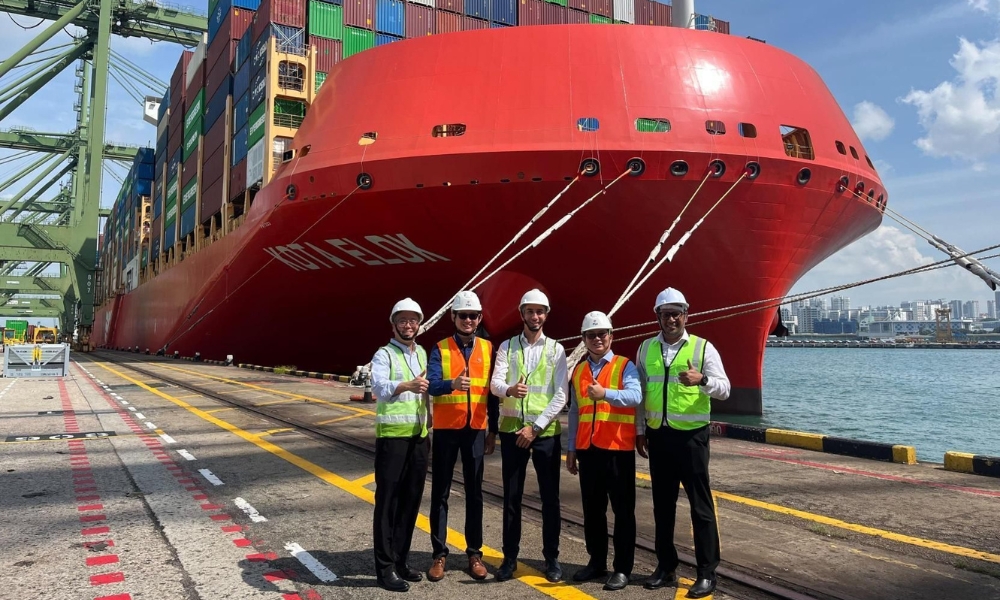
Singapore-based Pacific International Lines Pte Ltd on Monday (20 July) said its first 13,000 TEU LNG dual-fuel container vessel, Kota Elok, recently made her maiden call to Singapore on 15 July.

As the first of 13 new 13,000 TEU vessels joining its fleet, Kota Elok is equipped to operate on liquefied natural gas (LNG) and low-sulphur fuel oil that helps reduce our greenhouse gas emissions. 

The vessel also incorporated energy-saving features and digital technologies to reduce fuel consumption and enhance operational performance, as well as a bow windshield to improve aerodynamics, contributing to improved fuel efficiency and lower emissions over the course of long-haul voyages.

“Following Singapore, Kota Elok will continue her voyage on our East Coast Service 1 (ES1) route to South America, calling at ports in Brazil, Uruguay, and Argentina before returning to Asia,” the company said in a social media post. 

Kota Elok also became PIL’s first vessel to receive Lloyd’s Register certification for compliance with the IACS UR E26 and UR E27 cyber security requirements.

Developed by the International Association of Classification Societies (IACS), UR E26 and UR E27 are mandatory cyber resilience requirements for newbuild vessels contracted from 1 July 2024. 


Photo credit: Pacific International Lines
Published: 21 July, 2026

Continue Reading

LNG Bunkering

CIMC SOE secures order for 12,000-cbm LNG bunkering vessel from Sinopec Clean Energy

Once operational, the vessel is expected to strengthen Sinopec’s domestic coastal LNG bunkering network and help address gaps in China’s alternative fuel bunkering infrastructure.
Admin

Published

on

By

CIMC SOE secures order for 12,000-cbm LNG bunkering vessel from Sinopec Clean Energy

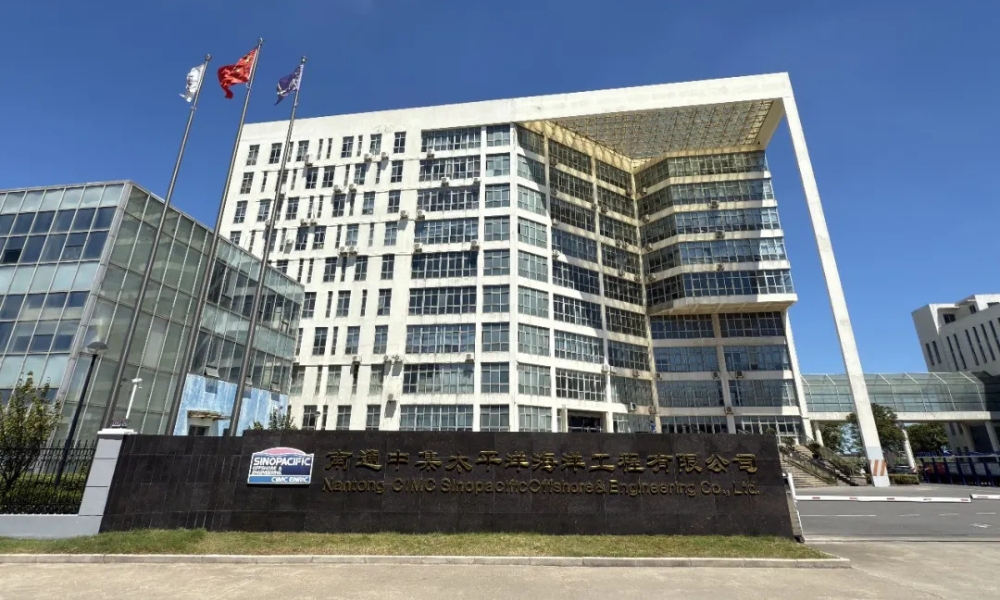
China’s Nantong CIMC Sinopacific Offshore & Engineering Co., Ltd. (CIMC SOE) recently signed a contract with Sinopec (Beijing) Clean Energy Co., Ltd. to build a 12,000-cubic metre (m3) LNG bunkering vessel, according to Chinese maritime media.

The vessel is scheduled for delivery in 2028 and will support Sinopec’s efforts to expand its presence in the marine clean energy sector.

Once operational, the vessel is expected to strengthen Sinopec’s domestic coastal LNG bunkering network and help address gaps in China’s LNG bunkering infrastructure.

With this signing , CIMC Pacific Offshore Engineering’s LNG bunkering vessel orderbook is further strengthened, maintaining its leading position in the global market for small and medium-sized LNG bunkering vessels.

The contract also marked another milestone for CIMC SOE, which has seen a sharp increase in orders and business performance this year amid a surge in domestic LNG vessel demand.


Photo credit: Nantong CIMC Sinopacific Offshore & Engineering
Published: 21 July, 2026

Continue Reading

Nuclear

ABS awards AiP to Korean institute for SMR-powered container ship concept design

KRISO says AiP recognises the technical feasibility and safety of its concept design, marking an important milestone toward the development of next-generation nuclear-powered commercial ships.
Admin

Published

on

By

ABS awards AiP to Korean institute for SMR-powered container ship concept design

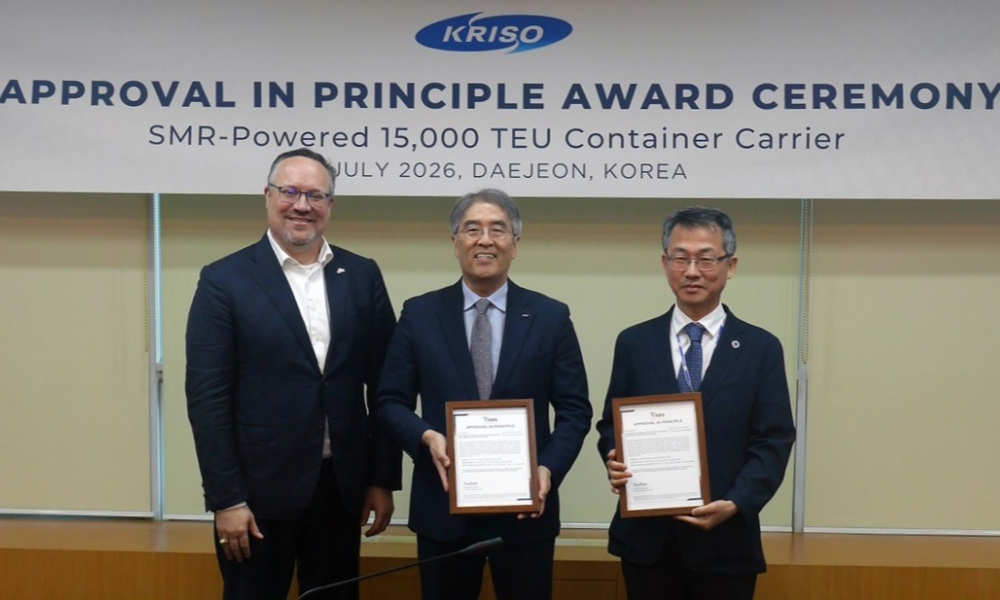
Korea Research Institute of Ships & Ocean Engineering (KRISO) on Thursday (16 July) received Approval in Principle (AiP) from the American Bureau of Shipping (ABS) for its concept design of a 15,000 TEU Small Modular Reactor (SMR)-powered container ship utilising Molten Salt Reactor (MSR) technology.

KRISO said the AiP recognises the technical feasibility and safety of its concept design, marking an important milestone toward the development of next-generation nuclear-powered commercial ships.

“This achievement demonstrates international recognition of KRISO’s technological capabilities in the rapidly evolving field of nuclear-powered shipping, supporting the transition toward low-carbon maritime transport,” it said. 

Building on this milestone, KRISO will continue advancing basic and detailed ship design, paving the way for future demonstration and commercialisation of SMR-powered vessels. 

Through continued R&D and international collaboration, KRISO remains committed to strengthening next-generation maritime technologies and contributing to the safe deployment of nuclear propulsion in the maritime industry.


Photo credit: Korea Research Institute of Ships & Ocean Engineering
Published: 21 July, 2026

Continue Reading

Trending