Connect with us

Environment

IBIA: Delicate balance as IMO’s new GHG reduction measures come up for adoption

IMO working group meeting head of MEPC 76 struggles to reach consensus on draft guidelines to support mandatory measures to cut carbon intensity of all ships.

Admin

Published

on

IBIA

The International Bunker and Industry Association (IBIA) on Monday (7 June) published an update regarding discussions of GHG reduction measures ahead of MEPC 76.

An IMO working group meeting head of the 76th session of the IMO’s Marine Environment Protection Committee (MEPC 76) struggled to reach consensus on a set of draft guidelines to support mandatory measures to cut the carbon intensity of all ships.

The working group was attended by many of the same delegates that will be at MEPC 76, which is due to consider, with a view to adoption, draft amendments to MARPOL Annex VI prescribing technical and operational measures to reduce the carbon intensity of ships.

These new measures are the Energy Efficiency Existing Ship Index (EEXI) relating to how the ship is equipped and retrofitted, and an operational carbon intensity indicator (CII). Both are intended to help achieve the ambition of the Initial IMO GHG Strategy to reduce carbon intensity of international shipping by 40% by 2030, compared to 2008.

The Intersessional Working Group on Reduction of GHG Emissions from Ships (ISWG-GHG 8), which met remotely from 24-28 May, saw very divergent views on some aspects of the guidelines to support the new mandatory measures. Discussions became heated, in particular, around carbon intensity reduction factors relative to 2019 reference lines.

ISWG-GHG 8 discussed reduction factors ranging from 10% to 75%, settling on 22% as a compromise arguing this was the top end of figures that had been discussed in a correspondence group prior to ISWG-GHG 8. It was not, however, an easy compromise.

Having decided on the 22% reduction factor to 2030 compared to 2019, ISWG-GHG 8 agreed on another compromise for how to get there, and has put forward to MEPC 76 the concept of a phased approach. This would see an annual successive carbon intensity reduction rate of 2% compared to the 2019 reference line from 2023 (when the MARPOL amendments would enter into force) through to 2026. This means a review required under the draft MARPOL amendments will need to further strengthen the annual reduction rate from 2026 to 2030 to achieve a 22% reduction factor.

A number of delegations expressed intense frustration during ISWG-GHG 8, claiming the guidelines would not be effective at achieving the 2030 goals of the IMO’s initial GHG strategy. Coupled with the uneasy compromise on the guidelines, it suggests a delicate balance when MEPC 76 meets from 10-17 June to adopt the new energy efficiency measures and associated guidelines.

Guidelines put forward to MEPC 76 for adoption following ISWG-GHG 8 relate to the EEXI and CII and will “provide important tools for Administrations and industry to implement the new requirements, and building blocks for future energy efficiency measures,” the IMO said in a press release.

ISWG-GHG 8 agreed to establish a Correspondence Group on Carbon Intensity Reduction, to further consider and finalise the draft updated Guidelines for the development of a Ship Energy Efficiency Management Plan (SEEMP); further consider and update existing guidelines, procedures or guidance, including the 2017 guidelines related to the ship fuel oil data collection system; develop draft guidelines on correction factors for certain ship types, operational profiles and/or voyages for the CII calculations, and develop specific guidance on the audit and verification processes of SEEMP as well as possible parameters and templates for reporting, verification and submission of data for trial CIIs of individual ships on voluntary basis.


Photo credit and source: International Bunker and Industry Association
Published: 11 June, 2021

Continue Reading

Methanol

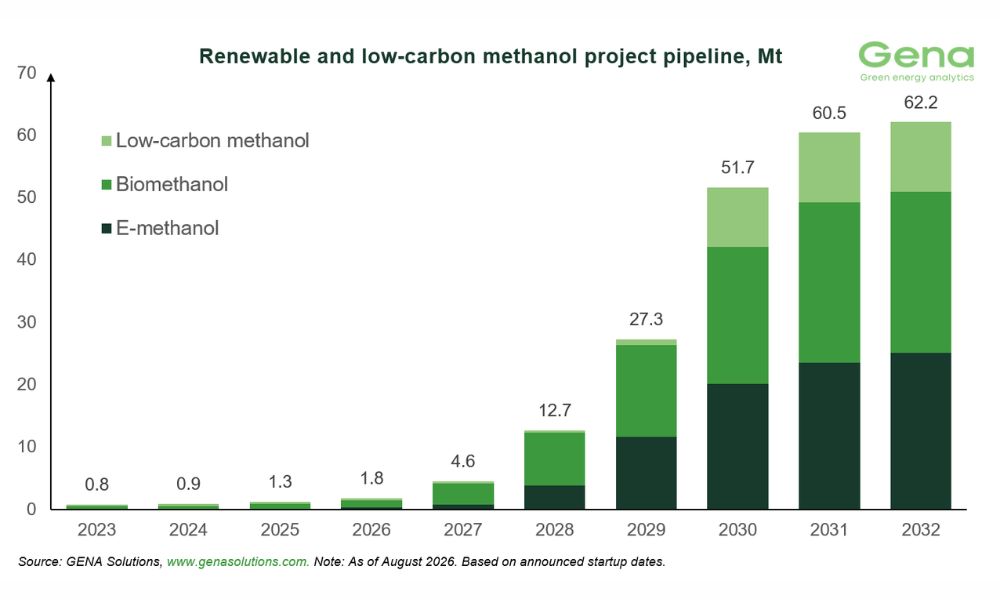
GENA Solutions: Total renewable and low-carbon methanol project pipeline increases from 61.8 to 62.2 Mt by 2032

Information shared by MI – the Global Methanol Alliance meant to assist the maritime industry in the adoption of methanol as a mainstream marine fuel heading into IMO 2030/2050.
Admin

Published

on

By

28 1

MI – the Global Methanol Alliance recently shared with Manifold Times the renewable and low-carbon methanol project pipeline August 2026 release produced by GENA Solutions Oy.

Information from the release is meant to provide the bunkering publication’s readers with insight on renewable methanol availability, and to assist the maritime industry in the adoption of methanol as a mainstream marine fuel heading into IMO 2030/2050.

Key takeaways from GENA’s August 2026 Methanol release are as follows:

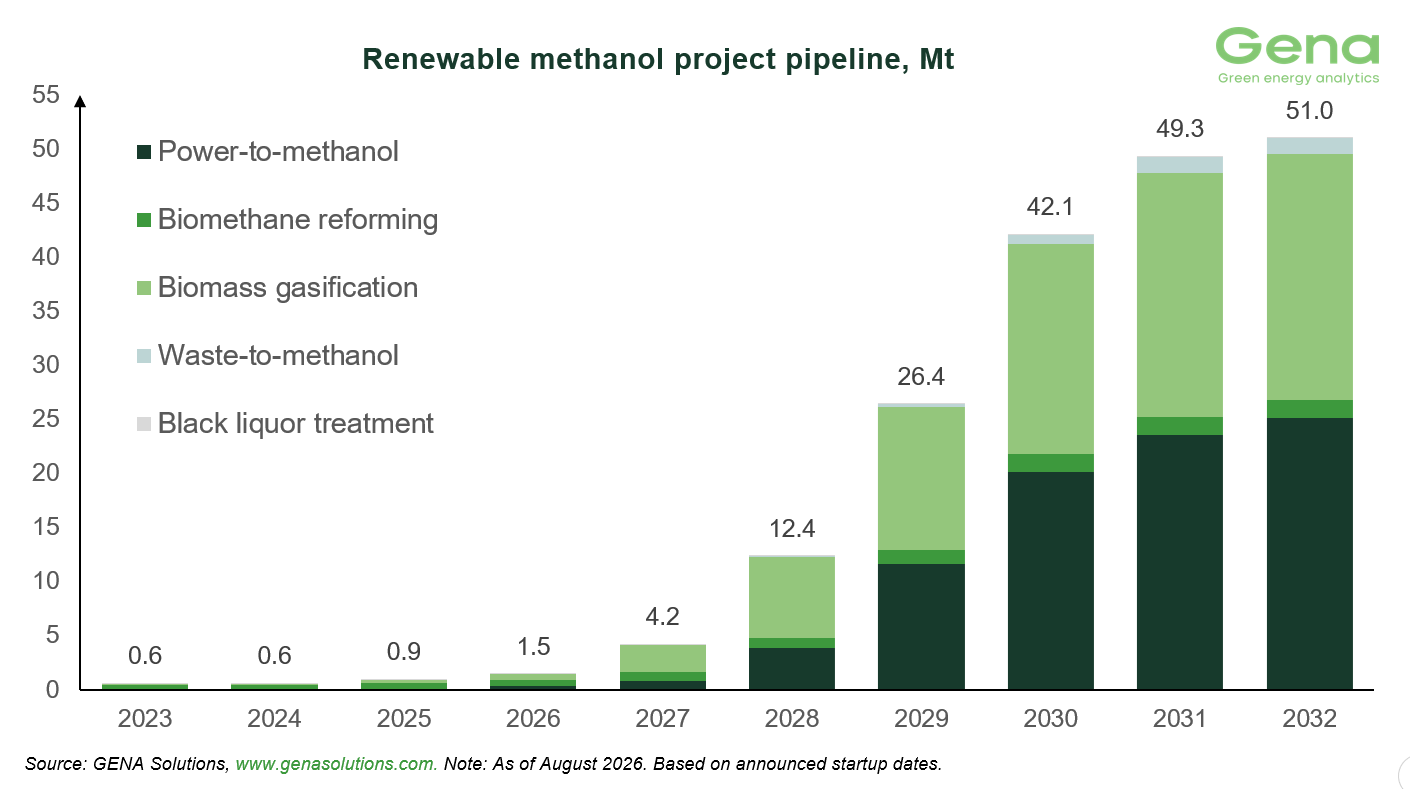
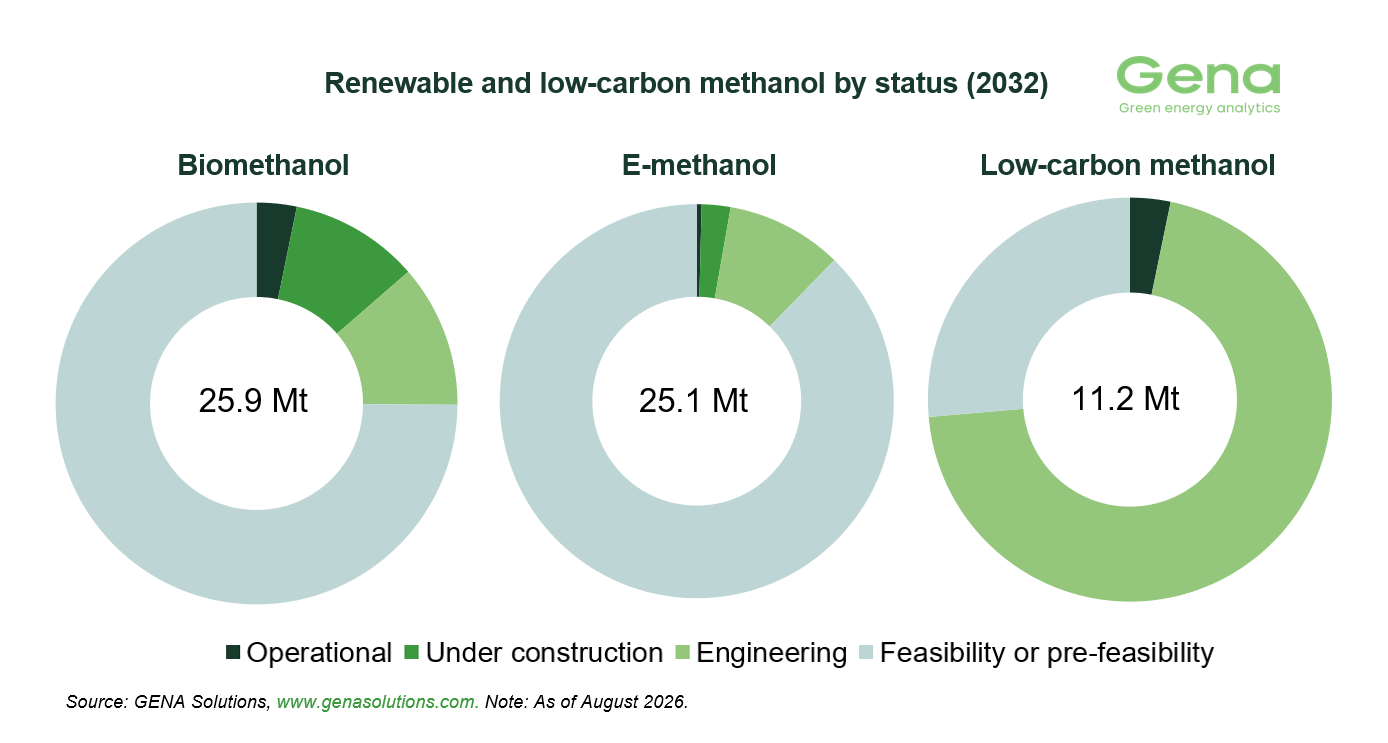
  • As of the end of August 2026, GENA tracks 286 renewable and low carbon methanol projects, representing 62.2 Mt of capacity by 2032. This includes 25.1 Mt of e-methanol, 25.9 Mt of biomethanol, and 11.2 Mt of low carbon methanol capacity.
  • Two new projects were added to Project Navigator last month, while one frozen project was excluded. The project pipeline increased by 0.4 Mt month on month.
  • Four new offtake agreements were registered during August, including two biomethanol and two e-methanol agreements.
  • About 8% of the cumulative renewable methanol project pipeline capacity has reached FID so far, with another 11% at the FEED stage.
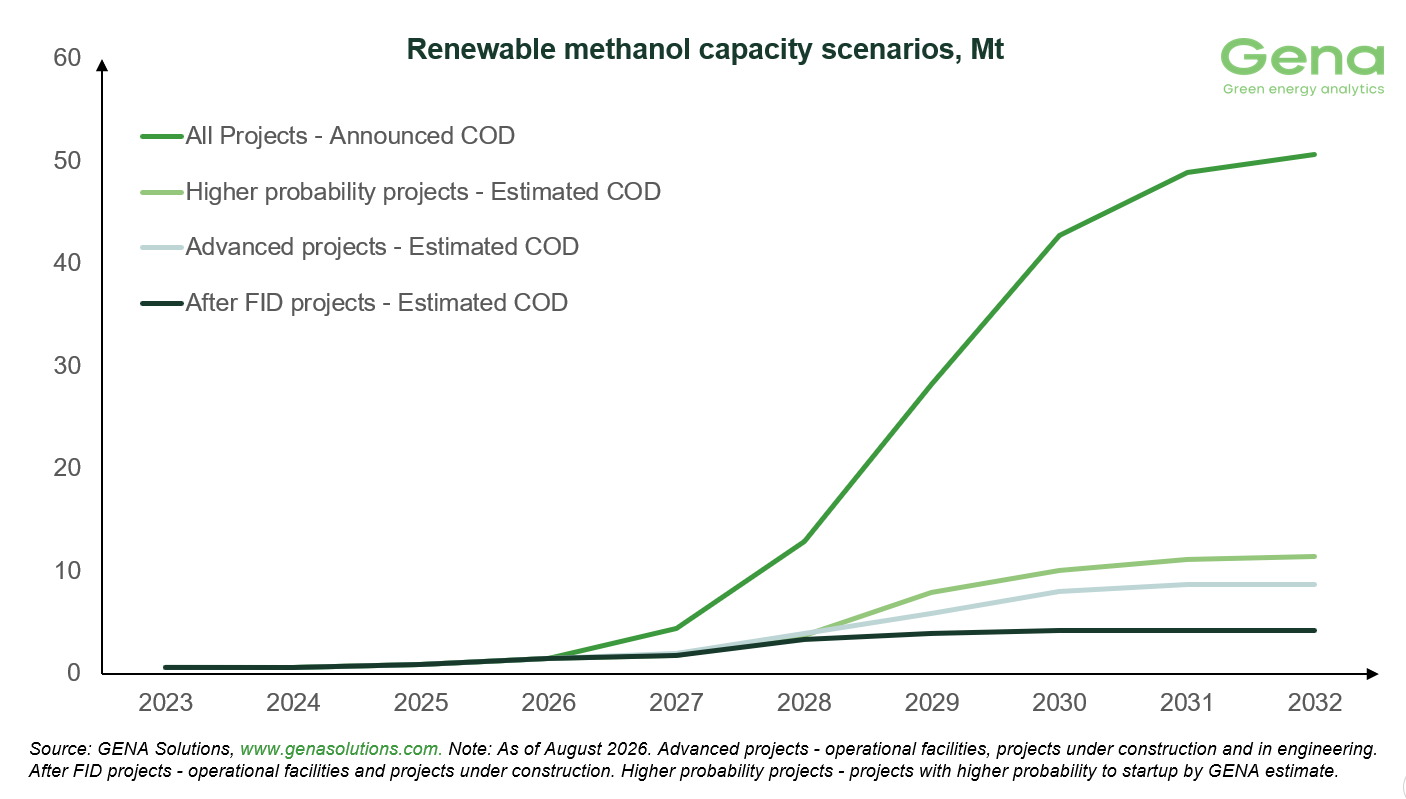
  • Considering the current uncertainty around regulatory developments and demand growth, GENA projects that renewable methanol capacity could reach 6 Mt to 12 Mt by 2031.

Note: The full article can be viewed here.
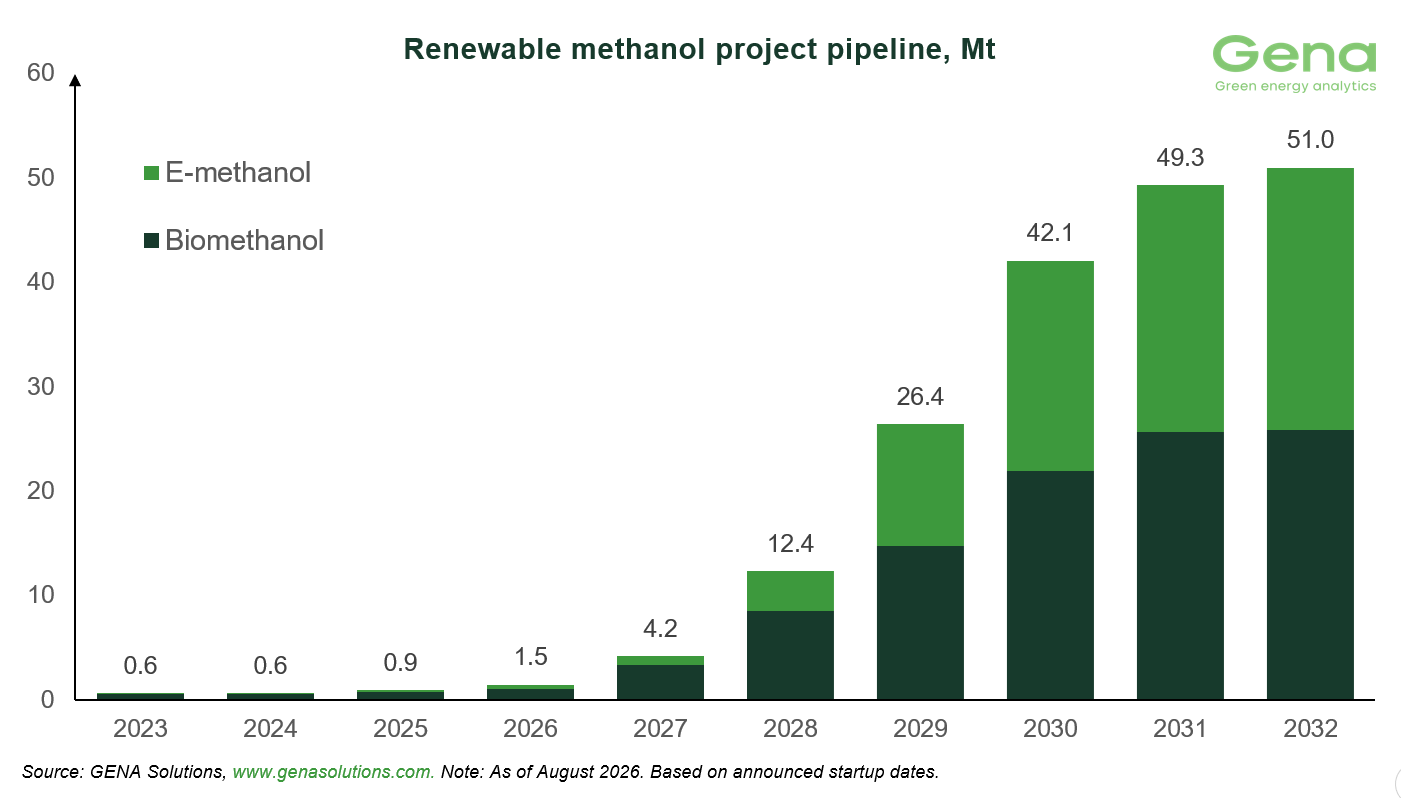
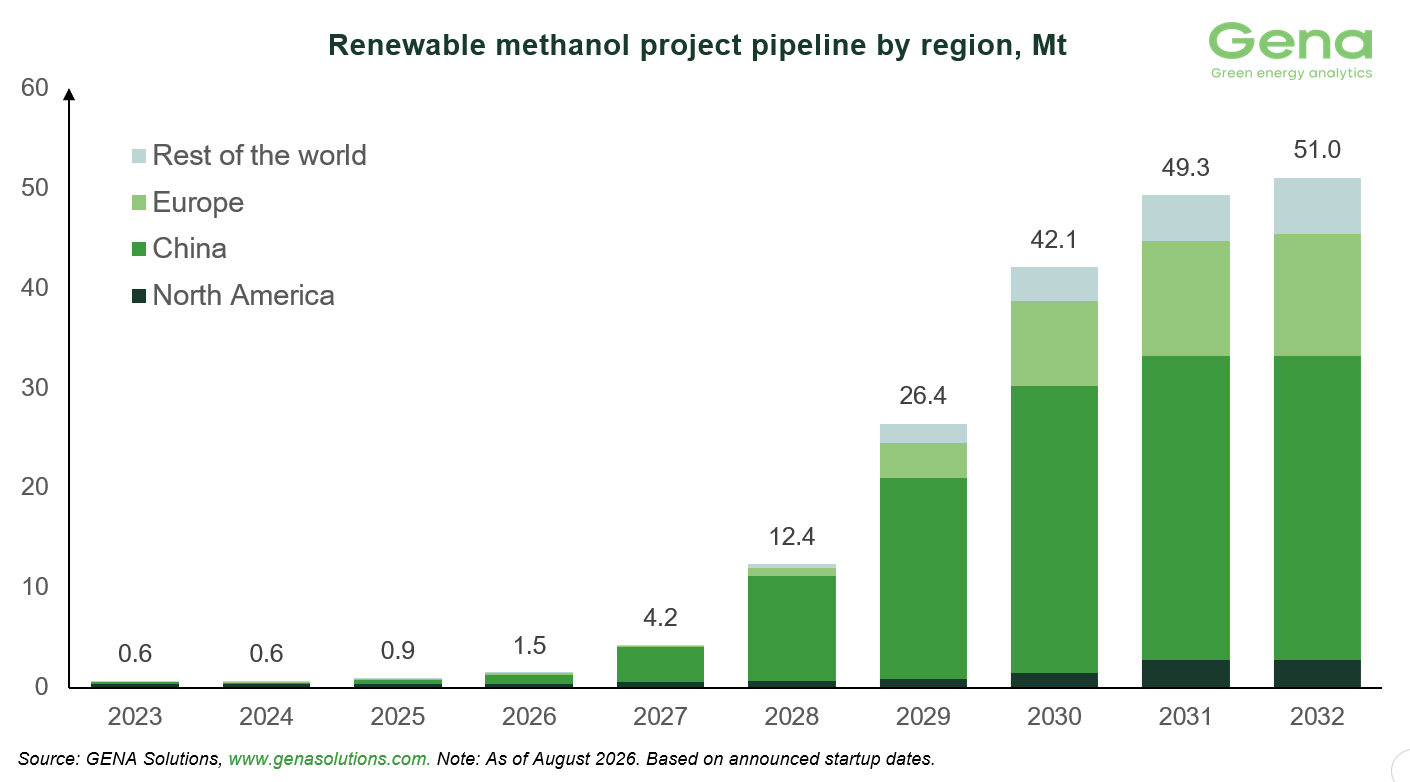
Renewable methanol project pipeline 4 Renewable methanol by feedstock 8 Renewable methanol by region 7 Project pipeline by status Methanol capacity scenarios


Photo credit: GENA Solutions
Published: 4 September, 2026

Continue Reading

Business

Singapore: MPA urges maritime firms to prepare for potential haze with plan

MPA encourages all maritime companies, especially those with workers performing outdoor work to maintain a business continuity plan for haze.
Admin

Published

on

By

RESIZED SG bunker tanker

The Maritime and Port Authority of Singapore (MPA) on Monday (31 August) issued Port Marine Circular No. 9 of 2026 on steps for maritime companies to take for potential haze affecting Singapore:

BUSINESS CONTINUITY PLAN FOR HAZE

This circular supersedes Port Marine Circular No. 09 of 2023.

With reference to the National Environment Agency’s (NEA) joint media release issued on 9 August 2026, hotspots were observed in parts of Sumatra and Kalimantan, with prevailing winds potentially bringing smoke haze towards Singapore. The dry conditions may further increase the likelihood of haze affecting Singapore. The Maritime and Port Authority of Singapore (MPA) encourages all maritime companies, especially those with workers performing outdoor work to maintain a business continuity plan for haze.

MPA advises all maritime companies to monitor the PSI level through the media and the NEA’s website (www.haze.gov.sg), keep at least a one-week supply of N95 masks for workers especially those who work outdoors, and observe the Ministry of Manpower’s (MOM) Haze guidelines and advisory for work which can be found on their website (www.mom.gov.sg/haze). The latter include guidelines to ensure that stocks of N95 masks are periodically inspected, remain serviceable, and not expired.

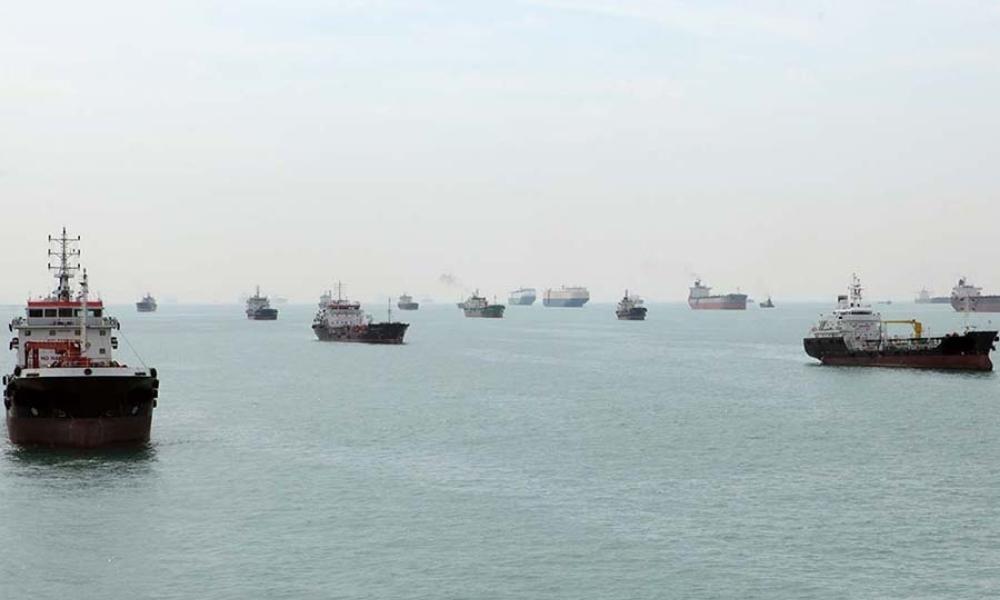
The visibility in the Singapore Strait and port waters could be significantly reduced in the event of haze. During periods of restricted visibility, shipmasters are advised to keep a proper lookout and navigate with caution. They are also advised to comply with the International Regulations for Preventing Collisions at Sea and in particular Rule No. 19, Rule No. 20 and Rule 35 concerning conduct of vessels in restricted visibility, exhibition of navigation lights and sound signals in restricted visibility, respectively.

In the interest of safety of navigation and life at sea, the Port Master may restrict the movement of harbour craft and pleasure craft in the port waters during reduced visibility conditions.


Photo credit: Manifold Times
Published: 31 August, 2026

Continue Reading

Alternative Fuels

DNV report: Regulatory uncertainty demands fleet strategies built for multiple futures

Report examines four regulatory scenarios, ranging from adoption of IMO NZF in its current form to its outright rejection, energy efficiency uptake, and long-term bunker fuel and technology strategies.
Admin

Published

on

By

DNV report: Regulatory uncertainty demands fleet strategies built for multiple futures

Regulatory uncertainty is increasing pressure on shipowners to make investment decisions that remain viable across multiple future scenarios, said classification society DNV on Thursday (27 August). 

According to DNV’s 10th Maritime Forecast to 2050, stronger global regulatory signals could accelerate the uptake of energy-efficiency measures, enabling the global fleet to consume up to 25% less energy by 2050 compared to a scenario where regulation is driven by regions.

The report examines four regulatory scenarios, ranging from adoption of the IMO Net-Zero Framework (NZF) in its current form to its outright rejection, which could lead to a period of prolonged regulatory gridlock, and explores the implications of these outcomes for fuel demand, energy efficiency uptake, and long-term fleet fuel and technology strategies.

Cristina Saenz de Santa Maria, CEO Maritime, DNV, said: “Ships ordered today will operate well beyond 2050, but many of the factors shaping their future performance remain uncertain. Regulatory requirements are advancing faster than the fuel, infrastructure, and technological systems needed to support them, making long-term investment decisions increasingly complex. The industry therefore needs greater clarity and alignment among all stakeholders to provide the confidence required for long-term investment. In the meantime, shipowners need strategies that deliver benefits today while remaining resilient across a range of regulatory and market outcomes.”

Energy efficiency is one of the most immediate and practical levers available to shipowners, delivering value across regulatory outcomes whether implemented at the newbuild stage or as a retrofit. A case study of a hydrodynamic measures retrofit on a 5,000 TEU container vessel showed potential annual fuel savings of 16%, with a payback time of around one to four years depending on future fuel prices. Retrofits can add similar value across many ship types and with sufficient planning can typically be completed during a standard class-renewal dry docking.

The development of the marine low-GHG fuel market remains a key challenge. While significant progress has been made in expanding alternative-fuel capabilities of vessels, scaling fuel production depends on confidence that demand will materialize. DNV projects shipping demand for low-GHG fuels to range from 4 to 22 Mtoe by 2030 and 33 to 185 Mtoe by 2050, depending on regulatory outcomes, with uptake also shaped by future uptake of shore power, plug-in hybridization, nuclear power, and onboard carbon capture systems.

Current project pipelines indicate a maximum global supply of 270 Mtoe by 2030, although actual volumes are likely to be lower due to project delays and other uncertainties, and shipping will need to compete with other industries for its share. However, the cost of reducing emissions varies significantly between fuel pathways, with abatement costs ranging from about 180 to 1,290 USD per tonne of CO₂ avoided, highlighting the importance of regulation and market incentives in enabling low-GHG fuel markets to develop.

Øyvind Sekkesæter, lead author of Maritime Forecast to 2050, said: “Scenarios explored in this year’s report show how different regulatory futures can lead to very different outcomes in energy efficiency uptake, fuel demand, and consequently, GHG emissions. By testing fuel and technology choices across multiple scenarios, shipowners can identify strategies that create value today while preserving flexibility as regulation, fuel availability, prices, and technologies evolve. Strategies that each owner chooses will also be dependent on their fleet type and operating context.”

Key findings from the report: 

  • Several regulatory futures remain possible as the IMO continues negotiations on the Net-Zero Framework, with these outcomes shaping investment decisions, low-GHG fuel uptake, and energy-efficiency deployment across the global fleet.
  • With global regulatory incentives in place, the world-fleet could consume 25% less energy by 2050 than under a scenario limited to regional regulations.
  • Energy efficiency can pay off regardless of regulatory outcome – 5,000 TEU container ship case study shows 16% annual fuel savings from hydrodynamic measures retrofit.
  • Shipping demand for low-GHG fuels could range from 4 to 22 Mtoe by 2030, and 33 to 185 Mtoe by 2050, depending on regulatory outcomes and the availability of these fuels in a competitive global market.
  • Current project pipelines indicate that a maximum of 270 Mtoe of supply could be available by 2030, though actual volumes are likely to be lower due to project delays and other uncertainties, and shipping will need to compete with other industries for its share.
  • Testing fuel and technology strategies across different scenarios can help shipowners identify robust choices for an uncertain transition. Testing, piloting, and verifying technologies can provide the trusted performance data needed to make investment decisions with greater confidence.

Note: DNV’s 10th Maritime Forecast to 2050 can be found here. 


Photo credit: DNV
Published: 28 August, 2026

Continue Reading
Advertisement

OUR INDUSTRY PARTNERS


Trending