Connect with us

Business

BIMCO ‘concerned’ on IMO suggestion to amend sulphur testing and sampling regulation

New suggestion can cause confusion between the ship, bunker supplier, time charter etc, especially if the testing results turn out to be different, said BIMCO.

Admin

Published

on

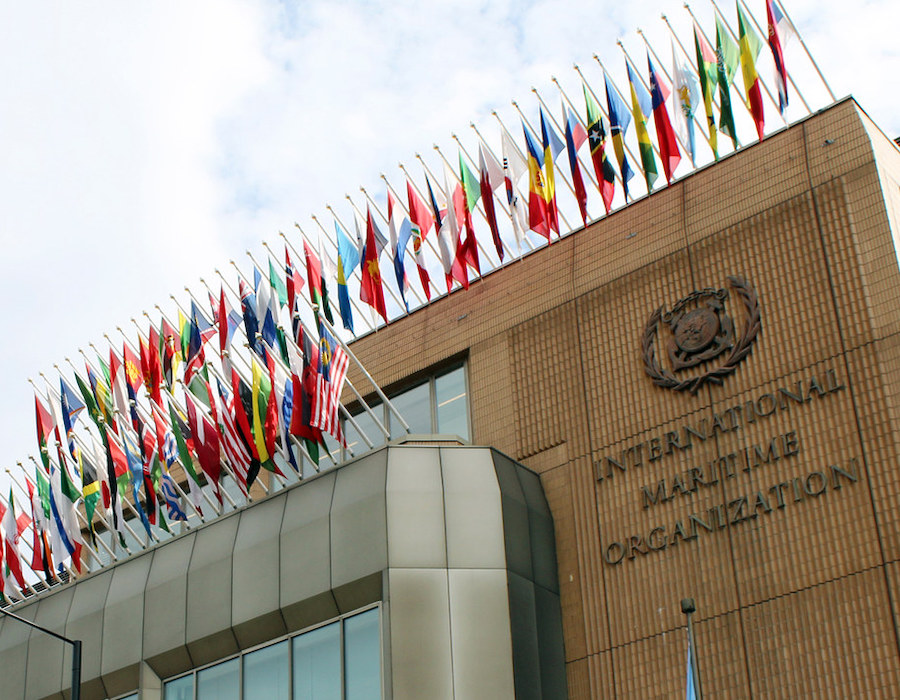
IMO headquarters

Christian Bækmark Schiolborg, Manager, Marine Environment at BIMCO on Monday (16 November) published an article explaining why BIMCO is ‘concerned’ with the proposed procedure for ‘On board sampling’ to be used in determining compliance with sulphur regulations as the International Maritime Organization (IMO) prepares to discuss amendments to MARPOL Annex VI this week:

While shipowners have been focused on the 2020 sulphur regulation which entered into force on 1 January 2020 due to safety concerns, IMO members states have had their eyes on the procedures that control whether ships are carrying low-sulphur fuel oil in accordance with the new regulations.

In connection with the amendments to MARPOL Annex VI a few definitions will come in handy:

  •  In-use sample, defined as the sample of fuel oil in use on a ship. It can for example be drawn from the fuel oil line between the service tank and an auxiliary engine.
  •  On board sample, defined as the sample of fuel oil intended to be used or carried for use on board a ship. It is drawn directly or indirectly from fuel oil tanks.

According to the new regulation, authorities including Port State Control are thus given explicit authority to draw oil samples from the ship’s fuel oil tanks.

BIMCO is concerned with the suggested procedure for ‘On board sampling’ to be used for determining if the ship is in compliance with the sulphur regulation, since the only truly homogenous and representative fuel oil sample is the MARPOL sample (MARPOL delivered sample). The new suggestion could cause confusion and uncertainty between the ship, bunker supplier, time charter and other stakeholders, especially if the testing results turn out to be different, BIMCO believes.

Direct samples drawn through the sounding pipe or the manhole cannot in BIMCO’s view be considered homogenous and representative for the sulphur content in the fuel oil tank. This is recognised (but also disregarded) in the circular on early application of the verification procedures for a MARPOL Annex VI fuel oil sample (MEPC.1/Circ.882 ):

“The in-use or on board fuel oil sample, as appropriate, shall be used to verify the sulphur content of the fuel oil as represented by that sample of fuel oil at the point of sampling.”

This means that a fuel oil sample drawn by PSC is only representative of the fuel oil at the level or point of suction, but not representative of the fuel oil in the tank.

Indirect samples drawn by using the fuel oil transfer pump, cannot be used either, since the sample is not homogenous and representative of the sulphur content in the tank. Since the transfer pump’s suction is placed in the bottom of the fuel tank, BIMCO fears that such samples would show wrong results even if the sulphur content of the fuel oil is actually compliant.

This leads to the fact that the only fuel sample truly homogenous and representative of the sulphur content that is available today, is the MARPOL sample because it is drawn over the entire bunker operation.

Safety concerns in case of direct sampling from fuel oil tanks

A normal fuel oil tank only has two openings, the manhole, for inspection when the tank is empty, and the sounding pipe. Fuel oil tanks on existing ships are not constructed with designated sampling points.

The manhole should never be opened while there is fuel oil inside the tank. Fuel oils are stored at high temperatures and it is consequently unsafe for the people taking the sample.

The MARPOL (delivered) sample is still essential

The statutory fuel verification procedure for MARPOL Annex VI fuel oil samples is being updated to include the new fuel oil samples and making the text of the circular on early application of the verification procedures for a MARPOL Annex VI fuel oil sample mandatory. 

More information can be found here interpretation of the discord between MARPOL and commercial fuel samples.

Compared to the current verification procedure, MARPOL (delivered) samples will in the future be tested without taking the Reproducibility (R) of the test method into consideration. This means there will be no test margin and thus, the test result of a MARPOL sample (average of two tests by the same laboratory) must not exceed 0.50% m/m sulphur.

For ‘In-use’ and ‘On board’ samples, the Reproducibility (R) of the test method, in accordance with ISO 4259-2:2017, should be taken into consideration when assessing whether the test result is acceptable or not. This means that the test result, from the fuel oil samples drawn by PSC, shall be considered acceptable if the sulphur content does not exceed 0.53%.

This small but essential difference between the verification procedure for MARPOL samples and samples drawn by PSC was agreed by IMO deliberately. The difference is intended to ensure that ships are not unfairly penalised for marginal exceedances due to factors outside the ship’s control. Time will show if this is sufficient to avoid that different conclusions are drawn from the different types of samples.

In the end we should not forget that it is still the responsibility of the supplier to deliver fuel oil which is compliant with the statutory sulphur content limits i.e. 0.50% or 0.10% m/m.


Photo credit: International Maritime Organisation
Source: BIMCO
Published: 18 November, 2020

Continue Reading

Winding up

Singapore: High Court to hear Norvic Shipping Asia winding up application on 31 July

Application for the winding up of Norvic Shipping Asia Pte Ltd was filed by Netherlands-registered Mur Shipping BV on 8 April, according to Government Gazette notice.

Admin

Published

on

By

RESIZED singapore high court

An application for the winding up of Norvic Shipping Asia Pte Ltd was filed by Netherlands-registered Mur Shipping BV on 8 April, according to a Tuesday (21 July) notice on the Government Gazette.

It noted the winding up application is directed to be heard before the Judge sitting in the General Division of the High Court at 10am on 31 July.

Any creditor or contributory of the company desiring to support or oppose the making of an order on the winding up application may appear at the time of hearing by himself or his counsel for that purpose.

A copy of the winding up application will be furnished to any creditor or contributory of the company requiring the copy of the winding up application by the solicitors of the applicant’s, Oon & Bazul LLC, on payment of the regulated charge for the same.

The Applicant’s address is Hiridostraat 5, Gebouw Prismatrium, 1101CW Amsterdam, The Netherlands.

The Applicant’s solicitors are Oon & Bazul LLC of 103 Penang Rd, #04-04/05/06 Singapore 238467. 

Queries on the winding up application may be directed to the following email addresses: [email protected] and [email protected].


Photo credit: Manifold Times
Published: 22 July, 2026

Continue Reading

Methanol

World Fuel and partners complete first green methanol bunkering of car carrier in Shanghai

Operation involved the delivery of approximately 2,800 MT of green methanol to “Arctic Tern” via a ship-to-ship transfer using SIPG Energy’s dedicated methanol bunkering vessel “M/V Hai Gang Zhi Yuan”.

Admin

Published

on

By

World Fuel and partners complete first green methanol bunkering of car carrier in Shanghai

Marine fuel provider World Fuel on Tuesday (21 July) said it successfully completed the first green methanol bunkering of M/V Arctic Tern, with EUKOR Car Carriers and SIPG Energy at the Port of Shanghai. 

Arctic Tern is the first vessel in the new Shaper Class series of car carriers. 

The operation involved the delivery of approximately 2,800 MT of green methanol to Arctic Tern via a ship-to-ship transfer using SIPG Energy’s dedicated methanol bunkering vessel M/V Hai Gang Zhi Yuan, the largest vessel of its kind in operation. 

The bunkering operation was carried out at Haitong Terminal, Waigaoqiao Port Area, Shanghai Port, with cargo handling operations conducted simultaneously during bunkering.

This marks EUKOR Car Carriers’ first green methanol operation and the first time Arctic Tern has bunkered methanol since its delivery on 9 July. The operation marked the first bunkering at Shanghai Port of green methanol produced locally in Shanghai for an international PCTC operator. 

It also demonstrated the city’s integrated green methanol value chain, spanning local production, storage and bunkering, and established a replicable “Shanghai Model” for green methanol supply.

World Fuel arranged the supply and delivery of the fuel on behalf of EUKOR Car Carriers, working with SIPG Energy as the physical supplier at the Port of Shanghai.

The green methanol supplied was produced from municipal solid waste, ISCC-EU certified, and had a carbon intensity value below 25 gCO₂e/MJ.

Arctic Tern is the first of fourteen Shaper Class vessels ordered by Wallenius Wilhelmsen. With a capacity of 9,300 car equivalent units and methanol dual-fuel capability, the vessel will be operated by EUKOR Car Carriers, jointly owned by Wallenius Wilhelmsen and Hyundai Motor Group. Following her first green methanol bunkering, Arctic Tern will continue her maiden voyage from Asia to Europe.

Xavier Leroi, COO Shipping Services at Wallenius Wilhelmsen and CEO of EUKOR Car Carriers, said: “Completing Arctic Tern’s first green methanol bunkering shortly after delivery is a significant milestone towards our decarbonisation ambition for both EUKOR Car Carriers and Wallenius Wilhelmsen. It demonstrates how investments in next-generation vessel technology and fuel flexibility are being translated into real-world operations. 

“This achievement reflects the strong collaboration between all parties involved. Together, we have shown how partnerships across the maritime value chain can help make lower-emission fuels available and operationally viable at scale.”

Mark Tamsitt, SVP Global Marine Sales at World Fuel, said, “The first bunkering event with a new fuel is a significant moment for any shipowner, and our role is to make it as seamless as possible. By connecting EUKOR Car Carriers with SIPG Energy’s proven green methanol capability at the Port of Shanghai, we were able to deliver on reliable supply, fuel quality, and safe processes. As more of our customers bring methanol dual-fuel tonnage into service, we are committed to being the partner that makes these kinds of operations routine.”

Mr. Zhang Da, General Manager of SIPG Energy, said, “Welcoming Arctic Tern to the Port of Shanghai for her first green methanol bunkering demonstrates the strength and maturity of our supply capability. Building on our well-established methanol ship-to-ship bunkering services for container vessels, we have already extended such services to pure car and truck carriers (PCTCs). This bunkering sets a new record for the largest single SIMOPs green methanol bunkering for PCTCs in China, marking another step in building Shanghai’s position as a global green energy hub for international shipping.”

This operation follows Wallenius Wilhelmsen’s announcement on 9 July that Arctic Tern would complete her first methanol bunkering shortly after delivery. The vessel entered service on routes between Asia and Europe immediately following handover from China Merchants Jinling Shipyard in Nanjing.


Photo credit: World Fuel
Published: 22 July, 2026

Continue Reading

Ammonia

HPA and MB Energy develop safety concept for STS ammonia bunkering

HPA says the Port of Hamburg will become “bunker ready” for ammonia, laying the groundwork for safe and reliable ammonia bunkering in the future.

Admin

Published

on

By

HPA and MB Energy develop safety concept for STS ammonia bunkering

The Hamburg Port Authority (HPA) and integrated energy company MB Energy on Tuesday (21 July) said they have completed a comprehensive risk analysis and developed a dedicated safety concept for ship-to-ship ammonia bunkering.

MB Energy said the analysis lays the groundwork for the safe introduction of ammonia as a future marine fuel.

“With our planned ammonia import terminal in Hamburg-Blumensand, MB Energy intends to provide the reliable land side supply infrastructure needed to support this transition across northern German ports,” it said in a social media post. 

Mabanaft Group was renamed to MB Energy last year and merged over 50 existing brands under one identity. 

Separately, HPA said the Port of Hamburg will become “bunker ready” for ammonia, laying the groundwork for safe and reliable ammonia bunkering in the future.

“The focus is in particular on container ships, cruise ships as well as RoRo and ConRo (Container/RoRo) ships,” it said. 

“We expect ammonia to establish itself as an alternative marine marine fuel in the coming years. With our preparatory work, we are already creating the conditions to welcome the first ammonia-powered ships in Hamburg and to bunker them safely.:

HPA added that the import terminal for ammonia planned by MB Energy from 2029 will make a decisive contribution to ensuring the reliable availability of ammonia as a bunker fuel in northern German ports in the long term. 

“The use of an ammonia bunker barge is considered a possible addition to the landside infrastructure to enable ship bunkering in the port and beyond in the future,” it said.

Related: Mabanaft Group renames as MB Energy, merging over 50 brands under one identity


Photo credit: Hamburg Port Authority
Published: 22 July, 2026

Continue Reading

Trending