Connect with us

Environment

T&E: IMO climate plan ‘ignores Paris Agreement’, calls upon EU to set own standards

It has been 23 years since Kyoto Protocol assigned responsibility for climate-changing emissions from ships to IMO, yet progress has been painfully slow.

Admin

Published

on

post 56055

The global body that regulates shipping has ignored the Paris Agreement by proposing a climate plan that will see emissions from ships grow for several decades, said clean transport campaigner European Federation for Transport and Environment (T&E) on Friday (30 October).

It called on the EU to set its own shipping standards as part of the European Green Deal in order to bypass the ‘ineffective’ International Maritime Organisation (IMO).

It has been 23 years since the Kyoto protocol assigned responsibility for climate-changing emissions from ships to the IMO, yet progress has been painfully slow, according to T&E.

Earlier in October, the IMO’s group on reducing greenhouse gas emissions discussed a very weak proposal aimed at reducing the carbon intensity of international shipping by 40% by 2030, compared to 2008.

Yet the proposal was watered down by the group, whose recommendations are expected to be adopted by IMO’s environment committee (Marine Environment Protection Committee) which meets for its 75th session 16-20 November.

If adopted, emissions from ships will not be capped this decade, let alone reduced; there will be no enforcement mechanisms; and there will be loopholes which will allow ships to escape penalties for non-compliance.

Even under the best-case scenario, the proposal will see emissions rise nearly 15% on the industry’s 2008 baseline; the proposed 40% reduction would itself fall a long way short of the Paris accord’s commitment to limiting global warming to 1.5/2 Celsius by 2100.

“The IMO has proved once again that it is completely ineffective in tackling shipping’s climate impact,” said T&E’s shipping programme director, Faig Abbasov.

“Governments have ridden roughshod over the Paris accord by agreeing a measure that will see ship emissions grow for decades to come. EU countries must now work through the European Green Deal to fill the gap left by the IMO.”

Because of poor progress made by the IMO between 1997 and 2015, the Paris climate accord mandated countries to address shipping at national and regional levels as part of their economy-wide climate plans.

National governments have been reluctant to take action while IMO efforts were continuing, but the Clean Shipping Coalition, which includes T&E, says the latest poor outcome from the IMO indicates it is time for more localised action.

“In pursuing this outcome at the IMO, many countries have knowingly broken their Paris agreement commitment to pursue a 1.5/2C compatible emissions reduction,” said John Maggs, president of the Clean Shipping Coalition which has observer status at the IMO.

“We urge all countries to reconsider their support for the decision ahead of MEPC75 and reject it, unless it can be fundamentally strengthened.”

The proposal likely to be adopted will fail to reduce emissions before 2023, will not cause emissions to peak emissions at the earliest opportunity, and will not set ship CO2 emissions on a pathway consistent with the Paris agreement goals. In those three ways, it waters down the IMO’s initial greenhouse gas strategy.

Abbasov added: “We cannot tell the public that progress is being made when their representatives come to the IMO just to thwart CO2 regulation to protect short-term profits, rather than protecting their own citizens from the escalating impacts of the climate crisis.”


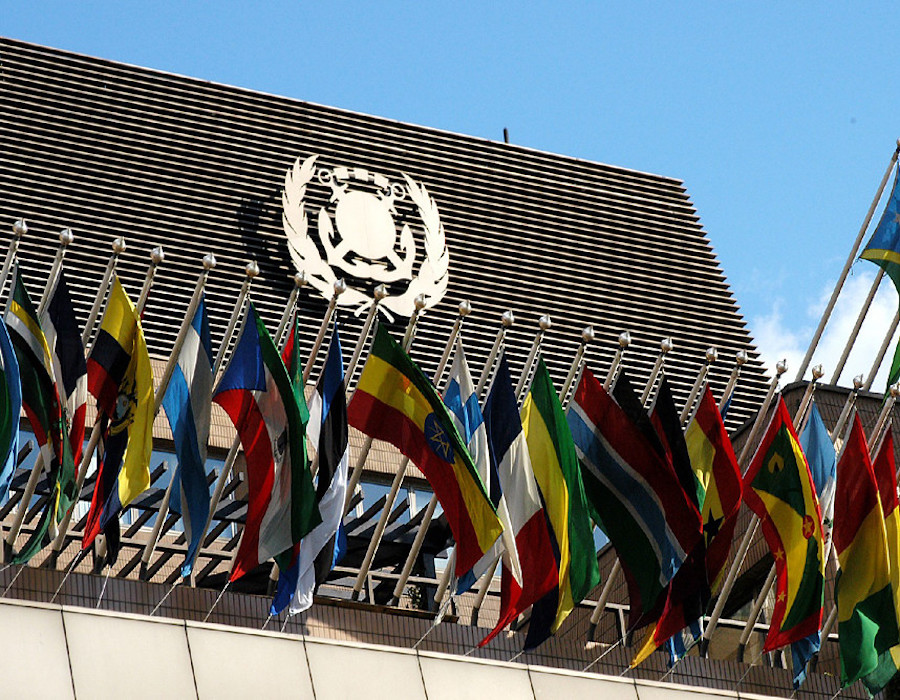
Photo credit: International Maritime Organisation

Published: 30 October, 2020

Continue Reading

Methanol

World Fuel and partners complete first green methanol bunkering of car carrier in Shanghai

Operation involved the delivery of approximately 2,800 MT of green methanol to “Arctic Tern” via a ship-to-ship transfer using SIPG Energy’s dedicated methanol bunkering vessel “M/V Hai Gang Zhi Yuan”.

Admin

Published

on

By

World Fuel and partners complete first green methanol bunkering of car carrier in Shanghai

Marine fuel provider World Fuel on Tuesday (21 July) said it successfully completed the first green methanol bunkering of M/V Arctic Tern, with EUKOR Car Carriers and SIPG Energy at the Port of Shanghai. 

Arctic Tern is the first vessel in the new Shaper Class series of car carriers. 

The operation involved the delivery of approximately 2,800 MT of green methanol to Arctic Tern via a ship-to-ship transfer using SIPG Energy’s dedicated methanol bunkering vessel M/V Hai Gang Zhi Yuan, the largest vessel of its kind in operation. 

The bunkering operation was carried out at Haitong Terminal, Waigaoqiao Port Area, Shanghai Port, with cargo handling operations conducted simultaneously during bunkering.

This marks EUKOR Car Carriers’ first green methanol operation and the first time Arctic Tern has bunkered methanol since its delivery on 9 July. The operation marked the first bunkering at Shanghai Port of green methanol produced locally in Shanghai for an international PCTC operator. 

It also demonstrated the city’s integrated green methanol value chain, spanning local production, storage and bunkering, and established a replicable “Shanghai Model” for green methanol supply.

World Fuel arranged the supply and delivery of the fuel on behalf of EUKOR Car Carriers, working with SIPG Energy as the physical supplier at the Port of Shanghai.

The green methanol supplied was produced from municipal solid waste, ISCC-EU certified, and had a carbon intensity value below 25 gCO₂e/MJ.

Arctic Tern is the first of fourteen Shaper Class vessels ordered by Wallenius Wilhelmsen. With a capacity of 9,300 car equivalent units and methanol dual-fuel capability, the vessel will be operated by EUKOR Car Carriers, jointly owned by Wallenius Wilhelmsen and Hyundai Motor Group. Following her first green methanol bunkering, Arctic Tern will continue her maiden voyage from Asia to Europe.

Xavier Leroi, COO Shipping Services at Wallenius Wilhelmsen and CEO of EUKOR Car Carriers, said: “Completing Arctic Tern’s first green methanol bunkering shortly after delivery is a significant milestone towards our decarbonisation ambition for both EUKOR Car Carriers and Wallenius Wilhelmsen. It demonstrates how investments in next-generation vessel technology and fuel flexibility are being translated into real-world operations. 

“This achievement reflects the strong collaboration between all parties involved. Together, we have shown how partnerships across the maritime value chain can help make lower-emission fuels available and operationally viable at scale.”

Mark Tamsitt, SVP Global Marine Sales at World Fuel, said, “The first bunkering event with a new fuel is a significant moment for any shipowner, and our role is to make it as seamless as possible. By connecting EUKOR Car Carriers with SIPG Energy’s proven green methanol capability at the Port of Shanghai, we were able to deliver on reliable supply, fuel quality, and safe processes. As more of our customers bring methanol dual-fuel tonnage into service, we are committed to being the partner that makes these kinds of operations routine.”

Mr. Zhang Da, General Manager of SIPG Energy, said, “Welcoming Arctic Tern to the Port of Shanghai for her first green methanol bunkering demonstrates the strength and maturity of our supply capability. Building on our well-established methanol ship-to-ship bunkering services for container vessels, we have already extended such services to pure car and truck carriers (PCTCs). This bunkering sets a new record for the largest single SIMOPs green methanol bunkering for PCTCs in China, marking another step in building Shanghai’s position as a global green energy hub for international shipping.”

This operation follows Wallenius Wilhelmsen’s announcement on 9 July that Arctic Tern would complete her first methanol bunkering shortly after delivery. The vessel entered service on routes between Asia and Europe immediately following handover from China Merchants Jinling Shipyard in Nanjing.


Photo credit: World Fuel
Published: 22 July, 2026

Continue Reading

Ammonia

HPA and MB Energy develop safety concept for STS ammonia bunkering

HPA says the Port of Hamburg will become “bunker ready” for ammonia, laying the groundwork for safe and reliable ammonia bunkering in the future.

Admin

Published

on

By

HPA and MB Energy develop safety concept for STS ammonia bunkering

The Hamburg Port Authority (HPA) and integrated energy company MB Energy on Tuesday (21 July) said they have completed a comprehensive risk analysis and developed a dedicated safety concept for ship-to-ship ammonia bunkering.

MB Energy said the analysis lays the groundwork for the safe introduction of ammonia as a future marine fuel.

“With our planned ammonia import terminal in Hamburg-Blumensand, MB Energy intends to provide the reliable land side supply infrastructure needed to support this transition across northern German ports,” it said in a social media post. 

Mabanaft Group was renamed to MB Energy last year and merged over 50 existing brands under one identity. 

Separately, HPA said the Port of Hamburg will become “bunker ready” for ammonia, laying the groundwork for safe and reliable ammonia bunkering in the future.

“The focus is in particular on container ships, cruise ships as well as RoRo and ConRo (Container/RoRo) ships,” it said. 

“We expect ammonia to establish itself as an alternative marine marine fuel in the coming years. With our preparatory work, we are already creating the conditions to welcome the first ammonia-powered ships in Hamburg and to bunker them safely.:

HPA added that the import terminal for ammonia planned by MB Energy from 2029 will make a decisive contribution to ensuring the reliable availability of ammonia as a bunker fuel in northern German ports in the long term. 

“The use of an ammonia bunker barge is considered a possible addition to the landside infrastructure to enable ship bunkering in the port and beyond in the future,” it said.

Related: Mabanaft Group renames as MB Energy, merging over 50 brands under one identity


Photo credit: Hamburg Port Authority
Published: 22 July, 2026

Continue Reading

Environment

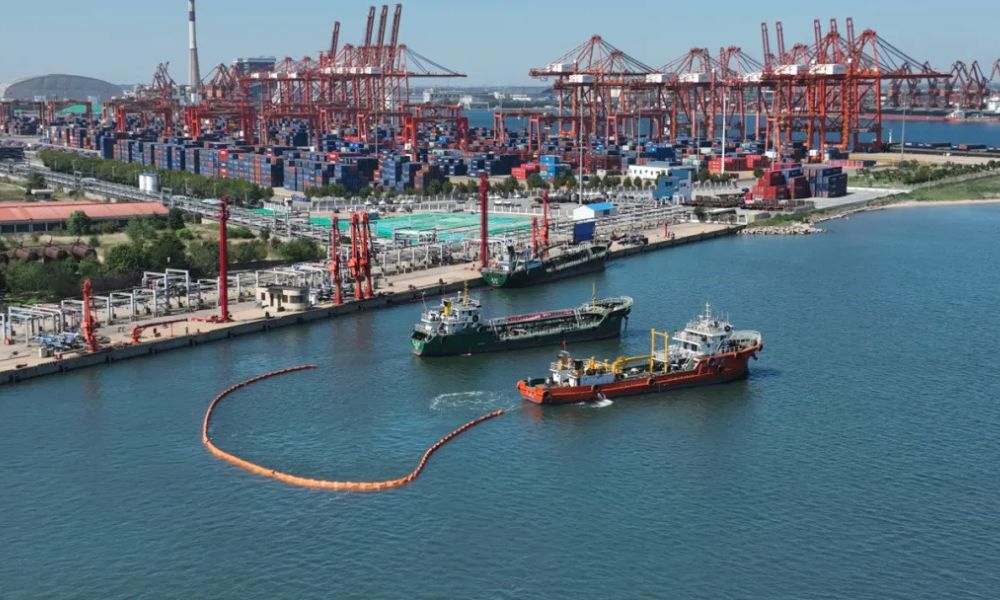
Indonesia to expedite removal of sunken Malaysia-flagged tanker “Silver Sincere”

Vessel sank while carrying about 1,000 mt of waste oil on 12 January 2025; the wreck was discovered in March 2025 and was found to have drifted about 13 nautical miles from its original sinking site.

Admin

Published

on

By

Indonesia to expedite removal of sunken Malaysia-flagged tanker “Silver Sincere”

Indonesia’s Coordinating Ministry for Political and Security Affairs on Tuesday (14 July) held a cross-agency coordination meeting to expedite efforts in handling the Malaysian-flagged tanker Silver Sincere that sank off Bintan Regency, Riau Islands.

The vessel sank while carrying about 1,000 metric tonnes (mt) of waste oil on 12 January 2025. 

According to authorities, the ship sank within Indonesian waters. After several surveys, the wreck was finally discovered in March 2025 and it was found to have shifted approximately 13 nautical miles from the initial sinking location.

The meeting was aimed to align cross-ministerial and institutional measures to expedite the handling of the Silver Sincere wreck while minimising risks to shipping safety, the marine environment, and national interests.

Deputy for Coordination of State Defense and National Unity Purwito Hadi Wardhono emphasised that the handling of the impact of the Silver Sincere sinking was the first case to be comprehensively coordinated, serving as a model for handling foreign vessels sinking within Indonesian jurisdiction.

Through this cross-sectoral coordination, the government will establish a clear and measurable framework that can serve as a reference for resolving similar cases in the future, while minimising state losses due to environmental pollution, damage to underwater ecosystems and infrastructure, and disruption to shipping lanes.

“The most important thing is to immediately stop and prevent the negative impacts of this ship sinking,” Purwito said.

“Therefore, a coordinating role is crucial, as maritime security governance involves various ministries and institutions with varying authorities, allowing for faster, more integrated, and more effective response,” he said. 

He added that the Silver Sincere was a Malaysian-flagged vessel that sank within Indonesian jurisdiction, and therefore, all handling processes must comply with the provisions of Indonesian laws and regulations.

In the meeting, Prof. Eko Ganis Sukoharsono, representing the SAE Energy Consulting Team, presented the results of an analysis based on 14 observation periods using Sentinel-1 Synthetic Aperture Radar (SAR) satellite imagery. 

The analysis results showed strong indications of a waste oil spill that has resulted in marine pollution, damage to the seabed due to shifting shipwrecks, disruption of coastal ecosystems and fishing grounds, and potentially threatening the livelihoods of fishing communities around the Riau Islands. 

Purwito added these findings further emphasise the importance of accelerating the removal of the shipwrecks to prevent widespread environmental impacts, maintain shipping safety, and avoid the potential for greater state losses.

The meeting brought together representatives of related ministries and institutions including the Ministry of Foreign Affairs, Ministry of Defense, Ministry of Transportation, Ministry of Maritime Affairs and Fisheries, Ministry of Environment, Attorney General’s Office.  

Related: MPA: Malaysia-registered tanker “Silver Sincere” sinks off Pedra Branca


Photo credit: MarineTraffic / Julian T
Published: 20 July, 2026

Continue Reading

Trending