Connect with us

Business

Interview: Total Marine Fuels Global Solutions discusses sector growth, IMO 2020, and future plans

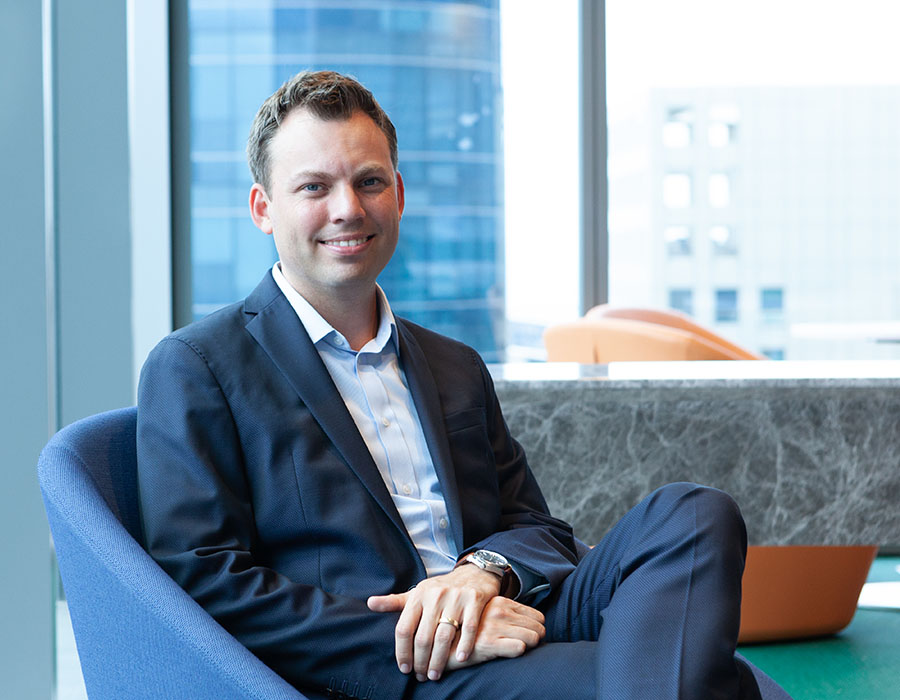
Jesper Rosenkrans, Global Sales & Business Development Director at Total Marine Fuels Global Solutions, provides an update on company developments in 2020 and its future plans.

Admin

Published

on

Jesper Rosenkrans

The following interview is part of pre-event coverage for the upcoming Singapore International Bunkering Conference and Exhibition (SIBCON) 2020; where Manifold Times is an official media partner:

International bunkering firm Total Marine Fuels Global Solutions (TMFGS), which also ranks among Singapore’s top ten bunker suppliers for 2019, is in the midst of preparations for a change within the marine fuels industry, learns Manifold Times .

The Singapore bunkering publication took an opportunity to interview Jesper Rosenkrans, Global Sales & Business Development Director at TMFGS, who shared the company’s plans and investments for sustainable growth post IMO2020.

He further discusses how TMFGS provides additional services to their clients, the increased complexity in the credit and compliance landscape, the company’s operations in China, and more.

MT: What are the current areas of growth within the bunkering trade which TMFGS see major development in?

JR: One of the most important areas of growth currently is LNG bunkering, where we see a rapid development in infrastructure and investment in assets.

LNG as a marine fuel is no longer just a development on the horizon; it is ready to be the fuel solution of today and tomorrow.

As a global leader in LNG, the next 12 – 18 months promise to be equally busy and exciting for us, with further assets launched to serve the two biggest bunker hubs in the world in Rotterdam and Singapore, as well as the Mediterranean.

Our first chartered LNG Bunker Vessel (LNGBV), the largest one ever built, has just arrived in Rotterdam. She will go into service within the next few weeks. Her sistership is currently being built in China and should reach the French port of Marseilles by the end of 2021.

Finally, we signed an agreement with Pavilion Energy to jointly develop an LNG bunker supply chain in the port of Singapore. The latter covers the shared long-term time charter of a new 12,000-m3 LNG bunker vessel to be commissioned in 2021.

Securing our position as the global leader of LNG bunkering is important for us, as we collaborate with our shipping clients to sail beyond IMO 2020.

MT: Is TMFGS also investing in these areas and what are the reasons for doing so?

JR: As highlighted, LNG provides the environmental and economic profile to be the fuel solution for shipping today and for the years to come, and we have prepared for this through significant investments in assets and infrastructure.

In addition to LNG, we are also actively developing commercial biofuels solutions for our clients, with the first deliveries already taking place in Europe.

MT: With bunkering being a tight margin business, what are the other value-added commercial areas which TMFGS is working on to maximise margin?

JR: Margins do tend to be tight in our industry, so while we always need to be price-competitive, we are constantly working towards providing extra value for our customers. Two such value-drivers are in assisting with price-management solutions, and leveraging our geographical reach to bring additional flexibility.

As part of an integrated group with significant trading capabilities, we are able to tailor pricing solutions to meet customer needs. This includes providing embedded physical options, changing the pricing index, offering conversion to/from fixed price contracts, or building LNG prices on either gas- or oil- related indices. The core of this offering is that we will meet the business requirement of our customers, who can choose the index and structure of pricing for their bunkers according to their wishes.

In terms of geographical reach, we have a strategic network of supply locations that supports our customers. In Asia we see this with Singapore, China, and Korea, and in Northern Europe through key ports such as Rotterdam, Le Havre, and Hamburg.

MT: Has the various commodity-trading mishaps in Singapore changed the way TMFGS manages its credit and due diligence?

JR: As an oil major, we are committed to stringent and dynamic risk assessment. Our business model is built on reliability, and we have been actively managing enterprise risks –also in the space of credit and due diligence. We remain committed to ensuring that our customers know that when they deal with TMFGS, their business is in safe and trustworthy hands.

As part of a global organization, we are in a robust position and have good controls around any market exposure. When we deal directly with our customers, this in turn means we can pass that risk management onto them, helping to reduce their risk. We have really good relationships with our customers, and appreciately working actively with them on all matters.

MT: How has TMFGS adapted as an organisation to industry disruption driven by IMO 2020?

JR: We were aware that IMO2020 was going to impact the market significantly and create a changed landscape for the industry. We moved early in anticipation and preparation for that, which has been reflected in our organizational design and recruitment over the last couple of years.

IMO2020 was a game-changer, and we recognized the need to be ready for that with new thinking and fresh ideas, combined with deep technical and industry knowledge.

We needed to be ready and able to handle a dynamically changing market and new products, so there was a conscious and active strategy behind how we prepared for this ‘new normal’.

MT: With the main bunkering ports established; do you see any up-and-coming alternative bunkering ports presenting themselves as attractive marine refuelling locations?

JR: Clearly, Singapore remains the biggest and strategically most important bunkering hub for the Asia region – and indeed the world – and we really do not see a situation where that changes.

In terms of developing locations, China is emerging rapidly. Recognizing this trend and reflecting our aim to be part of this growth, we were delighted to enter into a joint venture with Zhejiang Energy Group to launch Zhejiang Petroleum Marine Fuels Co Ltd. Through this JV we are able to offer international shipping companies a safe, reliable, competitive and high quality fuel supply solution across the Zhoushan – Ningbo – Shanghai zone.

MT: What services can potential bunkering partners of TMFGS introduce for themselves in order to increase their standing with your good company?

JR: Safety is the principle value of TOTAL – and a benchmark for how we operate.  This is also reflected in the partners we work with. Fundamental to this is shared standards. We have a rigorous vetting process, which is key to ensure those values and the focus on quality and safety are reflected in our partners.

Similarly, it is important for us that we share a core set of values, and the desire to build a long-term partnership. We aim to do business in a way, and with companies, that allow us to build relationships that stand the test of time.


Photo credit: Manifold Times
Published: 4 September, 2020

Continue Reading

Legal

Singapore withdraws remaining 127 charges against Hin Leong founder OK Lim

Lim Oon Kuin, also known as OK Lim, was issued a stern warning and a district court granted him a discharge amounting to an acquittal for these charges on 17 July.

Admin

Published

on

By

RESIZED Sora Shimazaki on Pexels

Founder of collapsed oil trader Hin Leong Trading, Lim Oon Kuin, also known as OK Lim, has had the remaining 127 charges against him withdrawn, according to The Straits Times on Monday (20 July). 

OK Lim was issued a stern warning and a district court granted him a discharge amounting to an acquittal for these charges, including those for cheating, on 17 July. The discharge means Lim cannot be prosecuted again for the same offences.

Lim, 84, is currently serving a 13½-year prison sentence after the High Court reduced his original 17½-year jail term in March 2026. He was convicted in 2024 on two cheating charges and one count of abetting forgery in a case prosecutors described as one of Singapore’s most serious trade finance frauds.

Lim was convicted in May 2024 of two charges of cheating the Hongkong and Shanghai Banking Corporation (HSBC) and one count of abetting forgery that proceeded to trial out of a total of 130 criminal charges.

He was first charged in court on 14 August 2020, and was subsequently handed further charges in court on 25 September 2020, 30 April 2021 and 24 June 2021 for his role in perpetuating fraud on various financial institutions. 

A total of 130 charges were eventually brought against him for cheating and forgery-related offences.

Related: Singapore: Hin Leong Founder OK Lim gets jail term slashed to 13.5 years


Photo credit: Sora Shimazaki
Published: 21 July, 2026

Continue Reading

Winding up

Singapore: Coastal Logistics Pte Ltd to be wound up voluntarily

Coastal Logistics was reportedly affiliated with troubled Singapore bunker player Coastal Oil (Singapore) Pte Ltd.

Admin

Published

on

By

RESIZED Drew Beamer

Several resolutions for Coastal Logistics Pte Ltd were made during an extraordinary general meeting held on 14 July, according to a notice in the Government Gazette on Friday (4 July).

The following resolutions were duly passed during the meeting:

As Special Resolution

  • That it has been proved to the satisfaction of the meeting that the Company cannot by reason of its liabilities continue its business and accordingly the Company be wound up voluntarily pursuant to Section 160(1)(b) of the Insolvency, Restructuring and Dissolution Act 2018 (No. 40 of 2018);

As Ordinary Resolutions

  • that Mr. Wong Pheng Cheong Martin and Ms. Koay May Yee, both care of FTI Consulting (Singapore) Pte Ltd, One Raffles Quay, #27-10 South Tower, Singapore 048583 be appointed as the joint and several Liquidators of the Company for the purpose of such winding up; and
  • that the Liquidators be at liberty to open, maintain and operate any bank account(s) or account(s) for monies received by them as Liquidators with such bank(s) as they deem fit; and
  • that a Committee of Inspection will not be formed.

Manifold Times previously reported Nicholas James Gronow, director of Heng Tong Fuels & Shipping and Coastal Logistics, filed statutory declarations for both companies stating the firms cannot continue their businesses due to liabilities.

Both companies were reportedly affiliated with troubled Singapore bunker player Coastal Oil (Singapore) Pte Ltd. 

In 2019, several vessels owned by both firms entered the sale & purchase (S&P) market in Singapore.

Related: Singapore: Director declares Heng Tong Fuels & Shipping’s inability to continue business
Related: Heng Tong Fuels & Shipping in court over DBS Bank bunker tanker loan
Related: Singapore: Bunker tanker “Coastal Neptune” arrested
Related: Heng Tong Fuels & Shipping, Coastal Logistics tankers enter S&P market


Photo credit: Drew Beamer
Published: 21 July, 2026

Continue Reading

LNG Bunkering

PIL’s LNG dual-fuel boxship “Kota Elok” arrives in Singapore on maiden call

As the first of 13 new 13,000 TEU vessels joining its fleet, Kota Elok is equipped to operate on LNG and low-sulphur fuel oil that helps reduce our greenhouse gas emissions.

Admin

Published

on

By

PIL's LNG dual-fuel boxship “Kota Elok” arrives in Singapore on maiden call

Singapore-based Pacific International Lines Pte Ltd on Monday (20 July) said its first 13,000 TEU LNG dual-fuel container vessel, Kota Elok, recently made her maiden call to Singapore on 15 July.

As the first of 13 new 13,000 TEU vessels joining its fleet, Kota Elok is equipped to operate on liquefied natural gas (LNG) and low-sulphur fuel oil that helps reduce our greenhouse gas emissions. 

The vessel also incorporated energy-saving features and digital technologies to reduce fuel consumption and enhance operational performance, as well as a bow windshield to improve aerodynamics, contributing to improved fuel efficiency and lower emissions over the course of long-haul voyages.

“Following Singapore, Kota Elok will continue her voyage on our East Coast Service 1 (ES1) route to South America, calling at ports in Brazil, Uruguay, and Argentina before returning to Asia,” the company said in a social media post. 

Kota Elok also became PIL’s first vessel to receive Lloyd’s Register certification for compliance with the IACS UR E26 and UR E27 cyber security requirements.

Developed by the International Association of Classification Societies (IACS), UR E26 and UR E27 are mandatory cyber resilience requirements for newbuild vessels contracted from 1 July 2024. 


Photo credit: Pacific International Lines
Published: 21 July, 2026

Continue Reading

Trending